Unknown's avatar

About @DrDanNicholls

CEO of The White Horse Federation Thoughts and ideas do not necessarily reflect that of The White Horse Federation

To grade or not to grade… is probably not the question?

obs in time

“Whether we grade observations or not, we need to ensure teaching is increasingly progress-orientated and outcome-orientated – concentrating the strategies that provoke progress and secure outcomes for students.”

It is probably true that we should not determine the quality of teaching based on short lesson observations, but use a triangulation of evidence that identifies the typical quality of teaching; evaluating the effectiveness of teaching for securing progress-over-time and its success in securing strong outcomes for students. (outcomes in a broad sense as well as”attainment”) 

It is also true that we need to ensure and support teachers to find their way to great progress/outcome-orientated teaching that has a deep impact on students life chances. It is this autonomy that secures the motivation and ownership to reflect and stretch toward mastery.


We should, however, explore the assumption that grading teaching denies formative development; understanding that it perhaps provides the framework for improvement. Without a descriptive continuum of effective practices there is a danger of mediocrity. Particularly as…

“Not all approaches aimed at securing progress over time are equally effective or equally well delivered”

So this begs the question how do we develop a deep understanding of what secures progress, how do we measure the quality of teaching and how do we ensure that feedback to teachers is precise, owned and liberating, such that it sparks deliberate improvement, debate and improvement? It is difficult to see how we do this without a  descriptive continuum of what matters. We can rename the continuum, but when we consider progress-over-time and outcome-orientated teaching not everything is equal…or equally well delivered. Slide1


What if we fully understood how we move from this…Slide8To this… (where teaching is progress and outcome-orientated?… and that it is this that is rewarded and developed?)

Slide16

What if we understood that measuring quality of teaching through observation alone only measures a teacher’s ability to perform a lesson by tumbling and jumping between different teaching and learning strategies to tick enough of the criteria to get them over the Good line? What if we understand the limited sample that a lesson observation provides?…(shown as the vertical line below)

jumpy progress What if we firmly framed any episode of learning or scrutiny in the context of student progress, in the past and into to the future as the measure of the typicality of teaching?… such that it becomes a measure of how:

  1. Progress-orientated the teaching has been, such that students have made good progress over time.
  2. Outcome-orientated the teaching is, such that students achieve in the future.

What if we viewed the window of observation as an opportunity to measure progress over time and future progress?… obs in time


What if we examine, reward and measure the conditions, teaching habits and approaches in lessons that give us evidence that students are making progress over time and are aimed at achieving worthwhile outcomes?

What if this involved us recognising and identifying poor proxies for learning and being smarter at evaluating what we see? (from Robert Coe)… Slide21

“every child a powerful learner” (Steve Mundy, 2015)

So given that not all approaches/strategies are equally able to leverage progress over time and that some proxies are compelling, even blinding, what should be valued to ensure that every child is a powerful learner? What if progress-orientated and outcome-orientated teaching was revealed in…

  • The quality of teacher subject knowledge, concept (and misconception) understanding as well as pedagogy understanding.
  • and that this was revealed in the quality of direct instruction and the ability to impart knowledge and to understand how students learn and make progress in their subject
  • and that this was expertly revealed in the quality of questioning that accelerates learning and unlocks understanding (perhaps the most efficacious part of the learning for progress?)
  • and that this has had the impact of increasing the quality of students answers and oracy that is beyond age-related expectation and directly improving writing.
  • and that through embedded formative assessment (within not after) – teaching plans, differentiates and intervenes to enable all abilities to make progress.
  • and that there is real clarity on the end point – students are well set to perform unusually well in assessment or exams as a result of outcome-orientated teaching.
  • and that teaching shows ambition, warmth and drive to secure progress for all; setting ambitious expectations for all students.
  • and that this is also revealed in the quality of work in books.
  • and that these highlight an appropriate amount and depth of learning as a consequence of time spent in lessons focused on writing and demonstrating learning.
  • and that teaching dwells and goes to depth at the expense of skimming content.
  • and that is informed by on-going feedback that is within and not bolt-on in lessons. And that time is committed in lessons to respond to feedback and make progress. What if we rewarded and looked for actual improvement in books from the front to back as evidence of ongoing feedback … and much less impressed by regularity of feedback sheet or dialogue that does little to improve the work?

Slide2

  • and that there is clear evidence of an ethic of excellence where students re-do and redraft work, so that they produce their very best work that they have ever done more often – something that diminishes as they progress from 3-19. Primary children often produce their best ever piece of work.

B3NFRJOCEAAQsMO.jpg-large

  • and that leads to students attitudes and approaches that demonstrate a thirst for knowledge, enquiring and knowledgeable questions.
  • …and because teaching has imparted inspiring knowledge and achieved progress over time – learning takes on its own momentum.

What if we also realised that the greatest teachers have these as habits…consistent approaches and abilities to teach with purpose, precision and consistency.

20130201-191828

What if the importance of progress over time and having the end in mind was rewarded and that observation is seen as just one part of evaluating whether the conditions are present to secure progress? What if we triangulated with data, outcomes, planning, student voice, books and other evidence? Perhaps then we would measure the quality of teaching in this way…(apologies for the grading – but not everything is equal or equally well delivered)

Slide2 …by ignoring observed performance, we reward teaching habits and approaches that have created and secured the conditions for progress and outcomes. if there is no evidence of progress over time, historic good outcomes and/or evidence of outcome-orientated teaching then teaching cannot be typically good.

What if this meant that evidence over time led to a view of the typicality of teaching and that this is stickier than when judgements are based on one-off observations? Any observed episode then simply adds to what is already known about the typical quality of teaching to secure progress and outcomes.


What if we ensured that ownership for improvement was located with individual teachers – understanding that there is also an element of earned autonomy to this freedom… Not least because you…

“Prescribe adequacy, (but) unleash greatness…”

What if this empowered teachers who then have greater freedom to explore progress-orientated and outcome-orientated approaches to teaching…

  • Purpose (secure student progress to give them a better chance in life)
  • Autonomy (you decide how you secure student progress)
  • Mastery (it is a craft not a science, be creative and innovative – seek mastery in teaching to drive progress and secure outcomes) (Dan Pink)
“We know we are in a good school when the four following things happen: Teachers talk about teaching and learning; Teachers observe each other’s practice; Teachers plan, organise, deliver, monitor and evaluate their work together; Teachers teach each other” Judith Warren, Little The Power of Organisational Setting (1981)
What if we applied our understanding of deliberate practice to support teachers to improve…deliberate practice occurs when teachers…

1. …are motivated and exert effort to improve their performance.

2. …engage in tasks that take into account their pre-existing knowledge.

3. …receive immediate informative feedback and knowledge of the results of their performance.

4. …repeatedly perform the same or similar tasks.

So that…

practice (is) intentional, aimed at improving performance, designed for (a student’s) current skill level, (aimed at excellence), combined with immediate feedback and repetitious.” (Malcolm Gladwell)

What if observers engaged with teachers in real time, so that observers support improvement, reflection and learning during lessons?


Maybe then we would…

  • …ensure that teaching is progress-orientated and outcome-orientated.
  • ….not use short observations alone to assess quality of teaching and instead triangulate observation that evaluates progress over time and the effectiveness of the teaching to deliver outcomes.
  • …tread carefully when considering removing grades as this may reduce our ability to understand what makes the difference and to show direction of travel for teaching improvement…even without grading a descriptive continuum is required – probably divided four ways… (beginning, embedding, effective, transferrable)(or 4,3,2,1)
  • …understand that not all strategies and approaches are equal or equally well delivered.
  • …understand that the efficiency and efficacy of teaching for progress and outcomes is what matters.
  • ..release teachers to own their improvement and to consider what we know about deliberate practice as a framework/continuum to enable teachers to receive immediate feedback that informs focused, repetitious improvement.
  • …realise that what maybe considered as traditional teaching is often the most effective at securing progress over time.

March, 2015

A culture of continuous improvement…

“Seek marginal gains to outperform – small steps that create a contagious environment, where a philosophy of continuous improvement engages everyone.” (adapted from Sir David Brailsford, 2015)

Sir David Brailsford eloquently and concisely outlines the key characteristics of high performing teams in this great 2 minute video…click the photo belowIt is probably true that there are some key principles that are at the heart of high performing teams that enable outperformance .. all of which are highly applicable and relevant to education.

UKCES2011A_SPEAKERS_0000s_0000_DAVE


Sir David Brailsford identifies a number of key principles that allow teams and organisations to over-perform or out-perform others. These are explored below…

1. “Recruit the best people that you can find”. What if we are really fussy over recruitment; ensuring that we recruit the very best to the team? What if we were also focused on this being a good behavioural fit … given that attitude is the key aspect in creating an over-performing culture?  There are a number of organisation who largely recruit based on attitude – often gaps in core skills can be closed. What if we started with First Who Then What?…

g2g-first-who“Good to great companies first got the right people on the bus (and in the right seats) –and the wrong people off the bus –and then figured out where to drive it.”

(Jim Collins)

What if these were the superheroes, linchpins, mavericks or Freds whose connectivity and altruistic collaboration enabled the organisation to fly?


2. Seek out the “Podium people – ask, who is the best in the world?” What if organisations identified the best in the world? What if we then understood where they were, how and what they achieve? What if we then work out precisely where we are and then plot to close the gap? By setting direction for the “Podium People” in our field we set the expectation high. What if we habitually faced the brutal truths of our own performance?…

“have the discipline to confront the most brutal facts of your current reality, whatever they might be.” (Collins)

podium

By aspiring to reach and exceed Podium People we commit to do “whatever it takes” and embark on a journey, an accumulation of steps…

“What we can do and what the best schools do already – is ask where they would like to be in five years time (aiming for the podium) and what steps they will take to get there” … ” the best schools accumulate these small steps and describe themselves as being on a journey.” (Tim Brighouse)

What if we time limit the drive for improvement?…

“To achieve great things, two things are needed; a plan, and not quite enough-time.” (Leonard Bernstein)


3. Seek Marginal Gains, because small improvements in a number of aspects that we do can have a huge impact to the overall performance of the team.

marginal-gains

What if we realised that impact, stickability and the effectiveness of any change is in the detail and that where change is planned, simple and purposeful big change and impact can follow? … often with unexpected benefits…

“We need to prepare ourselves for the possibility that sometimes big changes follow from small events, and that sometimes these changes can happen very quickly!” (Malcolm Gladwell)

Jobs-quote

What if we understood greatness was about the choices we make and the discipline to see them through?…

“Greatness is not a function of circumstance. Greatness, it turns out, is largely a matter of conscious choice and discipline.” (Jim Collins)


“Leaders are only truly in charge when they inspire others to take charge.” (Simon Sinek, 2012)

4. Give Ownership, because with ownership comes motivation. What if we trusted that because we have set the destination … on exceeding our podium people/organisations and  that we have the right people on the bus … then these people are best placed to lead and make decisions? That by giving ownership we increase autonomy and this drives-up motivation and performance that is widely owned and more likely to be sustained. – “pushing decision making to the action” (David Marquett)

What if this ownership was allied to responsibility and accountability – a measuring stick and evaluation that rewards and supports motivation? … so that individuals know they are doing a remarkable job.

What if we connected individuals to collaborate? … Seth Godin reminds that groups/teams need a clarity of destination and an ability to connect and communicate … collaboration and improvement follows…

“…groups of people connected to one another, connected to a leader, and connected to an idea. For millions of years, human beings have been part of one tribe or another. A group only needs two things to become a tribe: a shared interest (vision) and a way to connect and communicate.” (Seth Godin)

What if, as John Kotter identifies, we create and facilitate connection and collaboration (right hand side) alongside hierarchy that challenges, supports and delivers accountability (the left hand side)? It is balancing these that create a successful, agile team/organisation.

Slide1


5. Absolute clarity of role – People need to own and absolutely accept the role they have, but importantly they need to believe it is the right thing to do. What if we understood that Individuals perform well when there is absolute clarity on what is expected of them? Too often leaders complain of poor performance only to realises that they have never been clear in the first place as to what was expected.

What if we also identify the standards and insisted on the highest of expectations – in all that you do? What if we create a positive, risk-embracing environment and culture so that we face the brutal truths and seek feedback and understanding to maintain continuous improvement?


Maybe then we would build teams in education from middle to senior to executive leadership that understand outperformance, borrow from other professions, sports and organisations to realise the leadership potential that exists.

Maybe then by asking…

  • …do we have the right people on the bus and in the right seats?
  • …do we know who the podium organisations are? – and how we close the gap?
  • …do we find marginal gains for continuous improvement?
  • …do we give and facilitate ownership for improvement and balance with accountability?
  • …do we have absolute clarity on roles and responsibilities and ensure that the standards and expectations are set high … within a feedback and risk-taking culture?

we would would better understand our organisation and how we create the conditions for great teams to grow, succeed and out-perform. After all, in academies/schools leadership and the extent that leadership creates high performing teams directly relates to the success or otherwise of the organisation.

“Delivery never sleeps.” (Barber)

March 2015

If not now, when? Raising Achievement

‘Garry was brilliant,’ …. ‘He told us exactly where the Italians were and he really motivated us with things like: ‘If not now, when? If not you, who? How much do you want this?’ We knew then that we wanted it more than them.’ (Greg Searle, Gold, Barcelona Olympics)

In the Barcelona Olympics the Searle brothers trailed the Italians by two lengths at 1250m…with 15 stokes remaining it was still more than a length…rising to the if not now, when? and the if not you, who? challenge…the brothers showed extraordinary courage and determination to overhaul the Italians in the last stroke to win Gold. (Click picture to view the race)

_61783432_searle1992_getty

It is probably true that when it comes to raising achievement (RA) a whatever it takes” mindset and culture is key and Term 4/5 is the engine room of opportunity to ensure that students perform. Where there is a focus on quality first teaching and a balance of being deliberate, precise and rigorous on strategies and approaches that matter… there are no limits to what can be achieved.


This begs the question: How do Academies/schools raise achievement most effectively ahead of summer exams? After all, “If not now, when?” … “If not you, who?”

“Success is not a random act. It arises out of a predictable and powerful set of circumstances and opportunities.” (Malcolm Gladwell)


What if we always kept central that it is quality first teaching that matters? – what students receive every lesson, every day is what raises achievement and this is best achieved through strong, precise and deliberate teaching over time. – This is the “flywheel” (Collins), the “One Thing” (Keller). Keep the main thing, the main thing…

Slide10

What if we also understood that RA approaches have much to inform us about everyday teaching, assessment and practices? So that RA is not about a sticking plaster or a bolt-on (panic) approach, but is built into effective progress-focussed teaching across all Year groups.


amplify-a-need

What if we realised that urgency is important when raising achievement and that it is crucial that this is communicated to encourage and insist on a move to action for both students and staff? We need to “amplify a need” to secure action that makes the difference.

What if it was the superheroes in our midst that led RA – each teacher, tutor, mentor, leader taking responsibility for RA and believing that anything is possible and being the change and impetus to move students to action? …the deliberate action that enables students to achieve. Blog: Connected Collaboration and Deliberate Altruism

Tumblr_mnh27a7WA31rir6lho1_1280

What if we are very clear about who is responsible for student performance? Class-level responsibility is key to RA – teachers being accountable for students – where there is quality conversation (support and challenge) around what can be achieved with a group of students – teaching becomes more focused on RA.


What if we reward teaching that is outcome-orientated? We value and reward teachers who achieve progress over time; placing more weight on outcomes and progress achieved than performance in observations. And what if we support and reward teaching that is more deliberate and grounded in formative assessment, so that it enables planning to close gaps and secure greater progress. (blog: progress over time)

What if we show a boldness of leadership that reshuffles students, alters groupings and changes staffing to ensure students get the best opportunity to perform? (they only get one shot) And What if where behaviour limits progress teachers and leaders are tenacious and quick to remove this barrier?

What if we fully recognised that Raising Achievement is not about doing more and stacking strategy on strategy … in the push to raise achievement… “not everything matters equally?” (Keller) see Strategic leadership | fanatical discipline and deliberate delivery. We should deliberately seek “marginal gains” (David Brailsford) but resist the temptation just to add strategy on top of strategy – such approaches are high energy, spread impact thinly and are often counter productive.


What if we embedded deliberate practice within teaching and RA? Deliberate Practice occurs when students…

1. …are be motivated and exert effort to improve their performance.

2. …engage in tasks that take into account their pre-existing knowledge.

3. …receive immediate informative feedback and knowledge of the results of their performance.

4. …repeatedly perform the same or similar tasks.

What if based on sound formative and summative assessment that allowed a deep understanding of what students are able to do and not do we used DTT and DDI to close gaps in understanding?…

  • DTT – Diagnosis, Therapy, Test, Diagnosis, Therapy, Test….
  • DDI – Data Driven Instruction.

What if using DDI allows for greater professional conversation around how to secure concepts with students? Why are there gaps shared by students in their understanding? If we focus on understanding how effective our instruction is then teaching will more quickly RA of students.


What if, like the Oakland As, RA is consistently Data Driven? If we ask the right questions and measure the most important performance indicators (the gaps) we get a sense of impact/performance and we direct teaching, planning and intervention to efficiently and effectively close gaps. See blog: Greatness isn’t born, it’s grown. Coyle What if we borrow and use more of Dan Coyle’s ideas on learning and performance? He identifies three important conditions that support learning:

  • Maximise reachfulness in the presence of an expert
  • Embrace the struggle – “You will become clever through your mistakes.”
  • Encourage theft – use feedback and copy others.

Dan Coyle: http://www.youtube.com/watch?v=Aq0pHpNy6bs (17 mins)

What if RA is based on the assumption that anyone can learn anything? That the physical development of myelin to secure pathways in the brain enables learning – it is practice that counts and that Dweck’s Growth Mindset ideas are central to highlighting what is possible?

“We all have the ability to profoundly change our levels of talent, our level of skill. Where clusters of great talent emerge there has been a culture created where individuals are constantly reaching and repeating, making mistakes, receiving feedback, building better brains, faster more fluent brains…inside the brain myelin acts like insulation on the pathways and connections in the brain – each time we reach and repeat we earn another layer – signal speeds in the brain start to increase from 2 mph to 200 mph – neuro broadband – (or the difference between normal and great).” (Dan Coyle)


What if Mock exams were regular and deliberately delivered, perhaps in this sequence? Quality teaching…Walking Talking Mock…Visualisation/deliberate instruction/preparation…Mock Exam…question-level feedback…moderation…diagnosis…DDI/DDT…deliberate results day…quality first teaching/intervention that precisely closes gaps.

Slide02

What if these Mocks are externally marked or moderated? such that a accurate “Actual Performance” is measured? …completed in exam halls, under full exam conditions, with full exam papers? …including all access arrangements?

What if Mock performance precisely informed what is taught and better still how it is taught (DDI)? What if Covey tables or similar identified specifically the gaps and opportunities for marks and that this is owned in subjects and at class-level? (remembering that some marks are easier than others)

What if fine grading was used across all subjects and that the criteria for each fine grade is consistently applied? And what if feedback from each exam provided question-level analysis and specifically directed students to when and how they can close gaps in understanding?

What if parents evenings were also results evenings where students receive results and specific question/area-level feedback on what is known and where the gaps…and how, where and when the gaps can/will be closed?


What if we meticulously had a plan for the seconds, minutes, hours and days prior to am and pm exams – that this tapered preparations, supported students and was consistent, dependable and reassuringly routine?

What if the period before and during the exams was precisely timetabled to make the very best use of the time available, such that quality teaching input existed up to each exam and that lessons and teachers whose courses had completed made an Academy contribution to support the preparation for other exams?

What if we also focused on student well-being, praise and reward? Cohort performance is often linked to cohort ethos and approach, such that there is a collective and wide-held value placed on performing and achieving? This can often be tangible and obvious – where cohorts tip outcomes improve. What approaches can be used to create a sense of belonging, a Year group sense of we are in this together and “your success is also my success?”

What if RA is a whole Academy drive such that a 100 day plan (to… 50 day plans) leading up to and through the summer exams is owned by all? And even better if this is translated into subject plans…that are very specific, deliberate and precise. What if there is a clear focus on the key students that make the difference the “key 34” the “critical 25” the “golden 28”?


Maybe then we would exploit a “whatever it takes” and “if not now, when” mindset that assumes everything is possible and ensures students perform and achieve. That we never let up on improving the quality of teaching as this is the most effective way of raising student achievement of students – what happens in every lesson really matters.

Maybe also we would be precise and deliberate about Raising Achievement, squeezing out the most from the strategies and approaches that matter the most.

…enabling students to perform unusually well.

March 2015

Connected collaboration and deliberate altruism… growing great organisations and systems

Connected collaboration and deliberate altruism… how great organisations grow and coherent education systems improve…

del alt 3


slide-5-638It is probably true that…for organisations to excel and become great the internal climate needs to support individuals to connect, collaborate and be deliberately altruistic. These indispensable individuals (mavericks, superheroes, connectors, change agents, linchpins, Freds etc.) draw maps, bring Art to work and accelerate organisations toward greatness.

slide-2-638

It is also probably true that this scales to a system leadership level such that great systems grow where deliberate altruism within collaborative networks/multi academy trusts enable clusters of schools to be remarkable; to bring Art to education – lifting-up communities.


Which begs the question: How do we enable change leaders and linchpins across the system (within academies and across clusters of Academies) to connect, collaborate and be deliberately altruistic to deliver world class education?

Perhaps Seth Godin expresses it best: “What happens when you build an organisation (or system) that is flat and open? what happens when you expect a lot and trust the people you work with?” …and what if we create the climate/platform for connection, collaboration and deliberate altruism? … maybe then system leadership has a chance to raise the bar and make education remarkable.

“(when) Schools pull together and share their best ideas, while simultaneously employing peer pressure to achieve more for the sake of all students (and the whole community).” (Hargreaves et al. 2014)


What if there are superheroes in our midsts?… What if we set them free to bring Art to work, to be remarkable, to be heroes who seek connection, who collaborate, who are deliberate, innovative and who altruistically spread ideas that work, because they are close to the action and they are infectious with enthusiasm. Tumblr_mnh27a7WA31rir6lho1_1280 Who are the superheroes?… What if we had more Freds in organisations and across systems? The story goes that Fred was the postman of Mark Sanborn. Fred cared; he cared a lot about providing a service – he did not have to, but he did – he went beyond the call of duty to add real value. Not because he had to, because he wanted to…he was extraordinary and he made Mark Sanborn consider the Fred factor; for which he identifies four principles…

  1. Everyone makes a differencedo we exploit opportunities to make a difference?
  2. Everything is built on relationshipsdo we always invest in relationship building?
  3. You must continually create value for othersdo we lift others up & create value?
  4. You can reinvent yourself regularlydo we take a fresh look and reinvent ourselves?

How many Freds do you know? Organisations that have Freds, add value and are likely to thrive. It is for leaders to create an oasis of Freds within their organisation – and even better if they inspire others to take charge…

“Leaders are only truly in charge when they inspire others to take charge.” (Simon Sinek, 2012)

What if we had more linchpins in organisations and across the system? Those that say…Linchpin_TTb What if we actively recognised, grew and recruited linchpins, These are positive deviants, who engage in “positive deviant practices.” (Heaths) Seth Godin in his Tribes and Linchpin books identifies that these individuals bring Art to work, are creative and are linchpins that link and connect widely. Gladwell would describe them as Connectors. (Tipping Point). 499b343267ee2a7181a9913c4f593c48 What if we allow linchpins to bring Art to work and drive improvement from within? What if we also devolve and push decision making and innovation closer to the action (David Marquet), so that Linchpins and connectors influence others, lead change and release potential to secure improvement? Maybe then change and improvement will have greater stickability, be more effective and more consistently delivered. It is exactly these individuals who “Don’t settle” (Steve Jobs) and consistently reflect and innovate deliberately around the few things that matter. See: Strategic Leadership | fanatical discipline and deliberate delivery. Jobs


What if we enabled and created a platform for these change agents, innovators, linchpins and Freds to do their work…to be given the time and space to energise and accelerate improvement where it matters … near to the action.

“The role of the leader is to enable, facilitate, and cause peers to interact in a focused manner…but still only a minority of systems employ the power of collective capacity.” (Fullan, 2010)

What if leadership within an organisation and across the system created a climate for individuals to thrive, to lead…what if it offered discretion to be creative and innovative? And what if it was less about the leaders at the top and more about enabling and freeing linchpins and Freds to go about making remarkable things happen?

“There are conditions under which people thrive and conditions under which people do not. The culture of an (Academy) is essential…it is organic. If the conditions are right – you give people a different sense of possibilities, a new set of expectations and offer discretion to be creative and innovative…things spring to life…real leaders know that.” Ken Robinson 

And What if leaders sought not to command and control, but to create a climate of possibility that enabled people to rise up, influence and do remarkable things?

“The real role of leadership in education…is not and should not be command and control the real role of leadership is climate control, creating a climate of possibility…people will rise to it and do things that you did not anticipate and could not have expected.” (Ken Robinson) 

Quotation-Seth-Godin-giving-leadership-work-ideas-people-Meetville-Quotes-228804 What if we developed tribes…

“…groups of people connected to one another, connected to a leader, and connected to an idea. For millions of years, human beings have been part of one tribe or another. A group only needs two things to become a tribe: a shared interest (vision) and a way to connect and communicate.” (Seth Godin)

After all, given freedom we should trust that… f163eaa3b112c76e1f850c9a4ba57189


What if the mode of operation was deliberate altruism. As Adam Grant considers, there are givers, matchers and takers. The takers hold what they have, steal ideas and focus on self-interest. The matchers only give if they receive something of equal value. The givers who give strategically/deliberately, make things happen, they gain far more and they contribute to improvement. We all know takers, matchers and givers. It is interesting that whilst this works on an individual level it is also true at an Academy level. Where Academies give they make a contribution to the system…everyone benefits…in fact more comes back… a-few-quotes-from-its-not-how-good-you-areits-how-good-you-want-to-be-3-728

“There is a crucial difference between the wisdom of openness and the folly of unguarded innocence. (Givers can be the most and the least successful)” (Hargreaves and (Grant))

What if every organisation created the space and supported connected collaboration for individuals to bring art and what if system leaders understood the power of networks…John Kotter provides an excellent diagram of how a great organisation maintains a hierarchical structure with all the necessary line management and accountability whilst enabling connected networks to exploit the linchpins and Freds in the organisation to connect and enabling the organisation to be agile and innovative. If we place a number of hierarchies (academies) around a central network, a network that connected linchpins and Freds across the system, we have the model that connects. If this connection and collaboration is built on deliberate altruism we have the basis for enhancing system leadership and a chance to reshape education. Slide1

Uplifting leadership entails engaging a talented team that values risk and creativity, acknowledges and tolerates honest mistakes, and has members that participate and “play” in interchangeable roles. They inspire each other as leadership emerges throughout the group.” (Hargreaves, 2014)


What if organisations/academies deeply connected and collaborated across networks/clusters of schools and altruistically shared everything such that there was a wide responsibility for system improvement? What if all Principals/Headteachers were system leaders or change agents?

“If as a principal you go it alone, you can only go so far…although it is possible to become a great school despite the system you are in, it is not possible to stay effective if the system is not cultivating greatness in all of its schools…the system matters a great deal.’ (Fullan, 2014)

The best system leaders look out to improve within whilst contributing to the wider system. What if we did not see local schools as competitors? what if there was a greater recognition that the success of other schools increases system success and this is better for everyone? Hargreaves et al.(2014) identifies three powerful combinations of collaboration and competition:

  • Co-opetition: the alliance of opponents achieve greater value together than they can achieve alone.
  • Uplifting federations: that include competitors increase social value for the wider community as well as for each individual organisation.
  • Being on the collaborative edge: enhances motivational value; pushing up performance in the comradely quest to keep innovating and outdo others – in a way that moves everyone up to a higher level.

“There are many strategic benefits…from aligning joint effort, and for combining collective investment for competitive gain. Uplifting leaders know that these (collaboration and competition) are the yin and yang of enduring success.” (Hargreaves, 2014)


Maybe then…Academies will develop greater opportunities and platforms to support individuals to be linchpins, connectors, Freds and change agents. Maybe where the connection and collaboration of these individuals is deep and deliberate altruism dominates, great ideas and approaches will grow from within the organisation.

and Maybe this will…push decision making, innovation, research, development and delivery to the people closest to the action. Perhaps this greater ownership and drive increases consistency and take-up and importantly is better attuned to the needs of students and the Academy. Perhaps this will also allow Academies to be agile enough to stay on the cutting edge … ever closer to creating remarkable approaches that deliver unusual outcomes for students and families.

…and Maybe if we take these ideas and apply them at an Academy level and to Principals as system (uplifting) leaders across networks of schools and multi academy trusts we could transform education. Creating deep connections and collaboration based on deliberate altruism would better allow clusters, trusts and networks to lift up communities and regions….making education remarkable.

Perhaps it is at this level that we require our system leaders (our uplifting leaders) to be superheroes, Freds, connectors and linchpins to take on the responsibility for taking a deliberately altruistic approach to collaboration, creating a remarkable education system…that has a wide and deep impact on communities/regions.

and perhaps there should be greater focus and measure of these qualities and approaches …such approaches are poorly incentivised at present…and yet it offers a remarkable opportunity to grasp and shape education.

Maybe then we will have a coherent system and shift into the top right quadrant where connected collaboration and deliberate altruism dominates… del alt 3 February 2015 | @DrDanNicholls https://twitter.com/DrDanNicholls

Life without levels | With opportunity comes responsibility

fce193ace76044e716a3250e46ccda9d

It is probably true that: “The removal of levels from the curriculum creates an amazing opportunity to redefine success and progress for children…and to reshape teaching (and assessment)” It is also true that poor thinking or planning of a new curriculum could lead to the promotion of mediocrity and the inching over thresholds or jumping through false hoops that hang in the air… and ultimately results in slower progress that has a detrimental impact on learning and progress.

From September 2014 levels have been removed from the curriculum (except Y2 and Y6). Tim Oates provides a good case fro their removal: https://www.youtube.com/watch?v=-q5vrBXFpm0  Whilst a number of schools have chosen not to jump and retain levels, a brave few have jumped to new approaches. It would be fair to say that Primaries are ahead of the game in their thinking in this new world (the compulsion to act has been greater).


Which begs the question what should be considered in the new world without levels?

The following attempts to offer a set of What if… comments that underline the new opportunities that are presenting themselves and how a set of key principles can be applied to seize this opportunity. It is clear that this will play out differently across 3-19 (we must however anchor our approaches around the same principles).


What if we saw the move away from levels as an opportunity not to just re-do/rethink assessment and how we track progress?, but instead asked the question what should teaching look like in a post level world? This initially shifts debate toward pedagogy and away from how do we replace numbers/levels/labels. It is proving very easy to shift to a system that simply reframes levels and replaces with grades for example.

What if we considered the age related standard that children should reach each year. What if this is clearly located around what would be the expected standard of a child in terms of knowledge, skills, understanding, application, conceptual awareness and mis-conceptions?

What if the age related standards are clearly communicated on single sheets that show the specific areas – not dissimilar to PiXL Covey table or PLC grids…a DTT approach. What if deliberate practice approach is then used in lessons and intervention to close gaps.

What if we then further embed ideas around Blooms and SOLO taxonomy? That “by age” we were very clear about what is expected (what competences children need to know or be able to do?)…and that this provides the framework for depth, teaching, questioning etc. as it already does in many classrooms.

blooms_taxonomysolo-taxonomy-with-verbs

What if the achievement of these age related standards were delivered through a Mastery approach – such that teaching was given the time and focus (and teachers the permission) to secure the age related standards…and that this was non-negotiable.

What if we were able to teach to depth around these age related standards because the necessity to cover lots of content is removed. What if there was a real stickiness around redrafting and re-doing, such that children were challenged to do their best work and this enabled students to achieve age related standards.

More generally, in top performing education systems the curriculum is not mile-wide and inch-deep, but tends to be rigorous, with a few things taught well and in great depth.

stock-footage-deep-end-deep-end-of-the-pool-a-good-visual-metaphor-to-show-madness-forstock-footage-shallow-end-of-the-pool

What if we did not seek breadth and reduced the burden on teachers; freeing them from the need to skim and teach at pace.

too-much

What if we made a far greater investment in developing (continuing to develop) teacher subject, conceptual (and mis-conceptual) and pedagogical understanding.

What if instead of using KS3 as the basis for performing in GCSE exams that we asked what do we need student to be able to do and know, so that they are set up to perform well at GCSE and in the rest of their lives?

What if this is firmly located around a growth mindset model (Dweck) – where an anything is possible  – what if it was the absolute expectation that children had to meet the standards. …ensuring, of course, that we do not set the bar too low.

believe-in-kids

“People with Growth Mindsets and who show GRIT achieve more when they engage in deliberative practice … it is this practice that achieve marginal gains (Steve Peters), inching toward excellence.”

In Finland, Japan, Singapore, Shanghai and Hong Kong, students, parents, teachers and the public at large tend to share the belief that all students are capable of achieving high standards. (BBC news)

And yet, results from Pisa tests show that the 10% most disadvantaged 15-year-olds in Shanghai have better maths skills than the 10% most privileged students in the United States and several European countries. (BBC news)

What if we focused more on the journey; on the “near win” (Sarah Evans)

“The pursuit of mastery is an ever onward almost.” … “Grit is not just simple elbow-grease term for rugged persistence. It is an often invisible display of endurance that lets you stay in an uncomfortable place, work hard to improve upon a given interest, and do it again and again.”(Sarah Evans)

What if that when children achieved the standard for their age the focus shifted to greater depth (not breadth) moving to the top of Blooms and across SOLO taxonomy and not moving to the set of age-related targets.

What if all of this also sought the ethic of excellence, because… https://dannicholls1.wordpress.com/2015/01/24/the-ethic-of-excellence-powerful-lever/

B3NFRJOCEAAQsMO.jpg-large

“Once a student sees that he or she is capable of excellence, that student is never quite the same. There is a new self-image, a new notion of possibility. There is an appetite for excellence.” (Ron Berger)

Slide1

What if this seeking excellence required an unswerving expectation that all teachers were  purposeful, deliberate and precise around formative feedback and that this was within tasks and lessons and not bolted on.

feedback

What if we judged the quality of feedback much more on the quality of what students produce and less on ticks or comments or forced dialogue in books.

What if we described progress not in terms of levels but is terms of a child’s progress in line with age related standards. Perhaps the conversation at parents evening becomes much more powerful and useful: compare “your child is below what would be expected at this age, we need to focus on…” “with your child is a 4a to move to a 4b we need to focus on…” Levels can mean little to (parents and students).

What if we are very aware that there is a real danger that we could teach to the middle and even bottom with this approach and that we should embed from the beginning the ability to challenge children to depth to ensure that those on steep progress trajectories continue to accelerate improvement.

What if parents evening was a discussion not about a series of letter or numbers, but real clarity about what is expected by this age and a rich discussion around the students work (in books), oracy, knowledge and practical skill.

What if summative assessment remained a key part of preparing and testing students. That this could test against age related standards and also indicate present GCSE grade and given professional judgement and trajectory the most likely grade at end of KS4. Keeping an end in mind.

What if the curriculum was interleaved so that the age related standards are re-visited to embed and secure new knowledge and understanding?

tharby6curve_0-500x231


Maybe then we would have a curriculum and teaching that:

  • was purposeful, deliberate, formative, to depth…
  • sought to move all children through age-related standards… and these raised the bar…
  • used a mastery approach, a growth mindset and an ethic of excellence focus to expect much from every child…
  • is really focused to depth on the things that mattered…
  • enabled teachers to not race or skim content, but to focus on quality outcomes…
  • invested heavily in formative assessment…
  • measured progress on security of the age related standards…
  • used evidence to show progress not movement between random numbers…
  • reported formatively to secure next steps…
  • was not hung up on numbers or grades…
  • used summative benchmarking to quality assure and formatively develop teaching and children.

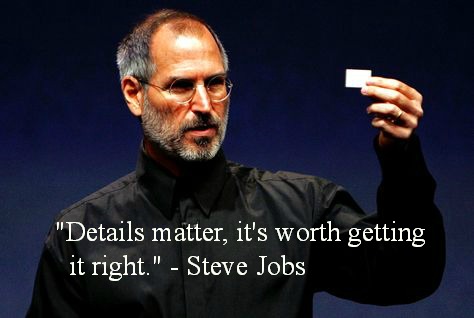
And finally all of this requires time, thought and professionalism. Teacher and team ownership is crucial and particularly the setting of appropriately challenging and well communicated age related standards the detail really matters, because this is worth getting right.

Jobs-quote

Strategic leadership | fanatical discipline and deliberate delivery

bring light

It is probably true that:  When we describe and aim for a preferred future, understand what matters (what has impact) and when we are fanatically disciplined and deliberate in delivering the few (one) things that really matter…we bring new light to what life might be. and achieve unusually well.


So, what if we were better at balancing three things?

  • Our ability, based on the WHY, to describe the future, the destination, the dream? – to set sights on an extraordinary end point?
  • Our understanding of what matters, what makes the difference, what achieves impact?
  • Our fanatical discipline to deliberately focus upon and deliver the One Thing(s) that align with our dream and matter most.

It is at the intersection of these three things that we have the chance to accelerate improvement by:

  • Aligning strategy toward our dream, ambition, destination or preferred future.
  • Focusing on the few areas that have impact (our positive deviant practices)
  • AND maintain the fanatic discipline to deliberately deliver our preferred future.

Slide4

Or we might consider that when we have a focused strategy that aligns to our dream and when we are fanatically disciplined and deliberate in the delivery of the few (one) things that make a difference (have impact) we achieve unusual improvement over time

Slide3


What if: We start by finding our organisation’s WHY? and seek to describe a preferred future … maybe then we can point to the destination and follow strategies that align and accelerate towards that dream.

“Inspired leaders, organisations and teams find their deepest purpose – their ‘why?’ – and attract followers through shared values, vision and belief.” “this has the ability to transform the fortunes of a group or enterprise – activating individuals, providing a cultural glue, guiding behaviours and creating an overall sense of purpose and personal connection.” (James Kerr, Legacy, 2013)

the-golden-circle


“People don’t buy what you do, they buy why you do it.” “All organisations Start with why, but only the great ones keep their why clear year after year.”  (Simon Sinek)

Simon Sinek has been very influential in ensuring that the basis of strategic planning and the focus of work is located around the moral purpose – the why. His golden circle has framed an approach, language and strategic focus. Sinek identifies that human motivation is emotionally linked, meaning that when people start with why (the moral purpose) this secures early emotional buy in. Just as Martin Luther King composed the “I have a dream” speech and described the future and not the “I have a plan…first we…” speech (taken from Sinek), school leaders have a responsibility to describe the desired future or destination.

Emotional connection is also crucial:

“People change what they do less because they are given analysis that shifts their thinking, than because they are shown a truth that influences their feelings.” (Kotter)

Question: How far have you/your organisation identified the WHY – how well is the moral purpose communicated/shared? How often is it articulated? is it taken for granted? is it a comfort blanket or even an excuse when improvement is slow?


What if: we then used the WHY to describe a preferred future (a dream) and ensure that urgency is in the system to drive toward the end?

John West-Burnham highlights the importance of describing a preferred future.

“Successful and credible leaders are able to tell compelling and credible stories about the future – they are leaders to the extent that people accept and value the future they describe. – In the 1970s Shell developed an approach that required identification of preferred scenarios…that are essentially descriptions of a preferred future.” (John West-Burnham, 2012)

If leaders create compelling stories of the future (a dream), attach meaning to them and embed the why, they have the chance of connecting peers with purpose (Fullan). Such ownership allows change and strategic improvement to be owned at a greater depth within the organisation. Tim Brighouse describes how schools are on journeys and that the best schools ask where they want to be and take small steps on a journey toward that goal.

“What we can do and what the best schools do already – is ask where they would like to be in five years time and what steps they will take to get there” … ” the best schools accumulate these small steps and describe themselves as being on a journey.” (Tim Brighouse)


What if: we ensured that there is an appropriate level of urgency in the system.

There is little point in having a compelling dream unless there is in-built urgency (often beyond that provided by the WHY). John Kotter uses the word urgency to emphasize the need for a heightened sense of focus, readiness to act and determination.

Kotter’s urgency describes the force that is released when people feel a quest, a purpose, that their work is meaningful and has a greater purpose than themselves. It is not to be confused with panic or knee-jerk leadership that is reactionary. This is the type of urgency that inspires and moves people to action.

Great leaders understand that generating and highlighting urgency is important as it creates forward motion.

(Jim Collins)

Great organisation often need to generate urgency. For Academies, a poor set of results or pending Ofsted, for example, should not be the driver for the required urgency…neither should it be knee-jerk, reactionary responses to temporal problems or transient political directives. Great organisations are naturally urgent – the moral purpose is deep, the preferred future is compelling, the strategic focus aligns to the need to improve – there is a deliberate and discipline pursuit of what matters. It is this that generates and embeds the urgency in the system.

“To achieve great things, two things are needed; a plan, and not quite enough-time.” (Leonard Bernstein)

Ken Segall, in Insanely Simple (2012): “Though it may defy logic, the easiest way to screw up a project is to give it too much time – enough time for people to rethink, revise, have second thoughts, invite others into the project, get more opinions, conduct tests, etc…you invite overthinking…only when people are kept in constant motion do they stay focused with the right kind of intensity…keeping the team in motion is what gets you there.” (describing project management at Apple)


What if: Based on the why, the described future and the built in urgency…we are able to focus down to the one Thing(s)? based on what matters and what makes a difference – those positively deviant, hedgehog ideas and core practices that have impact?

“What is the ONE THING that you need to do, such that by doing it, everything else is either easier or not required.” (Gary Keller, The One Thing)

…because not everything matters equally.

How often do we ask this question? based on where we need to get to what do we need to do in a years time, a months time, next week, tomorrow….what is the one thing that needs to happen now, such that everything else is easier or not required? Keller describes that if we are to tip our preferred future (dream) domino then we need to set a series of dominoes back to the present…the job then is to realise the one thing that now has to happen to tip the very first domino that is uniquely aligned to the dream future.

The One Thing needs to also have further qualities:

  1. It needs to have impact (more than any other strategy/focus) – be a positive deviant – and this requires measurement of impact and deep questioning.
    • In all that we do there are things that have real impact, things that appear to have impact (but are proxies) and things that have limited impact. Finding the one thing that really makes a difference requires evaluation and measurement. The aim is to identify the positively deviant practices, often referred to as bright spots (Heaths). Beware fads, trends, promising innovation or popular approaches – it is impact that counts – things do not matter equally.
    • Our perception of what is possible is obstructed by historic assumptions about what is possible – they stop us considering game-changing innovations. Clever questioning has the ability to unlock possibilities and the true impact of approaches (Barber).
  2. It needs to be what you have to be the best in the world at (hedgehog concept).
    • The hedgehog concept represents the intersect of three circles: what you can be (need to be) the best in the world at, what you are deeply passionate about and what best drives your improvement/outcomes (Collins). Just like a hedgehog is excellent at One Thing (rolling into a ball for protection) – the key to success often lies in the ability to be the best in the world at one thing – it is amazing how this makes you better at other stuff and how wide the influence of this one thing travels.
  3. It is absolutely at the core of what you/your organisation is about. – aligned to the dream and reflects the brutal truth of your present performance.
    • “have the discipline to confront the most brutal facts of your current reality, whatever they might be.” (Collins)
  4. It needs to be sticky and timeless. This is Collin’s Fly-wheel.
    • Success and improvement resembles relentlessly pushing a giant heavy flywheel, turn upon turn, building momentum until a point of breakthrough, and beyond. This is not temporal innovation or reaction this is a systemic focus on the thing that matters most.

Of course the key is to simplify to those strategies that matter most … it is unlikely to be one thing…but it might be three things that matter (not 20) and these need to be sticky, and aligned to the dream. Great organisations KISS (keep it simple stupid).

“Simplicity is power, whether it’s used by individuals or organisations. The question is, do you have the insight and skills to turn this power into your own advantage?” Ken Segall (2012)


What if:  we are fanatically focused on deliberately delivering the thing(s) that matters.

Delivery never sleeps.” (Barber)

Collins writes, “discipline, in essence, is consistency of action – consistency with values (why), consistency of method, consistency over time. True discipline requires the independence of mind to reject pressures to conform in ways incompatible with values, performance standards and long term aspirations (dream). …having the inner strength to do what ever it takes to create a great outcome, no matter how difficult.” (Collins)

Great organisations balance this unswerving fanatical focus on delivery with an agility that enables innovation around what counts. This is not about jumping, adopting new ideas, this is about being the best in the world at what matters most. Kotter identifies the need to balance the hierarchy required in great organisations to turn the flywheel with the agility to to free individuals to connect and innovate around what counts (below). Firing bullets before cannonballs (Collins). And there in lies the contradiction – to be great you focus on the things that really matter, that are sticky, that are timeless – whilst maintaining the innovative agility necessary to stay ahead, to be leading edge, to path find.

Slide1


Maybe then: more organisations would be strategically led through:

  • A strong WHY and moral purpose – communicated and compelling.
  • A clear DREAM of the future described at 1 month, 1 year, 2 years, 5 years, 10 years …2040?
  • An URGENCY that is embedded in the organisation from a deep moral purpose, the compelling preferred future and the aligned deliberate strategic focus.
  • A clarity down to the ONE THING(S) that matter, that have impact – the positive deviant practices, the hedgehog, that address the brutal truth and are sticky and timeless.
  • A FANATIC DISCIPLINE to deliberately deliver the few things that matter. Such that change is sticky.
  • An AGILITY that allows the organisation to innovate in these core things that matter. Firing bullets before cannonballs.

And Finally: none of the above sustains improvement or change unless…

“our actions inspire others to dream more, learn more, do more and become more.” (J.Q. Adams)

and 

“Leaders inspire others to take charge … they guide us through the journey.” (adapted, Simon Sinek)

and

“leaders create the choice architecture in an organisation to free individuals, to lead the way to the preferred future (dream). Building on a foundation of strong values and principles,  a compelling purpose, great capacity is released to do something great.” (adapted, Seth Godin)

The Ethic of Excellence | igniting the possible

It is probably true that:

“Once a student sees that he or she is capable of excellence, that student is never quite the same. There is a new self-image, a new notion of possibility. There is an appetite for excellence.” (Ron Berger)

Which begs the question, “how often do students produce excellence?”

It might be that although students are capable of excellence we rarely support students to produce their very best work and that much of the work produced falls in the bottom quartile of what is possible for that individual. It might be true then that the opportunity to  enable students to see what is possible rarely happens as students simply tread water in the mediocre.

Slide1

 So what if?

  • What if students skewed their work right toward excellence (and teaching prioritised and supported this) and not left where it probably sits at present.

skewed

  • What if the Curriculum and teaching shifted to focus on depth? Avoiding the skimming of content?
  • What if every child kept their very best piece of work as the benchmark for subsequent work, published and accessible?
  • What if feedback was within and not after tasks? So that students were supported throughout tasks to move to excellence. What if this supported the production of excellence more than summative feedback that comes at the end and does little to inform the outcome.

feedback

  • What if we forget green pen and dialogue and replace with on-going embedded feedback that expects much through the work and supports redrafting and re-doing on the journey to excellence.
  • What if the essence of deliberate practice informed teaching more so that:

    practice (is) intentional, aimed at improving performance, designed for (a student’s) current skill level, (aimed at excellence), combined with immediate feedback and repetitious.” (Malcolm Gladwell)

  • What if students were not allowed to finish work until it was excellent? excellence
  • What if we borrowed much from Dan Coyle’s insights and took seriously the role of:
    • Deliberate Practice,
    • Establish the conditions for ignition, (ideally from within themselves and what they achieve)
    • Provide the feedback of an expert coach from within tasks to tease out and expect excellence.

“we are often taught that talent begins with genetic gifts – that the talented are effortlessly able to perform feats that the rest of us just dream of. This is false. Talent begins with brief powerful encounters that spark motivation (ignition) by linking your identity to a high performing person or group (or self image). This is called ignition, and it consists of a tiny, world shifting thought lighting up your unconscious mind: I could be them (or do that, or achieve that – in fact look at my best work… my near wins).” (Dan Coyle)

  • What if students were more inspired and surprised by themselves and the production of their excellent work; what if it is this that ignites the intrinsic motivation within each child to be more and achieve more.
  • What if all of this is allied with a growth mindset that set the conditions and ethos for a class, cohort or Academy to stretch for excellence. (Dweck)

“People with Growth Mindsets and who show GRIT achieve more when they engage in deliberative practice … it is this practice that achieve marginal gains (Steve Peters), inching toward excellence.”

  • What if we focused more on the journey; on the “near win” (Sarah Evans)

“The pursuit of mastery is an ever onward almost.” … “Grit is not just simple elbow-grease term for rugged persistence. It is an often invisible display of endurance that lets you stay in an uncomfortable place, work hard to improve upon a given interest, and do it again and again.”(Sarah Evans)

Maybe then…individuals would see that they are capable of excellence, that this would change them forever and raise their personal benchmark. They would have a new self-image, a new notion of possibility and an appetite for excellence. Maybe observation and education would value the outcome, the quality, the closeness to excellence and be less fixated on observed practice…

“If you’re going to do something, I believe, you should do it well. You should sweat over it and make sure it’s strong and accurate and beautiful and you should be proud of it” (Ron Berger)

January 2015

Judge teaching over time not over 20 minutes

Progress over time

Whilst Ofsted highlight …”120. The judgement on the quality of teaching must take account of evidence of pupils’ learning and progress over time,” many schools rely heavily on brief 20 minute observations to judge the quality of teaching. This emphasises performance over systematic long term teaching impact on progress. The former encourages observation tricks and hoop-jumping the latter focuses on habits and approaches that sustain progress for each child over time.

Supporting teachers to move from Requiring Improvement to Good is often achieved by insisting on a number of non-negotiables. Teachers seek and are supported to tick-off a series of aspects of teaching and learning; they perform a 20 minute section of a lesson by tumbling and jumping between different teaching and learning strategies and approaches to ensure that they tick enough of the criteria to get them over the Good line. The consequence is that observations are high-stakes with Teachers performing a range of tricks that often hamper learning and rarely support the conditions required for students to make good or better progress over time. Teachers then carry the label of their last 20 min observation. Improving teaching needs to move much more toward rewarding teaching that has strong habits that typically create learning conditions that enable students to consistently make good progress.

jumpy progress

Student progress is not linear over time. Students make progress when the conditions are right and when they make breakthroughs in their learning (progress is more catastrophic than uniform). The blue line highlights a better description of progress over time (accepting that there will also be ‘dips’ in learning along this blue line). When teaching is good/outstanding it secures jumps in students progress because the teacher habits and typicality of approach maintains conditions for learning that promote and provoke students to make progress more often. The vertical line provides a representation of a lesson observation, scaled larger than reality, but nevertheless highlighting the tiny sample of a students journey measured by observation. We also then extrapolate the judgements made in this lesson and make the assumption that this represents a teachers performance across all of their classes all of the time … it doesn’t.

The bar below highlights how small a sample the 20 minute observation represents compared the learning over time. This sample is very likely to be unrepresentative and  hide the typicality and actual quality and effectiveness of teaching. This also only shows one class; if we place 6-8 more blue bars alongside then the sample size becomes even more unrepresentative (or ridiculous). We can be guilty of placing far to much emphasis on the 20min observed sample and place too little weight on the evidence of progress over time or use the conditions, habits and practices to extrapolate progress into the future. If we agree that what matters is the typical quality of teaching and the ability of that teaching to genererate good progress or better over time then we should look beyond the 20 minute observation to seek evidence of progress over time. We should also consider how the conditions for learning in the observation can be extrapolated (with care) to assess the likely progress of students into the future.

obs in time

We have made too much of progress in a lesson or part lesson. We have not helped ourselves at times by using phrases like, “do the students know or can they do something that they could not at the start of the observation.” In feedback we are often susceptible to making it clear to teachers that we are judging the lesson (20mins) and not them as a teacher. The reality is that measurable progress for students is unlikely in 20 minutes, but that it is possible to examine and judge the conditions present in the lesson that give us reassurance that students have, are and will make at least good progress over time…are they getting a good deal?

The first bar below shows how dominant the sample observation can be on grading a lesson and by extension the teacher that delivered the lesson. Where we weight the judgement heavily on what is observed it tempts a teacher performance; a mad rush to run through a range of strategies that are often detailed on the observation form. The consequence is the teachers teach a lot, students are busy and often bewildered, moved-on, and asked to show how much progress they think they have made. The punctuation in the lesson through questioning, AFL, modeling, peer assessment, paired work, group work, four minutes of writing…. Tick boxes on the form, but in quick combination reduce the conditions required to secure progress over time. Far better to judge the typicality of teaching and therefore the effectiveness of teaching by considering a range of evidence.

bars

If we are to reward typicality of teaching and teaching that generates good or better progress over time then the weighting of our evidence should use a range of sources. The evidence from the observation of the teaching should provide an insight into the conditions that are typical for the students over time. Much more emphasis should be placed on evidence from students, their books, evidence from panning (backwards and forwards) and the data/outcomes for this class.

With the emphasis on rewarding and promoting teaching that secures progress over time then perhaps feedback and judgements should highlight typically good or typically outstanding or typically requiring improvement or typically inadequate as more appropriate judgements on the quality of teaching. The importance of progress over time to a judgement is highlighted in this table…

table

This rewards those teachers that work hard, have good habits and the professional ability to generate that conditions in a classroom that secure good or better progress over time. This means that we should have stickier judgements for individual teachers. The first bar below highlights the range of grades that could be achieved in an academic year by a single teacher due to the high stakes nature of 20 minute observations (the observation providing a label to be carried by that teacher until the next observation). Where the emphasis is more around typicality then judgements are stickier and more reflective of the typical quality of teaching (shown by bar two). This will have the effect of polarising teaching judgements. Where teaching uses effective approaches and habits that secure progress over time the evidence will always be in books, in the planning, in the student voice, the routines, shown in the quality of feedback, in the purpose and meaningfulness of the learning journey…where this happens good and outstanding teaching becomes securer over time. Where the opposite is true, where teachers rely on the performance, mark less, plan less, have less purpose and less focus on the journey and the outcomes the typicality of teaching will require improvement…and that is likely to be true for all classes … and we are back to the importance of habits that sustain student progress over time.judgements

What would observation criteria that emphasised the importance of progress over time look like? Here is an example that places progress over time as the key determinant on the typical quality of teaching. Below this are an indication of the approaches that would contribute towards securing the conditions required for securing progress over time…

lesson obs

The form, therefore, indicates areas that may be observed that are more likely to support good progress over time. These are not prescribed or essential, neither are they a set of tick boxes to be checked to determine the grade. When the key determining judgement is progress over time, the 20 minute lesson observation is no longer a performance or does it necessitate the teacher jumping through hoops. Whilst the lesson could be all singing and all dancing it could also be students sat silently redrafting a piece of work for 20 minutes or performing or engaged in a piece of art etc. This approach frees teachers to not change practice under observation; secure in the knowledge that the observer is measuring progress secured over time not the number of tricks and hoops-jumped in 20 minutes.

Prescribe adequacy, unleash greatness…

All of which links to the trendy ideas around moving from tight to loose. To get to good it is often about being tight; using non-negotiables to raise the bar. To move through typically good to typically outstanding it is about loosening or unleashing greatness. You do this because teaching is a craft not a science; the ability to facilitate 30 teenagers often of mixed ability to make good progress requires an awareness, a professionalism and ability to keep all students progressing. Sometimes that is about engaging, inspiring, provoking responses and sometimes that is learning vocabulary, a spelling test, redrafting, testing, feeding back, being diagnostic and closing gaps. The best person to judge this interplay is the teacher. We need to recognise this and use observation to judge teaching impact over time and not on how many boxes a performer ticked in 20 minutes. This should empower teachers who then have greater freedom and…

  • Purpose (secure student progress to give them a better chance in life)
  • Autonomy (you decide how you secure student progress)
  • Mastery (it is a craft not a science, be creative and innovative – seek mastery in teaching to drive progress) (Dan Pink)

Where a teacher has taken on a class, from another teacher or at the start of the year there needs to be a shift in the emphasis placed on the different parts of the evidence. An early judgement on typicality would extrapolate the observed conditions, judge the likely impact of habits, use teacher planning and dialogue to consider the likely typicality and impact of teaching over time…and re-visit later to judge impact. The longer the teacher has a class the more the emphasis will shift to actual measurable progress over time from their starting point with the class.

As we reward progress over time (making it a determining judgement)  we need to increasingly compare actual (external) outcomes with our typical gradings of teaching. There has been a poor relationship between the quality of teaching judged through lesson observation compared to actual outcomes of the students; class performance often does not stack up well against observation data. A focus on progress over time should generate a greater link between the judgements on typicality teaching and student outcome. 

So ticking tricks in 20 minutes is mis-leading and does not focus on what matters. What matters is that students receive typically good and outstanding teaching every lesson so that they make progress over time. Those teachers that create the conditions for progress more often should be rewarded, for it is the impact of this teaching that supports students to make progress over time that counts. The freeing/loosening nature of this view on teaching and rationalising the part that observation has to play in judging teaching releases professionals to teach anyway they choose, without ticking any prescribed boxes, so long as students make progress over time and this is reflected in a triangulation of evidence then teaching is typically good and outstanding and these judgements are stickier….and that feels right.

April, 2014

Greatness isn’t born, it’s grown | thinking differently about success

CoyleDan Coyle, Billie Beane, Myelin, Oakland As

 “You will become clever through your mistakes.” German proverb

Background and parental influence count FOUR times more than the school attended for achievement at 16; experience and opportunity up to age 4 would appear to be the most influential factor on academic success and Ofsted give many more outstanding judgments to schools with low FSM and high KS2 performance. What does this mean? Well, it is True … But it is also Useless that context is important (TBU, Jerry Sternin, in “Switch”, Dan and Chip Heath). None of this is or should be surprising. When faced with the inertia of context and entrenched assumptions about success, it pays to seek anomalies; examples of where individuals and groups excel and under what conditions – it is this insight that may allow Schools to think differently and win an unfair game.

The first example highlights that winning an unfair game is about innovation, not accepting historical assumptions and using rigour to seek an advantage…

The Oakland Athletics Baseball Team: The year, 2002, Oakland As had a budget of $40 million compared to the $130million budget of the New York Yankees. Another true but useless fact. The assumption: money determines success – it is impossible for Oakland, through the drafting system, to afford a team that can compete – performance is pre-determined, hope lost. None of this surprised Oakland, but it took an individual, Billie Beane to find an innovative way to buck the trend… http://www.youtube.com/watch?v=AiAHlZVgXjk (3 min)

Through rigorous statistical analysis he demonstrated that on-base and slugging percentage were better indicators of offensive success, and that these qualities were cheaper to obtain on the open market than more historically valued qualities such as speed and contact. By re-evaluating the strategies that produce wins on the field, the Athletics made the playoffs in 2002 and 2003, despite ranking 28/30 of the Major League Baseball Teams…an amazing achievement.

Where in education do we see similar gains in performance? Where is the next game-changer? What innovation, change of view or change in approach could create game-changing conditions for our students? Do we think long enough about our long held assumptions and create innovative approaches that buck trends?

Billie Beane’s different view dissolved long held assumptions and created success. Similar anomalies are also present across that globe where unbelievable clusters of success are achieved by growing cultures of greatness…

Daniel Coyle’s “The Talent Code”: Greatness isn’t born it’s Grown. Dan Coyle has visited and researched “hot-beds of talent” around the globe, music school in Dallas, tennis academy near Moscow, baseball players from the Dominican Republic etc… He argues that talent is grown through purposeful practice…deep practice.

“We all have the ability to profoundly change our levels of talent, our level of skill. Where clusters of great talent emerge there has been a culture created where individuals are constantly reaching and repeating, making mistakes, receiving feedback, building better brains, faster more fluent brains…inside the brain myelin acts like insulation on the pathways and connections in the brain – each time we reach and repeat we earn another layer – signal speeds in the brain start to increase from 2 mph to 200 mph – neuro broadband – (or the difference between normal and great).”

Dan Coyle identifies three important conditions that support this brain development :

  • Maximise reachfulness in the presence of an expert– illuminate passive learning
  • Embrace the struggle – “You will become clever through your mistakes.”
  • Encourage theft – use feedback and copy others.

How do we create these conditions? Is it possible that short intervention that maximises reachfulness and embraces the struggle can accelerate a student’s progress? This clearly links to Angela Duckworth’s GRIT and the need to move to action, Gladwell’s 10,000 hours and his insight that practise must be intentional, aimed at improving performance, designed for your current skill level, combined with immediate feedback and repetitious. All of this challenges the way we teach and intervene – how often do we maximize reachfulness and embrace the struggle? Dan Coyle’s excellent Talk: http://www.youtube.com/watch?v=Aq0pHpNy6bs (17 mins)

The challenge then is not to accept poor or wrong assumptions about what our students can achieve, but to develop a culture that generates the conditions for over-performance. We create this culture whilst we seek innovative ways of changing-the-game; subtle or outrageous approaches that deliver an advantage presently hidden by our long held assumptions.

By thinking differently and innovating to find game-changing approaches like Billie Beane’s depth of analysis at the Oakland As and if we seek to create the conditions in lessons and across the Academy where progress is grown like in the Moscow tennis academy – we may build deep practice into what we do and ignite a culture that overturns the power of context and releases students into greatness.

“Excellence is a habit” (Aristotle)…one that is reaching and repeated, makes mistakes, uses feedback to build a better, faster and more fluent brain. (adapted, Dan Coyle, 2009)

Creating the conditions for over-performance

cowell

“The truth is that only a tiny fraction of people get lucky.” (Gove, 2013)

Simon Cowell said: “I didn’t work hard when I was at school. I left at 16 and I didn’t have any qualifications. I was useless. The secret is to be useless at school and then get lucky.” Gove responded: “This is an irresponsible and stupid thing to say. Teachers strive every day to ensure children understand the importance of learning, hard work and discipline. Simon Cowell’s comments undermine their efforts. The truth is that only a tiny fraction of people get lucky.”

In Malcolm Gladwell’s book ‘Outliers’ he describes the importance of opportunity and circumstance in becoming successful, “Success is not a random act. It arises out of a predictable and powerful set of circumstances and opportunities.” (Gladwell)  – the contrast with Cowell is that opportunity is one part of the success equation. Opportunity is nothing without Grit or the “persistence, doggedness and the willingness to work hard for twenty-two minutes to make sense of something that most people would give up on after thirty seconds.” (Gadwell)

A short insight into outliers, 10,000 hours and what makes people successful is provided in this interview of Gladwell: http://www.youtube.com/watch?v=Hz4hPbHIZ6Y – it ends with Gladwell urging, “society to build institutions that provide opportunities to work hard.” …it is opportunity that is seized that creates success not chance or luck or talent alone.

David Beckham provides an excellent example. Whilst at Man Utd Under 15 Academy, he spent every school holiday in Manchester. Like many other successful individuals Beckham had four things, opportunity, competition from like-minded individuals, GRIT and deliberate practice…he writes:

The incredible thing about that generation of lads, who came into the youth team (1. opportunity) with me in 1991, is that they were committed to hard training, as I ever was. We couldn’t get enough of it. Gary and Phil Neville had a Dad whose basic motto was ‘give everything and you will reap the rewards.’ At the end of practice, while most of the older lads were sitting in the canteen with their feet up, Gary was still pounding the ball against the wall… I already had a strong work ethic because of my family background (rise review – background counts four times more than school attended)Practice was like second nature. But with these guys (the Nevilles, Giggsy, Nicky Butt, Scholsey) (2. competition from like-minded individuals) I knew I had to take it to another level, to put in the extra shifts, to leave nothing to chance. We had to show commitment like never before…and that is exactly what we did. (3. GRIT)”…The more we practiced the better we became. Soon we were overtaking the older boys who were realising, a little to late, that they had taken things to easy…It wasn’t just the quantity of practice, it was the incredible focus on quality. (4. deliberative practice)” (David Beckham, 2013)

Even with opportunity, only effort and commitment over time (GRIT) combined with practice that is …”intentional, aimed at improving performance, designed for your current skill level, combined with immediate feedback and repetitious.”  (Malcolm Gladwell) … will allow individuals to succeed, to become over-performers based on their context and background and to be outliers.

Creating these conditions will allow individuals (and groups) to over-perform and become Outliers;

  1. Opportunity (getting teaching and learning right – teaching that is… intentional, aimed at improving performance, designed for your current skill level, combined with immediate feedback and repetitious?
  2. Competition from like-minded individuals (Peer groups, ethos, language, aspiration, pastoral support, House system?) – growing an epidemic of strong work ethic.
  3. GRIT (an ethos of possibility for all through effort) Outliers focus on long term goals, ignoring short-term distractions. – they are unswervingly future-focused.
  4. Deliberative practise approach… learn-revise-test-feedback-learn…marginal gains increasingly creating outliers compared to starting points.

bell curve

Whilst in the world of celebrity the role of luck maybe high; we live in a world that requires a series of conditions to exist and an attitude and approach that enables individuals to succeed. Education and schools are increasingly providing, supporting and developing these enabling conditions and opportunity … indeed we cannot afford not to secure over-performance, to buck-the-trend and to create the conditions that increase the occurrence  of OUTLIERS.

“To build a better education system we need to replace the patchwork of lucky breaks, context and arbitrary advantages that determine success…with a system that provides opportunities and the conditions for all to feel success.” (Malcolm Gladwell, adapted)