Ethic of Excellence | CLF Conference

Slide1

The following supports the “ethic of excellence” workshop at the CLF Conference, 2 November 2015…


It is probably true that:

“Once a student sees that he or she is capable of excellence, that student is never quite the same. There is a new self-image, a new notion of possibility. There is an appetite for excellence.” (Ron Berger)

It is also probably true that where an ethic of excellence runs through teaching and learning a child’s progress is accelerated and they outperform their peers. This maybe the most important aspect for driving up standards, accelerating progress, securing unusually good outcomes and giving all children a new sense of possibility; enhancing their life chances for the long term.

The following reflects some of the best practices across the Federation and identifies the key aspects for securing an ethic of excellence in all classrooms…


Slide23

What if… an ethic of excellence is measurable and tangible? That it can be judged from a short triangulation of teaching, books and student voice…and that where teachers have a strong ethic of excellence this is likely to be reflective of strong habits and a personal commitment to excellence.

What if… the ethic of excellence is revealed in the attitude of children toward their learning – that low-level disruption is not a feature – it is, in fact, socially unacceptable to not engage and seek to make progress in lessons.

“What if I fail to be the prophecy?” (Peter Pan)

“What if you fail to try?” (Tiger Lily)

(from the film Pan, 2015)

What if… the ethic of excellence is sought through the way the teacher and others inspire and inject passion around content (subject or age related) and learning; using language and praise to reinforce the expectation of excellence. (praise is not cheap).

Slide3

What if… the ethic of excellence is supported by the challenge and stretch that is evident in lessons supports children to reach beyond what they can do now, expecting students to work in their top 10% excellence zone.

What if… the ethic of excellence is seen in the quality of work and books; showing an  an attention to detail in the…

  • care and precision of presentation
  • quality and depth of writing and working
  • continuity and progression in the work over time that reflects a layered curriculum

What if Ofsted are right and that some of the key evidence of an ethic of excellence is seen in books.

Slide2

What if… the ethic of excellence is shown in a focus on depth rather than breadth and in routinely re-doing and re-drafting; seeking excellence. That teaching uses deliberate practice to inform teaching, so that:

practice (is) intentional, aimed at improving performance, designed for (a student’s) current skill level, (aimed at excellence), combined with immediate feedback and repetitious.” (Malcolm Gladwell)
excellence

What if… children do not produce their best work often enough? It might be that although students are capable of excellence we rarely support students to produce their very best work and that much of the work produced falls in the bottom quartile of what is possible for that individual. It might be true then that the opportunity to enable students to see what is possible rarely happens as students simply tread water in the mediocre.

Slide1

What if… students skewed their work right toward excellence (and teaching prioritised and supported this) and not left where it probably sits at present?

skewed

What if… there is an ongoing and accessible record of a child’s best pieces of work so that there is an immediate benchmark to build from.

draft2

What if… the ethic of excellence is seen in the feedback that is built into tasks/lessons and is specifically targeted at securing concepts and unravelling mis-conceptions…expecting much and targeting specifically where chidden can improve?

feedback

What if… the ethic of excellence supported by assessment (all forms) that is a coherent element of teaching – formatively driving progress and improvement toward excellence? Using mastery to support all children to secure the foundations and core knowledge, skills and understanding that will allow them to be academically and personally successful in and beyond education.

What if… the ethic of excellence is supported where teachers are persistent, and unswerving in raising standards (pass marks etc.) and deliberate in lessons and over-time in catching-up and closing gaps for those students who fall behind?; making a discernible difference to those that fall behind. 

What if… the ethic of excellence is embedded through teacher passion, subject knowledge, pedagogical knowledge, exam or age-related understanding and an insightful understanding of concepts and mis-concepts that are the foundation for driving children toward excellence? This is also evident in the schemes of work – progression of lessons – and within the layered/spiralled/escalating curriculum. Avoiding the skimming of content and the shallow learning.

What if… the ethic of excellence is shown in questioning that immediately reveals the teachers desire to seek excellence, maintain a high bar and expect much from answers and discussion – expertly steering and intervening to maintain standards and encourage depth of pupil involvement? …the deliberate inclusion of explanation and modelling supports children in their quest for excellence.

What if… in seeking an ethic of excellence we borrowed much from Dan Coyle’s insights and establish the conditions for ignition, (moments that inspire an ignition of internal motivation) and provide the feedback of an expert coach from within tasks to breakdown tasks and specifically remove misconceptions and seek accelerated improvement.

“we are often taught that talent begins with genetic gifts – that the talented are effortlessly able to perform feats that the rest of us just dream of. This is false. Talent begins with brief powerful encounters that spark motivation (ignition) by linking your identity to a high performing person or group (or self image). This is called ignition, and it consists of a tiny, world shifting thought lighting up your unconscious mind: I could be them (or do that, or achieve that – in fact look at my best work… my near wins).” (Dan Coyle)

What if… the ethic of excellence was reinforced by teachers and others who have an  unswerving ambition for all children and expecting much from all children, every lesson.

What if… the ethic of excellence is reflected across the Academy in all that we do – in our day-to-day expectations? (from uniform to ‘finishing conversations’ to politeness).

What if… an ethic of excellence was allied to growth mindset that sets the conditions and ethos for a class, cohort or Academy to stretch for excellence? (Dweck)

“People with Growth Mindsets and who show GRIT achieve more when they engage in deliberative practice … it is this practice that achieve marginal gains (Steve Peters), inching toward excellence.”

What if… we focused more on the journey; on the “near win”?(Sarah Evans)

“The pursuit of mastery is an ever onward almost.” … “Grit is not just simple elbow-grease term for rugged persistence. It is an often invisible display of endurance that lets you stay in an uncomfortable place, work hard to improve upon a given interest, and do it again and again.”(Sarah Evans)

What if… the ethic of excellence is exemplified by the classroom environment that reflects learning, progress and supports excellence? Display is inspired, the walls are useful, all areas are tidy and reflective of excellence… boards (and IWB) reflect organised and logical presentation of information that is timely and focused on the key learning for the lesson?

What if… the ethic of excellence is seen in the routines that are shared and owned by all – they are systematic and reflects the desire to make progress and learn?


Maybe then…children would see that they are capable of excellence, that this would change them forever and raise their personal benchmark. They would have a new self-image, a new notion of possibility and an appetite for excellence. Maybe observation and education would value the outcome, the quality, the closeness to excellence and be less fixated on observed practice.

“If you’re going to do something, I believe, you should do it well. You should sweat over it and make sure it’s strong and accurate and beautiful and you should be proud of it” (Ron Berger)

Dan Nicholls

October 2015

To grade or not to grade… is probably not the question?

obs in time

“Whether we grade observations or not, we need to ensure teaching is increasingly progress-orientated and outcome-orientated – concentrating the strategies that provoke progress and secure outcomes for students.”

It is probably true that we should not determine the quality of teaching based on short lesson observations, but use a triangulation of evidence that identifies the typical quality of teaching; evaluating the effectiveness of teaching for securing progress-over-time and its success in securing strong outcomes for students. (outcomes in a broad sense as well as”attainment”) 

It is also true that we need to ensure and support teachers to find their way to great progress/outcome-orientated teaching that has a deep impact on students life chances. It is this autonomy that secures the motivation and ownership to reflect and stretch toward mastery.


We should, however, explore the assumption that grading teaching denies formative development; understanding that it perhaps provides the framework for improvement. Without a descriptive continuum of effective practices there is a danger of mediocrity. Particularly as…

“Not all approaches aimed at securing progress over time are equally effective or equally well delivered”

So this begs the question how do we develop a deep understanding of what secures progress, how do we measure the quality of teaching and how do we ensure that feedback to teachers is precise, owned and liberating, such that it sparks deliberate improvement, debate and improvement? It is difficult to see how we do this without a  descriptive continuum of what matters. We can rename the continuum, but when we consider progress-over-time and outcome-orientated teaching not everything is equal…or equally well delivered. Slide1


What if we fully understood how we move from this…Slide8To this… (where teaching is progress and outcome-orientated?… and that it is this that is rewarded and developed?)

Slide16

What if we understood that measuring quality of teaching through observation alone only measures a teacher’s ability to perform a lesson by tumbling and jumping between different teaching and learning strategies to tick enough of the criteria to get them over the Good line? What if we understand the limited sample that a lesson observation provides?…(shown as the vertical line below)

jumpy progress What if we firmly framed any episode of learning or scrutiny in the context of student progress, in the past and into to the future as the measure of the typicality of teaching?… such that it becomes a measure of how:

  1. Progress-orientated the teaching has been, such that students have made good progress over time.
  2. Outcome-orientated the teaching is, such that students achieve in the future.

What if we viewed the window of observation as an opportunity to measure progress over time and future progress?… obs in time


What if we examine, reward and measure the conditions, teaching habits and approaches in lessons that give us evidence that students are making progress over time and are aimed at achieving worthwhile outcomes?

What if this involved us recognising and identifying poor proxies for learning and being smarter at evaluating what we see? (from Robert Coe)… Slide21

“every child a powerful learner” (Steve Mundy, 2015)

So given that not all approaches/strategies are equally able to leverage progress over time and that some proxies are compelling, even blinding, what should be valued to ensure that every child is a powerful learner? What if progress-orientated and outcome-orientated teaching was revealed in…

  • The quality of teacher subject knowledge, concept (and misconception) understanding as well as pedagogy understanding.
  • and that this was revealed in the quality of direct instruction and the ability to impart knowledge and to understand how students learn and make progress in their subject
  • and that this was expertly revealed in the quality of questioning that accelerates learning and unlocks understanding (perhaps the most efficacious part of the learning for progress?)
  • and that this has had the impact of increasing the quality of students answers and oracy that is beyond age-related expectation and directly improving writing.
  • and that through embedded formative assessment (within not after) – teaching plans, differentiates and intervenes to enable all abilities to make progress.
  • and that there is real clarity on the end point – students are well set to perform unusually well in assessment or exams as a result of outcome-orientated teaching.
  • and that teaching shows ambition, warmth and drive to secure progress for all; setting ambitious expectations for all students.
  • and that this is also revealed in the quality of work in books.
  • and that these highlight an appropriate amount and depth of learning as a consequence of time spent in lessons focused on writing and demonstrating learning.
  • and that teaching dwells and goes to depth at the expense of skimming content.
  • and that is informed by on-going feedback that is within and not bolt-on in lessons. And that time is committed in lessons to respond to feedback and make progress. What if we rewarded and looked for actual improvement in books from the front to back as evidence of ongoing feedback … and much less impressed by regularity of feedback sheet or dialogue that does little to improve the work?

Slide2

  • and that there is clear evidence of an ethic of excellence where students re-do and redraft work, so that they produce their very best work that they have ever done more often – something that diminishes as they progress from 3-19. Primary children often produce their best ever piece of work.

B3NFRJOCEAAQsMO.jpg-large

  • and that leads to students attitudes and approaches that demonstrate a thirst for knowledge, enquiring and knowledgeable questions.
  • …and because teaching has imparted inspiring knowledge and achieved progress over time – learning takes on its own momentum.

What if we also realised that the greatest teachers have these as habits…consistent approaches and abilities to teach with purpose, precision and consistency.

20130201-191828

What if the importance of progress over time and having the end in mind was rewarded and that observation is seen as just one part of evaluating whether the conditions are present to secure progress? What if we triangulated with data, outcomes, planning, student voice, books and other evidence? Perhaps then we would measure the quality of teaching in this way…(apologies for the grading – but not everything is equal or equally well delivered)

Slide2 …by ignoring observed performance, we reward teaching habits and approaches that have created and secured the conditions for progress and outcomes. if there is no evidence of progress over time, historic good outcomes and/or evidence of outcome-orientated teaching then teaching cannot be typically good.

What if this meant that evidence over time led to a view of the typicality of teaching and that this is stickier than when judgements are based on one-off observations? Any observed episode then simply adds to what is already known about the typical quality of teaching to secure progress and outcomes.


What if we ensured that ownership for improvement was located with individual teachers – understanding that there is also an element of earned autonomy to this freedom… Not least because you…

“Prescribe adequacy, (but) unleash greatness…”

What if this empowered teachers who then have greater freedom to explore progress-orientated and outcome-orientated approaches to teaching…

  • Purpose (secure student progress to give them a better chance in life)
  • Autonomy (you decide how you secure student progress)
  • Mastery (it is a craft not a science, be creative and innovative – seek mastery in teaching to drive progress and secure outcomes) (Dan Pink)
“We know we are in a good school when the four following things happen: Teachers talk about teaching and learning; Teachers observe each other’s practice; Teachers plan, organise, deliver, monitor and evaluate their work together; Teachers teach each other” Judith Warren, Little The Power of Organisational Setting (1981)
What if we applied our understanding of deliberate practice to support teachers to improve…deliberate practice occurs when teachers…

1. …are motivated and exert effort to improve their performance.

2. …engage in tasks that take into account their pre-existing knowledge.

3. …receive immediate informative feedback and knowledge of the results of their performance.

4. …repeatedly perform the same or similar tasks.

So that…

practice (is) intentional, aimed at improving performance, designed for (a student’s) current skill level, (aimed at excellence), combined with immediate feedback and repetitious.” (Malcolm Gladwell)

What if observers engaged with teachers in real time, so that observers support improvement, reflection and learning during lessons?


Maybe then we would…

  • …ensure that teaching is progress-orientated and outcome-orientated.
  • ….not use short observations alone to assess quality of teaching and instead triangulate observation that evaluates progress over time and the effectiveness of the teaching to deliver outcomes.
  • …tread carefully when considering removing grades as this may reduce our ability to understand what makes the difference and to show direction of travel for teaching improvement…even without grading a descriptive continuum is required – probably divided four ways… (beginning, embedding, effective, transferrable)(or 4,3,2,1)
  • …understand that not all strategies and approaches are equal or equally well delivered.
  • …understand that the efficiency and efficacy of teaching for progress and outcomes is what matters.
  • ..release teachers to own their improvement and to consider what we know about deliberate practice as a framework/continuum to enable teachers to receive immediate feedback that informs focused, repetitious improvement.
  • …realise that what maybe considered as traditional teaching is often the most effective at securing progress over time.

March, 2015

A culture of continuous improvement…

“Seek marginal gains to outperform – small steps that create a contagious environment, where a philosophy of continuous improvement engages everyone.” (adapted from Sir David Brailsford, 2015)

Sir David Brailsford eloquently and concisely outlines the key characteristics of high performing teams in this great 2 minute video…click the photo belowIt is probably true that there are some key principles that are at the heart of high performing teams that enable outperformance .. all of which are highly applicable and relevant to education.

UKCES2011A_SPEAKERS_0000s_0000_DAVE


Sir David Brailsford identifies a number of key principles that allow teams and organisations to over-perform or out-perform others. These are explored below…

1. “Recruit the best people that you can find”. What if we are really fussy over recruitment; ensuring that we recruit the very best to the team? What if we were also focused on this being a good behavioural fit … given that attitude is the key aspect in creating an over-performing culture?  There are a number of organisation who largely recruit based on attitude – often gaps in core skills can be closed. What if we started with First Who Then What?…

g2g-first-who“Good to great companies first got the right people on the bus (and in the right seats) –and the wrong people off the bus –and then figured out where to drive it.”


(Jim Collins)

What if these were the superheroes, linchpins, mavericks or Freds whose connectivity and altruistic collaboration enabled the organisation to fly?


2. Seek out the “Podium people – ask, who is the best in the world?” What if organisations identified the best in the world? What if we then understood where they were, how and what they achieve? What if we then work out precisely where we are and then plot to close the gap? By setting direction for the “Podium People” in our field we set the expectation high. What if we habitually faced the brutal truths of our own performance?…

“have the discipline to confront the most brutal facts of your current reality, whatever they might be.” (Collins)

podium

By aspiring to reach and exceed Podium People we commit to do “whatever it takes” and embark on a journey, an accumulation of steps…

“What we can do and what the best schools do already – is ask where they would like to be in five years time (aiming for the podium) and what steps they will take to get there” … ” the best schools accumulate these small steps and describe themselves as being on a journey.” (Tim Brighouse)

What if we time limit the drive for improvement?…

“To achieve great things, two things are needed; a plan, and not quite enough-time.” (Leonard Bernstein)


3. Seek Marginal Gains, because small improvements in a number of aspects that we do can have a huge impact to the overall performance of the team.

marginal-gains

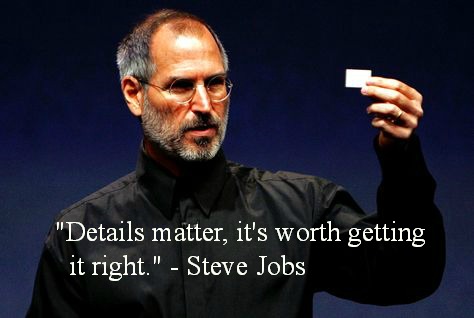
What if we realised that impact, stickability and the effectiveness of any change is in the detail and that where change is planned, simple and purposeful big change and impact can follow? … often with unexpected benefits…

“We need to prepare ourselves for the possibility that sometimes big changes follow from small events, and that sometimes these changes can happen very quickly!” (Malcolm Gladwell)

Jobs-quote

What if we understood greatness was about the choices we make and the discipline to see them through?…

“Greatness is not a function of circumstance. Greatness, it turns out, is largely a matter of conscious choice and discipline.” (Jim Collins)


“Leaders are only truly in charge when they inspire others to take charge.” (Simon Sinek, 2012)

4. Give Ownership, because with ownership comes motivation. What if we trusted that because we have set the destination … on exceeding our podium people/organisations and  that we have the right people on the bus … then these people are best placed to lead and make decisions? That by giving ownership we increase autonomy and this drives-up motivation and performance that is widely owned and more likely to be sustained. – “pushing decision making to the action” (David Marquett)

What if this ownership was allied to responsibility and accountability – a measuring stick and evaluation that rewards and supports motivation? … so that individuals know they are doing a remarkable job.

What if we connected individuals to collaborate? … Seth Godin reminds that groups/teams need a clarity of destination and an ability to connect and communicate … collaboration and improvement follows…

“…groups of people connected to one another, connected to a leader, and connected to an idea. For millions of years, human beings have been part of one tribe or another. A group only needs two things to become a tribe: a shared interest (vision) and a way to connect and communicate.” (Seth Godin)

What if, as John Kotter identifies, we create and facilitate connection and collaboration (right hand side) alongside hierarchy that challenges, supports and delivers accountability (the left hand side)? It is balancing these that create a successful, agile team/organisation.

Slide1


5. Absolute clarity of role – People need to own and absolutely accept the role they have, but importantly they need to believe it is the right thing to do. What if we understood that Individuals perform well when there is absolute clarity on what is expected of them? Too often leaders complain of poor performance only to realises that they have never been clear in the first place as to what was expected.

What if we also identify the standards and insisted on the highest of expectations – in all that you do? What if we create a positive, risk-embracing environment and culture so that we face the brutal truths and seek feedback and understanding to maintain continuous improvement?


Maybe then we would build teams in education from middle to senior to executive leadership that understand outperformance, borrow from other professions, sports and organisations to realise the leadership potential that exists.

Maybe then by asking…

  • …do we have the right people on the bus and in the right seats?
  • …do we know who the podium organisations are? – and how we close the gap?
  • …do we find marginal gains for continuous improvement?
  • …do we give and facilitate ownership for improvement and balance with accountability?
  • …do we have absolute clarity on roles and responsibilities and ensure that the standards and expectations are set high … within a feedback and risk-taking culture?

we would would better understand our organisation and how we create the conditions for great teams to grow, succeed and out-perform. After all, in academies/schools leadership and the extent that leadership creates high performing teams directly relates to the success or otherwise of the organisation.

“Delivery never sleeps.” (Barber)

March 2015

Life without levels | With opportunity comes responsibility

fce193ace76044e716a3250e46ccda9d

It is probably true that: “The removal of levels from the curriculum creates an amazing opportunity to redefine success and progress for children…and to reshape teaching (and assessment)” It is also true that poor thinking or planning of a new curriculum could lead to the promotion of mediocrity and the inching over thresholds or jumping through false hoops that hang in the air… and ultimately results in slower progress that has a detrimental impact on learning and progress.

From September 2014 levels have been removed from the curriculum (except Y2 and Y6). Tim Oates provides a good case fro their removal: https://www.youtube.com/watch?v=-q5vrBXFpm0  Whilst a number of schools have chosen not to jump and retain levels, a brave few have jumped to new approaches. It would be fair to say that Primaries are ahead of the game in their thinking in this new world (the compulsion to act has been greater).


Which begs the question what should be considered in the new world without levels?

The following attempts to offer a set of What if… comments that underline the new opportunities that are presenting themselves and how a set of key principles can be applied to seize this opportunity. It is clear that this will play out differently across 3-19 (we must however anchor our approaches around the same principles).


What if we saw the move away from levels as an opportunity not to just re-do/rethink assessment and how we track progress?, but instead asked the question what should teaching look like in a post level world? This initially shifts debate toward pedagogy and away from how do we replace numbers/levels/labels. It is proving very easy to shift to a system that simply reframes levels and replaces with grades for example.

What if we considered the age related standard that children should reach each year. What if this is clearly located around what would be the expected standard of a child in terms of knowledge, skills, understanding, application, conceptual awareness and mis-conceptions?

What if the age related standards are clearly communicated on single sheets that show the specific areas – not dissimilar to PiXL Covey table or PLC grids…a DTT approach. What if deliberate practice approach is then used in lessons and intervention to close gaps.

What if we then further embed ideas around Blooms and SOLO taxonomy? That “by age” we were very clear about what is expected (what competences children need to know or be able to do?)…and that this provides the framework for depth, teaching, questioning etc. as it already does in many classrooms.

blooms_taxonomysolo-taxonomy-with-verbs

What if the achievement of these age related standards were delivered through a Mastery approach – such that teaching was given the time and focus (and teachers the permission) to secure the age related standards…and that this was non-negotiable.

What if we were able to teach to depth around these age related standards because the necessity to cover lots of content is removed. What if there was a real stickiness around redrafting and re-doing, such that children were challenged to do their best work and this enabled students to achieve age related standards.

More generally, in top performing education systems the curriculum is not mile-wide and inch-deep, but tends to be rigorous, with a few things taught well and in great depth.

stock-footage-deep-end-deep-end-of-the-pool-a-good-visual-metaphor-to-show-madness-forstock-footage-shallow-end-of-the-pool

What if we did not seek breadth and reduced the burden on teachers; freeing them from the need to skim and teach at pace.

too-much

What if we made a far greater investment in developing (continuing to develop) teacher subject, conceptual (and mis-conceptual) and pedagogical understanding.

What if instead of using KS3 as the basis for performing in GCSE exams that we asked what do we need student to be able to do and know, so that they are set up to perform well at GCSE and in the rest of their lives?

What if this is firmly located around a growth mindset model (Dweck) – where an anything is possible  – what if it was the absolute expectation that children had to meet the standards. …ensuring, of course, that we do not set the bar too low.

believe-in-kids

“People with Growth Mindsets and who show GRIT achieve more when they engage in deliberative practice … it is this practice that achieve marginal gains (Steve Peters), inching toward excellence.”

In Finland, Japan, Singapore, Shanghai and Hong Kong, students, parents, teachers and the public at large tend to share the belief that all students are capable of achieving high standards. (BBC news)

And yet, results from Pisa tests show that the 10% most disadvantaged 15-year-olds in Shanghai have better maths skills than the 10% most privileged students in the United States and several European countries. (BBC news)

What if we focused more on the journey; on the “near win” (Sarah Evans)

“The pursuit of mastery is an ever onward almost.” … “Grit is not just simple elbow-grease term for rugged persistence. It is an often invisible display of endurance that lets you stay in an uncomfortable place, work hard to improve upon a given interest, and do it again and again.”(Sarah Evans)

What if that when children achieved the standard for their age the focus shifted to greater depth (not breadth) moving to the top of Blooms and across SOLO taxonomy and not moving to the set of age-related targets.

What if all of this also sought the ethic of excellence, because… https://dannicholls1.wordpress.com/2015/01/24/the-ethic-of-excellence-powerful-lever/

B3NFRJOCEAAQsMO.jpg-large

“Once a student sees that he or she is capable of excellence, that student is never quite the same. There is a new self-image, a new notion of possibility. There is an appetite for excellence.” (Ron Berger)

Slide1

What if this seeking excellence required an unswerving expectation that all teachers were  purposeful, deliberate and precise around formative feedback and that this was within tasks and lessons and not bolted on.

feedback

What if we judged the quality of feedback much more on the quality of what students produce and less on ticks or comments or forced dialogue in books.

What if we described progress not in terms of levels but is terms of a child’s progress in line with age related standards. Perhaps the conversation at parents evening becomes much more powerful and useful: compare “your child is below what would be expected at this age, we need to focus on…” “with your child is a 4a to move to a 4b we need to focus on…” Levels can mean little to (parents and students).

What if we are very aware that there is a real danger that we could teach to the middle and even bottom with this approach and that we should embed from the beginning the ability to challenge children to depth to ensure that those on steep progress trajectories continue to accelerate improvement.

What if parents evening was a discussion not about a series of letter or numbers, but real clarity about what is expected by this age and a rich discussion around the students work (in books), oracy, knowledge and practical skill.

What if summative assessment remained a key part of preparing and testing students. That this could test against age related standards and also indicate present GCSE grade and given professional judgement and trajectory the most likely grade at end of KS4. Keeping an end in mind.

What if the curriculum was interleaved so that the age related standards are re-visited to embed and secure new knowledge and understanding?

tharby6curve_0-500x231


Maybe then we would have a curriculum and teaching that:

  • was purposeful, deliberate, formative, to depth…
  • sought to move all children through age-related standards… and these raised the bar…
  • used a mastery approach, a growth mindset and an ethic of excellence focus to expect much from every child…
  • is really focused to depth on the things that mattered…
  • enabled teachers to not race or skim content, but to focus on quality outcomes…
  • invested heavily in formative assessment…
  • measured progress on security of the age related standards…
  • used evidence to show progress not movement between random numbers…
  • reported formatively to secure next steps…
  • was not hung up on numbers or grades…
  • used summative benchmarking to quality assure and formatively develop teaching and children.

And finally all of this requires time, thought and professionalism. Teacher and team ownership is crucial and particularly the setting of appropriately challenging and well communicated age related standards the detail really matters, because this is worth getting right.

Jobs-quote

The Ethic of Excellence | igniting the possible

It is probably true that:

“Once a student sees that he or she is capable of excellence, that student is never quite the same. There is a new self-image, a new notion of possibility. There is an appetite for excellence.” (Ron Berger)

Which begs the question, “how often do students produce excellence?”

It might be that although students are capable of excellence we rarely support students to produce their very best work and that much of the work produced falls in the bottom quartile of what is possible for that individual. It might be true then that the opportunity to  enable students to see what is possible rarely happens as students simply tread water in the mediocre.

Slide1

 So what if?

  • What if students skewed their work right toward excellence (and teaching prioritised and supported this) and not left where it probably sits at present.

skewed

  • What if the Curriculum and teaching shifted to focus on depth? Avoiding the skimming of content?
  • What if every child kept their very best piece of work as the benchmark for subsequent work, published and accessible?
  • What if feedback was within and not after tasks? So that students were supported throughout tasks to move to excellence. What if this supported the production of excellence more than summative feedback that comes at the end and does little to inform the outcome.

feedback

  • What if we forget green pen and dialogue and replace with on-going embedded feedback that expects much through the work and supports redrafting and re-doing on the journey to excellence.
  • What if the essence of deliberate practice informed teaching more so that:

    practice (is) intentional, aimed at improving performance, designed for (a student’s) current skill level, (aimed at excellence), combined with immediate feedback and repetitious.” (Malcolm Gladwell)

  • What if students were not allowed to finish work until it was excellent? excellence
  • What if we borrowed much from Dan Coyle’s insights and took seriously the role of:
    • Deliberate Practice,
    • Establish the conditions for ignition, (ideally from within themselves and what they achieve)
    • Provide the feedback of an expert coach from within tasks to tease out and expect excellence.

“we are often taught that talent begins with genetic gifts – that the talented are effortlessly able to perform feats that the rest of us just dream of. This is false. Talent begins with brief powerful encounters that spark motivation (ignition) by linking your identity to a high performing person or group (or self image). This is called ignition, and it consists of a tiny, world shifting thought lighting up your unconscious mind: I could be them (or do that, or achieve that – in fact look at my best work… my near wins).” (Dan Coyle)

  • What if students were more inspired and surprised by themselves and the production of their excellent work; what if it is this that ignites the intrinsic motivation within each child to be more and achieve more.
  • What if all of this is allied with a growth mindset that set the conditions and ethos for a class, cohort or Academy to stretch for excellence. (Dweck)

“People with Growth Mindsets and who show GRIT achieve more when they engage in deliberative practice … it is this practice that achieve marginal gains (Steve Peters), inching toward excellence.”

  • What if we focused more on the journey; on the “near win” (Sarah Evans)

“The pursuit of mastery is an ever onward almost.” … “Grit is not just simple elbow-grease term for rugged persistence. It is an often invisible display of endurance that lets you stay in an uncomfortable place, work hard to improve upon a given interest, and do it again and again.”(Sarah Evans)

Maybe then…individuals would see that they are capable of excellence, that this would change them forever and raise their personal benchmark. They would have a new self-image, a new notion of possibility and an appetite for excellence. Maybe observation and education would value the outcome, the quality, the closeness to excellence and be less fixated on observed practice…

“If you’re going to do something, I believe, you should do it well. You should sweat over it and make sure it’s strong and accurate and beautiful and you should be proud of it” (Ron Berger)

January 2015