Human Organisations | alchemy and magic

The building of Trusts as Human Organisations offers the best opportunity to exploit the collaborative advantage created by deeply connecting colleagues and groups of schools. Human organisations are deliberately designed to be colleague-centred, relational, collaborative and generative. Aligning individual purpose with the collective mission, empowers colleagues to seek improvement.

Human organisations require deliberate ‘Trust’ leadership to orchestrate collaboration and to understand that Trusts are adaptive, living systems that with the right culture and architecture can trigger greater connection and value. This value is multiplied when peers connect with purpose to explore and exploit their collective imagination and expertise: alchemists creating magic. Too often the capacity and connection for improvement remains latent within Trusts.

“…magic should have a place in our lives – it is never too late to discover your inner alchemist.” Rory Sutherland

The following describes a human organisation—one that seeks a collaborative advantage so that groups of schools perform better than before and are more able to tackle the challenges of our time.


The power of purpose

Human organisations articulate why they exist. Leaders draw maps, set destinations, raise expectations and describe the desired future in technicolour. The narration of the journey and importance placed on it offers the cultural currency, the validation, the reward for collaborating toward the destination.

“Never doubt that a small group of thoughtful, committed citizens can change the world. Indeed, it is the only thing that ever has.” Margaret Mead

A shared quest, in something worthwhile, something meaningful, something that lights a fire, and something anchored in why we exist, creates a generative shared desire and motivation. It sustains and directs energy across the organisation, toward that which is worthy.

Built on relationships3

Human organisations are driven by an unswerving investment in relationships, to secure motivation and to connect peers with purpose, to seek our moral ambition.

“Leadership is communicating to colleagues their worth and potential so clearly that they are inspired to see it in themselves.” Stephen Covey

In human organisations colleagues need to feel the purpose, have enough empowerment and autonomy to seek mastery. It is this investment in colleagues as social beings that taps our deeply engrained tribalist desire, to belong and do meaningful things.

“The relationships we build with each other provide the foundations of change. We are social beings who thrive on connections.” Sir Hamid Patel

The investment in relationships directed toward the purpose is the life blood of human organisations where success is the sum of all decisions made, by all colleagues, every second, of everyday, everywhere in the Trust.

Hard wiring

Human organisations hard wire, design and develop networks and communities as fundamental to their being: seeking connectivity and conductivity. It is not just an exercise in bringing colleagues together, networks must create enough conductivity to shift behaviour and actions intelligently toward the purpose and higher standards.

The architecture and design of networks is very deliberate and requires colleagues to be open, critical and ego-less in the deliberate search for better.

Soft Wiring

“The stars we are given. The constellations we (and they) make.” Rebecca Solnit

Human organisations encourage, permit and expect colleagues to collaborate beyond the set piece networks; connecting in informal, organic and dynamic groups of colleagues motivated to share and solve, in service to the mission. This collaboration propagates value, horizontally and organically across the organisation, adding up to more than the sum of the parts and becoming self-improving.

“…forests are complex adaptive systems, comprised of many species that adjust and learn, …and these parts interact in intricate dynamic networks, with information feedback and self-organisation. System-level properties emerge from this that add up to more than the sum of the parts.” Suzanne Simard

Building a platform

Human organisations invest in platforms of shared approaches for colleagues to collaborate on. This liberates colleagues to add value and seek greater impact by getting much better at the same. Playing in one field, free to innovate and add value based on a foundation, rather than playing in the woods or on the hill or in the fields: where a thousand flowers fail to add value.

This is an intelligent dance, that balances standardised and empowered approaches, and connects colleagues to embed and improve both. For Trusts what should be standardised or empowered is largely objective not subjective, driven by the difference between complicated or complex. The dividend is derived from investing in both.

Empowerment

Standardised approaches liberate rather than stifle schools and enables attention on the quality of education. On this platform, empowerment, sensitive to context generates local ownership and accountability for improvement. Colleagues empowered on the platform to collaborate with colleagues, aligned to the purpose, toward the destination, to drive local improvement is the engine room of self-improvement.

Trusts of parallel ecosystems

Each school is an ecosystem within the wider Trust ecosystem. In their part they run ‘experiments’ in parallel with other schools, with roughly the same resources, on a platform of shared approaches and seeking the same goals (helpful controls). With greater horizontal collaboration between trust leaders and colleagues the conditions exist to compare, contrast, iterate, develop and learn what it takes to add value.

“A golden age is associated with a culture of optimism, which encourages people to explore new knowledge, experiment with new methods and technologies, and exchange the results with others.” Johan Norberg

Seeking improvement requires the transparent sharing of all performance data. A self-improving system requires open access to all performance information to identify the conditions and approaches that secure strong performance.

Alchemy and alloys

Within the ecosystem (a large enough ecosystem) there is the best of everything. With enough connectivity, alchemy, alloying and forging, magic is possible. This is the intelligent melding of contextually sensitive approaches, enhancing a theory of action that is deliberately implemented. This expects heads and colleagues to intelligently exploit the resource in the trust, implementing for impact, and not to blindly stagger from one initiative to another.

“The mythical “butterfly effect” does exist, but we don’t spend enough time butterfly hunting.” Rory Sutherland

Imitation + adaptation

Leaders as alchemists, seek to alloy new approaches and strategies, by iteration, combination and adaptation, to spark greater impact. Deeply connected, open, collaborative cultures can learn from each other and interrogate new ways, ideas and methods to imitate and adapt: utilising the wisdom of the forest in their part of the ecosystem.

“The basic raw materials are a wide variety of ideas and methods to learn from and to combine in new ways.” Johan Norberg

Crowdsourcing

Human organisations create the opportunity and expectation for leaders to crowdsource solutions, tapping into the expertise and approaches of others across the ecosystem: setting out challenges for others to solve. Within a culture of openness, shared responsibility and because we are playing the same game, the ability to crowdsource improvement is the advantage of connected, human organisations.


Self-improving (eco)system

Taken together this forms a blueprint for a human organisation that is purpose driven, relational, generative and seeking value, together. Leaders and colleagues formally and informally networked, often horizontally, engaged in the business of improvement, fuelled by collaborative intelligence and forest wisdom: propagating a high performing ecosystem.

“… beneath the forest floor …exist an ‘underground social network’… trees could move resources around between one another…  ‘a co-operative system’, in which trees ‘talk’ to one another, producing a collaborative intelligence … ‘forest wisdom’.” Robert Macfarlane

So, seek greater connectivity to empower and permit colleagues to be alchemists, to collaborate, generate greater value and perhaps create a little magic.

Build human organisations.


Dan Nicholls | August 2025

Belonging | an exercise in leadership

A sense of belonging: is one of humanity’s most basic needs; feeling an affinity with a group, that accepts you.

Enabling colleagues to feel a sense of belonging is an exercise in leadership. Leadership that creates the conditions for colleagues to feel psychologically safe and able to engage in meaningful work. It is under these conditions and when the climate is right, that colleagues feel a sense of belonging, that they have status and are empowered to use their agency to add value. When colleagues are encouraged and empowered they feel the protected and secure sense of being an insider.

“To feel a sense of belonging is to feel accepted, to feel seen and to feel included by a group of people… to not feel belonging is to experience the precarious and insecure sense of an outsider.” (Owen Eastwood, 2021)

Organisations that seek to be as amazing as the colleagues within, actively create the conditions for belonging. Under these conditions colleagues feel an affinity to the group and to the mission, they feel the security and acceptance that gives them the mandate to bring themselves to others and to their work. Where leaders create these conditions there is an alchemy of purposeful engagement that is self-sustaining and creates momentum; the momentum of the many on a mission.

Enhancing belonging requires nuanced leadership that understands the complexity of humans and human motivation to empower and align collective effort; freeing capability and capacity. It is this nuanced leadership that deliberately leads, makes decisions, upholds values, sets parameters and direction to a compelling future that empowers colleagues. Under these conditions colleagues feel the security of deliberate leadership that both holds and frees colleagues to make good decisions, more often and aligned in the pursuit of meaningful work.

“…an organisation is not a machine – it is a collection of individual human beings. …built on normal, everyday human relationships, and it will work so much better for us if we approach its design from a human-level perspective …understanding the “cultural magic” that makes an organisation feel truly human and creates a sense of connection and belonging.” (Tracey Camilleri, et al., 2023)

The following identifies the conditions required for connection and belonging.


Relationships, relationships, relationships

“It is difficult for us to realise how much information is socially transmitted, because the amount is staggering and the process is largely transparent.” (Pascal Boyer)

Treat people well. If belonging is an exercise in leadership, then leadership is an exercise in relationships. Leaders who engage with, listen to, seek to understand, learn, connect colleagues and at the same time make decisions, bring clarity, lead and set direction, create the climate for belonging. Be a host, not a guest.

Strong leaders use time to listen, learn and build relationships. This is about ensuring colleagues are known as individuals, individuals with a unique story, a story that is heard. Understanding an individual’s story allows colleagues to weave collective stories into the future; creating insiders, who feel and believe that they each belong.

“Isn’t it odd. We can only see our outsides, but nearly everything happens on the inside.” (Charlie Mackesy)

Taking time to build relationships and understanding what is on the inside is not just about securing belonging, it is also a matter of status and esteem.


Belonging that is alive in the DNA

Creating the conditions for belonging is not accidental, it is a deliberate attempt to influence the climate in which colleagues thrive. The organisation’s values, explicit and implicit, are the antecedent conditions for creating the climate for belonging. Values are never achieved just in words. Values need to be lived, to be meant, to be evident in artefacts, actions, behaviours, routines and language; our words matter, a lot, they are the window into the soul.

“…your culture is… (the) assumptions your colleagues use to resolve the problems they face every day …how they behave when no one is looking. If you do not methodically set your culture, then two thirds of it will end up being accidental, and the rest will be a mistake.” (Ben Horowitz)

Values that are just written, cliché ridden or tokenistic will erode, not build, belonging. Colleagues want to feel part of something bigger than themselves, something tangible and meaningful. Building culture is the result of all interactions and actions, over time, secured in years not months. Strong organisations invest deeply in values, they map values through the organisation, challenge anti-value behaviours and seek to nudge and reinforce values over time; it is what we do, it is what we are, it is how we come to be.

“Integrity is doing the right thing even when no one is watching.” (C.S. Lewis)


Connect peers with purpose | describe a compelling future

Life is too short not to do something that matters. Connecting peers with purpose, encourages joint enterprise and individuals to have skin in the game, in the shared pursuit of something bigger, triggering a greater sense of belonging. Strong leaders paint pictures of what could be; building loyalty to the joint mission, rather than the leader.

Communication from set pieces to seemingly inconsequential comments, constantly set tone, reinforce culture and create the lived experience of what it is to be a member of this group. The art of leadership is revealed in meaningful communication, which connects colleagues to a shared purpose; knowing why we exist, gives us identity and something to belong to.

Belonging evaporates in a vacuum. Colleagues are cast adrift and feel a reduced sense of belonging where leaders fail to make decisions, set rules and implement well. Colleagues are not well held in an environment of constant initiative and u-turn or one that lacks direction or purpose. Place a few bets well; bets that all colleagues have a stake in, long term investments.

…and connect peers with each other. Build collaborative structures, give permission, provide mandates and expect colleagues to collaborate in a shared quest that adds value. This is at the heart of a learning organisation, one that frees colleagues to explore together, to learn together, to support each other and to make a difference.

“To be successful beyond the very short run, all organisations must incorporate moral purpose, respect, build, and draw on human relationships; and foster purposeful collaboration inside and outside the organisation.” (Michael Fullan)


Give away the ending, step away from the plot and the characters.

Leaders should give away the ending of the story/quest/mission in technicolour detail. They should also begin the story with the truth of the present situation, setting the scene, the baseline for the quest to follow. With the start and the end in place, leaders need to empower others to develop the plot, the twists, the character development that create the story; empowering others to find the way.

“…people rise to the occasion when they are helped by leaders who develop others to do something that is individually and collectively worthwhile. Such leaders tap into fundamental virtues of humans – and when they do, improvement happens quickly.” (Michael Fullan)

Leadership is not a passive activity, it is deliberate, seeking to empower colleagues, giving permission to exercise agency within the bounds of the shared values, headed toward our compelling, shared future. Colleagues thrive when they have purpose and the autonomy to seek mastery (Dan Pink).

Clarity is kindness. Colleagues need to understand the rules of the game and to understand what constitutes success in this team; how they belong. Without clarity, there is an uncertainty in action and a risk in expressing agency. Humans like rules, it is this clarity that creates safety.


Resist the temptation to simplify the complex.

Leave room for colleagues to express their agency. The dance between leading/directing and empowering drives the dividend, the value an organisation adds. The sweet spot between directing and empowering, enables more to contribute to the mission. Over directing, stifles contributions and agency, it denies professionalism and local decision making.

“When we build a culture of people who eagerly seek out and take responsibility, we build a culture that enables a special kind of resilient freedom.” (Seth Godin)

Feel the tension, leaders need to live and be happy with cognitive dissonance. Holding ideas in tension and resisting simplifications, or the urge to codify too far into the professional space. Whilst being clear about how we do things here is important (for the complicated), where provision is complex, leaders must invest in professional learning and the professional judgement of those closest to the action. We tend to be compelled to simplify, when many areas in education are in tension and require nuance; strong leaders live with and exploit this tension.

As a general rule people do not simply do what they are told to do (or at least not well or over time). Creating the conditions for colleagues to bring art to their work creates the climate for ownership, experimentation to get excited about the work.


Creating places of belonging is an exercise in nuanced leadership that invests deeply in human relationships. Leadership that influences the daily weather to create the long term climate that builds organisations as great as the colleagues within.

“In the end, all that matters is how we feel about the places we spend most of our time in. It is the sense of belonging that defines our experiences.” (Rob Carpenter)

When the weather conditions in our sector seem to be decreasing belonging, it is reassuring that belonging is typically situational, built, grown and strengthened locally with leaders building havens that we need to deliberately nurture more widely for our sector; a sector worth belonging to and where more feel that they belong.


Dan Nicholls | April 2023

Thunks | simple questions that prompt a new view

Thunks… beguiling questions about everyday things that stop you in your tracks and suggest new ways to look at the world… earthrise

Earthrise: “The vast loneliness is awe-inspiring and it makes you realise just what you have back there on Earth.” (Jim Lovell)

Thunks have the ability to change our view, our thinking, our behaviours, our habits and the way we lead and teach; just like seeing earth from space changes perspective and forces us to reflect. The following is a herd of thunks designed to add ideas and viewpoints that stop and force reflection…prompting improvement in our leadership and teaching…

All teaching and leadership blogs are here


Thunk #3 | What if… motivation needs to be ignited?

i-4e84ae6655ead4d2602ed030e890aa1f-ShuttleLiftOff

“Beneath every big talent lies an ignition story – the famously potent moment when a young person falls helplessly in love with their future passion.” Dan Coyle

We all have them; the moments in our past that have shaped the present and will influence the future. It may be a teacher, a sportsperson, a hero, a film, a piece of work, art, riding a bike, running, a poem, essay, a realisation, a chance encounter. It can be like a lightning bolt that ignites something deep inside that motivates a lifetime of passion for something; it causes the heart to flutter and captures the imagination.

“Success is not a random act. It arises out of a predictable and powerful set of circumstances and opportunities.” (Malcolm Gladwell)

It is probably true that there are moments in our lives that create core memories that have disproportionate influence on who we are, what we do and who we become. The Disney Pixar film Inside Out is a great tale that revolves around those forming experiences that shape each of us.

screen-shot-2015-06-22-at-7-00-43-pm

In the film each memory that Riley has is diligently stored in the short and long term memory, occasionally forgotten and removed (hoovered in the movie). There are however key core memories – it is these that shape Riley’s personality islands…those few things that define who  she is, what is important to her and what she is passionate about. The mind replays the key igniting memories that reinforce this passion and drives the intrinsic motivation for deep practice.

inside-out-personality-islands

“Talent begins with brief powerful encounters that spark motivation (ignition) by linking your identity to a high performing person or group (or self image). This is called ignition, and it consists of a tiny, world shifting thought lighting up your unconscious mind: I could be them (or do that, or achieve that)” Dan Coyle

The emerging thunk is that these moments are a lot like falling in love — we can’t force it, but we can increase the odds slightly by doing a few basic things. As teachers and leaders how do we create the conditions and the opportunities that are more likely to provoke these lightning bolt moments for children and our peers?

These moments are: (from Dan Coyle)

  1. Serendipitous. Happen by chance, and thus contain an inherent sense of noticing and discovery.
  2. They are joyful. Crazily, obsessively, privately joyful. As if a new, secret world is being opened.
  3. The discovery is followed directly by action. Not to just admire, but to act, do and practise.

One key lever in education is subject knowledge or rather subject passion from teachers who inspire. Teachers have huge influence – and with that opportunity comes great responsibility:

717296dd52443f5d014228877381418e

The language we use is also extremely powerful. It is language that can create ignition points and perhaps more importantly can confirm and propagate these sparks into passions that drive the motivation to shape and enhance young peoples lives…

Screen Shot 2015-03-10 at 9.18.46 AM

“Tread carefully on the dreams of children; they are fragile”

So, create moments of joy, inspiring facts, details and experiences that ignite a passion, perhaps not seen or witnessed early but for ever changing the individual. After all…

“Once a student sees that he or she is capable of excellence, that student is never quite the same. There is a new self-image, a new notion of possibility. There is an appetite for excellence.” (Ron Berger)

It just might be that supporting children to achieve the best work they have ever done ignites the sort of motivation that creates a personality island and the deep passion to engage in the practice that enriches a lifetime.

How do we create core memories, lightning bolts, ignition moments or at least the conditions for them to happen more often?

How do we use language to support children’s dreams and passions?

We may not create olympic medalists, chess grandmasters or a world-class composers, but the fun is in the journey, in having a passion, an interest and generating the kind of joy that sparks an interest – Teachers have no idea the influence they have on others.

Go create ignition opportunities and sparks that will enrich and empower young people to be passionately interested about stuff… and reinforce these passions with your language.

you have the privilege of sparking remarkable futures.

soulnote_heartflutter_grande

August 2015


Thunk #2 | What if… Mission + Campaigning = Momentum?

Untitled

Michael Hayman and Nick Giles identify: Mission: “A driving desire to change things, a higher purpose that drives (improvement).” (best expressed in 5 words) Campaigning: “Turning the mission into a powerful reality, the activist mentality.” Momentum: “The measure of success moving and growing faster than the competition.” Are you a campaigner, an activist, a disruptor? …on a mission to secure the momentum you require to change the piece of the world that you want to improve? This is a refreshing view of change (particularly the link to activism) and what it takes to move to action and secure the level of change that will make the difference. But what does it take to be an activist/campaigner? Hayman and Giles identify:

  1. Drive (or refusal to give in): Do you have the drive to keep going when it is easier to stop or when people tell you it will not work? Remember that there is a default movement against change and an inherent fear of new/different. Set your mission with care – it needs to be simply expressed and the focus of your drive.
  2. Self improvement: Do you build in enough time to reflect and learn? Treat experience and opportunity as stepping stones forward as part of the ups and downs of a campaign.
  3. Communication: Without communication there is no campaign. Reinforce the mission and the purpose often – drive the mission daily…this is the flywheel. If it is not simple and compelling there will be no followers.
  4. Disruption: To achieve change you need to disrupt the current status quo: If your mission is to address dissatisfaction or a need for change and this is multiplied by a Vision (Mission) and First Steps (Campaign) and this is greater than the Resistance you will achieve Momentum. (based on Gleicher formula)change-graphicOvercoming the Resistance of status quo requires a disruptive drive to succeed in achieving non-reversable change.
  5. Persuasion: You will not achieve your mission alone – persuasion is the key to securing followers – it is followers that transforms a lone nut into a leader. You need a tipping point to secure change – persuade through the strength of purpose, mission and ambition – people follow those with a deep and unshakable belief about what they seek to change. Unwavering commitment to change.
  6. Connection: Connect and network widely to secure support, seek feedback and make things happen.
  7. Optimism: To overcome the status quo activists and campaigners need to be optimistic. The vast majority of people will give up before they realise the change they seek. Develop the ability to bounce.

“Go big or go home. Because it’s true. What do you have to lose?” (Eliza Dushku)

Maybe then: As educators and leaders we should assume the role of activist and trigger campaigns to achieve missions. This language underlines the inertia of the status quo and that if we really want to trigger change and make a big difference – irreversible change – then activism and campaigning is more appropriate representation of the energy and commitment required to overcome the inherent resistance and secure the improvement we seek.

Go forth and disrupt, commit to a mission that you love, use ridiculous amounts of drive, communicate for buy-in, create a movement through persuasion and connect with others to achieve a level of momentum that makes the change stick and irreversible.

Go big or go home

Further Reading: (“Mission” by Michael Hayman and Nick Giles is excellent and very applicable to educational leadership)

and this blog: Great Leaders create movements that stick | Amazing is what spreads 

August 2015


Thunk #1 | What if… leading change and improvement is all about the nudge? Nudge “Nudges are ways of influencing choice” (Hausman & Welch 2010) …a fundamental aspect in education. The behavioural insights team, led by David Halpern, commonly known as the “nudge unit” was set up by David Cameron to “help people make better choices for themselves… (by gentle prompting or nudging).” The art of leadership, teaching and sparking change is often in the ability of “nudging” new ways of acting, learning and thinking in others. Nudges are similar in nature to other powerful change agents: butterflies (Brighouse), bright spots (Heaths) or positive deviants (Sternin)… those outliers present in any population that, when amplified, have the power to leverage change and improvement. Thaler et al. highlight that there are influential strategies (nudges) that leaders can use as choice architects to influence choice and behaviour. So leaders are choice architects; determining the environment in which noticed and un-noticed features influence the decisions that staff and students make. Leaders have the ability to influence behaviours, create social epidemics and use “nudges” to influence individual and group behaviour. We are surrounded by nudges; good leaders see them, look for them and use them (often automatically), great leaders have an increased awareness of nudges and use them to spark change; clever, cheap and effective ways that change behaviours intrinsically – without forcing choices. Perhaps some obvious nudges are:

  • What is placed onto observation forms and is therefore rewarded.
  • Telling students how many marks they are away from the next grade and not their actual grade.
  • Shifting Satisfactory to Requires Improvement.
  • Removing levels.
  • Any new performance measure  – nudging by shifting the goal to where you want it and not wasting time supporting the how it can improve.
  • Any new category that classifies performance of Academies or MATs – nudges improvement toward set criteria.
  • Asking (not telling) others what they will contribute.
  • Warning bell moved earlier to nudge punctuality.
  • Accepting that change is the norm and not saying things like, “we just need stability”
  • Never talking negatively as a leader – nudging that positive ethos that is desired.
  • Being in every classroom everyday.
  • Providing enough seating at lunchtime.
  • Finding and promoting teaching bright spots.
  • Removing all graffiti immediately.
  • Using “we” and not “I” or “you” when collaborating.
  • Investing in signage/branding that describes the accepted behaviour.
  • Leading with Why and telling emotive stories of a compelling future.
  • Not talking about behaviour and only about learning.
  • Praising the good habits, only highlighting that which is desirable.

…you will have other nudges. As the choice architect of your organisation, team, classroom… 

  • do you recognise the nudges around you? …the nudges that influence you as well as the nudges that you use to influence others?
  • how do you use nudges? Do we think and plan long enough to seek softer ways (nudges) to achieve the changes we wish to see?
  • how can you nudge improvement?

(a Future Thunk: Do we understand and recognise the constraints that we have around us; constraints that control what we do, how we think and how we behave?)

 August 2015

Great Leaders create movements that stick | Amazing is what spreads

“The Tipping Point is that magic moment when an idea, trend, or social behaviour crosses a threshold, tips, and spreads like wildfire.  Just as a single sick person can start an epidemic of the flu, so too can a small but precisely targeted push cause a fashion trend, the popularity of a new product, or a drop in the crime rate” (Gladwell, 2002).


It is probably true… that understanding how to “start a movement” is a key leadership quality at all levels within organisations. Why is it that somethings tip and others do not; why some approaches are adopted and become habitual and others not? It is also probably true that movements start when the conditions are right and you emotionally connect, tell stories, ignite action, reach the tipping point and propagate the conditions for contagion, so that ideas spread, are well adopted and become typical. 

Indeed it might be… that those organisations who create movements by seeking small but precisely targeted pushes turn the Flywheel (Collins), so that the organisation becomes and stays great. This is focused, deliberate change and improvement, based on an understanding of how to start and propagate movements and trigger change that sticks. Great organisations take bets where the odds suggest that change will be well adopted, aligned to core purpose, impactful and importantly … irreversible. Great organisations deliberately stay close to their flywheel and make a few well-placed bets on a few key irreversible strategies that matter and make the difference … it is around these that great leaders create, trigger, propagate and sustain movements.

Slide11

However…it is probably true that education is riddled with dead-end initiatives and unsustained changes – the consequence is either a wasteland of innovation or multiple initiatives; where a thousand flowers are allowed to bloom and wither often in rapid succession; all of which has a damaging impact on the credibility of the organisation’s leadership.


 Which beg the questions…  What are the conditions required for a movement to start? AND how, as leaders, can we start, propagate and embed a movement/change based on key leveraging strategies that stick and accelerate improvement?


The importance of the firsts followers, the lone nut and creating conditions for movements to thrive

What if… we understood how movements start and remind ourselves of this great clip and piece of observation from Derek Sivers … how to start a movementhqdefault

Derek Sivers: Blog: https://sivers.org/ff

“…remember the importance of nurturing your first few followers as equals, making everything clearly about the movement, not you. … be public. … be easy to follow! …remember leadership is over-glorified. … It was the first follower that transforms a lone nut into a leader. … there is no movement without the first follower. …the best way to make a movement, if you really care, is to courageously follow and show others how to follow. … so when you find a lone nut doing something great, have the guts to be the first person to stand up and join in.” (Derek Sivers)

What if…, as leaders, we…

“…take responsibility for enabling others to achieve a shared purpose.” (Sinek)

…understanding that by enabling others to achieve and by creating conditions for connection and collaboration we provide the opportunity for movements to start.

“What happens when you build an organisation that is flat and open? what happens when you expect a lot and trust the people you work with?” (Seth Godin)

What if… we were aware that great leadership is about creating a climate where movements happen; that these need to be well focused, but trust that it is amazing that spreads.f163eaa3b112c76e1f850c9a4ba57189 What if… we recognised that change and movements do not take hold where there is disorganisation; where an organisation is…

  • Passive
  • Divided
  • Drifting
  • Reactive
  • and prone to inaction

What if… sustained change and the conditions for movements to grow occur where an organisation is…

  • Motivated
  • United
  • Purposeful
  • Values initiative
  • Moves to action?

“The role of the leader is to enable, facilitate, and cause peers to interact in a focused manner…but still only a minority of systems employ the power of collective capacity.” (Fullan, 2010)


Igniting and propagating a movement that sticks…

What if… we understood that the spread of a new idea, strategy or approach is determined by the adoption patterns of this small group of ‘socially infectious’ early adopters and connectors in an organisation that enable the reaching of a tipping point (Malcolm Gladwell). Who are the Connectors in your organisation? or the sneezers…

What if… we knew who our “sneezers” are? After all it is the sneezers who “unleash the idea virus” (Seth Godin) These are the people who are listened to, who are respected and admired. If you can build up a core of evangelizers among these sneezers, Godin says, your idea is much more likely to spread. What if… we understood how ideas become adopted by a population…perhaps then we would be more successful at starting and creating movements…

F2_0

What if… it is about 16%?

Maloney’s 16% Rule:  Once you have reached 16% adoption of any innovation, you must change your messaging and media strategy from one based on scarcity, to one based on social proof, in order to accelerate through the chasm to the tipping point.

How many organisations fail to switch approach for new strategies and simply decide to re-invent or scrap it? Do we invest enough time in ‘social proof’ a demonstration of the effectiveness of the new strategy – measuring and communicating the impact? What if we understood that 16% is a significant tipping point; that point where the early adopters become interested – we then have a movement (if we seek and communicate ‘social proof’)

BUT…

What if… as senior leaders within organisations the actual tipping point is far beyond 16% – perhaps >80% after which the movement is embedded, change is sustained and habits become irreversible.

AND…

What if… we re-set our movements to ensure that there is on-going improvement that is fit for the time and focused on maximum effectiveness. An evolving, well positioned and aligned movement may require re-birth to maintain momentum of improvement and avoid plateauing:

types-of-innovation-s-curves

Diagram credit: Innovation-Management.org


Create the time, space and opportunity to connect and collaborate; creating the conditions for movement to trigger, propagate and become habitual.

What if … we understood the power of connection; actually the power of purposeful connection and collaboration. Remembering that connection means nothing without a commitment to move to action. Slide1 What if… we understood that an organisation cannot remain agile and innovative with a purely hierarchical structure (right side of diagram). That great organisations maintain a connected structure that supports innovation, grows its individuals and ensures that there is collective ownership and opportunity to drive the organisation forward (left side of diagram) (John Kotter). It is within this structure that your, connectors, sneezers, early adopters have the opportunity to follow and create a movement…remembering that it is the first followers that transform a lone nut into a leader and a fad into a movement.

What if… this also recognised that decision making is better done nearer to the action; that this is what empowers individuals to commit and convert into habit those things that make the greatest difference. (David Marquet) Slide1 What if… we understood that through connection and collaboration we grow resources and opportunity; we gain insight, ideas and innovation. This challenges that traditional assumption that change just costs time and money.


Getting out of the cave and inviting peers into our cave provides perspective and enables more deliberate focused innovation; we increase our odds of instigating the right movements around the things that matter…

What if… we get out of our cave and connect so that we create opportunity and increase our view of what is going to have the most impact; increasing our odds of success. What if this also involves inviting others into our cave to provide peer review.Deer_Cave_Mulu_National_Park_Borneo_Malaysia

Image Credit: wallpaperweb


Tell stories that connect emotionally and tell of a bright future, trigger movements and compel people to action?

Slide2

What if… we shared stories that motivate: Stories that are about SELF, are about NOW, are about US and are about the FUTURE. People respond to stories; how often do leaders use stories to  make an emotional connection? We are pre-disposed to responding to stories; we understand our world through story and strong leaders understand this; and will passionately link stories to the WHY and the moral purpose.

“The Story is everything.” (Spacey)

What makes a good story?… Kevin Spacey highlights the need for… CONFLICT, AUTHENTICITY and AUDIENCE. kevin-spacy-cmi Stories create emotional connection:

“People change what they do less because they are given analysis that shifts their thinking, than because they are shown a truth that influences their feelings.” (Kotter)

John West-Burnham highlights the importance of describing a preferred future.

“Successful and credible leaders are able to tell compelling and credible stories about the future – they are leaders to the extent that people accept and value the future they describe.” (John West-Burnham, 2012)

Stories bind movements together they give reasons to start movements, they tell of a worthwhile future and they connect emotionally; it is the story that moves people to action.

Inspired leaders, organisations and teams find their deepest purpose – their ‘why?’ – and attract followers through shared values, vision and belief.” “this has the ability to transform the fortunes of a group or enterprise – activating individuals, providing a cultural glue, guiding behaviours and creating an overall sense of purpose and personal connection.” (James Kerr, Legacy, 2013)


Movements are more likely to take hold and become habitual if we KISS and avoid complexity – Complexity unravels good ideas, diminishes adopters and stops ideas sticking.

What if… we understood that we needed to  “Keep it simple, stupid?” The KISS principle states that most systems work best if they are kept simple rather than made complicated. Complexity is the enemy to creating a movement or implementing change. Where strategies mis-fire, or change is not adopted, or where there is limited consistency and low habit development, complexity is likely to be the cause. What of we… also recognised that:

Slide3

 What if.. we also understood that when a thousand flowers bloom we are not deliberate or focused enough on propagating and developing those ideas that really matter that really make a difference. Innovation and movements need to be few, deliberate, leveraging, focused, contagious, simple and compelling. 


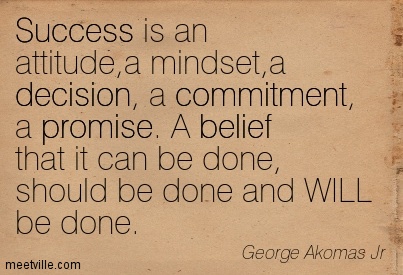
Wide held and owned set of beliefs in what is possible maintain movements and make them stick. Great organisations have deep, clear and simple beliefs, that are widely held and applied. These underpin the success of any movement or change. Where change or a movement mis-aligns with the underlying belief it will mis-fire.

What if… there is a wide-held and embedded belief in the organisation that we can do things that are amazing? The type of belief that enables and levers success from deep within the organisation – a belief that lives and breaths –  it is felt, insidious and ubiquitous; it is in the air.

“To accomplish great things, we must not only act, but also dream; not only plan, but also believe.” (Anatole France)

What if… we build this belief into great ambition, purpose and drive? Quotation-George-Akomas-Jr-decision-promise-belief-success-commitment-Meetville-Quotes-66977

“Whether you think that you can, or that you can’t, you are usually right.” (Henry Ford)


 Making movements stick. “Fire bullets then cannonballs” (Collins)

What if… we sought stickability of change and movements? Not only does change or movement need to be compelling, it also needs to stick around. Creating a movement or instigating change should consider if it will stick, a year, two years, three years… if not, don’t launch or invest energy and time, it is futile. The stickiness and sustainability of change is key; it needs to have legs! Education is a wasteland of terminated, washed-up initiatives. This is a real problem, because where organisation are initiative rich and these rarely take hold, the leadership reputation is eroded and damaged; further innovation becomes less likely to stick.

What if… we fired bullets first to test the water and then fully back those ideas that have the potential to be sticky, by firing cannonballs.

““the stickiness factor”, is a unique quality that compels a phenomenon to “stick” in the minds of people and influences their future behaviour.”

What if… we understood how to make ideas stick? and we considered the six principles of sticky ideas (“Made to Stick”, Chip and Dan Heath).

  1. Simple
  2. Unexpected
  3. Concrete
  4. Credible
  5. Emotional
  6. Stories

Maybe then…

  • we would understand the dynamics of how to start, propagate and sustain a movement (change) around the few things that matter; the few things that make the difference.
  • we would better understand that it is more about the followers than the lone nut leader. That moving from 16% to 80% is the measure of success as well as understanding that re-invigorating change is required to avoid plateauing and sustain a trajectory of improvement.
  • we would create the connection and conditions for movements to start, ensuring the checks and balances are in place so that we back those movements that are deliberate, effective and well targeted… avoiding a thousand flowers blooming and then wilting.
  • We would use story to emotionally connect and move people to action.
  • We would take bets on a few ideas and strategies that have a high chance of success. where success is measured in sustainability, adoption, impact and whether the change will become irreversible (or evolvable in the same direction) Will this be in place – consistently applied in 3 years time?
  • We understood the key components for making change stick; the stickability factor.
  • We would KISS and avoid complexity; because complexity kills movements.
  • We would get out of the cave and invite peers into our cave more to get perspective and better understand the movements we need to create; having that wider view.
  • we would align belief about what is possible .. about what the future could be .. and that this aligned to a deeply held moral purpose .. that recognise that everything is possible .. so long as we are willing to do whatever it takes.

“Great leadership is the ability to place bets on the few things that matter; that have impact – great leaders use a wide-view to create and propagate movements that reach tipping points, achieve irreversible change and lasting impact. This enables a metronomic and efficient turning of the flywheel.”

May 2015

Seeing the wood for the trees: beware organisational blindness

blind-spot

Can’t see the wood for the trees: the whole situation is not clear, because you’re looking too closely at small details, or you’re too closely involved.

trees

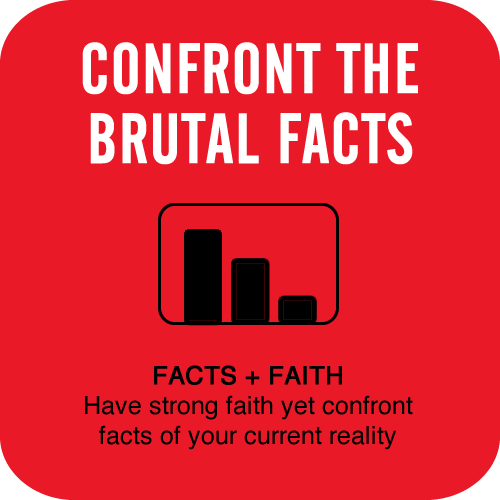
It is probably true that the longer we lead, teach or support within an organisation the blinder, more conditioned we become to accepting how things are. Our organisational blindness restricts our ability to be shocked or provoked into action; our ability to see the ‘brutal truths’ (Collins) of our situation decreases with time (and surprisingly quickly). We are less able to see the reality of our present situation and less able to seek the required improvement.

“Organisational blindness inhibits individuals and teams from seeing the brutal truth of their reality; leading to missed opportunities, an inability to not see what really matters or be agile enough to strategically move to a brighter future.”


Which begs the question, how do we correct our organisational blindness; overcome our biases and conceptions that grow through time and be alive to the brutal truths so that we can focus on the things that matter; those things that will address the reality and not our perception of the reality? So how do we provoke fresh thinking and fresh perspectives?

g2g-confront-facts

“You absolutely cannot make a series of good decisions without first confronting the brutal facts.” (Collins)


What if we fully understood that we learn to live with and accept things over time. That over time we become organisationally blind to our reality. The story goes that if you place a frog in water and gradually boil the water, the frog sits happily until death, but throw a frog into boiling water and it will jump straight out…the difference between becoming conditioned and normalised to our organisation and seeing it through fresh eyes and from a new, wider perspective.

frog-in-pan

What if we understood that when we move organisations we have our sharpest understanding and insight during the first 6 weeks and after that we gradually become part of the system (Dr Patrick Dixon). What if we worked harder to find ways of re-creating this opportunity; to more often see through fresh eyes?

What if we realised that our institutional blindness is our greatest risk? As the future becomes increasingly uncertain and the educational landscape shifts often, an organisation that is sleepy and fog ridden with organisational blindness is very vulnerable to “wildcard” events as well as to normal rates of change. There are a number of island Academies who have required reinvention; a significant contributing factor being organisational blindness and a poor perspective on what matters now.

fog1

What if we recognise that decisions, strategies and approaches are often only appropriate and right for a point in time? Great organisations are able to be agile and evolve practices so that they stay on the leading edge. Our vulnerability increases where organisational blindness is deep and widely shared such that we are unable to see what is right for now.

What if we realised a key strength of being part of a collaborative network or Multi Academy Trust (MAT) is the ability to connect, compare, contrast and have the wider view that improves our organisational blindness, enabling a greater identification of the brutal truths. What if we accelerated our connectivity, because together Academies in firm and soft collaborations can raise standards and overcome the blindness and vulnerability caused through isolation?

What if the most dangerous institutional blindness is when it occurs at the top. If the Head/Principal is the most significant leader then blindness at this level can cripple an organisation. More than ever we need all leaders to be system leaders…

“All leaders, South West leaders.” (Sir David Carter, RSC)

What if the fragmented nature and isolation of some academies increases organisational blindness? Where island organisations exist and/or there is significant blindness there is significant danger that the organisation becomes less attuned to reality and less successful.

“We still have an education system that is fragmented and unstandardised (adapted from Lord Nash); one where there are too many island schools/academies whose viewpoint is unavoidably organisationally blind.”

What if we recognised that much of what we see and think is hugely vulnerable to selective perception: seeing only the things that fit with our own preconceptions or prior beliefs? Whilst we rely on internal scrutiny these perceptions will limit our notion of performance and this worsens over time.

“Selective perception is the tendency to not notice and more quickly forget stimuli that causes emotional discomfort and contradicts our prior beliefs.”

What if we accept that the people within organisations are least likely to be able to evaluate its quality? What if we fully exploited, embraced and sought external scrutiny, because as leaders we understand that this perspective will be truer, more balanced and less open to bias than our own?

What if we grew more system leaders to horizon scan and have a wide perspective that can correct blindness… to find coherence, to light the way, to reduce blindness so that the system as a whole saw more of the light; lifting our young people and communities up?

5886864693_d512f83368

What if system leaders connected the dots and collaborated; being strategically altruistic. Recognising that where we strategically give and collaborate we reduce our institutional blindness and contribute to correcting institutional blindness in others. By connecting the dots and by being a deliberately altruistic system leaders we reduce blindness in ourselves and others.

dots-and-circles-purple-24173866-2560-1600

What if we spent more time out of our organisation? What if we actively supported leaders and teachers to spend time in other Academies? So that we eased and removed organisational blindness, provided perspective and shifted the frame of reference such that we were better able to see the brutal truths and plot improvement. Fresh eyes provide a new perspective; in the land of the blind the one-eyed person is king…

Basic RGB

“Complacency in leadership limits our ability to notice the unacceptable and maintain high expectations. Leaders need to welcome and proactively seek challenge and peer review.”
(adapted from Steve Munby)
What if we recognise inhibiting hubris. Jim Collins in “How the Mighty Fall” identifies the dangers of hubris, the excessive pride that brings down a hero – following success, leaders often become arrogant about their success and almost view it as an entitlement.  As a result, they become complacent and lose sight of (become blind to) what caused/s their success.  Organisations that were perceived to be successful can be vulnerable to disruptive changes (occasionally dramatically)…

There is no danger that Titanic will sink. The boat is unsinkable and nothing but inconvenience will be suffered by the passengers.” -Phillip Franklin, White Star Line Vice-President

Der Untergang der Titanic

What if by recognising the problems caused by organisational blindness that we are better able to avoid catastrophes and to find an appropriately risk-aware approach based on the true realities of our performance and provision?

What if we protected ourselves from this false sense of security, the false notion of being able to control situations or understand present performance. It is this that compromises our ability to cope and evolve to meet the demands of the present and the future. Perhaps this is about remaining students of our work and seeking external opinion and thoughts; taking every opportunity to vacuum the brains of others for insight and perspective…

“Like inquisitive scientists, the best leaders remain students of their work, relentlessly asking questions–why, why, why?–and have an incurable compulsion to vacuum the brains of people they meet.” Jim Collins.
What if we sought peer review and scrutiny as the best way to avoid both complacency and organisational blindness? Even if this makes us feel uncomfortable and exposed to the truth… perhaps a humbling truth, but with this comes new understanding, insight and perspective to enable improvement.
 “What makes us vulnerable makes us beautiful.” (Brene Brown)
“What do we see when leaders are at their best. – a balance between confidence and humility.” (Steve Munby)
What if Ofsted valued system leadership more? Valued the system contributions made to other organisations and the wider community? After all Ofsted wields significant power to nudge the education system in the direction it chooses.
What if we also recognised that unless leaders, teachers and staff go beyond the organisation there is significant danger of Cabin Fever; becoming conditioned (negatively) to everyday experience, with little ability to measure quality or what is normal? It is healthy and desirable to offer and ensure that all staff gain wide perspectives – as organisational blindness can be damaging and provide a warped sense of performance or quality…(often selectively perceiving the organisation based on low amounts of evidence or restricted perspectives).
2009128-quiet_cabin

Maybe then we would recognise the prevalence and harm of organisational blindness…understanding that our ability to see with fresh eyes lasts around six weeks, after which, without corrective approaches, we become increasingly blind to the brutal truths of our reality, less able to identify improvement and actions that are right for now.

Maybe then we would have far less complacency within the system; the sort of complacency born out of hubris and organisational blindness.

Maybe then we would see the brutal truths in ourselves and our organisations. Enabling our organisation to avoid dangers and to be agile enough to cope and thrive despite the present pace of change.

Maybe then we would see the huge opportunity that presently exists for shifting our fragmented island system of Academies into local hubs and multi Academy Trusts to reduce blindness, create coherence and shift the quality of education for whole communities.

Maybe then we would connect and collaborate not just to see again, but so that we could treat blindness in others and be system leaders.

Maybe then we would welcome scrutiny and peer review as a way to reduce blindness, bring better perspective and focus and to therefore accelerate improvement.

Maybe then we would seek opportunities for staff and ourselves to “get out more often” to improve our blindness and that of others? … as well as reduce cabin fever and the dangers of selective perception.

Maybe then we would connect more and be strategically altruistic to improve the wider system; playing our part in removing organisational blindness. After all great organisations don’t settle and achieve greatness through conscious choice…

“Greatness is not a function of circumstance. Greatness, it turns out, is largely a matter of conscious choice.” (Collins)  (A choice that needs to be seen through the fog of organisational blindness)

Slide39


April 2015