Unwarranted Optimism

    For there is always light,

    If only we’re brave enough to see it.

    If only we’re brave enough to be it.

    (Amanda Gorman)

    When everything around appears dark and it is hard to see the light, we need to be brave enough to have unwarranted optimism. It is unwarranted because of the number of challenges faced by colleagues working in education that push us into hopelessness and toward helplessness. And, perhaps worse, there is a real danger that this helplessness is increasingly learnt, mutually reinforced and influencing the stories we tell each other about our profession.

    “Do you have the resilience to show unwarranted optimism, and to regard crisis as the norm and complexity as fun, while maintaining a bottomless well of intellectual curiosity?” (Tim Brighouse)

    To work in our profession requires unwarranted optimism. It always has, but it feels harder than ever to view the future with hope. Optimism (particularly unwarranted) is the life blood of our sector, the fuel that drives good people to do good and change lives. We must not sink our profession by peddling pessimism, even if it is warranted.

    “The problem is that people mistake optimism for ‘blind optimism’.” (Hannah Ritchie)

    However, this is no time for ‘blind optimism’, a naive faith or passive hope that things will turn out well. We need a ‘conditional’, ‘urgent’ optimism that empowers us to act, to step forward and build together a future for all children. Even if optimism, at this time, is unwarranted, it is a far better basis for offering colleagues and children a sense of possibility.


    Warranted Optimism | Everyday acts of heroism.

    “Optimism is seeing challenges as opportunities to make progress; it’s having the confidence that there are things we can do to make a difference. We can shape the future, and we can build a great one if we want to.” (Hannah Ritchie)

    Our schools may well be performing better than ever, providing provision that is meeting the steepest of challenges, post pandemic, and in the face of the fracturing social contract. In all schools, heroic acts are changing lives, exemplifying the power of human connection, offering real hope and optimism for the future; a powerful force for good.

    Warranted Pessimism | poor choice for children and colleagues.

    Warranted pessimism is not an option. Despite the oppressive background music and the darkening light, if we choose to be pessimistic, we may well extinguish the fading light. Too much pessimism, warranted or unwarranted disturbs us deeply, encourages retreat and pushes us to become victims of circumstance. And whilst we can individually decide to retreat, it comes at a cost for all and our profession, as well as the children who need optimism, not pessimism, from the adults they trust.

    “There is no trust more sacred than the one the world holds with children.” (Kofi Annan)

    Skin in the game | our influence lives beyond us

    We all have an opportunity to be and bring the light to others. We cannot choose to sit outside the lives of others or be silent in the narratives that we tell each other; we have skin in other people’s lives. How we choose to move through life, reinforces or erodes the narrative and norms that set the stage far beyond ourselves, in schools, classrooms, and more broadly in life.  How we choose to live in this world, matters.

    How to live in a world where profound uncertainty is not a bug, but a feature? (Yuval Noah Harari)

    We are also hugely influenced by the need to fit in. It is coded deep in us that to be outside of a group hurts, is unsafe and a danger. So, we often take opportunities to align ourselves with the beliefs, attitudes, norms and behaviours of those closest to us. Often choosing against our independent beliefs to follow trend and fit in; a trend that is too often pessimistic. It matters, therefore, whether we choose unwarranted optimism or not, it radiates and infects beyond ourselves to other beings and happenings, all of the time.

    “Your response has to be to reject cynicism and reject pessimism and push forward, with a certain infectious and relentless optimism. Not blind optimism, not one that ignores the scale and scope of our challenges, but that hard-earned optimism, that’s rooted in the stories of very real progress.” (Barack Obama)

    Fairy Lights over Spotlights | a marvellous victory

    “What we choose to emphasise … will determine our lives. If we see only the worst, it destroys our capacity to do something… and at least the possibility of sending this spinning top of a world in a different direction. …to live now as we think human beings should live, in defiance of all that is bad around us, is itself a marvellous victory.” (Howard Zinn)

    To live with unwarranted optimism is to seek the joy of fairy lights over spotlights. A focus on fairy lights enables us to see the joy woven through life, to value the happenings and humans around us. Shifting our focus to the normal, everyday, magic that happens in schools, reveals the power of human relationships and places value on what really matters.

    “To be hopeful in bad times is not just foolishly romantic.” (Howard Zinn)

    The future then is built on an accumulation of small acts, a bottom-up movement, where change becomes possible and we have the chance to send this spinning top of a world in a different direction.

    meaningful movements start bottom-up.

    Seeking spotlights on the other hand is like waiting for big things or changes, often viewing them as a salvation that will save the day. It is the hope that kills, the waiting for the next station that stops us from living now and enjoying the journey.

    “I’ve very deliberately chosen to notice the smaller things, the joys I might have otherwise missed had I looked too broad, too big. The thousands of joys that lattice and join and thread into and around our daily school life.” (Claire Stoneman)

    Uncommon Opportunity | striving for what is worth having.

    There might just be an uncommon opportunity to re-evaluate what really matters in education. Some of the most courageous and heroic work is happening in unfavoured areas of our sector; areas where the challenge is steepest and recognition the lowest.

    “This is Vanity Fair a world where everyone is striving for what is not worth having.” (William Thackeray)

    The narrowness of what is valued in education belies the vibrance and range of opportunity that exists in our world and the eclectic abilities of human beings. It is this narrowness that disenfranchises the many. We must throw more light on what is worth having, what children need for their future; a system more geared towards those it serves.

    I deal my own deck, sometimes the ace, sometimes the deuces.” (Gloria Gaynor)

    When we are pushed by powers beyond our control we should strive to go in the opposite direction and enable others to take more control, to step forward and make a difference to their part of the world. We should continue to deal our own cards, and empower others, to deal from their decks, optimistically, regardless of what is dealt; because we have collective power and we are the system.

    Too many feel unremarkable | in a remarkable world.

    In a darkening world children, particularly under-resourced children, need us to have unwarranted optimism, to offer more light and a greater sense of possibility. Creating the conditions for children to adventure down rabbit holes of curiosity and to feel the wonder of our remarkable world. We seek this wonder, so that children have the chance to walk a step or two with genius and because childhoods last a lifetime.

    “Do you believe with a passion that brooks no denial that all pupils, whatever their background, can walk a step or two with genius and that your staff will embrace the aim that all students will grow up to think for themselves and act for others?” (Tim Brighouse)

    We must not allow a pervading pessimism to extinguish the light for children and create a self-fulfilling narrative that damages our profession. We must encourage more to serve in education to reveal the magic that exist in ordinary lives and to bring more light.

    “…treading the intriguing line between the everyday and the otherworldly, revealing the magic that exists in our ordinary lives.” (The Lost Bookshop)

    Not our story to finish | true but useless.

    We should not pretend to know the future or how this story plays out. We must tread carefully on the dreams of children and seek to create provision that is more born out of optimism than pessimism. It is the difference between setting the stage for children to stumble forward in the dark, steeped in pessimism, and stepping with confidence into a future that is full of optimism and possibility. Children need to grow up in a world where they feel remarkable, opportunity is unbound, and where children do not feel separate from the world.

    “…although her childhood, had left her feeling separate from the world.” (Steven Rogers)

    Lest we forget that children are vulnerable to the beliefs and narratives of the adults in their lives. The challenges we face are true but useless for the children we educate. They do not choose the conditions, location, or time that they inhabit, and they are largely unaware of pressures, turmoil, and upset of colleagues in our sector. They profit nothing from a sector that fights, argues, gives-up, or fails to work optimistically with the hand that they are dealt.


    Unwarranted optimism | An invitation to dance

    We choose our approach to life and to work. It is too easy to see the challenges that surround us and retreat into the security of pessimism, into narratives that reduce agency and reinforce helplessness. But, when we do, it is not an individual choice, the impact of this stance reverberates through other beings and happenings. It denies a sense of possibility.

    Conversely, to bravely choose optimism, conditional optimism, we offer a greater sense of possibility, to reassess what is valued and to see the magic and the light in the everyday. This is a stronger basis for the future, more generous and a greater investment in colleagues and children.

    “Ignore those who say that we are doomed. We are not doomed. We can build a better future for everyone.” (Hannah Ritchie)

    So, to choose individually, collectively, and organisationally to pursue unwarranted optimism is to contribute to a growing narrative that encourages us not just to see the light, but to be the light. To step forward rather than shy away from the future and collectively build it.

    And in this optimistic light perhaps all children and colleagues will accept an invitation to dance.


    Dan Nicholls | February 2024
    A culture of continuous improvement…

    “Seek marginal gains to outperform – small steps that create a contagious environment, where a philosophy of continuous improvement engages everyone.” (adapted from Sir David Brailsford, 2015)

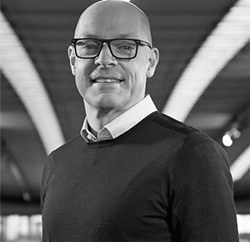
    Sir David Brailsford eloquently and concisely outlines the key characteristics of high performing teams in this great 2 minute video…click the photo belowIt is probably true that there are some key principles that are at the heart of high performing teams that enable outperformance .. all of which are highly applicable and relevant to education.

    UKCES2011A_SPEAKERS_0000s_0000_DAVE


    Sir David Brailsford identifies a number of key principles that allow teams and organisations to over-perform or out-perform others. These are explored below…

    1. “Recruit the best people that you can find”. What if we are really fussy over recruitment; ensuring that we recruit the very best to the team? What if we were also focused on this being a good behavioural fit … given that attitude is the key aspect in creating an over-performing culture?  There are a number of organisation who largely recruit based on attitude – often gaps in core skills can be closed. What if we started with First Who Then What?…

    g2g-first-who“Good to great companies first got the right people on the bus (and in the right seats) –and the wrong people off the bus –and then figured out where to drive it.”

    (Jim Collins)

    What if these were the superheroes, linchpins, mavericks or Freds whose connectivity and altruistic collaboration enabled the organisation to fly?


    2. Seek out the “Podium people – ask, who is the best in the world?” What if organisations identified the best in the world? What if we then understood where they were, how and what they achieve? What if we then work out precisely where we are and then plot to close the gap? By setting direction for the “Podium People” in our field we set the expectation high. What if we habitually faced the brutal truths of our own performance?…

    “have the discipline to confront the most brutal facts of your current reality, whatever they might be.” (Collins)

    podium

    By aspiring to reach and exceed Podium People we commit to do “whatever it takes” and embark on a journey, an accumulation of steps…

    “What we can do and what the best schools do already – is ask where they would like to be in five years time (aiming for the podium) and what steps they will take to get there” … ” the best schools accumulate these small steps and describe themselves as being on a journey.” (Tim Brighouse)

    What if we time limit the drive for improvement?…

    “To achieve great things, two things are needed; a plan, and not quite enough-time.” (Leonard Bernstein)


    3. Seek Marginal Gains, because small improvements in a number of aspects that we do can have a huge impact to the overall performance of the team.

    marginal-gains

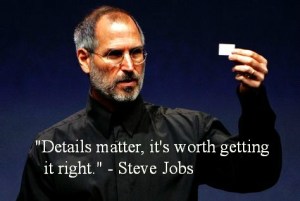
    What if we realised that impact, stickability and the effectiveness of any change is in the detail and that where change is planned, simple and purposeful big change and impact can follow? … often with unexpected benefits…

    “We need to prepare ourselves for the possibility that sometimes big changes follow from small events, and that sometimes these changes can happen very quickly!” (Malcolm Gladwell)

    Jobs-quote

    What if we understood greatness was about the choices we make and the discipline to see them through?…

    “Greatness is not a function of circumstance. Greatness, it turns out, is largely a matter of conscious choice and discipline.” (Jim Collins)


    “Leaders are only truly in charge when they inspire others to take charge.” (Simon Sinek, 2012)

    4. Give Ownership, because with ownership comes motivation. What if we trusted that because we have set the destination … on exceeding our podium people/organisations and  that we have the right people on the bus … then these people are best placed to lead and make decisions? That by giving ownership we increase autonomy and this drives-up motivation and performance that is widely owned and more likely to be sustained. – “pushing decision making to the action” (David Marquett)

    What if this ownership was allied to responsibility and accountability – a measuring stick and evaluation that rewards and supports motivation? … so that individuals know they are doing a remarkable job.

    What if we connected individuals to collaborate? … Seth Godin reminds that groups/teams need a clarity of destination and an ability to connect and communicate … collaboration and improvement follows…

    “…groups of people connected to one another, connected to a leader, and connected to an idea. For millions of years, human beings have been part of one tribe or another. A group only needs two things to become a tribe: a shared interest (vision) and a way to connect and communicate.” (Seth Godin)

    What if, as John Kotter identifies, we create and facilitate connection and collaboration (right hand side) alongside hierarchy that challenges, supports and delivers accountability (the left hand side)? It is balancing these that create a successful, agile team/organisation.

    Slide1


    5. Absolute clarity of role – People need to own and absolutely accept the role they have, but importantly they need to believe it is the right thing to do. What if we understood that Individuals perform well when there is absolute clarity on what is expected of them? Too often leaders complain of poor performance only to realises that they have never been clear in the first place as to what was expected.

    What if we also identify the standards and insisted on the highest of expectations – in all that you do? What if we create a positive, risk-embracing environment and culture so that we face the brutal truths and seek feedback and understanding to maintain continuous improvement?


    Maybe then we would build teams in education from middle to senior to executive leadership that understand outperformance, borrow from other professions, sports and organisations to realise the leadership potential that exists.

    Maybe then by asking…

    • …do we have the right people on the bus and in the right seats?
    • …do we know who the podium organisations are? – and how we close the gap?
    • …do we find marginal gains for continuous improvement?
    • …do we give and facilitate ownership for improvement and balance with accountability?
    • …do we have absolute clarity on roles and responsibilities and ensure that the standards and expectations are set high … within a feedback and risk-taking culture?

    we would would better understand our organisation and how we create the conditions for great teams to grow, succeed and out-perform. After all, in academies/schools leadership and the extent that leadership creates high performing teams directly relates to the success or otherwise of the organisation.

    “Delivery never sleeps.” (Barber)

    March 2015

    Strategic leadership | fanatical discipline and deliberate delivery

    bring light

    It is probably true that:  When we describe and aim for a preferred future, understand what matters (what has impact) and when we are fanatically disciplined and deliberate in delivering the few (one) things that really matter…we bring new light to what life might be. and achieve unusually well.


    So, what if we were better at balancing three things?

    • Our ability, based on the WHY, to describe the future, the destination, the dream? – to set sights on an extraordinary end point?
    • Our understanding of what matters, what makes the difference, what achieves impact?
    • Our fanatical discipline to deliberately focus upon and deliver the One Thing(s) that align with our dream and matter most.

    It is at the intersection of these three things that we have the chance to accelerate improvement by:

    • Aligning strategy toward our dream, ambition, destination or preferred future.
    • Focusing on the few areas that have impact (our positive deviant practices)
    • AND maintain the fanatic discipline to deliberately deliver our preferred future.

    Slide4

    Or we might consider that when we have a focused strategy that aligns to our dream and when we are fanatically disciplined and deliberate in the delivery of the few (one) things that make a difference (have impact) we achieve unusual improvement over time

    Slide3


    What if: We start by finding our organisation’s WHY? and seek to describe a preferred future … maybe then we can point to the destination and follow strategies that align and accelerate towards that dream.

    “Inspired leaders, organisations and teams find their deepest purpose – their ‘why?’ – and attract followers through shared values, vision and belief.” “this has the ability to transform the fortunes of a group or enterprise – activating individuals, providing a cultural glue, guiding behaviours and creating an overall sense of purpose and personal connection.” (James Kerr, Legacy, 2013)

    the-golden-circle


    “People don’t buy what you do, they buy why you do it.” “All organisations Start with why, but only the great ones keep their why clear year after year.”  (Simon Sinek)

    Simon Sinek has been very influential in ensuring that the basis of strategic planning and the focus of work is located around the moral purpose – the why. His golden circle has framed an approach, language and strategic focus. Sinek identifies that human motivation is emotionally linked, meaning that when people start with why (the moral purpose) this secures early emotional buy in. Just as Martin Luther King composed the “I have a dream” speech and described the future and not the “I have a plan…first we…” speech (taken from Sinek), school leaders have a responsibility to describe the desired future or destination.

    Emotional connection is also crucial:

    “People change what they do less because they are given analysis that shifts their thinking, than because they are shown a truth that influences their feelings.” (Kotter)

    Question: How far have you/your organisation identified the WHY – how well is the moral purpose communicated/shared? How often is it articulated? is it taken for granted? is it a comfort blanket or even an excuse when improvement is slow?


    What if: we then used the WHY to describe a preferred future (a dream) and ensure that urgency is in the system to drive toward the end?

    John West-Burnham highlights the importance of describing a preferred future.

    “Successful and credible leaders are able to tell compelling and credible stories about the future – they are leaders to the extent that people accept and value the future they describe. – In the 1970s Shell developed an approach that required identification of preferred scenarios…that are essentially descriptions of a preferred future.” (John West-Burnham, 2012)

    If leaders create compelling stories of the future (a dream), attach meaning to them and embed the why, they have the chance of connecting peers with purpose (Fullan). Such ownership allows change and strategic improvement to be owned at a greater depth within the organisation. Tim Brighouse describes how schools are on journeys and that the best schools ask where they want to be and take small steps on a journey toward that goal.

    “What we can do and what the best schools do already – is ask where they would like to be in five years time and what steps they will take to get there” … ” the best schools accumulate these small steps and describe themselves as being on a journey.” (Tim Brighouse)


    What if: we ensured that there is an appropriate level of urgency in the system.

    There is little point in having a compelling dream unless there is in-built urgency (often beyond that provided by the WHY). John Kotter uses the word urgency to emphasize the need for a heightened sense of focus, readiness to act and determination.

    Kotter’s urgency describes the force that is released when people feel a quest, a purpose, that their work is meaningful and has a greater purpose than themselves. It is not to be confused with panic or knee-jerk leadership that is reactionary. This is the type of urgency that inspires and moves people to action.

    Great leaders understand that generating and highlighting urgency is important as it creates forward motion.

    (Jim Collins)

    Great organisation often need to generate urgency. For Academies, a poor set of results or pending Ofsted, for example, should not be the driver for the required urgency…neither should it be knee-jerk, reactionary responses to temporal problems or transient political directives. Great organisations are naturally urgent – the moral purpose is deep, the preferred future is compelling, the strategic focus aligns to the need to improve – there is a deliberate and discipline pursuit of what matters. It is this that generates and embeds the urgency in the system.

    “To achieve great things, two things are needed; a plan, and not quite enough-time.” (Leonard Bernstein)

    Ken Segall, in Insanely Simple (2012): “Though it may defy logic, the easiest way to screw up a project is to give it too much time – enough time for people to rethink, revise, have second thoughts, invite others into the project, get more opinions, conduct tests, etc…you invite overthinking…only when people are kept in constant motion do they stay focused with the right kind of intensity…keeping the team in motion is what gets you there.” (describing project management at Apple)


    What if: Based on the why, the described future and the built in urgency…we are able to focus down to the one Thing(s)? based on what matters and what makes a difference – those positively deviant, hedgehog ideas and core practices that have impact?

    “What is the ONE THING that you need to do, such that by doing it, everything else is either easier or not required.” (Gary Keller, The One Thing)

    …because not everything matters equally.

    How often do we ask this question? based on where we need to get to what do we need to do in a years time, a months time, next week, tomorrow….what is the one thing that needs to happen now, such that everything else is easier or not required? Keller describes that if we are to tip our preferred future (dream) domino then we need to set a series of dominoes back to the present…the job then is to realise the one thing that now has to happen to tip the very first domino that is uniquely aligned to the dream future.

    The One Thing needs to also have further qualities:

    1. It needs to have impact (more than any other strategy/focus) – be a positive deviant – and this requires measurement of impact and deep questioning.
      • In all that we do there are things that have real impact, things that appear to have impact (but are proxies) and things that have limited impact. Finding the one thing that really makes a difference requires evaluation and measurement. The aim is to identify the positively deviant practices, often referred to as bright spots (Heaths). Beware fads, trends, promising innovation or popular approaches – it is impact that counts – things do not matter equally.
      • Our perception of what is possible is obstructed by historic assumptions about what is possible – they stop us considering game-changing innovations. Clever questioning has the ability to unlock possibilities and the true impact of approaches (Barber).
    2. It needs to be what you have to be the best in the world at (hedgehog concept).
      • The hedgehog concept represents the intersect of three circles: what you can be (need to be) the best in the world at, what you are deeply passionate about and what best drives your improvement/outcomes (Collins). Just like a hedgehog is excellent at One Thing (rolling into a ball for protection) – the key to success often lies in the ability to be the best in the world at one thing – it is amazing how this makes you better at other stuff and how wide the influence of this one thing travels.
    3. It is absolutely at the core of what you/your organisation is about. – aligned to the dream and reflects the brutal truth of your present performance.
      • “have the discipline to confront the most brutal facts of your current reality, whatever they might be.” (Collins)
    4. It needs to be sticky and timeless. This is Collin’s Fly-wheel.
      • Success and improvement resembles relentlessly pushing a giant heavy flywheel, turn upon turn, building momentum until a point of breakthrough, and beyond. This is not temporal innovation or reaction this is a systemic focus on the thing that matters most.

    Of course the key is to simplify to those strategies that matter most … it is unlikely to be one thing…but it might be three things that matter (not 20) and these need to be sticky, and aligned to the dream. Great organisations KISS (keep it simple stupid).

    “Simplicity is power, whether it’s used by individuals or organisations. The question is, do you have the insight and skills to turn this power into your own advantage?” Ken Segall (2012)


    What if:  we are fanatically focused on deliberately delivering the thing(s) that matters.

    Delivery never sleeps.” (Barber)

    Collins writes, “discipline, in essence, is consistency of action – consistency with values (why), consistency of method, consistency over time. True discipline requires the independence of mind to reject pressures to conform in ways incompatible with values, performance standards and long term aspirations (dream). …having the inner strength to do what ever it takes to create a great outcome, no matter how difficult.” (Collins)

    Great organisations balance this unswerving fanatical focus on delivery with an agility that enables innovation around what counts. This is not about jumping, adopting new ideas, this is about being the best in the world at what matters most. Kotter identifies the need to balance the hierarchy required in great organisations to turn the flywheel with the agility to to free individuals to connect and innovate around what counts (below). Firing bullets before cannonballs (Collins). And there in lies the contradiction – to be great you focus on the things that really matter, that are sticky, that are timeless – whilst maintaining the innovative agility necessary to stay ahead, to be leading edge, to path find.

    Slide1


    Maybe then: more organisations would be strategically led through:

    • A strong WHY and moral purpose – communicated and compelling.
    • A clear DREAM of the future described at 1 month, 1 year, 2 years, 5 years, 10 years …2040?
    • An URGENCY that is embedded in the organisation from a deep moral purpose, the compelling preferred future and the aligned deliberate strategic focus.
    • A clarity down to the ONE THING(S) that matter, that have impact – the positive deviant practices, the hedgehog, that address the brutal truth and are sticky and timeless.
    • A FANATIC DISCIPLINE to deliberately deliver the few things that matter. Such that change is sticky.
    • An AGILITY that allows the organisation to innovate in these core things that matter. Firing bullets before cannonballs.

    And Finally: none of the above sustains improvement or change unless…

    “our actions inspire others to dream more, learn more, do more and become more.” (J.Q. Adams)

    and 

    “Leaders inspire others to take charge … they guide us through the journey.” (adapted, Simon Sinek)

    and

    “leaders create the choice architecture in an organisation to free individuals, to lead the way to the preferred future (dream). Building on a foundation of strong values and principles,  a compelling purpose, great capacity is released to do something great.” (adapted, Seth Godin)