Outstanding Meetings | How groups drive improvement

“Right at the heart of what makes humans unique is their social interaction and most importantly empathy… we are hardwired to connect social interaction with survival and that no connection can be more powerful; this is deep in our nature.” (Geoff Colvin, 2015)

It is probably true.. that we spend a significant amount of time in meetings and yet they vary greatly in terms of their impact. The way groups interact, their culture, structure, quality of interaction, expectations and the groupthink dynamics mean that meetings can be prone to encouraging poor decisions, wasting precious time, limiting progress and not delivering the ambition of the people attending.

and.. we are prone to accepting the norm and becoming conditioned to how meetings run  and teams interact in our organisation.
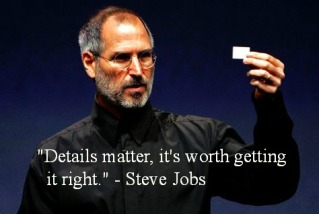
Jobs-quote

It is also probably true.. that there are some excellent teams who squeeze the very best out of their precious meeting time, planning and executing team/group interaction to ensure high impact that secures improvement. It is also probably true.. that highly effective groups, teams and meetings do not happen by chance – they are highly engineered, developed over-time and are based on a set of key principles that need to be developed…because details matter, it’s worth getting it right.


Which begs the question.. what are the key aspects of effective meetings/groups? How do we nudge and develop the quality of social interaction within groups/teams so that they deliver purposeful collaboration and drive improvement? In short, how do effective teams and groups collaborate to secure high performance and accelerate improvement?

(How do your meetings rate against the checklist in the Maybe then… section?)


What if.. we remembered why face-to-face meetings are so important to our culture and that they should be seen as an important vehicle for adding significant value over time and drive improvement? Seeking groups and working in teams is hard-wired into our brains – it taps deep into what makes us human and is far superior to electronic connection and phone conversations – are most important advances typically happen in person and in groups.

“…the number one factor in making a groups effective is (the depth of) human interaction. Social skills are the most important factor in group effectiveness because they encourage … “ideas flow” …how good the group members are at harvesting ideas from all of the participants and eliciting reactions to each new one.” (Colvin, 2015)

What if.. we understood that this is a workload issue. Efficient, effective, meaningful meetings reduce workload and use time efficiently to focus on the key priorities that will most benefit the team/organisation?

What if.. it is all in the preparation. Given that meetings use high amounts of collective time and significant sums of money, the planning and preparation should seek to maximise the effectiveness and efficiency of meetings? What if..

  • The agenda is published at least 48 hours prior to the meeting (7 days perhaps)?
  • The agenda is timed so that each item is given a clearly defined slot?
  • It is really not ok to not read pre-released materials prior to a meeting?

What if.. leaders take time to clarify each item and each person’s contribution to the meeting. Securing the key decisions to be made, considering the key questions and likely actions for each part of the agenda? What if.. leaders cancelled items where members have not prepared thoroughly or where the meeting will not add to the item or secure improvement in-line with the organisational aims?

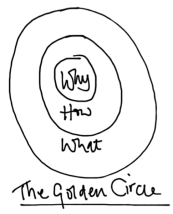
What if.. there is a strategic focus for meetings. So that the focus is on the Why and a bit of the How, but largely avoids the What, which is to be owned and developed outside of the meeting and closer to the action? (Sinek and Maquett) (Interestingly: Different voices are heard in meetings depending on whether the discussion is on the Why, the How or the What.)
the-golden-circle

What if.. the actions identified in the previous meeting are always reviewed with the expectation that these would have been addressed (what if.. leaders did not let people off the hook for their actions) – What if.. this secured a motivating level of accountability to the group?

What if.. the leader/chair secured an appropriate level of urgency and drive to the meeting to reinforce its importance and reflect that time is precious. What if.. leaders took responsibility to reflect and improve the quality of meetings and team interactions?

What if.. we were committed to and are tenacious in keeping to the the pre-agreed timings – limiting discussion where required? What if.. groups were made to stick to the agenda and not go off on tangents?

What if.. we were aware of the dangers of groupthink? (taken from Sunstein and Hastie’s book Wiser (2015)) In particular..

  • Groups often amplify, rather than correct, individual errors in judgement.
  • Groups fall victim to cascade effects, as members follow what others say or do.
  • Groups become polarized, adopting more extreme positions than the ones they began with.
  • Groups can emphasise what everybody knows instead of focusing on critical information that only a few people know.

“Most managers are exceedingly busy…it is tempting for them to prefer employees who offer upbeat projections and whose essential message is that there is no need to worry (Happy Talk). Employees…(can be) reluctant to provide their bosses with bad news. No one likes to be anxious or spread anxiety, especially to those who have power over them.(Cosy Club)” (Sunstein and Hastie, in Wiser, 2015)

What if.. groups can be prone to “Happy Talk” – where it is easier for members to support the growing concensus and say things that will keep the leader/chair happy? … and feed the Cosy Club?

What if.. we are vulnerable to being pursuaded more by how an idea is delivered as opposed to the merits of the idea. What if.. we are knowingly or un-knowingly bias towards other members of the group and to their ideas – what if we reinforce this bias by finding the good in what our favoured people say and ignore the weaker parts?

What if.. meetings become hijacked by professional (and forceful) opinion givers and persuaders – more interested in serving their own ego than the overall good of the group?

“Conversational turn taking also made a big difference; groups dominated by a few talkers were less effective than those in which members took more equal turns.” (Colvin , 2015)

What if.. “social skills were the most important factor in group effectiveness because they encourage those patterns of “idea flow”. (Colvin, 2015) What if.. group performance depends upon how good the group members are at harvesting ideas from all participants and eliciting reactions to each new one.

What if.. the meetings are dominated by one or a few individuals? What if.. decisions are normally aligned to the bossiest individual? What if.. any benefit of groupthinking is removed by a dominant participant; essentially limiting the quality of output to the quality of that person?

What if.. Leaders strategically self-silenced themselves?

“…leaders and high status members can do the group a big service by indicating their willingness and their desire to hear uniquely held information…Leaders can also refuse to state a firm view from the outset and in that way all space for more information to emerge.”(Sunstein and Hastie, 2015)

What if.. all members of the meeting are obliged to provide a perspective (that self-silencing is actively discouraged)- so that the group can benefit from the widest viewpoint? This supports groups to benefit from insider-outsider viewpoints and reduces organisational blindness (Tett, 2015). What if.. the leaders actively brought individuals into discussions?

“If the group encourages disclosure of information – even if information opposes the group’s inclination – the self-silencing will be reduced significantly.” (Sunstein and Hastie, 2015)

What if.. it is not ok to be a bystander. What if.. “self-silencing” happens where the culture is not conducive to a range of ideas or is dominated by a few?

What if.. success is a majority agreement not full concesus – to provide the safety and support for divergent and opposing viewpoints to exist? What if.. we openly welcomed and rewarded opposing views and ideas?

What if.. silence was taken to mean that individuals agree with the item and that where they disagree or require further information that this is indicated at the time?

What if.. Adam Grant is right the most successful groups use a “giver culture“…helping others, sharing knowledge, offering mentoring, and making connections without expecting anything in return.” And perhaps this is the basis for the high collegiate, low ego culture required in meetings and teams to drive-up group success and organisational improvement?

What if.. group effectiveness depends on building up social capital of the team? (avoiding the dangers posed by Cosy Clubs) Colvin (2015) provides a good example of Steve Jobs who kept together the six top executives for 13 years until he stepped down as CEO of Apple in 2011.

What if.. we championed and rewarded divergent thinking so that when appropriate groups generated a large number of ideas in short contributions from all members of the group – seeking and promoting individual viewpoints. What if.. we actively dispatched and brought in outsiders to provide an insider-outsider viewpoint (Tett, 2015)

leaders are choice architects; determining the environment in which noticed and un-noticed features influence the decisions groups make. Leaders have the ability to influence behaviours and use “nudges” to influence individual and group behaviour. (influenced from, Thaler and Sunstein, 2008)

What if… the art of leadership and leading change is in the ability to priortise what is important and to stay on track? What if… meetings and groups discussion sought to prioritise, asking…

“…what’s the ONE Thing you can do such that by doing it everything else will be easier or unnecessary?” (Gary Keller)

What if.. active listening is expected from all… and this meant eye-contact and small gestures to acknowledge the developing contributions. What if.. this meant all members were active note takers and (as reflected in research)…

“…engage…in ‘deep interactions,’  with group members constantly alternating between advancing their own ideas and responding to contributions of others with “good”,”right”, “what?”and other super-short comments that signaled concensus on ideas value, good or bad.” (Colvin, 2015)

What if.. we run scenarios of the future based on the decisions made by the group. What if.. these were considered in terms of possible and probable futures? What if.. we exercised high levels of empathy..changed perspective..and spent enough time thinking about how decision will be receieved by stakeholders and the likely level of adoption?

What if… we use roles to draw all into discussion and debate. Devil’s advocate, Black Hat (Thinking Hats approach) or set-up red teams, who construct a case against the proposed idea, change to test the quality and sustainability of a strategy or change. What if.. we tested whether each proposed change is likely to be there and sustaining improvement in 3 years time?

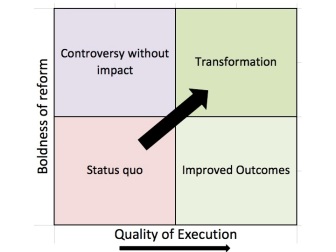
What if.. we realised the importance of execution and that we need to invest time in meetings ensuring that the execution of actions is fully timed, owned, evolved and reviewed?
Slide2

What if.. we ask “end of spectrum” questions to provoke debate, creativity and innovation?

  • If our lives depended on it what would we do?
  • If we were a new leadership team in this organisation what would we do?
  • If we had all the time and money we required what would we do?
  • If you had to argue against this course of action – what case would you build?
  • Are we answering the right question?

What if.. we use data to inform decisions – hard and soft information that allows for Black Box Thinking (Syed, 2015) and brings a key reality to the decision making and to measuring impact.

“Nothing seems to inject reality into a discussuin and banish wishful thinking and biased speculations as well as empirical evidence, especially in the form of data and numbers.” (Sunstein and Hastie, 2015)

What if.. the power of questioning creates better meetings and better decisions? … As Barber highlights…

“…our perception of what is possible is obstructed by historic assumptions about what is possible – they stop us considering game-changing innovations. Clever questioning has the ability to unlock possibilities previously not considered. Barber sets high targets to support ambition, urgency and to force a wide consideration of options. To drive change there needs to be a strict focus – “delivery never sleeps” (influenced by Michael Barber, 2015)


ALSO What if…

  • … it is not ok to allow the agenda to fill the time available – finishing an effective and efficient meeting early is a good thing.
  • … the expectation is that everyone is 5 minutes early to every meeting…(what if members are not allowed to attend after the start?)
  • … the chair was decisive and assured in maintaining both quality, timing and the momentum of the meeting?
  • … Steve Jobs was right and that only the very key people should be in a meeting making key decisions – do we get the group/meeting attendance right?
  • phones and laptops are banned? – the meeting is either worth the full attention of the members or it is not.
  • … side-conversations were not tolerated and that no one spoke over anyone else, ensuring a shared bouncing of ideas across the group.
  • only ideas and not their owners were examined or pulled apart? What if.. it should never be about taking sides?
  • … post-mortems, conducted well, are a key way for groups and teams to learn?
  • … within 24 hours the actions of a meeting are clearly circulated to all members – highlighting and driving accountability.

Maybe then.. we would use the following checklist to assess our meetings and the effectiveness of our groups and teams. Also Maybe then.. we would realise that this is hard to achieve and that it needs to be deliberately developed over-time to add real value to an organisation… the opportunity to improve our groups, teams and meetings is too important to ignore.

  1. Meticulusly plan each meeting – it occupies too much time and cost too much money not to be fully planned. Understanding and evaluating the intention of each item.
  2. Keep meetings tight – effective and efficient. Start on time, consider who really should be attending, no mobiles/laptops, keep to time, read pre-released information, keep to the agenda, no side conversations, seek clear actions, keep concise minutes and seek high accountability for agreed actions (always follow-up actions – avoid letting people of the hook) – finish on time.
  3. Delivery never sleeps – meetings should prioritise the most leveraging items for discussion and agreement. There sould be a level of urgency and drive delivered through the leader/chair – this is precious time.
  4. Beware of and share the dangers of group think (empowering groups to identify these dangers in meetings):
    1. Amplifying errors through a lack of critical discussion.
    2. Cascading initial or most forcfully delivered ideas
    3. becoming polarized based on allegance instead of the ideas
    4. Having a narrow view and limited development of ideas as the group only shares knowledge known by all  (or that of the most vocal) – lacking wider viewpoints and insider-outsider views.
  5. Find ways to support broad brainstorming, explore wide perspectives and encouage Divergent Thinking to solve problems, generate ideas and develop strategy. Effective groups seek and support “idea flow” from all participants.
  6. Avoid a culture that is dominated by “Happy Talk” within a “Cosy Club”. Seek majority agreement, by tolerating and exploring opposing positions – decisions to be supported by all outside of the meeting.
  7. Use data to inform decisions – hard and soft information that allows for Black Box Thinking and brings a key reality to decision making and to measuring impact. People need to feel something to change their views (Kotter).
  8. Beware the Bystander and the tendency for individuals to be self-silencing – create structures and an ethos that expect participation. Reward opposing viewpoints and critical comment – make it a safe environment to share critical views. Ensure silence is taken as agreement. Develop a “Givers culture” (Grant, 2015)
  9. Leaders and chairs need to take to opportunity to be self-silencing to avoid over-influencing decisions and draw a wider range of opinions out.
  10. Beware the Hijacker – generate cultures that champion group as opposed to individual success – counter act dominant individuals – make it about the groups/teams success not individual success.
  11. Provoke wider views and perspective through end-of-spectrum questions and scenario creation to test the impact and likely success of strategies.
  12. Use roles to draw all into discussion and debate. Devil’s advocate or Black Hat etc. or red teaming – set-up a team who construct a case against the proposed idea, strategy or change.
  13. Promote an ethos and culture of active listening and deep buy-in – enhance where meetings or team interaction are meaningful, effective and efficient.
  14. Execute all actions agreed in meetings – ensuring enough time is spent thinking-through delivery and execution over-time. Always return to the actions to secure accountability and the on-going effectiveness of he meeting.
  15. Why?, What if?, Have we thought?, What is the consequence of? – our meetings and group interactions need to be rich in clever and searching questions? Clever questioning has the ability to unlock possibilities previously not considered.

“…participating in co-operative group behaviour  – working for the success of the group without regard to potential personal rewards – makes us high.” (Colvin, 2015)

What if.. I took some of this advice?

Dan Nicholls

April 2016

A culture of continuous improvement…

“Seek marginal gains to outperform – small steps that create a contagious environment, where a philosophy of continuous improvement engages everyone.” (adapted from Sir David Brailsford, 2015)

Sir David Brailsford eloquently and concisely outlines the key characteristics of high performing teams in this great 2 minute video…click the photo belowIt is probably true that there are some key principles that are at the heart of high performing teams that enable outperformance .. all of which are highly applicable and relevant to education.

UKCES2011A_SPEAKERS_0000s_0000_DAVE


Sir David Brailsford identifies a number of key principles that allow teams and organisations to over-perform or out-perform others. These are explored below…

1. “Recruit the best people that you can find”. What if we are really fussy over recruitment; ensuring that we recruit the very best to the team? What if we were also focused on this being a good behavioural fit … given that attitude is the key aspect in creating an over-performing culture?  There are a number of organisation who largely recruit based on attitude – often gaps in core skills can be closed. What if we started with First Who Then What?…

g2g-first-who“Good to great companies first got the right people on the bus (and in the right seats) –and the wrong people off the bus –and then figured out where to drive it.”

(Jim Collins)

What if these were the superheroes, linchpins, mavericks or Freds whose connectivity and altruistic collaboration enabled the organisation to fly?


2. Seek out the “Podium people – ask, who is the best in the world?” What if organisations identified the best in the world? What if we then understood where they were, how and what they achieve? What if we then work out precisely where we are and then plot to close the gap? By setting direction for the “Podium People” in our field we set the expectation high. What if we habitually faced the brutal truths of our own performance?…

“have the discipline to confront the most brutal facts of your current reality, whatever they might be.” (Collins)

podium

By aspiring to reach and exceed Podium People we commit to do “whatever it takes” and embark on a journey, an accumulation of steps…

“What we can do and what the best schools do already – is ask where they would like to be in five years time (aiming for the podium) and what steps they will take to get there” … ” the best schools accumulate these small steps and describe themselves as being on a journey.” (Tim Brighouse)

What if we time limit the drive for improvement?…

“To achieve great things, two things are needed; a plan, and not quite enough-time.” (Leonard Bernstein)


3. Seek Marginal Gains, because small improvements in a number of aspects that we do can have a huge impact to the overall performance of the team.

marginal-gains

What if we realised that impact, stickability and the effectiveness of any change is in the detail and that where change is planned, simple and purposeful big change and impact can follow? … often with unexpected benefits…

“We need to prepare ourselves for the possibility that sometimes big changes follow from small events, and that sometimes these changes can happen very quickly!” (Malcolm Gladwell)

Jobs-quote

What if we understood greatness was about the choices we make and the discipline to see them through?…

“Greatness is not a function of circumstance. Greatness, it turns out, is largely a matter of conscious choice and discipline.” (Jim Collins)


“Leaders are only truly in charge when they inspire others to take charge.” (Simon Sinek, 2012)

4. Give Ownership, because with ownership comes motivation. What if we trusted that because we have set the destination … on exceeding our podium people/organisations and  that we have the right people on the bus … then these people are best placed to lead and make decisions? That by giving ownership we increase autonomy and this drives-up motivation and performance that is widely owned and more likely to be sustained. – “pushing decision making to the action” (David Marquett)

What if this ownership was allied to responsibility and accountability – a measuring stick and evaluation that rewards and supports motivation? … so that individuals know they are doing a remarkable job.

What if we connected individuals to collaborate? … Seth Godin reminds that groups/teams need a clarity of destination and an ability to connect and communicate … collaboration and improvement follows…

“…groups of people connected to one another, connected to a leader, and connected to an idea. For millions of years, human beings have been part of one tribe or another. A group only needs two things to become a tribe: a shared interest (vision) and a way to connect and communicate.” (Seth Godin)

What if, as John Kotter identifies, we create and facilitate connection and collaboration (right hand side) alongside hierarchy that challenges, supports and delivers accountability (the left hand side)? It is balancing these that create a successful, agile team/organisation.

Slide1


5. Absolute clarity of role – People need to own and absolutely accept the role they have, but importantly they need to believe it is the right thing to do. What if we understood that Individuals perform well when there is absolute clarity on what is expected of them? Too often leaders complain of poor performance only to realises that they have never been clear in the first place as to what was expected.

What if we also identify the standards and insisted on the highest of expectations – in all that you do? What if we create a positive, risk-embracing environment and culture so that we face the brutal truths and seek feedback and understanding to maintain continuous improvement?


Maybe then we would build teams in education from middle to senior to executive leadership that understand outperformance, borrow from other professions, sports and organisations to realise the leadership potential that exists.

Maybe then by asking…

  • …do we have the right people on the bus and in the right seats?
  • …do we know who the podium organisations are? – and how we close the gap?
  • …do we find marginal gains for continuous improvement?
  • …do we give and facilitate ownership for improvement and balance with accountability?
  • …do we have absolute clarity on roles and responsibilities and ensure that the standards and expectations are set high … within a feedback and risk-taking culture?

we would would better understand our organisation and how we create the conditions for great teams to grow, succeed and out-perform. After all, in academies/schools leadership and the extent that leadership creates high performing teams directly relates to the success or otherwise of the organisation.

“Delivery never sleeps.” (Barber)

March 2015

Connected collaboration and deliberate altruism… growing great organisations and systems

Connected collaboration and deliberate altruism… how great organisations grow and coherent education systems improve…

del alt 3


slide-5-638It is probably true that…for organisations to excel and become great the internal climate needs to support individuals to connect, collaborate and be deliberately altruistic. These indispensable individuals (mavericks, superheroes, connectors, change agents, linchpins, Freds etc.) draw maps, bring Art to work and accelerate organisations toward greatness.

slide-2-638

It is also probably true that this scales to a system leadership level such that great systems grow where deliberate altruism within collaborative networks/multi academy trusts enable clusters of schools to be remarkable; to bring Art to education – lifting-up communities.


Which begs the question: How do we enable change leaders and linchpins across the system (within academies and across clusters of Academies) to connect, collaborate and be deliberately altruistic to deliver world class education?

Perhaps Seth Godin expresses it best: “What happens when you build an organisation (or system) that is flat and open? what happens when you expect a lot and trust the people you work with?” …and what if we create the climate/platform for connection, collaboration and deliberate altruism? … maybe then system leadership has a chance to raise the bar and make education remarkable.

“(when) Schools pull together and share their best ideas, while simultaneously employing peer pressure to achieve more for the sake of all students (and the whole community).” (Hargreaves et al. 2014)


What if there are superheroes in our midsts?… What if we set them free to bring Art to work, to be remarkable, to be heroes who seek connection, who collaborate, who are deliberate, innovative and who altruistically spread ideas that work, because they are close to the action and they are infectious with enthusiasm. Tumblr_mnh27a7WA31rir6lho1_1280 Who are the superheroes?… What if we had more Freds in organisations and across systems? The story goes that Fred was the postman of Mark Sanborn. Fred cared; he cared a lot about providing a service – he did not have to, but he did – he went beyond the call of duty to add real value. Not because he had to, because he wanted to…he was extraordinary and he made Mark Sanborn consider the Fred factor; for which he identifies four principles…

  1. Everyone makes a differencedo we exploit opportunities to make a difference?
  2. Everything is built on relationshipsdo we always invest in relationship building?
  3. You must continually create value for othersdo we lift others up & create value?
  4. You can reinvent yourself regularlydo we take a fresh look and reinvent ourselves?

How many Freds do you know? Organisations that have Freds, add value and are likely to thrive. It is for leaders to create an oasis of Freds within their organisation – and even better if they inspire others to take charge…

“Leaders are only truly in charge when they inspire others to take charge.” (Simon Sinek, 2012)

What if we had more linchpins in organisations and across the system? Those that say…Linchpin_TTb What if we actively recognised, grew and recruited linchpins, These are positive deviants, who engage in “positive deviant practices.” (Heaths) Seth Godin in his Tribes and Linchpin books identifies that these individuals bring Art to work, are creative and are linchpins that link and connect widely. Gladwell would describe them as Connectors. (Tipping Point). 499b343267ee2a7181a9913c4f593c48 What if we allow linchpins to bring Art to work and drive improvement from within? What if we also devolve and push decision making and innovation closer to the action (David Marquet), so that Linchpins and connectors influence others, lead change and release potential to secure improvement? Maybe then change and improvement will have greater stickability, be more effective and more consistently delivered. It is exactly these individuals who “Don’t settle” (Steve Jobs) and consistently reflect and innovate deliberately around the few things that matter. See: Strategic Leadership | fanatical discipline and deliberate delivery. Jobs


What if we enabled and created a platform for these change agents, innovators, linchpins and Freds to do their work…to be given the time and space to energise and accelerate improvement where it matters … near to the action.

“The role of the leader is to enable, facilitate, and cause peers to interact in a focused manner…but still only a minority of systems employ the power of collective capacity.” (Fullan, 2010)

What if leadership within an organisation and across the system created a climate for individuals to thrive, to lead…what if it offered discretion to be creative and innovative? And what if it was less about the leaders at the top and more about enabling and freeing linchpins and Freds to go about making remarkable things happen?

“There are conditions under which people thrive and conditions under which people do not. The culture of an (Academy) is essential…it is organic. If the conditions are right – you give people a different sense of possibilities, a new set of expectations and offer discretion to be creative and innovative…things spring to life…real leaders know that.” Ken Robinson 

And What if leaders sought not to command and control, but to create a climate of possibility that enabled people to rise up, influence and do remarkable things?

“The real role of leadership in education…is not and should not be command and control the real role of leadership is climate control, creating a climate of possibility…people will rise to it and do things that you did not anticipate and could not have expected.” (Ken Robinson) 

Quotation-Seth-Godin-giving-leadership-work-ideas-people-Meetville-Quotes-228804 What if we developed tribes…

“…groups of people connected to one another, connected to a leader, and connected to an idea. For millions of years, human beings have been part of one tribe or another. A group only needs two things to become a tribe: a shared interest (vision) and a way to connect and communicate.” (Seth Godin)

After all, given freedom we should trust that… f163eaa3b112c76e1f850c9a4ba57189


What if the mode of operation was deliberate altruism. As Adam Grant considers, there are givers, matchers and takers. The takers hold what they have, steal ideas and focus on self-interest. The matchers only give if they receive something of equal value. The givers who give strategically/deliberately, make things happen, they gain far more and they contribute to improvement. We all know takers, matchers and givers. It is interesting that whilst this works on an individual level it is also true at an Academy level. Where Academies give they make a contribution to the system…everyone benefits…in fact more comes back… a-few-quotes-from-its-not-how-good-you-areits-how-good-you-want-to-be-3-728

“There is a crucial difference between the wisdom of openness and the folly of unguarded innocence. (Givers can be the most and the least successful)” (Hargreaves and (Grant))

What if every organisation created the space and supported connected collaboration for individuals to bring art and what if system leaders understood the power of networks…John Kotter provides an excellent diagram of how a great organisation maintains a hierarchical structure with all the necessary line management and accountability whilst enabling connected networks to exploit the linchpins and Freds in the organisation to connect and enabling the organisation to be agile and innovative. If we place a number of hierarchies (academies) around a central network, a network that connected linchpins and Freds across the system, we have the model that connects. If this connection and collaboration is built on deliberate altruism we have the basis for enhancing system leadership and a chance to reshape education. Slide1

Uplifting leadership entails engaging a talented team that values risk and creativity, acknowledges and tolerates honest mistakes, and has members that participate and “play” in interchangeable roles. They inspire each other as leadership emerges throughout the group.” (Hargreaves, 2014)


What if organisations/academies deeply connected and collaborated across networks/clusters of schools and altruistically shared everything such that there was a wide responsibility for system improvement? What if all Principals/Headteachers were system leaders or change agents?

“If as a principal you go it alone, you can only go so far…although it is possible to become a great school despite the system you are in, it is not possible to stay effective if the system is not cultivating greatness in all of its schools…the system matters a great deal.’ (Fullan, 2014)

The best system leaders look out to improve within whilst contributing to the wider system. What if we did not see local schools as competitors? what if there was a greater recognition that the success of other schools increases system success and this is better for everyone? Hargreaves et al.(2014) identifies three powerful combinations of collaboration and competition:

  • Co-opetition: the alliance of opponents achieve greater value together than they can achieve alone.
  • Uplifting federations: that include competitors increase social value for the wider community as well as for each individual organisation.
  • Being on the collaborative edge: enhances motivational value; pushing up performance in the comradely quest to keep innovating and outdo others – in a way that moves everyone up to a higher level.

“There are many strategic benefits…from aligning joint effort, and for combining collective investment for competitive gain. Uplifting leaders know that these (collaboration and competition) are the yin and yang of enduring success.” (Hargreaves, 2014)


Maybe then…Academies will develop greater opportunities and platforms to support individuals to be linchpins, connectors, Freds and change agents. Maybe where the connection and collaboration of these individuals is deep and deliberate altruism dominates, great ideas and approaches will grow from within the organisation.

and Maybe this will…push decision making, innovation, research, development and delivery to the people closest to the action. Perhaps this greater ownership and drive increases consistency and take-up and importantly is better attuned to the needs of students and the Academy. Perhaps this will also allow Academies to be agile enough to stay on the cutting edge … ever closer to creating remarkable approaches that deliver unusual outcomes for students and families.

…and Maybe if we take these ideas and apply them at an Academy level and to Principals as system (uplifting) leaders across networks of schools and multi academy trusts we could transform education. Creating deep connections and collaboration based on deliberate altruism would better allow clusters, trusts and networks to lift up communities and regions….making education remarkable.

Perhaps it is at this level that we require our system leaders (our uplifting leaders) to be superheroes, Freds, connectors and linchpins to take on the responsibility for taking a deliberately altruistic approach to collaboration, creating a remarkable education system…that has a wide and deep impact on communities/regions.

and perhaps there should be greater focus and measure of these qualities and approaches …such approaches are poorly incentivised at present…and yet it offers a remarkable opportunity to grasp and shape education.

Maybe then we will have a coherent system and shift into the top right quadrant where connected collaboration and deliberate altruism dominates… del alt 3 February 2015 | @DrDanNicholls https://twitter.com/DrDanNicholls