
For there is always light,
If only we’re brave enough to see it.
If only we’re brave enough to be it.
(Amanda Gorman)
When everything around appears dark and it is hard to see the light, we need to be brave enough to have unwarranted optimism. It is unwarranted because of the number of challenges faced by colleagues working in education that push us into hopelessness and toward helplessness. And, perhaps worse, there is a real danger that this helplessness is increasingly learnt, mutually reinforced and influencing the stories we tell each other about our profession.
“Do you have the resilience to show unwarranted optimism, and to regard crisis as the norm and complexity as fun, while maintaining a bottomless well of intellectual curiosity?” (Tim Brighouse)

To work in our profession requires unwarranted optimism. It always has, but it feels harder than ever to view the future with hope. Optimism (particularly unwarranted) is the life blood of our sector, the fuel that drives good people to do good and change lives. We must not sink our profession by peddling pessimism, even if it is warranted.
“The problem is that people mistake optimism for ‘blind optimism’.” (Hannah Ritchie)
However, this is no time for ‘blind optimism’, a naive faith or passive hope that things will turn out well. We need a ‘conditional’, ‘urgent’ optimism that empowers us to act, to step forward and build together a future for all children. Even if optimism, at this time, is unwarranted, it is a far better basis for offering colleagues and children a sense of possibility.
Warranted Optimism | Everyday acts of heroism.
“Optimism is seeing challenges as opportunities to make progress; it’s having the confidence that there are things we can do to make a difference. We can shape the future, and we can build a great one if we want to.” (Hannah Ritchie)
Our schools may well be performing better than ever, providing provision that is meeting the steepest of challenges, post pandemic, and in the face of the fracturing social contract. In all schools, heroic acts are changing lives, exemplifying the power of human connection, offering real hope and optimism for the future; a powerful force for good.
Warranted Pessimism | poor choice for children and colleagues.
Warranted pessimism is not an option. Despite the oppressive background music and the darkening light, if we choose to be pessimistic, we may well extinguish the fading light. Too much pessimism, warranted or unwarranted disturbs us deeply, encourages retreat and pushes us to become victims of circumstance. And whilst we can individually decide to retreat, it comes at a cost for all and our profession, as well as the children who need optimism, not pessimism, from the adults they trust.
“There is no trust more sacred than the one the world holds with children.” (Kofi Annan)
Skin in the game | our influence lives beyond us
We all have an opportunity to be and bring the light to others. We cannot choose to sit outside the lives of others or be silent in the narratives that we tell each other; we have skin in other people’s lives. How we choose to move through life, reinforces or erodes the narrative and norms that set the stage far beyond ourselves, in schools, classrooms, and more broadly in life. How we choose to live in this world, matters.
“How to live in a world where profound uncertainty is not a bug, but a feature?” (Yuval Noah Harari)
We are also hugely influenced by the need to fit in. It is coded deep in us that to be outside of a group hurts, is unsafe and a danger. So, we often take opportunities to align ourselves with the beliefs, attitudes, norms and behaviours of those closest to us. Often choosing against our independent beliefs to follow trend and fit in; a trend that is too often pessimistic. It matters, therefore, whether we choose unwarranted optimism or not, it radiates and infects beyond ourselves to other beings and happenings, all of the time.
“Your response has to be to reject cynicism and reject pessimism and push forward, with a certain infectious and relentless optimism. Not blind optimism, not one that ignores the scale and scope of our challenges, but that hard-earned optimism, that’s rooted in the stories of very real progress.” (Barack Obama)
Fairy Lights over Spotlights | a marvellous victory
“What we choose to emphasise … will determine our lives. If we see only the worst, it destroys our capacity to do something… and at least the possibility of sending this spinning top of a world in a different direction. …to live now as we think human beings should live, in defiance of all that is bad around us, is itself a marvellous victory.” (Howard Zinn)

To live with unwarranted optimism is to seek the joy of fairy lights over spotlights. A focus on fairy lights enables us to see the joy woven through life, to value the happenings and humans around us. Shifting our focus to the normal, everyday, magic that happens in schools, reveals the power of human relationships and places value on what really matters.
“To be hopeful in bad times is not just foolishly romantic.” (Howard Zinn)
The future then is built on an accumulation of small acts, a bottom-up movement, where change becomes possible and we have the chance to send this spinning top of a world in a different direction.
meaningful movements start bottom-up.
Seeking spotlights on the other hand is like waiting for big things or changes, often viewing them as a salvation that will save the day. It is the hope that kills, the waiting for the next station that stops us from living now and enjoying the journey.
“I’ve very deliberately chosen to notice the smaller things, the joys I might have otherwise missed had I looked too broad, too big. The thousands of joys that lattice and join and thread into and around our daily school life.” (Claire Stoneman)
Uncommon Opportunity | striving for what is worth having.
There might just be an uncommon opportunity to re-evaluate what really matters in education. Some of the most courageous and heroic work is happening in unfavoured areas of our sector; areas where the challenge is steepest and recognition the lowest.
“This is Vanity Fair a world where everyone is striving for what is not worth having.” (William Thackeray)
The narrowness of what is valued in education belies the vibrance and range of opportunity that exists in our world and the eclectic abilities of human beings. It is this narrowness that disenfranchises the many. We must throw more light on what is worth having, what children need for their future; a system more geared towards those it serves.
“I deal my own deck, sometimes the ace, sometimes the deuces.” (Gloria Gaynor)
When we are pushed by powers beyond our control we should strive to go in the opposite direction and enable others to take more control, to step forward and make a difference to their part of the world. We should continue to deal our own cards, and empower others, to deal from their decks, optimistically, regardless of what is dealt; because we have collective power and we are the system.
Too many feel unremarkable | in a remarkable world.
In a darkening world children, particularly under-resourced children, need us to have unwarranted optimism, to offer more light and a greater sense of possibility. Creating the conditions for children to adventure down rabbit holes of curiosity and to feel the wonder of our remarkable world. We seek this wonder, so that children have the chance to walk a step or two with genius and because childhoods last a lifetime.
“Do you believe with a passion that brooks no denial that all pupils, whatever their background, can walk a step or two with genius and that your staff will embrace the aim that all students will grow up to think for themselves and act for others?” (Tim Brighouse)
We must not allow a pervading pessimism to extinguish the light for children and create a self-fulfilling narrative that damages our profession. We must encourage more to serve in education to reveal the magic that exist in ordinary lives and to bring more light.
“…treading the intriguing line between the everyday and the otherworldly, revealing the magic that exists in our ordinary lives.” (The Lost Bookshop)
Not our story to finish | true but useless.
We should not pretend to know the future or how this story plays out. We must tread carefully on the dreams of children and seek to create provision that is more born out of optimism than pessimism. It is the difference between setting the stage for children to stumble forward in the dark, steeped in pessimism, and stepping with confidence into a future that is full of optimism and possibility. Children need to grow up in a world where they feel remarkable, opportunity is unbound, and where children do not feel separate from the world.
“…although her childhood, had left her feeling separate from the world.” (Steven Rogers)
Lest we forget that children are vulnerable to the beliefs and narratives of the adults in their lives. The challenges we face are true but useless for the children we educate. They do not choose the conditions, location, or time that they inhabit, and they are largely unaware of pressures, turmoil, and upset of colleagues in our sector. They profit nothing from a sector that fights, argues, gives-up, or fails to work optimistically with the hand that they are dealt.
Unwarranted optimism | An invitation to dance
We choose our approach to life and to work. It is too easy to see the challenges that surround us and retreat into the security of pessimism, into narratives that reduce agency and reinforce helplessness. But, when we do, it is not an individual choice, the impact of this stance reverberates through other beings and happenings. It denies a sense of possibility.
Conversely, to bravely choose optimism, conditional optimism, we offer a greater sense of possibility, to reassess what is valued and to see the magic and the light in the everyday. This is a stronger basis for the future, more generous and a greater investment in colleagues and children.
“Ignore those who say that we are doomed. We are not doomed. We can build a better future for everyone.” (Hannah Ritchie)
So, to choose individually, collectively, and organisationally to pursue unwarranted optimism is to contribute to a growing narrative that encourages us not just to see the light, but to be the light. To step forward rather than shy away from the future and collectively build it.
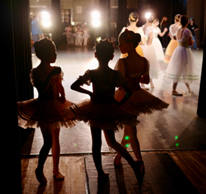
And in this optimistic light perhaps all children and colleagues will accept an invitation to dance.
Dan Nicholls | February 2024









 Dan Nicholls