Igniting identity | circumstance and happenstance

Our self-identity forms over time, shaped by our experiences and interactions, particularly in our formative years. It is not a uniform development of self, but rather one that is punctuated disproportionately by high impact moments. These sit in our backstories, having ignited our identity and shaped who we have become.

These moments are often subtle, quiet experiences of awe and wonder: a sudden realisation, both unsettling and exciting, that the world and our role in it is not what we thought. In these moments of alchemy, brief serendipitous collisions create a hiatus between our old and new self-image.

“…in moments of alchemy, brief and serendipitous collisions, the beautiful texture of interwoven lives. There are many seeds of genius in the world, we must nurture as many as we can.” Helen Lewis

Circumstance and happenstance

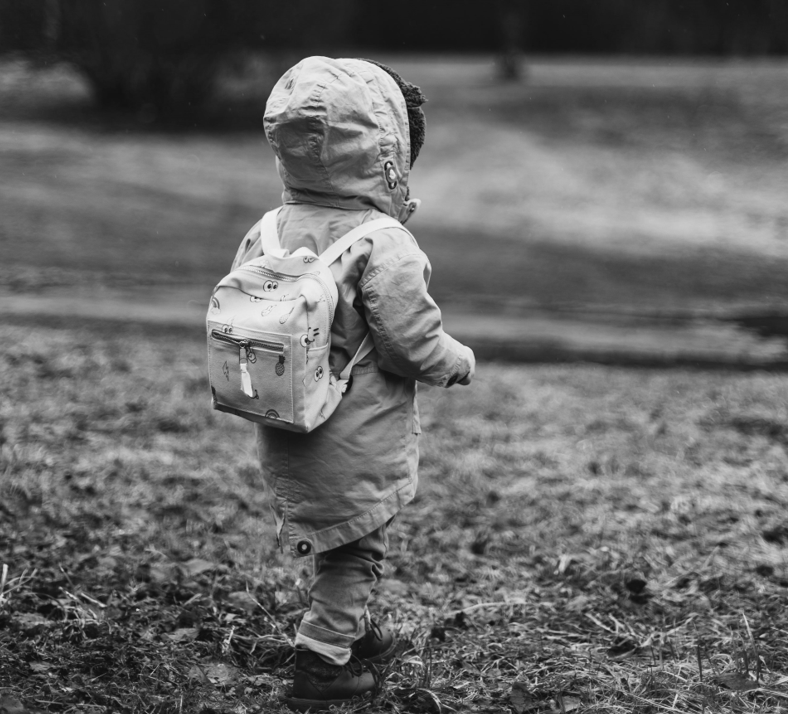
The development of self is determined by our context, upbringing and by the influential adults and peers that we look to through childhood: an on-going influence of circumstance through our formative years.

But much, arguably, is happenstance, serendipitous moments that build our self-image. Brief events, often remarkably small, that disproportionately shape our lives. Rather awkwardly, they are often surprisingly quiet, private moments of self-realisation that are invisible to the provider.

“The smallest act in the most limited circumstances bears the seed of boundlessness, because one deed, and sometimes one word, suffices to change every constellation.” Hannah Arendt

Yet for some children the vagaries of life’s happenstances are less frequent, less influential or much less accessible. It also depends on a child’s circumstance and their pre-disposition to act on these moments. Whilst our childhood sets the conditions and the circumstances that influence our predispositions, the brief moments, the happenstances, disproportionately explain who we become.


Predispositions

Will, Should, Might, Could, Won’t, Can’t

Our context and circumstance, whether consciously or unconsciously, determine our predispositions and the strength of our self-agency. For any given aspect of life we align to one of the following dispositions:

I Will  …. I fully expect to do this, unswerving, predestined, locked in, self-fulfilling.

I Should … Highly likely, people like me do things like this (reinforced by peer status).

I Might … Entirely possible and within my gift, requires a step forward, focus and resourced adults.

I Could … It is possible, but could be difficult to achieve – requires ignition, support and must be followed by resource.

I Won’t … People like me don’t do this, locked out, keys hard to find, and not sought, no capacity or resource, unable to see the future or be part in it.

I Can’t … Not possible, nobody like me does things like this, psychologically and materially forbidden.

If you are under-resourced and have experienced much less privilege, then too often your agency is limited to the bottom few dispositions. This offers a form of immunity to moments of ignition and even if ignited a lack of resource to follow your triggered passion. In a world of privilege, however, you occupy the top few dispositions: emboldened to accessible experiences and open to life-changing moments. And yet, ‘ambition’ is equally distributed, but enhanced or stifled from birth and perhaps before birth.

If you are lucky enough to be born in a world made in your image, you probably think of a failure as an obstacle on the path to eventual success. If you are a marginalised person in any way you internalise that failure more closely.” Elizabeth Day


Moments of wow… igniting identity

Regardless of who we are there are moments we witness that change our passions, our identity and motivation for what we wish to become…

“But the moment that changed everything came on 29 July 1992 … the Barcelona Olympics. Chris Boardman was about to go in the final of the men’s individual pursuit. I sat in front of the TV and watched him … Four and a bit minutes later, Chris had overtaken his German counterpart and become Britain’s first Olympic cycling gold medallist in 72 years. I was 12 and knew straightaway I wanted to emulate his feat. Another 12 years later I did just that.” Bradley Wiggins

…or influential adults who we are desperate to emulate…

“When I’m 13, my mum gives me a load of photos that she’s found. There he is, in his cycling kit, racing. It’s a definite “Wow!” moment, like he’s been brought to life in my hands. Those photos become my greatest treasure. The closest connection I could have with my father was by following in his footsteps” Bradley Wiggins

…or experiences that ignite our identity…

“My love for cinema began at a very early age, as early as I can remember… I was just a little kid in a darkened theatre, and I remember that beam of light just cut across the room and I remember looking up, and it seemed to just explode on the screen. … and suddenly, the world was so much larger than the one that I knew … it opened my eyes. It opened my imagination to the possibility that life could expand far beyond the boundaries that I then perceived in my own life.” Tom Cruise

“Making films is not what I do, it is who I am.” Tom Cruise


Owning the future

How far are children able to focus on the future? If you exist in an under-resourced world where you seek to survive the day, the week, your effective horizon is limited, perhaps irrelevant to you: there is no bandwidth to contemplate your future. This fundamentally forces you toward the weaker predispositions, I Won’t and Can’t, and breaks the connection between recognising that the efforts of now are an investment in next. The future will act on me.

Resourced children are able to make the investments now, fill their lockers and are typically compelled to do so, supported to strong dispositions, I Will and Should. I create my future.

To be or not to be

To be or not to be, that is the question that children wrestle with as they navigate the world. We know, though, that some children have much less capacity to be, forced into a not to be mindset. Growing in a world that tips the odds against you, denies a starting disposition, or ladder to, ‘Will, Should, Could’ and restricts the under-resourced to ‘Can’t and Won’t’. Only the application of equity can offer a ladder and break the cycle.

Lockers filled with belief

In every aspect of a child’s life, a child holds a locker of self-belief. Advantaged children have bursting lockers, filled by circumstance and opportunity, narrated by resourced adults, affirmed through experience. The lockers of under resourced children are sparse, short on belief, encouragement or affirming experiences. When they look to their lockers for self-confidence and self-belief they are encouraged, perhaps compelled, to step back, to not take risks and internalise the failure. We must be better at filling the lockers of under-resourced children.

“When you are born into wealth and privilege, you inherit a plan that outlines the paths ahead, indicating the shortcuts and byways available to reach your destination … If you enter the world without such a map, you are bereft of proper guidance. You lose your way more easily.” Elif Shafak

Chasing status

What you become depends largely on who you find yourself with. We measure status on those around us, typically the 5 peers that we spend time with that we look to and derive our own sense of status. Our belief in what is possible is shaped by our peers, and our schools are the crucible for these interactions.


Our verbal quota

“…we speak about 16,000 words a day, that is a lot of chances to tease, complain and criticise, but also to encourage, inspire and comfort. I know I can do a lot more good with my verbal quota.” Matt Woodcock

In every interaction, exchange and conversation our words are a powerful force for good (or ill). We never know for certain the weight of our words on a child, but we do know that children are adult-watchers, seeking to decode the world around them. Awkwardly or helpfully, in every interaction our words always carry weight and have influence, intended or otherwise. Often just 13 words deliver a self-belief that becomes unshakable and propels a dopamine-soaked desire to follow a passion:

“…I was introduced to a club coach, Stan Knight. Immediately he took hold of my wrist. “I’ve never felt a pulse like it,” he said. He looked me in the eye – “You’re going to be the best cyclist this country has ever produced.” … I liked the fact he had belief in me… Stan didn’t tell me I was special because of who my dad was. He told me I was special. Me.” Bradley Wiggins


Inspiring lives

“I began to realise how important it was to be an enthusiast in life. If you are interested in something, no matter what it is, go at it full speed, Embrace it with both arms, hug it, love it and above all else become passionate about it. Lukewarm is no good.” Roald Dahl

As educators we chose to inspire lives – and yet we spend little time understanding how children exist in the world or how their lives unfold through their circumstance and happenstance. How do we ensure that curiosity, hope and ambition is a feature of all childhoods not just those that are privileged?

Perhaps we should maintain a greater sense of awe and wonder, of possibility and back it with the application of equity and protect the flickering flames of hope, so that more children can embrace an interest with both arms. If we are to ignite a child’s self-identity, so that they have agency into their adulthood, we must create greater opportunity and apply the equity that will give all children the choice to follow their dreams.

...inspire lives with greater opportunity and choice.


Dan Nicholls | December 2025
Toward the future | inspiring lives

Our Mission

In the next phase we will strengthen our trust, deepen our connection and collaboration to add more value to each other and to all children. This is a venture in shared responsibility and joint endeavour to inspire lives with greater opportunity and choice. Succeeding in our mission:

Inspiring every child to flourish through an inclusive, all-through education that nurtures opportunity, equity, and agency for life.

A mission that ensures 11,000 children flourish and develop greater self-agency, becoming the masters of their fate. A worthy quest powered by 1,500 connected colleagues, empowered to do meaningful work.


For those that carry the most

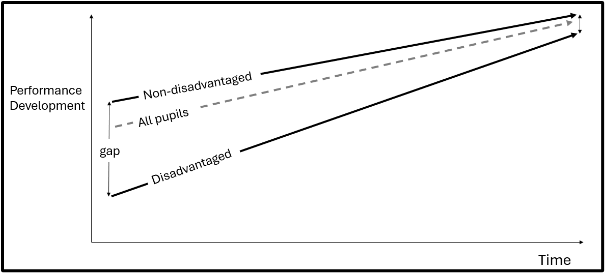
We recognise that some children carry more than most, have had less opportunity and experiences in their early childhood and so need us more. They neither lack ambition or ability, but they have less capacity, fewer resources and face barriers that tip odds against them. In difficult times education has the power to transform lives, which is the business we are in. The performance and development of these children is the most important measure of our worth.

“We need equity in education, not equality. If someone can’t see straight because the world is falling in around them, we need to raise them up to clearer skies.” Poor, Katriona O’Sullivan


Anchored by our Values

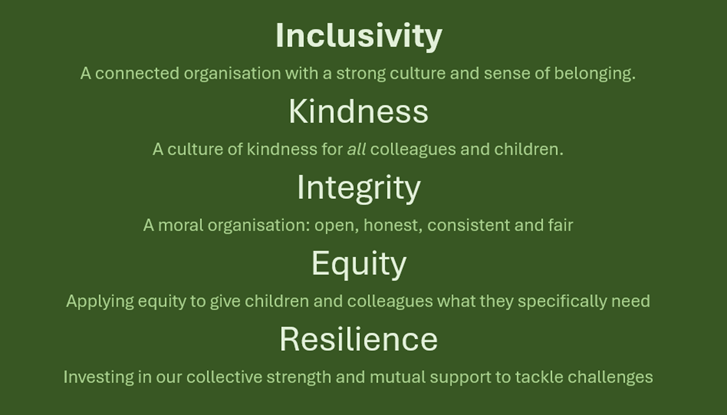
Everything we do is held by our shared values:


Our stable core enables our innovative edge

We continue to build a strong trust with great schools that focuses on getting every day right and building a stable core: consistently delivering high quality provision with effective systems and shared approaches, enables our frontline obsession.

We stand on our stable core and what we choose to do the same, so that we can innovate on the edge, expertly developing approaches to improve provision and inspire lives. This is a collective, connected and developmental endeavour through collaboration.


Towards 2030 | why we exist

To build a strong trust with great schools. Offering high quality education over 570-weeks that closes gaps for those that most need us. So that the trust exists in a higher performance space and exploits our collaborative advantage that yields a trust dividend.

Our focus on partnerships and places builds better communities for children to grow up in and flourish. Colleagues create greater opportunity through deliberate local and regional collaboration,seeking to improve other trusts and the sector.

The trust is deeply connected within itself. There is a strong collective desire and shared responsibility to add value for all children in every setting. This collaboration enables a level of innovation and shared approaches that add more value. As part of a human organisation colleagues are well connected, making a greater difference to others in and beyond our trust.

The consequence of our work over five years is that the trust becomes self-improving, the systems, shared approaches, trust improvement model, collaboration, horizontal leadership and empowerment is creating more value over time and is self-sustaining.

Colleagues enjoy more opportunity and are proud to do meaningful work that is enabling all children to flourish through an inclusive, all-through education that nurtures opportunity, equity, and agency for life


Higher performance space | in search of the trust dividend

There is an unswerving, shared responsibility and desire to raise standards. To build a strong trust and great schools that exist in a higher performance space that particularly enables disadvantaged learners to thrive and attain well.


So, where next… this year

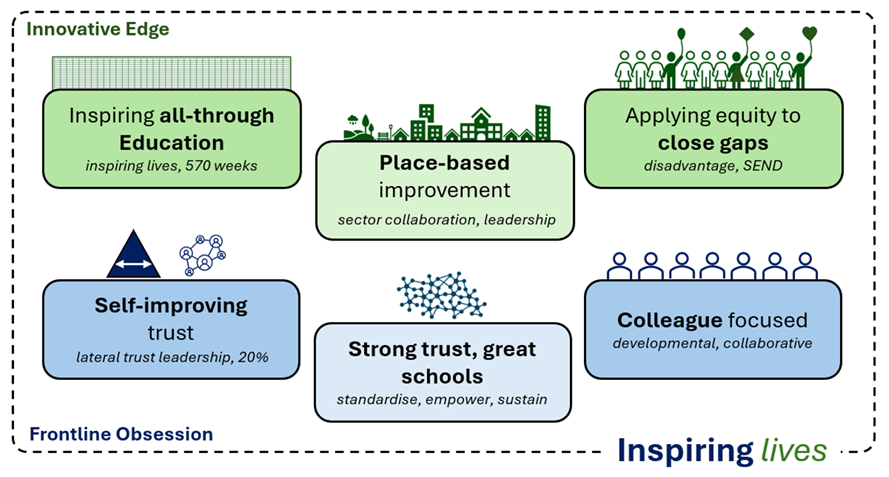
In the next phase, to summer 2026 we will prioritise these six areas:

Innovative Edge | Inspiring lives

This year we will invest in our inclusive all-through education (570-weeks) and apply greater equity to close gaps for children that need us most. A focus on place-based improvement will build strong community partnerships and support improvement beyond our trust.

Stable Core | frontline obsession

We will continue to invest in our stable core, by building a strong trust that enables great schools. Our colleague focused strategy will invest in all colleagues and create the conditions for our frontline obsession. Aiming to create a self-improving trust, investing in lateral leadership, connection, collaboration and strong systems.


570 Weeks | inspiring all-through education

To build an inspiring, inclusive, all-through education: as an entitlement for all children. Enacting excellent provision for every child throughout their 570 weeks of education. Prioritising:

  • Trust Curriculum | curating and enacting a shared curriculum across all year groups. (SDP)
  • Attendance, inclusion and transitions | to secure stronger attendance, strong inclusion and high-quality transitions, disadvantage first. (SDP)
  • Best Start in life | investing in the strongest possible start for all children through nursery and early years, enabled through a set of core commitments. (SDP)
  • Outstanding Personal Development | outstanding personal development curriculum builds character and offers greater opportunity for all children in every setting.

Closing gaps | seeking social justice

To apply equity and unswervingly commit to meeting the needs of children experiencing disadvantage and SEND, securing attainment and attendance that closes gaps and builds agency for each child. Securing greater social justice by prioritising:

  • The trust-wide development of teaching | systematic focus on the development of teaching to enact our shared curriculum. Our strongest lever for closing gaps. (SDP)
  • Disadvantage first | unswerving focus on the performance of disadvantaged pupils, through targets, data and quality assurance, as the indicator of the quality of our provision. (SDP)
  • Catch-up, Keep-up | systematic tracking all learners and applying equity, doing different and more, so that all children are caught up and kept up. (SDP)
  • All leaders, leaders of SEND | developing our SEND provision, focusing on ‘all leaders as leaders of SEND’ – securing a systematic strategy to meet SEND needs.

The importance of place | community partnerships

To build partnerships with educational and community partners to secure stronger communities and 570-week educations for all children. Using expertise in the trust to reach out and secure improvement in schools, trusts and the sector. Growing our reputation and influence by prioritising:

  • Strong recruitment built on growing reputation | securing stronger recruitment of pupils into our schools to inspire more lives and better serve our communities.
  • Trust Growth | securing appropriate and strategic growth of the trust to secure financial opportunities and grow our reputation and influence.
  • Collaboration with local trusts, local authorities and partners | seeking strong collaboration to secure improvement beyond the trust – seeking to influence all 570-weeks
  • Sector reputation and influence | playing an active role beyond the trust, including with the DfE and other partners, to influence policy, improve other trusts and the sector.

Colleague focused | developmental and collaborative

Investing in all colleagues to be connected, to collaborate, develop and grow to lead and contribute toward the mission and feel empowered to do meaningful work. Prioritising:

  • Recruitment and Retention | building a strategy to recruit well and to attract and retain strong colleagues. Considering our approach to flexible working.
  • Professional Development | creating on-going opportunities for professional development, held in a curriculum. Developing, inspiring and creating more opportunities for colleagues.
  • Induction | investing in and building strong induction to support all colleagues to have the best possible start to their career in our trust.
  • Well-being and mental health strategy | securing approaches across the trust to support all colleagues with their well-being and mental health.

Strong Trust, Great Schools | standardise, empower, sustain

Ensuring that the trust improvement model offers the foundation for colleagues to lead great schools. Complicated systems well embedded across the trust to drive effectiveness and efficiency. Prioritising:

  • Deliberate enactment of the Trust Improvement Model (SIM) | developing our standardised approaches, enabling empowered areas and sustaining the model to secure improvement.
  • Financial stability and clarity | Ensuring the trust maintains the present financial security, secures wider responsibility and enables greater investment in the trust.
  • Professional Services | developing professional services, to strengthen platform, offer capacity, expertise and secure the environment to empower all colleagues to deliver the mission.
  • IT Strategy | ensuring colleagues and pupils have the tools they need to thrive now and in the future. Developing our digital vision and cloud-first approach. Exploring the opportunities of AI.

Towards a self-improving trust | lateral trust leadership

Creating the expectation and conditions for horizontal improvement across the trust. Connectivity and collaboration that are more effective and efficient at driving the School Improvement. Prioritising:

  • Trust Leadership Curriculum | investing in and enacting a trust leadership curriculum and to extend the sense of leadership curriculum through networks and the layers of the trust.
  • Networks and Subject Communities | connecting colleagues with purpose, formally and informally, to enable the development of strategies that raise standards.
  • Lateral leadership, 20% time | creating the expectation and the structure for colleagues to work beyond setting to support lateral leadership and secure a self-improving trust.
  • Succession Planning | investing in succession planning and talent management to ensure the future leadership security for our trust.

First Steps… into Term 1

And our first steps in Term 1 will see us deepen our connection and collaboration and prioritise:

  1. Understanding performance and setting the ambition and targets for 2026.
  2. High quality Induction and line management, starting out strong.
  3. Strong start and focus on Attendance, disadvantage first.
  4. Best Start in Life, embedding our core commitments.
  5. Enacting our shared curriculum.
  6. Focus on the development of teaching through Steplab.
  7. Embedding the new Planergy software in Finance.

We choose to venture on this journey to 2030 not because it is easy, but because it is hard, and because our ambition will serve to organise and measure the best of our energies and skills, because the challenge is one that we are willing to accept, one we are unwilling to postpone, and one which we intend to win (adapted, John F. Kennedy)

So, breathe, commit … and go inspire lives with greater opportunity and choice.

Thank you, you make a difference


Dan Nicholls | August 2025

Unwarranted Optimism

    For there is always light,

    If only we’re brave enough to see it.

    If only we’re brave enough to be it.

    (Amanda Gorman)

    When everything around appears dark and it is hard to see the light, we need to be brave enough to have unwarranted optimism. It is unwarranted because of the number of challenges faced by colleagues working in education that push us into hopelessness and toward helplessness. And, perhaps worse, there is a real danger that this helplessness is increasingly learnt, mutually reinforced and influencing the stories we tell each other about our profession.

    “Do you have the resilience to show unwarranted optimism, and to regard crisis as the norm and complexity as fun, while maintaining a bottomless well of intellectual curiosity?” (Tim Brighouse)

    To work in our profession requires unwarranted optimism. It always has, but it feels harder than ever to view the future with hope. Optimism (particularly unwarranted) is the life blood of our sector, the fuel that drives good people to do good and change lives. We must not sink our profession by peddling pessimism, even if it is warranted.

    “The problem is that people mistake optimism for ‘blind optimism’.” (Hannah Ritchie)

    However, this is no time for ‘blind optimism’, a naive faith or passive hope that things will turn out well. We need a ‘conditional’, ‘urgent’ optimism that empowers us to act, to step forward and build together a future for all children. Even if optimism, at this time, is unwarranted, it is a far better basis for offering colleagues and children a sense of possibility.


    Warranted Optimism | Everyday acts of heroism.

    “Optimism is seeing challenges as opportunities to make progress; it’s having the confidence that there are things we can do to make a difference. We can shape the future, and we can build a great one if we want to.” (Hannah Ritchie)

    Our schools may well be performing better than ever, providing provision that is meeting the steepest of challenges, post pandemic, and in the face of the fracturing social contract. In all schools, heroic acts are changing lives, exemplifying the power of human connection, offering real hope and optimism for the future; a powerful force for good.

    Warranted Pessimism | poor choice for children and colleagues.

    Warranted pessimism is not an option. Despite the oppressive background music and the darkening light, if we choose to be pessimistic, we may well extinguish the fading light. Too much pessimism, warranted or unwarranted disturbs us deeply, encourages retreat and pushes us to become victims of circumstance. And whilst we can individually decide to retreat, it comes at a cost for all and our profession, as well as the children who need optimism, not pessimism, from the adults they trust.

    “There is no trust more sacred than the one the world holds with children.” (Kofi Annan)

    Skin in the game | our influence lives beyond us

    We all have an opportunity to be and bring the light to others. We cannot choose to sit outside the lives of others or be silent in the narratives that we tell each other; we have skin in other people’s lives. How we choose to move through life, reinforces or erodes the narrative and norms that set the stage far beyond ourselves, in schools, classrooms, and more broadly in life.  How we choose to live in this world, matters.

    How to live in a world where profound uncertainty is not a bug, but a feature? (Yuval Noah Harari)

    We are also hugely influenced by the need to fit in. It is coded deep in us that to be outside of a group hurts, is unsafe and a danger. So, we often take opportunities to align ourselves with the beliefs, attitudes, norms and behaviours of those closest to us. Often choosing against our independent beliefs to follow trend and fit in; a trend that is too often pessimistic. It matters, therefore, whether we choose unwarranted optimism or not, it radiates and infects beyond ourselves to other beings and happenings, all of the time.

    “Your response has to be to reject cynicism and reject pessimism and push forward, with a certain infectious and relentless optimism. Not blind optimism, not one that ignores the scale and scope of our challenges, but that hard-earned optimism, that’s rooted in the stories of very real progress.” (Barack Obama)

    Fairy Lights over Spotlights | a marvellous victory

    “What we choose to emphasise … will determine our lives. If we see only the worst, it destroys our capacity to do something… and at least the possibility of sending this spinning top of a world in a different direction. …to live now as we think human beings should live, in defiance of all that is bad around us, is itself a marvellous victory.” (Howard Zinn)

    To live with unwarranted optimism is to seek the joy of fairy lights over spotlights. A focus on fairy lights enables us to see the joy woven through life, to value the happenings and humans around us. Shifting our focus to the normal, everyday, magic that happens in schools, reveals the power of human relationships and places value on what really matters.

    “To be hopeful in bad times is not just foolishly romantic.” (Howard Zinn)

    The future then is built on an accumulation of small acts, a bottom-up movement, where change becomes possible and we have the chance to send this spinning top of a world in a different direction.

    meaningful movements start bottom-up.

    Seeking spotlights on the other hand is like waiting for big things or changes, often viewing them as a salvation that will save the day. It is the hope that kills, the waiting for the next station that stops us from living now and enjoying the journey.

    “I’ve very deliberately chosen to notice the smaller things, the joys I might have otherwise missed had I looked too broad, too big. The thousands of joys that lattice and join and thread into and around our daily school life.” (Claire Stoneman)

    Uncommon Opportunity | striving for what is worth having.

    There might just be an uncommon opportunity to re-evaluate what really matters in education. Some of the most courageous and heroic work is happening in unfavoured areas of our sector; areas where the challenge is steepest and recognition the lowest.

    “This is Vanity Fair a world where everyone is striving for what is not worth having.” (William Thackeray)

    The narrowness of what is valued in education belies the vibrance and range of opportunity that exists in our world and the eclectic abilities of human beings. It is this narrowness that disenfranchises the many. We must throw more light on what is worth having, what children need for their future; a system more geared towards those it serves.

    I deal my own deck, sometimes the ace, sometimes the deuces.” (Gloria Gaynor)

    When we are pushed by powers beyond our control we should strive to go in the opposite direction and enable others to take more control, to step forward and make a difference to their part of the world. We should continue to deal our own cards, and empower others, to deal from their decks, optimistically, regardless of what is dealt; because we have collective power and we are the system.

    Too many feel unremarkable | in a remarkable world.

    In a darkening world children, particularly under-resourced children, need us to have unwarranted optimism, to offer more light and a greater sense of possibility. Creating the conditions for children to adventure down rabbit holes of curiosity and to feel the wonder of our remarkable world. We seek this wonder, so that children have the chance to walk a step or two with genius and because childhoods last a lifetime.

    “Do you believe with a passion that brooks no denial that all pupils, whatever their background, can walk a step or two with genius and that your staff will embrace the aim that all students will grow up to think for themselves and act for others?” (Tim Brighouse)

    We must not allow a pervading pessimism to extinguish the light for children and create a self-fulfilling narrative that damages our profession. We must encourage more to serve in education to reveal the magic that exist in ordinary lives and to bring more light.

    “…treading the intriguing line between the everyday and the otherworldly, revealing the magic that exists in our ordinary lives.” (The Lost Bookshop)

    Not our story to finish | true but useless.

    We should not pretend to know the future or how this story plays out. We must tread carefully on the dreams of children and seek to create provision that is more born out of optimism than pessimism. It is the difference between setting the stage for children to stumble forward in the dark, steeped in pessimism, and stepping with confidence into a future that is full of optimism and possibility. Children need to grow up in a world where they feel remarkable, opportunity is unbound, and where children do not feel separate from the world.

    “…although her childhood, had left her feeling separate from the world.” (Steven Rogers)

    Lest we forget that children are vulnerable to the beliefs and narratives of the adults in their lives. The challenges we face are true but useless for the children we educate. They do not choose the conditions, location, or time that they inhabit, and they are largely unaware of pressures, turmoil, and upset of colleagues in our sector. They profit nothing from a sector that fights, argues, gives-up, or fails to work optimistically with the hand that they are dealt.


    Unwarranted optimism | An invitation to dance

    We choose our approach to life and to work. It is too easy to see the challenges that surround us and retreat into the security of pessimism, into narratives that reduce agency and reinforce helplessness. But, when we do, it is not an individual choice, the impact of this stance reverberates through other beings and happenings. It denies a sense of possibility.

    Conversely, to bravely choose optimism, conditional optimism, we offer a greater sense of possibility, to reassess what is valued and to see the magic and the light in the everyday. This is a stronger basis for the future, more generous and a greater investment in colleagues and children.

    “Ignore those who say that we are doomed. We are not doomed. We can build a better future for everyone.” (Hannah Ritchie)

    So, to choose individually, collectively, and organisationally to pursue unwarranted optimism is to contribute to a growing narrative that encourages us not just to see the light, but to be the light. To step forward rather than shy away from the future and collectively build it.

    And in this optimistic light perhaps all children and colleagues will accept an invitation to dance.


    Dan Nicholls | February 2024

    The Social Contract is fracturing

    “Everyone participates in the social contract every day, and we rarely stop to think about it. Yet social contracts shape every aspect of our lives, including how we raise our children and engage in education.” (Minouche Shafik)

    We live in difficult and darkening times. The growing gloom is becoming oppressive, encouraging retreat and reducing belonging. The social contract that shapes and guides every aspect of our lives is fracturing. For far too many children and families this is fundamentally altering their relationship with society, authority, and how we value and engage in education.

    The “social contract” is a theoretical agreement between individuals and society wherein people relinquish certain freedoms and abide by agreed-upon rules and norms in exchange for social order and mutual benefits.

    These are dark ages, characterised by challenging economics and social inequity, that are presenting both a psychological and material challenge. This is infecting and altering the narratives we tell ourselves and each other about what is important and what our contributions to society should be.

    “We all … listen for an account of who we are and where we stand.” (George Monbiot)

    Increasing numbers of children and adults are opting out from a world that finds multiple ways of challenging their sense of self, place, and agency. Whilst for some the light is not fading, for too many others, often the most vulnerable, the gloom is encouraging retreat from the agreed contract. Schools are at the heart of the maelstrom, open, available, and trusted enough for some families to fight against, because few others are listening, available or there. Schools stretch and respond to the needs that walk into school every day, attempting to fulfil their duty of care, often without the resource or expertise.

    For increasing numbers of pupils and families, school is seen as optional, far from being irresistible or a place of opportunity. The prevailing narrative is replacing long held norms around the value of education, driven by a weakening social contract and the entrenched inequities in society. The disadvantage gap, on any measure, is wide and widening, embarrassingly so. Fundamentally, the social contract is built on trust– when the returns from society diminish or disappear, or where we become increasingly priced out of life, we see the contract weakening and the trust we hold erodes.

    “Trusting others puts us in an inherently vulnerable position… the proof of the importance of trust is the intense emotional pain that accompanies it being broken. (Owen Eastwood)

    We need a revised and reinforced social contract that seeks greater cohesion, strengthens belonging and places education at the heart of this nation. This needs to secure far greater equity through education and a much stronger architecture of opportunity. An architecture enacted by stronger trust and system leadership, greater connectivity and purposeful collaboration between trusts and schools so that we take collective responsibility and stewardship for our sector. All Trusts working together for all children.

    “It is only through building a connected system that we will be able to address the multiple challenges facing our communities” (Leora Cruddas)

    Building the effectiveness of our trust, civic and system leadership to build an education system that is able to address the multiple challenges, redistribute esteem and enable many more children to live lives of decency and dignity.

    “…we need a redistribution of esteem… to live lives of decency and dignity, winning social esteem. …(to) travel the road to 2045 with purpose, dignity and accomplishment.” (Peter Hennessy)

    Seeking together to build strong trusts with great schools that meet need. Enabling more children and families to belong and benefit from a renewed social contract, gaining a greater sense of agency in their lives and contributing towards the common good.

    “Agency gives us control over our time, and it encourages us to choose what our contribution looks like.” (Seth Godin)


    In the eye of the storm

    The lines between school and society have blurred. Schools are trying to respond to the fracturing of the social contract. Where deprivation bites and societal problems leak into schools, colleagues can become overwhelmed. They take increasing amounts of time to support, resolve, and cope with difficult and widening societal issues of children and families, obligated to fulfil their deeply held duty of care for the communities they serve.

    The present level of attendance, suspensions and disenfranchisement, particularly of those presently disadvantaged, is a national crisis – a social epidemic. As the narrative falters, individuals are making pragmatic decisions around survival and choosing to opt out, to not conform, to challenge authority, avoid commitment and to escape the perceived risk of failing in class.

    If life is a game, too many are deciding not to play.


    Fracturing built on entrenched inequity

    It is not that the social contract has suddenly fractured, it has been creaking over time and is evident in the inequalities that characterise our society. Just as there are triggers for climate change, where it becomes irreversible and the impact is catastrophic, the same is true of the social contract. Multiple factors have triggered descent to this crisis point with our social contract.  


    Strong Trusts, Great Schools, Meeting Need | An architecture of opportunity

    “There is no trust more sacred than the one the world holds with children.” (Kofi Annan)

    The present architecture of opportunity in our sector, exists within a developing Trust landscape. It is timely, urgent and imperative for Trusts and groups of schools to work together within stronger collaborative structures to build strong trusts capable of supporting more great schools that are well placed to meet need. The sector should grasp the opportunity to create a stronger architecture of opportunity that addresses the societal challenges and particularly the widening disadvantage gap. Trusts and schools need to work much more collaboratively to realise the promise of academisation and to secure greater equity through education.

    We are the system

    The development of great schools across the sector that enable all children to lead full, flourishing lives is at that heart of the renewal we seek.

    “We need a broader and more ambitious vision of what a good life is. Human flourishing and dignity for all, requires us to have a wide set of success measures. Placing greater value on things such as contribution, difference, common values, and the process of learning and work itself.” (Ben Newmark, Tom Rees)

    The collaborative structures we need to build within and across the sector are required to secure a greater dividend, one that rises the tide for all children. Schools need to grow good humans through strong culture and inspire young minds through great teaching held within a progressive, sequenced curriculum that liberates agency and meets the needs of children now and for their future. This requires us to develop leaders(hip) that understands how to improve schools within the collaborative structure of Trusts, accelerated by Trusts working closer together. This will demand a move from silos to deliberate collaboration, so that we, together, take greater collective stewardship of our sector.

    The deficit narrative in society is reflected within our sector and in our schools. It is no accident that the current recruitment and retention challenges, the catastrophic decline in ITT applications and weakening working conditions are linked to the deficit narrative around schools and the value that our nation places on education. It is not that there isn’t an appetite to meet and reverse the challenges of the failing social contract, it is that it feels progressively more futile given the available funding, resourcing, staffing, and expertise that is required to meet the ever-increasing demand.


    Stewardship and Longtermism

    The investment in education needs to be long-term and it requires a commitment over generational timescales that inconveniently span timescales longer than political terms of office. We are prone to shortermism and this struggles to keep up with the complex needs of a growing number of children and families.

    “We should shift our energies upstream: personally, organisationally, nationally and globally. We can, and should, stop dealing with the symptoms of problems, again and again, and start fixing them.” (Dan Heath)

    This is urgent; it is not just about now, it is fundamentally about the future and the future health of our society and the standing, place and importance of education. Great schools are the hope, and increasingly the only hope, but they are exposed and creaking under the weight of the failing social contract. Schools and Trusts need to consider deeply their role in society and the educational offer that will better meet the needs of all children, now and into their adulthood.


    The weather is oppressive

    The prevailing climate is increasingly oppressive and characterised by profound uncertainty.

    “How to live in a world where profound uncertainty is not a bug, but a feature?” (Yuval Noah Harari)

    Our response to this uncertainty and the challenges of our time has influenced the national psyche and altered our narratives. So much has shifted in our lived experience…

    The global pandemic, Brexit, standards in public life (Nolan Principles), high inflation, high interest rates, energy costs, mortgage rates, loan rates, cost of living, AI, inaccessible first homes, decline in living standards, shifting employment types and longevity, climate change, political turmoil, social media, conflicts across the world (including Europe), long waiting lists, funding crisis, erosion of local services and multi-agency services, mental health challenges, public service strikes, recruitment, retention…

    … disconcerting, oppressive, challenging; encouraging retreat and a deafening backdrop to life.

    All of which play out unevenly across society. Except that, this is not true for everyone. These oppressive conditions tend to maintain the status quo for those who have means and power.


    The shifting locus of control; retreating from the noise

    “Nations and peoples are largely the stories they feed themselves.” Ben Okri

    Our society has always been divided into those who have and those who have not. Typically, the most disadvantaged in society have an external locus of control, one that encourages retreat, and one that negates a sense of agency. The current challenges are pushing more children into believing and acting as if they have an external locus of control. When this happens, they look to the contract that is meant to hold them, meant to say to them that they belong, and they pragmatically choose retreat and make decisions about their contribution to society; becoming more invisible.  

    Ubuntu: “I am a person through other people; my humanity is tied to yours.” (Zulu proverb)

    We must reinforce, redesign and improve the social contract. It is fractured and faltering. We must not stand-by and in doing so collude with this erosion. We need a society and an education system that builds back the social contract for the common good and creates an architecture of opportunity, so that more are invited to dance.


    Architecture of Opportunity | an invitation to dance

    1. We need to renew the invitation to dance, so that individuals contribute and benefit from the social contract. We need a new national and educational narrative around schools that places education at the heart of social renewal. This should seek to create a greater sense of belonging, status and esteem, a more just society and communities where children and families flourish.

    “Those who imagine the ground beneath their feet is solid are probably managing the present, not leading into the future.” (Tracey Camilleri, et al.)

    2. We are the system. As educators we have an opportunity and responsibility to make a difference, to tell a stronger narrative and to influence the national position of education. We need to review the present paradigm and ensure that we are keeping our side of the contract. We need to ensure that Trusts and schools develop organisational leadership to build a sector that rises the tide. Strong Trusts with Great Schools that Meet Need.

    “You cannot take away someone’s story without giving them a new one. Whether the systems that emerge from this rupture are better or worse than the current dispensation depends on our ability to tell a new story.” (George Monbiot)

    3. We need to invest more in education; an investment that yields a long-term dividend to our society and nation. The pay off will not just boost the economy, but it will improve well-being, mental health, community cohesion and deliver social justice. This investment will support schools to fulfil their duty of care and create an architecture of opportunity where the power of education will secure greater equity. Not for us, for them.

    4. We need to take a longer-term view on the role of education in society, as the moral priority of our time. Taking greater stewardship of the future, building collaborative structures where all educationalist can share responsibility for all children. It is what we owe their future.

    “Longtermism is about taking seriously just how big the future could be and how high the stakes are in shaping it. We need to act wisely.” (William Macaskill)

    5. We need to invest more in the first 1001 days from conception and in readying children for school. This lights the fire, sets the stage and reinforces, at the earliest possible moment, that education and investing in human potential is part of the fabric of our social contract. This includes educating and influencing parenting and the nations understanding of key developmental stages. We need to follow through on that investment into early years to give the best possible start in life, to secure the importance of school, where children belong and where we genuinely work upstream to prevent downstream problems.

    “We have the opportunity to help people become significant… build a culture of affiliation and status.” (Seth Godin)

    6. We need more great schools that meet the needs of all children. Schools that secure strong culture and great teaching to build great humans and bestow the very best curriculum, for our children in these times. Trusts need to work together to develop system leadership and purposeful collaboration that accelerates our impact on the everyday experience of every child. So that together we realise and enhance the collective Trust Dividend on children and society. We should seek to secure greater attainment mobility, to close gaps for those presently disadvantaged, and meet the needs of those with SEND.

    “There should be a national strategy to close the attainment gaps that have opened since the pandemic. Addressing these gaps should be a national priority, with a long-term plan in place, based on evidence.” (Sutton Trust)

    7. We need to urgently address the attendance crisis in this country. Seeking to tackle the entrenched challenges of our time, to strengthen our narrative around the importance of education and build back the social contract. Improving attendance is urgent; the damage and implications for this generation will play out across society and over decades.

    “Culture can change. And it is schools and school systems that have the power to change it.” (Lucy Crehan)

    8. We need to invest in ‘place’, work in strong partnerships and fulfil our civic responsibilities. We need Trusts and schools to collaborate and develop civic leadership to take greater stewardship for the places that we educate. Without these collaborative structures in place, we will not create the architecture of opportunity and the multi-agency working required to serve the communities where children grow up.

    “Civic leadership is about the protection and promotion of public values and addressing issues of place …creat(ing) the conditions for collective impact by addressing complex issues affecting children … that require different actors to work together.” (Leora Cruddas)

    9. We need to invest in wider services, and find ways to effectively work in closer partnerships with others, including social care that sit in and around schools – renewing and reinforcing the broken contract, as an expression of care and duty. Taking greater opportunity to understand and meet the needs of all children and adults. Funding and supporting schools to realise their civic duty, with enough resource and expertise to meet demand and fulfil our duty of care.

    10. We need to be clear on where the boundaries of the social contract sit between schools and society.  This clarity is required to understand where responsibilities sit and to reduce the flow of societal issues into schools. We need to either rebuild the agencies, services and expertise in our communities or significantly invest in schools as community hubs to meet the needs of society.


    Through joint enterprise and shared responsibility we can build a society and an education system that renews the social contract for the common good and create an architecture of opportunity so that more are invited to dance.

    “It is a matter of shared purpose and sustained application.” (Peter Hennessy)


    Dan Nicholls | July 2023

    Leading in extraordinary times | paradigm shifting

    Hardships often prepare ordinary people for an extraordinary destiny.” (C.S. Lewis)

    We are coping, working and leading in extraordinary times. We are in the midst of a high magnitude, low frequency event; a global pandemic that has significantly shunted and disrupted life as we know it. An event that is more disruptive to education than any other in our living (working) memory. Considering how we lead in this pandemic era and in a post pandemic world provides a framework for us to seize opportunities and to imagine how education could be. (the pandemic, at the very least, demonstrates that anything is possible).

    Under times of stress we are conditioned to focus on surviving and coping; our horizon is near, our perspective is narrow. Whilst this is a necessary phase of crisis management if we step back and look into the future we can start to take control, rationalise and address the challenges and prepare to exploit the opportunities that this hiatus to normal provides, so that we increase the chance of an extraordinary destiny.

    Hiatus: a pause or break in continuity in a sequence or activity.

    If we name it, perhaps we can manage it. … and as educators we must manage it; children and communities rely on us to make sense of this hiatus and to lead beyond it, into a post pandemic world. Indeed the way schools have responded to the pandemic has elevated their role as a civic actor; there has never been a greater opportunity to rethink, evolve and establish an education system, led by and developed by our sector.


    Situational Awareness

    The following diagram provides a representation of the pre-pandemic phase, the pandemic and the post pandemic world; providing a framework for discussion and greater situational awareness.

    The framework identifies how we moved from sensing the change that might be caused by the pandemic to the reality of the high magnitude event; an external shunt to the system that forced educators into crisis management. The traumatic change, in mid-March, closed schools across the country with educators leading from one hour to the next. This then shifted to a period of stabilisation, in the present pandemic era. A new normal, characterised by distance learning under lock-down.

    At some point in the future, in a post pandemic future, we will prepare to re-join normal. This is where educators will need to show strong and deliberate leadership that addresses, among other issues, significant challenges related to societal and cultural cohesion and the urgent need to address the hiatus in the education of disadvantaged children as well as key year groups, 5, 10 and 12. The flip side is a significant opportunity, using this hiatus in normal to trigger a new paradigm; perhaps a once in a generation opportunity to understand how education could be. A release from our organisational (sector) blindness.


    “Something very beautiful happens to people when their world has fallen apart: a humility, a nobility, a higher intelligence emerges at just the point when our knees hit the floor.” Marianne Williamson


    Paradigm shifting | our system has been externally shunted

    As humans we live by accepted norms; cultural, societal and educational; taken together these create the present paradigm; one which has been thrown into chaos. How we see the world and perhaps what is possible has shifted..

    Paradigm shift: a time when the usual and accepted way of doing or thinking about something changes completely. 

    The following diagram, which represents the same time span as above, identifies the former paradigm, the new temporary paradigm during the present pandemic era and the new paradigm that will establish in the post-pandemic world.

    Whilst we have shifted into the pandemic era we necessarily play a finite game where the immediacy of the situation necessitates coping, supporting and crisis management. As we stabilise in the pandemic era we need to extend our time horizon and think with a more infinite mindset necessary to plan for and realise what we can build as the next educational paradigm. (influenced by Sinek, 2020)

    This requires us as a sector and educationalists to have a purposeful awareness of the opportunities that can shape education in the new world. This requires us to seed and occupy an Innovation space, created and stimulated by the hiatus and the paradigm shift forced by the global pandemic… a unique opportunity to seize.


    Our challenge | pandemic, post pandemic and beyond

    The following is some initial thinking in broad terms (and far from exhaustive) of the challenges and opportunities we have a sector in these three phases…

    Within the pandemic era

    • Secure provision, defined by distance learning, that is sequenced, efficient, consistent and accessible and one that has (at least a sense of) human interaction and narrative. To maintain our curriculum, learning and a sense of normality to our children.
    • Understand the impact of distance learning on disadvantaged children; an urgent concern, one that could have an irreversible legacy. (if there was ever a strategy to further disadvantage disadvantaged children then distance learning would be it.)
    • Supporting and maintaining societal cohesion; acting with community agencies to support families in these challenging times.
    • Supporting and maintaining contact with our most vulnerable children and families and those that become so.

    Preparing for a post-pandemic world

    • Planning and preparing for children to re-join their education. A pastoral and curricular challenge.
    • Planning specifically to rationalise and empower children, particularly those in Years 5, 10 and 12 to experience a curriculum and assessment structure that does not compound the hiatus in their education.
    • Planning specifically to support disadvantaged children; deliberately and rigorously seeking to tackle the growing disadvantaged gap, which will be exasperated, not supported by distance learning; a challenge that will be measured in years not months.

    Paradigm shifting into a new education era

    • Understanding what we need from the national assessment and examination structure. Not just for Year 5, 10 and 12 in 2021 (whose gap and random curriculum coverage is already undermining the fairness of 2021 exams and assessment, particularly if you are disadvantaged), but in the long term. There has never been a better opportunity to rationalise this structure and understand how we could better prepare all children for adulthood and to be economically and personally successful.
    • Building on the role of schools, academies and Trusts as community partners; how far does this pandemic re-shape and re-articulate the position of schools and Trusts at the heart of their communities?
    • Capitalising on the role of parents and families as co-partners in educating their children; building on the deep investments being made by parents/carers in their child’s education.
    • Re-imagining the role of technology in supporting learning in and beyond school. We are already seeing a significant jump in the use of technology; a foothold in the virtual space that will not recede.
    • Deeply considering and understanding the key/leveraging curricular elements that enable children to transition to adulthood (or secondary, or Post-16); something that is required in the planning of Year 5, 10 and 12 , 2020-21 curriculum.
    • Exploiting the depth of altruism and support between Trusts and the wider sector evident through this crisis, to build a self-supporting, self-improving system.
    • The future of school inspection in a post-pandemic world; and the opposite opportunity to build sector-led quality assurance, based around a greater understanding of what matters. What does education look like with limited performance tables and a hiatus in curriculum continuity?

    “Always seek out the seed of triumph in every adversity.” Og Mandino


    Into the Innovation Space | Don’t go into hibernation

    So from adversity may come opportunity, perhaps one that is rich enough to bring significant good from the present struggle. One that may transform education and support our children to thrive in this uncertain world.

    So go into the innovation space, avoid hibernation and dare to dream of an education system at the heart of the community, working in deep partnerships and focusing on the right things for our children and the future generations.

    This hiatus may well be the jolt to the system that allows educationalists and the sector to create a new paradigm; one that will better serve our young people… but only if we seek it.


    Dr Daniel Nicholls

    29 March 2020

    Stretch and Challenge | CLF Conference

    Slide1

    It is probably true… that consistently, deliberately and purposefully pitching learning just beyond a child’s present ability, that point between confusion and boredom, is perhaps the hardest part of teaching. This requires a depth of awareness of where each child is and specifically what each individual needs to do next to learn and make progress.

    It is also probably true… that good lessons have the ability to stretch and challenge 80+% of children, whereas a great set of lessons stretches and challenges a different 80% each lesson. This requires teachers to become expert coaches who have a depth of subject and age-related knowledge, formatively assesses and use effective feedback to know where each child is with their learning, has the ability to use this to plan for progress, has an in-built ethic of excellence and the in-lesson awareness to intervene with effective questioning, explanation and modelling. Effective coaching happens when there is a consistent application of these elements over time, so that…

    “…success is not a random act. It arises out of a predictable and powerful set of circumstances and opportunities (provided by teachers and others).” (Malcolm Gladwell)

    The following reflects some of the best practices across the Federation and identifies the key aspects for securing stretch and challenge in all classrooms…


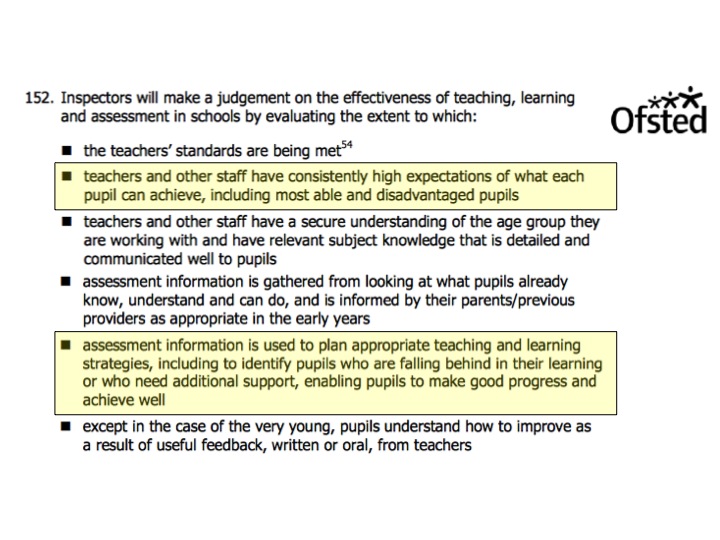
    What if… Ofsted are right? that the stretch and challenge of all children should be based on having consistently high standards of what each pupil can achieve, including the most able and disadvantaged…and assessment that informs planning for pupils who are falling behind in their learning or who need additional support enabling pupils to make good progress and achieve well?

    Slide1

    …and that when looking at books… there is the level of challenge and evidence that pupils have to grapple appropriately with content, not necessarily “getting it right” first time the work is not too easy?

    Slide2

    What if… the ability to plan for and to challenge and stretch children is impossible without a depth of knowledge that encompasses…

    • subject/age-related understanding of standards and expectations – that enables appropriate pitch as well as igniting an interest and passion around specific and well-ordered content?
    • a deep understanding of the key concepts and importantly the key mis-conceptions that are built into the progression of a subject or area of learning?
    • knowledge of exam and age-related expectations to provide precise planning, task setting that ensure that children are stretched and challenged around the appropriate content?
    • Knowledge of pedagogy – how to plan to pitch learning, plan lessons, activities and other elements of pedagogy to secure progress.

    What if.. one of the key levers in stretching and challenging children is the subject passion from teachers who inspire young people to achieve more. Teachers have huge influence – and with that opportunity comes great responsibility:

    717296dd52443f5d014228877381418e

    What if… this passion is particularly portrayed through the language we use? It is language that motivates and perhaps more importantly inspires interests that enhance young peoples lives. What if… we analysed our own use of language and identified phrases and approaches that automatically set limits (often unknowingly) on what children can achieve or indicate limits to what we believe is possible?

    What if… planning to stretch and challenge requires:

    • lesson objectives that genuinely stretch children based on where they are in their learning.
    • feedback and previous progress is the basis for the planning of each lesson – teachers show the flexibility required to respond and pitch lessons by child.
    • flexibility within lessons enable learning, tasks, questioning to be altered to maintain challenge and pitch.
    • peer-to-peer learning is used to support and accelerate progress.
    • different tasks are required to stretch children who are at different points in their progression.
    • lessons and content need to increase in depth rather than breadth to support increased challenge and stretch.
    • absolute clarity around what the age-related or exam-expectations are to direct learning appropriately and stretch in the right areas.
    • have high expectations of what is possible and what children can achieve.
    • Build resilience in pupils who develop GRIT and a growth mindset to spend more time outside of their comfort zone.

    comfort-zone-4

    What if… children do not produce their best work often enough and tread water in the mediocre? It might be that we rarely stretch and challenge students to produce their very best work and that much of the work produced falls in the bottom quartile of what what they are capable of?

    Slide1

    What if… children were stretched and challenged to produce work that is skewed to the right, toward excellence and not left where it probably sits at present?

    skewed

    What if… there is an ongoing and accessible record of a child’s best pieces of work so that there is an immediate benchmark to build from (perhaps at the front of each book).

    draft2

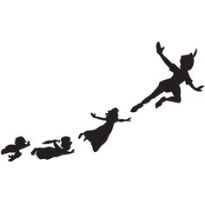
    What if… children can fly if they truly believe they can? 

    cc1ae1a0333adcd0ad428bd2046efa5d

    The moment you doubt whether you can fly, you cease for ever to be able to do it.” (from, Peter Pan)

    What if… teachers always started from the position that all children can achieve their potential? and What if… this was portrayed in the manner, language, optimism and challenge that teachers have for their classes/children?

    What if… we understood that a child’s beliefs can limit what they believe to be possible and worse still that as teachers and educators our beliefs can also limit what others believe that can achieve?

    “Tread carefully on the dreams of children; they are fragile”

    “…and release them to achieve their podium position…”

    podium

    What if… to stretch and challenge individuals practise needs to be …intentional, aimed at improving performance, designed for (their) current skill level, combined with immediate feedback and repetitious.”  (Malcolm Gladwell) … enabling children to  over-perform.

    What if… creating these conditions and the opportunity to stretch and challenge children requires teachers to be expert coaches who…

    1. Opportunity – creating the opportunity for children to learn and work just beyond their present ability.
    2. Competition from like-minded individuals – create a ethos and atmosphere of sharing and feedback that balances competition and co-operation.
    3. develop GRIT – supporting children to focus on long term goals, ignoring short-term distractions. Often re-doing and re-drafting for example.
    4. seek Deliberative practise – based on precise feedback support children to practise and apply understanding.

    bell curve

    What if… this seeks to…

    “replace the patchwork of lucky breaks, context and arbitrary advantages that determine success…with a system (learning) that provides opportunities and the conditions for all to feel success.” (Malcolm Gladwell, adapted)

    What if… planning, tasks and activities are informed by Blooms and SOLO taxonomy? That these frameworks support children to be appropriately stretched and challenged.

    blooms_taxonomysolo-taxonomy-with-verbs

    What if… we sought more often to escalate lessons and tasks from closed to open and (more often) to challenge children to apply, analyse, synthesis and evaluate their developing understanding. What if… too often children spend time doing what they can already do?

    What if… we pitch lessons in the proximal zone? and that the real challenge is to plan learning so that as many children are kept in their proximal zone for as long as possible, just beyond what the child is capable of, supported by a peer) … or in a state of FLOW (that area between boredom and anxiety)?

    What if… good lessons stretch and challenge 80% of students, but that in great lessons this is a different 80% each lesson? seeking to pitch and stretch all children over time… an ability that should not be under-estimated.

    pz

    figure1

    What if… stretch and challenge also came from teaching to depth and seeking mastery around the key ideas and concepts.

    More generally, in top performing education systems the curriculum is not mile-wide and inch-deep, but tends to be rigorous, with a few things taught well and in great depth.

    stock-footage-deep-end-deep-end-of-the-pool-a-good-visual-metaphor-to-show-madness-forstock-footage-shallow-end-of-the-pool

    What if… we stretched and challenged children based on a development of a growth mindset (Dweck) – where an anything is possible. What if… it was the absolute expectation that children had to meet the standards. …ensuring, of course, that we do not set the bar too low.

    What if… we are prone to underestimating what children are capable of and that this can be highlighted through modest lesson objectives. What if… by setting the bar high and seeking marginal gains we can expect more from children.

    “People with Growth Mindsets and who show GRIT achieve more when they engage in deliberative practice … it is this practice that achieve marginal gains (Steve Peters), inching toward excellence.”

    marginal-gains

    What if… teaching focused more on the journey; on stretching and challenging children to seek “near wins” (Sarah Evans)

    “The pursuit of mastery is an ever onward almost.” … “Grit is not just simple elbow-grease term for rugged persistence. It is an often invisible display of endurance that lets you stay in an uncomfortable place, work hard to improve upon a given interest, and do it again and again.”(Sarah Evans)


    Maybe then…  children will spend more time in their proximal zone thanks to the expertise and pedagogical understanding of the teacher. A teacher who consistently, deliberately and purposefully pitches learning just beyond a child’s present ability, that point between confusion and boredom, so that children are kept in flow more often. Teachers, as expert coaches, use assessment and formative feedback, strong subject and conceptual knowledge to use elements of pedagogy that stretch and challenge all children over time.

    …and maybe then, as teachers, we can be the spark of numerous ignition stories that are born out of an unswerving desire to stretch and challenge pupils; increasing the chances of individuals to be inspired and fall helplessly in love with a future passion…

    “Beneath every big talent lies an ignition story – the famously potent moment when a young person falls helplessly in love with their future passion.” Dan Coyle

    Dan Nicholls

    October 2015

    Creating the conditions for over-performance

    cowell

    “The truth is that only a tiny fraction of people get lucky.” (Gove, 2013)

    Simon Cowell said: “I didn’t work hard when I was at school. I left at 16 and I didn’t have any qualifications. I was useless. The secret is to be useless at school and then get lucky.” Gove responded: “This is an irresponsible and stupid thing to say. Teachers strive every day to ensure children understand the importance of learning, hard work and discipline. Simon Cowell’s comments undermine their efforts. The truth is that only a tiny fraction of people get lucky.”

    In Malcolm Gladwell’s book ‘Outliers’ he describes the importance of opportunity and circumstance in becoming successful, “Success is not a random act. It arises out of a predictable and powerful set of circumstances and opportunities.” (Gladwell)  – the contrast with Cowell is that opportunity is one part of the success equation. Opportunity is nothing without Grit or the “persistence, doggedness and the willingness to work hard for twenty-two minutes to make sense of something that most people would give up on after thirty seconds.” (Gadwell)

    A short insight into outliers, 10,000 hours and what makes people successful is provided in this interview of Gladwell: http://www.youtube.com/watch?v=Hz4hPbHIZ6Y – it ends with Gladwell urging, “society to build institutions that provide opportunities to work hard.” …it is opportunity that is seized that creates success not chance or luck or talent alone.

    David Beckham provides an excellent example. Whilst at Man Utd Under 15 Academy, he spent every school holiday in Manchester. Like many other successful individuals Beckham had four things, opportunity, competition from like-minded individuals, GRIT and deliberate practice…he writes:

    The incredible thing about that generation of lads, who came into the youth team (1. opportunity) with me in 1991, is that they were committed to hard training, as I ever was. We couldn’t get enough of it. Gary and Phil Neville had a Dad whose basic motto was ‘give everything and you will reap the rewards.’ At the end of practice, while most of the older lads were sitting in the canteen with their feet up, Gary was still pounding the ball against the wall… I already had a strong work ethic because of my family background (rise review – background counts four times more than school attended)Practice was like second nature. But with these guys (the Nevilles, Giggsy, Nicky Butt, Scholsey) (2. competition from like-minded individuals) I knew I had to take it to another level, to put in the extra shifts, to leave nothing to chance. We had to show commitment like never before…and that is exactly what we did. (3. GRIT)”…The more we practiced the better we became. Soon we were overtaking the older boys who were realising, a little to late, that they had taken things to easy…It wasn’t just the quantity of practice, it was the incredible focus on quality. (4. deliberative practice)” (David Beckham, 2013)

    Even with opportunity, only effort and commitment over time (GRIT) combined with practice that is …”intentional, aimed at improving performance, designed for your current skill level, combined with immediate feedback and repetitious.”  (Malcolm Gladwell) … will allow individuals to succeed, to become over-performers based on their context and background and to be outliers.

    Creating these conditions will allow individuals (and groups) to over-perform and become Outliers;

    1. Opportunity (getting teaching and learning right – teaching that is… intentional, aimed at improving performance, designed for your current skill level, combined with immediate feedback and repetitious?
    2. Competition from like-minded individuals (Peer groups, ethos, language, aspiration, pastoral support, House system?) – growing an epidemic of strong work ethic.
    3. GRIT (an ethos of possibility for all through effort) Outliers focus on long term goals, ignoring short-term distractions. – they are unswervingly future-focused.
    4. Deliberative practise approach… learn-revise-test-feedback-learn…marginal gains increasingly creating outliers compared to starting points.

    bell curve

    Whilst in the world of celebrity the role of luck maybe high; we live in a world that requires a series of conditions to exist and an attitude and approach that enables individuals to succeed. Education and schools are increasingly providing, supporting and developing these enabling conditions and opportunity … indeed we cannot afford not to secure over-performance, to buck-the-trend and to create the conditions that increase the occurrence  of OUTLIERS.

    “To build a better education system we need to replace the patchwork of lucky breaks, context and arbitrary advantages that determine success…with a system that provides opportunities and the conditions for all to feel success.” (Malcolm Gladwell, adapted)