Poor | inspiring childhoods shaped by poverty

Pause. Before we launch into the new term, we should check we are prioritising what matters… serving those who need us most.


Childhoods that are constrained by poverty are shaped by steep challenges, limited resources, and few opportunities. Children surviving under the weight of hardship, cope with more, with less help, are more vigilant, anxious, and mistrusting of the world they navigate. Childhoods that are shaped by poverty lead to adulthoods that never quite escape the impact of growing up poor, because childhoods last a lifetime (Floella Benjamin).

“Even as an adult the ripples of that (poverty) still affect me.” (Katriona O’Sullivan)

As educators we must do more to understand what it is to grow up poor, to grasp some understanding of the lived experience and the visceral truth. We should cut through our own jargon, our own perceptions and assumptions to understand the barriers, the struggle and the occupying weight of what some children are forced to carry.

“‘Poor’ cuts through a lot of jargon – words like ‘disadvantaged’, ‘underprivileged’, ‘deprived’, ‘under-class’, ‘under-resourced’. Words that have their place but don’t capture the visceral truth of what it is to grow up the way I did. The way thousands of children are growing up right now.” (Katriona O’Sullivan)


We need equity | inspiring lives with greater opportunity and choice

“We need equity in education, not equality. If someone can’t see straight because the world is falling in around them, we need to raise them up to clearer skies.” (Katriona O’Sullivan)

In these times, as schools return, we must apply the equity required to enable all children to flourish, to clear their skies, and to not feel marginalised in their world. “We cannot keep pretending it’s an equal opportunities education system. It is not.” (Katriona O’Sullivan) Applying equity is giving what is needed, offering the opportunities for more children to thrive, to have greater choice in their lives, to open doors that let in the future.

“There is always one moment in childhood when the door opens and lets the future in.” (Graham Greene)

This is not about planning and plotting an escape for a few but creating the conditions for all children to feel success in their school and their community. Applying equity to create the opportunities and experiences that inspire lives and unlock doors.


Tipping the odds | valuing what matters

As educators, we need to choose to better use our power, to be braver, to tip the odds and create the conditions that enable more children to flourish in their lives, where they are. To do so requires us to value and measure what matters, high attainment and attendance for the most vulnerable. This reveals the quality of provision and the closing of gaps is the evidence of success. We can and should do better.

“I was lucky, the timing for me was right – I managed but so many others don’t. The world is less because of that. The education system can and should do better. We all should do better.” (Katriona O’Sullivan)

Children living in poverty are not problems to be solved, the system is mis-aligned, lop-sided and intransigent. An uneven playing field that starts from birth and is exacerbated though childhood. Our system creates adverse conditions, fails to value diversity and has narrow success measures that perpetuate the present order and condemns those with the least. Poor assumptions and preconceived views of ability and ambition fail to unleash the potential and contribution of too many children. We need to re-engineer and reconfigure our system, avoiding the traps of meritocracy.

Our deficit discourse, language and vocabulary, both intended and unintended is deafening and maintaining the status quo, ensuring that a child’s poverty extends into all aspects of their lives. Only the deliberate application of equity addresses the a-symmetry of childhoods. Equity, tips the odds.


The deeper implications of poverty | levelling up
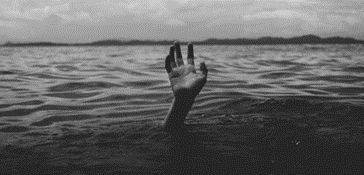
“Most of the time being poor felt like a sodden blanket was lying heavy across my shoulders, dragging me down into dark waters.” (Katriona O’Sullivan)

Whilst poverty is fundamentally about having less money, the impact of poverty extends far beyond, eroding self-confidence and a sense of worth:

“… ‘poor’ for me was also feeling like I had no worth. It was poverty of mind, poverty of stimulation, poverty of safety and poverty of relationships. Being poor controls how you see yourself, how you trust and speak, how you see the world and how you dream.” (Katriona O’Sullivan)

If we are to influence how children see the world, how they dream and how they build their future, we need to be bolder, to call out our unhelpful narratives, excuses, and assumptions that fixate on escape and tales of rags to riches. We must enrich their world, create more opportunity, more experiences, offer greater belief in individual children so that they feel more success and have stronger self-belief. You’ve got this.

“… opportunity, money and support. The middle classes are born with those three things in spades; the poor are born with none of them. And the truth is, we are losing some brilliant minds in the trenches of poverty.” (Katriona O’Sullivan).

Beyond the brilliant minds, there is considerable benefit to society when we create conditions that include, that value diversity and broaden access to success. Conditions that privilege all children disproportionately levels-up those who are traversing a world that is loaded against them.

“Sometimes, even these days, I feel like an interloper. I need reassurance sometimes that I am okay. Deserving. Worthwhile.” (Katriona O’Sullivan)


The smallest act | surfing on the ripples of others

Our influence on those closest to us and those that depend on us is more significant than we believe. How we are, what we say, do, behave, deeply affect those around us; children particularly so, who seek clues and are vigilant of snakes…

Are there snakes here? …you become hyperaware. Mistrust becomes a tool of survival. Whenever I met anyone in authority, I was instantly suspicious, instantly mistrustful… it is actually a safety meter.” (Katriona O’Sullivan)

We have an opportunity as educators, as schools and trusts to shape and inspire lives, to remove snakes, hold ladders, create the conditions for children to feel secure, to belong, to have status, to feel less anxious, less wired, more trusting and to grow in an environment that values the uniqueness of each child. And one of our greatest gifts is to give children their voice, the oracy to confidently contribute, to step forward, and stop their lives being narrated by others.

“My life was narrated for me by others. Their voices were forceful, emphatic, absolute. It had never occurred to me that my voice might be as strong as theirs.” (Tara Westover)

Sadly, not our present system, which is perfectly designed to create the reverse, to exclude children from and within schools. Schools need to be riddled with details, interactions, and sparks that pivot young lives.

“Every development in life pivots on small, contingent details, ad infinitum. We’d like to pretend it isn’t true, but reality doesn’t care what we think. We forever surf on the ripples of others.” (Brian Klass)

But, here is the thing, whilst our influence on others carries significant responsibility, humans are beautifully contagious; And, amazingly, importantly, thankfully, even the simplest acts, set of words, an acknowledgement, a moment of belief in another, changes every constellation, shapes a life and creates ripples for others to surf.

“The smallest act in the most limited circumstances bears the seed of boundlessness, because one deed, and sometimes one word, suffices to change every constellation.” (Hannah Arendt)


Excellence | Expectation | Equity | Currency | Culture | …our identity

So, at the start of term, we should pause, and plan to create the conditions for more to flourish, to apply equity and build schools that privilege all children and disproportionately support those who need us most. Prioritising what matters…

…to seek excellent educational provision: the strongest curriculum, enacted well, inspiring thought and stalking awe, where assessment follows learning to meet need.

…to never lower our expectations of what a child can achieve, because if we let them off, we let them down. Focused on high attainment and attendance, to build belonging and gift agency so that all children possess the keys to thrive through childhood, into adulthood. Because there is no lack of ambition, and a significant desire for self-agency

“We don’t need to waste time raising people’s ambitions. Idleness and low aspiration have never explained the lack of mobility. Presented with greater opportunity, most people grasped them …(seeking) the control over their lives and (the) choices that offered.” (Selina Todd)

…to apply equity, the permission to give what is specifically needed, to meet need, remove barriers, do different for those that need us most and give strong, timely, specific feedback, the golden thread of an advantaged upbringing. To need want to do different, to create the pathways and encouragement for children to ‘play on’ (Jemima Montag).

“I am giving you this feedback because I believe in you.” (Jo Boaler)

…to create incentives, currency, performance indicators that place value and reward the closing of gaps and gap-closers, so that no child is left behind, written off or able to be discounted. The attainment and attendance of disadvantage, reveals the true quality of provision.

…to build culture that privileges disadvantage and those in poverty, unswervingly never giving up on a child, because it is who we are and what we do. A commitment etched into our identity.


Perhaps then…

…we can create the conditions for colleagues to wittingly and unwittingly inspire lives with more opportunity so that we create the conditions for those living in poverty to prosper in their world, in these times. It is why we are here … to be the Myles for others.

“If not for Myles, I wouldn’t have been on that train. As distant as he was, his impact on my life was still tangible – only wishing I had the chance to thank Myles for the path he unwittingly set me on.” (Ashley John-Baptiste)

so, breathe, commit … and go inspire lives
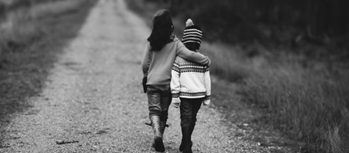

Much of this piece is inspired by Katriona O’Sullivan, whose book “Poor” is an extraordinary exploration of what it is to grow up in poverty. Read it.  

Dr Dan Nicholls | The White Horse Federation | August 2024
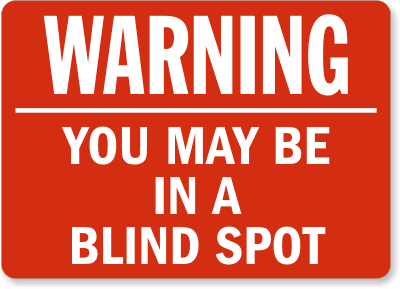
Seeing the wood for the trees: beware organisational blindness

blind-spot

Can’t see the wood for the trees: the whole situation is not clear, because you’re looking too closely at small details, or you’re too closely involved.

trees

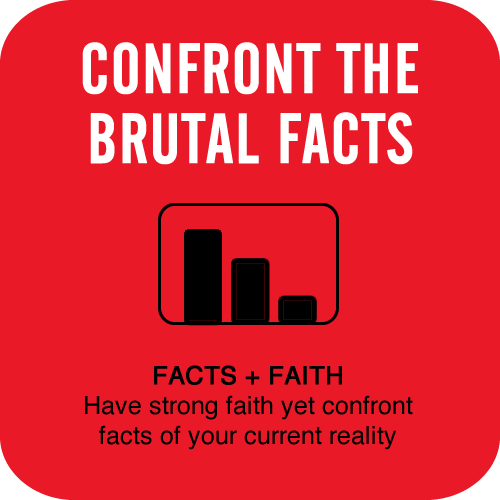
It is probably true that the longer we lead, teach or support within an organisation the blinder, more conditioned we become to accepting how things are. Our organisational blindness restricts our ability to be shocked or provoked into action; our ability to see the ‘brutal truths’ (Collins) of our situation decreases with time (and surprisingly quickly). We are less able to see the reality of our present situation and less able to seek the required improvement.

“Organisational blindness inhibits individuals and teams from seeing the brutal truth of their reality; leading to missed opportunities, an inability to not see what really matters or be agile enough to strategically move to a brighter future.”


Which begs the question, how do we correct our organisational blindness; overcome our biases and conceptions that grow through time and be alive to the brutal truths so that we can focus on the things that matter; those things that will address the reality and not our perception of the reality? So how do we provoke fresh thinking and fresh perspectives?

g2g-confront-facts

“You absolutely cannot make a series of good decisions without first confronting the brutal facts.” (Collins)


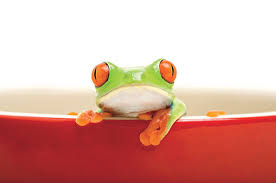
What if we fully understood that we learn to live with and accept things over time. That over time we become organisationally blind to our reality. The story goes that if you place a frog in water and gradually boil the water, the frog sits happily until death, but throw a frog into boiling water and it will jump straight out…the difference between becoming conditioned and normalised to our organisation and seeing it through fresh eyes and from a new, wider perspective.

frog-in-pan

What if we understood that when we move organisations we have our sharpest understanding and insight during the first 6 weeks and after that we gradually become part of the system (Dr Patrick Dixon). What if we worked harder to find ways of re-creating this opportunity; to more often see through fresh eyes?

What if we realised that our institutional blindness is our greatest risk? As the future becomes increasingly uncertain and the educational landscape shifts often, an organisation that is sleepy and fog ridden with organisational blindness is very vulnerable to “wildcard” events as well as to normal rates of change. There are a number of island Academies who have required reinvention; a significant contributing factor being organisational blindness and a poor perspective on what matters now.

fog1

What if we recognise that decisions, strategies and approaches are often only appropriate and right for a point in time? Great organisations are able to be agile and evolve practices so that they stay on the leading edge. Our vulnerability increases where organisational blindness is deep and widely shared such that we are unable to see what is right for now.

What if we realised a key strength of being part of a collaborative network or Multi Academy Trust (MAT) is the ability to connect, compare, contrast and have the wider view that improves our organisational blindness, enabling a greater identification of the brutal truths. What if we accelerated our connectivity, because together Academies in firm and soft collaborations can raise standards and overcome the blindness and vulnerability caused through isolation?

What if the most dangerous institutional blindness is when it occurs at the top. If the Head/Principal is the most significant leader then blindness at this level can cripple an organisation. More than ever we need all leaders to be system leaders…

“All leaders, South West leaders.” (Sir David Carter, RSC)

What if the fragmented nature and isolation of some academies increases organisational blindness? Where island organisations exist and/or there is significant blindness there is significant danger that the organisation becomes less attuned to reality and less successful.

“We still have an education system that is fragmented and unstandardised (adapted from Lord Nash); one where there are too many island schools/academies whose viewpoint is unavoidably organisationally blind.”

What if we recognised that much of what we see and think is hugely vulnerable to selective perception: seeing only the things that fit with our own preconceptions or prior beliefs? Whilst we rely on internal scrutiny these perceptions will limit our notion of performance and this worsens over time.

“Selective perception is the tendency to not notice and more quickly forget stimuli that causes emotional discomfort and contradicts our prior beliefs.”

What if we accept that the people within organisations are least likely to be able to evaluate its quality? What if we fully exploited, embraced and sought external scrutiny, because as leaders we understand that this perspective will be truer, more balanced and less open to bias than our own?

What if we grew more system leaders to horizon scan and have a wide perspective that can correct blindness… to find coherence, to light the way, to reduce blindness so that the system as a whole saw more of the light; lifting our young people and communities up?

5886864693_d512f83368

What if system leaders connected the dots and collaborated; being strategically altruistic. Recognising that where we strategically give and collaborate we reduce our institutional blindness and contribute to correcting institutional blindness in others. By connecting the dots and by being a deliberately altruistic system leaders we reduce blindness in ourselves and others.

dots-and-circles-purple-24173866-2560-1600

What if we spent more time out of our organisation? What if we actively supported leaders and teachers to spend time in other Academies? So that we eased and removed organisational blindness, provided perspective and shifted the frame of reference such that we were better able to see the brutal truths and plot improvement. Fresh eyes provide a new perspective; in the land of the blind the one-eyed person is king…

Basic RGB

“Complacency in leadership limits our ability to notice the unacceptable and maintain high expectations. Leaders need to welcome and proactively seek challenge and peer review.”
(adapted from Steve Munby)
What if we recognise inhibiting hubris. Jim Collins in “How the Mighty Fall” identifies the dangers of hubris, the excessive pride that brings down a hero – following success, leaders often become arrogant about their success and almost view it as an entitlement.  As a result, they become complacent and lose sight of (become blind to) what caused/s their success.  Organisations that were perceived to be successful can be vulnerable to disruptive changes (occasionally dramatically)…

There is no danger that Titanic will sink. The boat is unsinkable and nothing but inconvenience will be suffered by the passengers.” -Phillip Franklin, White Star Line Vice-President

Der Untergang der Titanic

What if by recognising the problems caused by organisational blindness that we are better able to avoid catastrophes and to find an appropriately risk-aware approach based on the true realities of our performance and provision?

What if we protected ourselves from this false sense of security, the false notion of being able to control situations or understand present performance. It is this that compromises our ability to cope and evolve to meet the demands of the present and the future. Perhaps this is about remaining students of our work and seeking external opinion and thoughts; taking every opportunity to vacuum the brains of others for insight and perspective…

“Like inquisitive scientists, the best leaders remain students of their work, relentlessly asking questions–why, why, why?–and have an incurable compulsion to vacuum the brains of people they meet.” Jim Collins.
What if we sought peer review and scrutiny as the best way to avoid both complacency and organisational blindness? Even if this makes us feel uncomfortable and exposed to the truth… perhaps a humbling truth, but with this comes new understanding, insight and perspective to enable improvement.
 “What makes us vulnerable makes us beautiful.” (Brene Brown)
“What do we see when leaders are at their best. – a balance between confidence and humility.” (Steve Munby)
What if Ofsted valued system leadership more? Valued the system contributions made to other organisations and the wider community? After all Ofsted wields significant power to nudge the education system in the direction it chooses.
What if we also recognised that unless leaders, teachers and staff go beyond the organisation there is significant danger of Cabin Fever; becoming conditioned (negatively) to everyday experience, with little ability to measure quality or what is normal? It is healthy and desirable to offer and ensure that all staff gain wide perspectives – as organisational blindness can be damaging and provide a warped sense of performance or quality…(often selectively perceiving the organisation based on low amounts of evidence or restricted perspectives).
2009128-quiet_cabin

Maybe then we would recognise the prevalence and harm of organisational blindness…understanding that our ability to see with fresh eyes lasts around six weeks, after which, without corrective approaches, we become increasingly blind to the brutal truths of our reality, less able to identify improvement and actions that are right for now.

Maybe then we would have far less complacency within the system; the sort of complacency born out of hubris and organisational blindness.

Maybe then we would see the brutal truths in ourselves and our organisations. Enabling our organisation to avoid dangers and to be agile enough to cope and thrive despite the present pace of change.

Maybe then we would see the huge opportunity that presently exists for shifting our fragmented island system of Academies into local hubs and multi Academy Trusts to reduce blindness, create coherence and shift the quality of education for whole communities.

Maybe then we would connect and collaborate not just to see again, but so that we could treat blindness in others and be system leaders.

Maybe then we would welcome scrutiny and peer review as a way to reduce blindness, bring better perspective and focus and to therefore accelerate improvement.

Maybe then we would seek opportunities for staff and ourselves to “get out more often” to improve our blindness and that of others? … as well as reduce cabin fever and the dangers of selective perception.

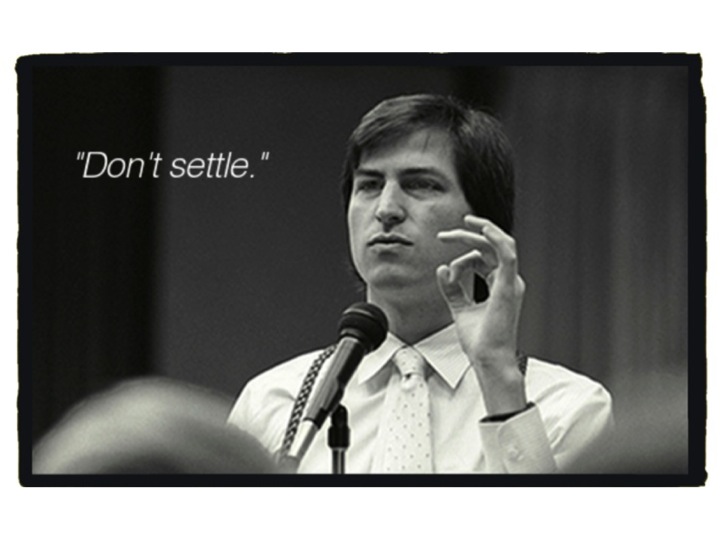
Maybe then we would connect more and be strategically altruistic to improve the wider system; playing our part in removing organisational blindness. After all great organisations don’t settle and achieve greatness through conscious choice…

“Greatness is not a function of circumstance. Greatness, it turns out, is largely a matter of conscious choice.” (Collins)  (A choice that needs to be seen through the fog of organisational blindness)

Slide39


April 2015