Toward the future | inspiring lives

Our Mission

In the next phase we will strengthen our trust, deepen our connection and collaboration to add more value to each other and to all children. This is a venture in shared responsibility and joint endeavour to inspire lives with greater opportunity and choice. Succeeding in our mission:

Inspiring every child to flourish through an inclusive, all-through education that nurtures opportunity, equity, and agency for life.

A mission that ensures 11,000 children flourish and develop greater self-agency, becoming the masters of their fate. A worthy quest powered by 1,500 connected colleagues, empowered to do meaningful work.

For those that carry the most

We recognise that some children carry more than most, have had less opportunity and experiences in their early childhood and so need us more. They neither lack ambition or ability, but they have less capacity, fewer resources and face barriers that tip odds against them. In difficult times education has the power to transform lives, which is the business we are in. The performance and development of these children is the most important measure of our worth.

“We need equity in education, not equality. If someone can’t see straight because the world is falling in around them, we need to raise them up to clearer skies.” Poor, Katriona O’Sullivan


Anchored by our Values

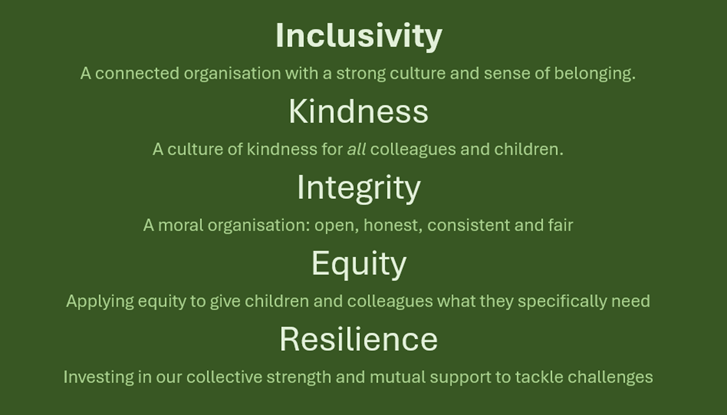
Everything we do is held by our shared values:

Our stable core enables our innovative edge

We continue to build a strong trust with great schools that focuses on getting every day right and building a stable core: consistently delivering high quality provision with effective systems and shared approaches, enables our frontline obsession.

We stand on our stable core and what we choose to do the same, so that we can innovate on the edge, expertly developing approaches to improve provision and inspire lives. This is a collective, connected and developmental endeavour through collaboration.


Towards 2030 | why we exist

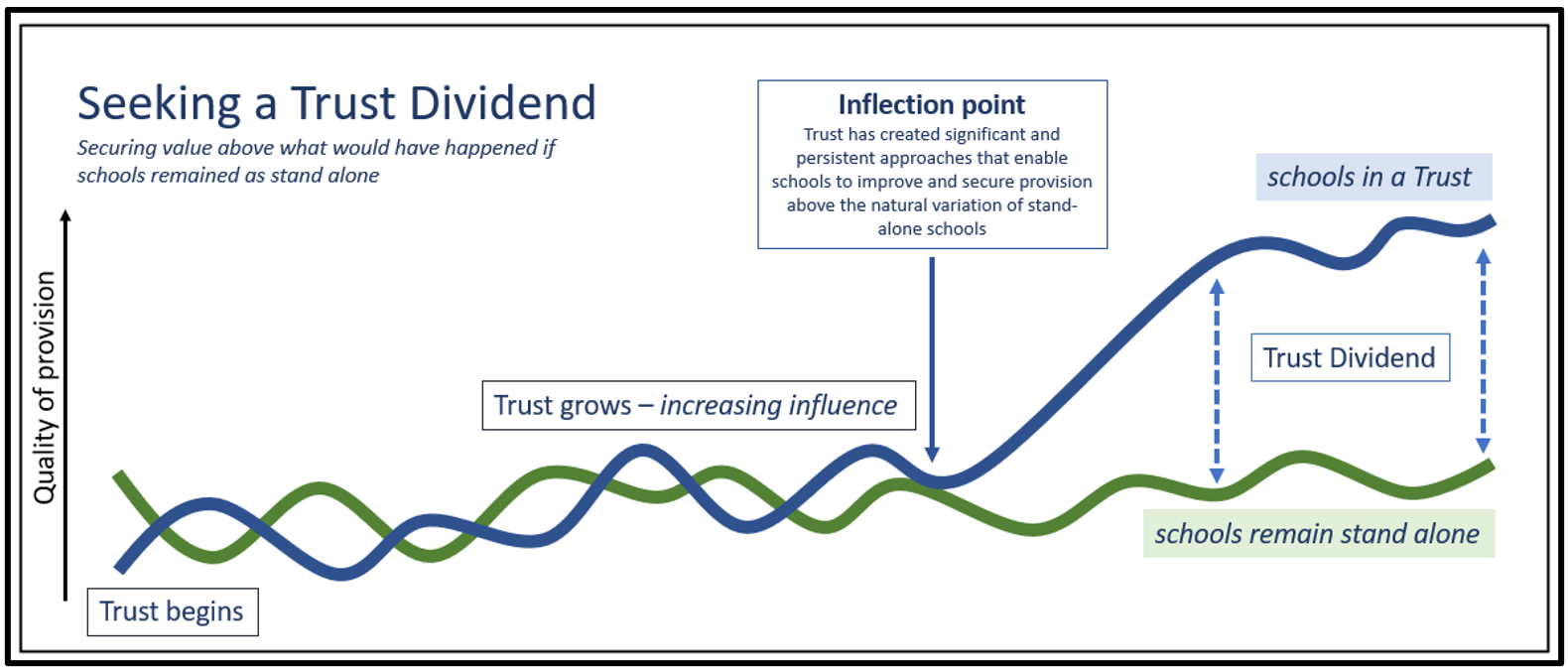
To build a strong trust with great schools. Offering high quality education over 570-weeks that closes gaps for those that most need us. So that the trust exists in a higher performance space and exploits our collaborative advantage that yields a trust dividend.

Our focus on partnerships and places builds better communities for children to grow up in and flourish. Colleagues create greater opportunity through deliberate local and regional collaboration,seeking to improve other trusts and the sector.

The trust is deeply connected within itself. There is a strong collective desire and shared responsibility to add value for all children in every setting. This collaboration enables a level of innovation and shared approaches that add more value. As part of a human organisation colleagues are well connected, making a greater difference to others in and beyond our trust.

The consequence of our work over five years is that the trust becomes self-improving, the systems, shared approaches, trust improvement model, collaboration, horizontal leadership and empowerment is creating more value over time and is self-sustaining.

Colleagues enjoy more opportunity and are proud to do meaningful work that is enabling all children to flourish through an inclusive, all-through education that nurtures opportunity, equity, and agency for life


Higher performance space | in search of the trust dividend

There is an unswerving, shared responsibility and desire to raise standards. To build a strong trust and great schools that exist in a higher performance space that particularly enables disadvantaged learners to thrive and attain well.


So, where next… this year

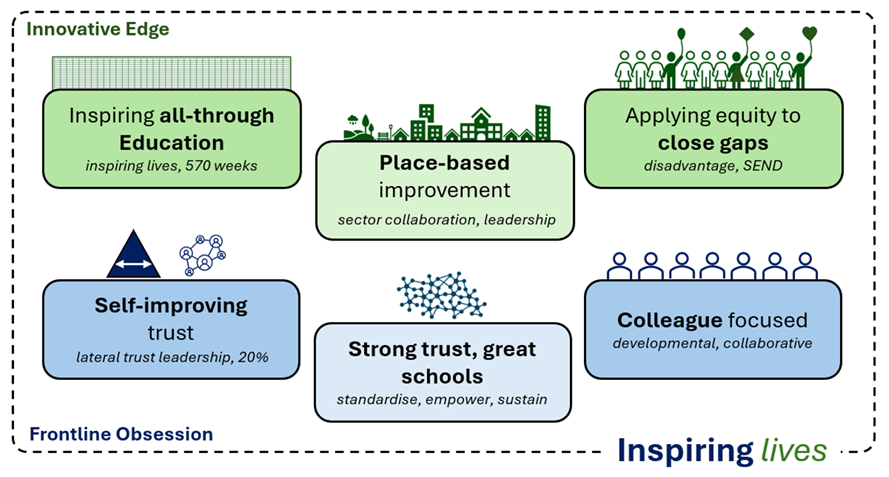
In the next phase, to summer 2026 we will prioritise these six areas:
Innovative Edge | Inspiring lives

This year we will invest in our inclusive all-through education (570-weeks) and apply greater equity to close gaps for children that need us most. A focus on place-based improvement will build strong community partnerships and support improvement beyond our trust.

Stable Core | frontline obsession

We will continue to invest in our stable core, by building a strong trust that enables great schools. Our colleague focused strategy will invest in all colleagues and create the conditions for our frontline obsession. Aiming to create a self-improving trust, investing in lateral leadership, connection, collaboration and strong systems.


570 Weeks | inspiring all-through education

To build an inspiring, inclusive, all-through education: as an entitlement for all children. Enacting excellent provision for every child throughout their 570 weeks of education. Prioritising:

  • Trust Curriculum | curating and enacting a shared curriculum across all year groups. (SDP)
  • Attendance, inclusion and transitions | to secure stronger attendance, strong inclusion and high-quality transitions, disadvantage first. (SDP)
  • Best Start in life | investing in the strongest possible start for all children through nursery and early years, enabled through a set of core commitments. (SDP)
  • Outstanding Personal Development | outstanding personal development curriculum builds character and offers greater opportunity for all children in every setting.

Closing gaps | seeking social justice

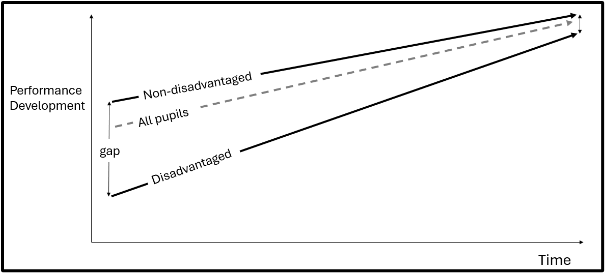
To apply equity and unswervingly commit to meeting the needs of children experiencing disadvantage and SEND, securing attainment and attendance that closes gaps and builds agency for each child. Securing greater social justice by prioritising:

  • The trust-wide development of teaching | systematic focus on the development of teaching to enact our shared curriculum. Our strongest lever for closing gaps. (SDP)
  • Disadvantage first | unswerving focus on the performance of disadvantaged pupils, through targets, data and quality assurance, as the indicator of the quality of our provision. (SDP)
  • Catch-up, Keep-up | systematic tracking all learners and applying equity, doing different and more, so that all children are caught up and kept up. (SDP)
  • All leaders, leaders of SEND | developing our SEND provision, focusing on ‘all leaders as leaders of SEND’ – securing a systematic strategy to meet SEND needs.
The importance of place | community partnerships

To build partnerships with educational and community partners to secure stronger communities and 570-week educations for all children. Using expertise in the trust to reach out and secure improvement in schools, trusts and the sector. Growing our reputation and influence by prioritising:

  • Strong recruitment built on growing reputation | securing stronger recruitment of pupils into our schools to inspire more lives and better serve our communities.
  • Trust Growth | securing appropriate and strategic growth of the trust to secure financial opportunities and grow our reputation and influence.
  • Collaboration with local trusts, local authorities and partners | seeking strong collaboration to secure improvement beyond the trust – seeking to influence all 570-weeks
  • Sector reputation and influence | playing an active role beyond the trust, including with the DfE and other partners, to influence policy, improve other trusts and the sector.

Colleague focused | developmental and collaborative

Investing in all colleagues to be connected, to collaborate, develop and grow to lead and contribute toward the mission and feel empowered to do meaningful work. Prioritising:

  • Recruitment and Retention | building a strategy to recruit well and to attract and retain strong colleagues. Considering our approach to flexible working.
  • Professional Development | creating on-going opportunities for professional development, held in a curriculum. Developing, inspiring and creating more opportunities for colleagues.
  • Induction | investing in and building strong induction to support all colleagues to have the best possible start to their career in our trust.
  • Well-being and mental health strategy | securing approaches across the trust to support all colleagues with their well-being and mental health.

Strong Trust, Great Schools | standardise, empower, sustain

Ensuring that the trust improvement model offers the foundation for colleagues to lead great schools. Complicated systems well embedded across the trust to drive effectiveness and efficiency. Prioritising:

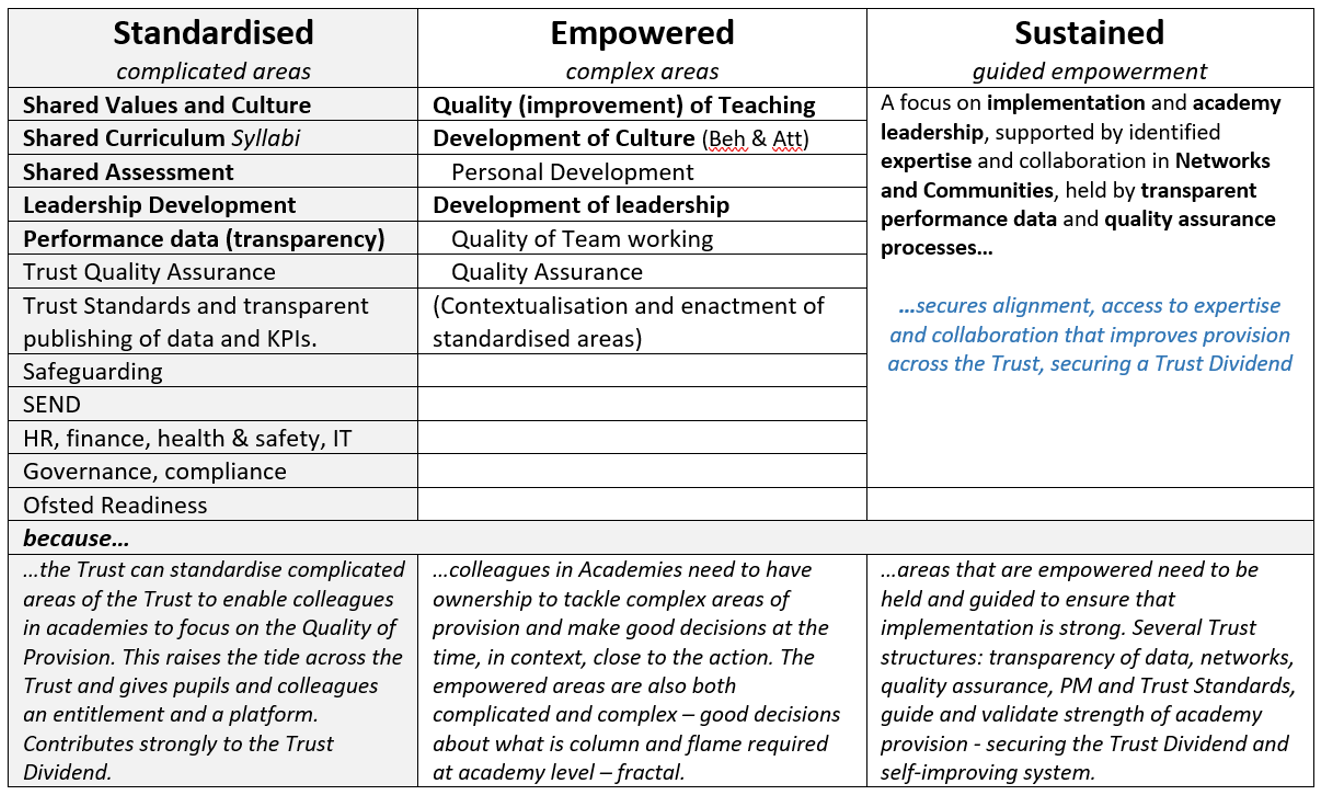
  • Deliberate enactment of the Trust Improvement Model (SIM) | developing our standardised approaches, enabling empowered areas and sustaining the model to secure improvement.
  • Financial stability and clarity | Ensuring the trust maintains the present financial security, secures wider responsibility and enables greater investment in the trust.
  • Professional Services | developing professional services, to strengthen platform, offer capacity, expertise and secure the environment to empower all colleagues to deliver the mission.
  • IT Strategy | ensuring colleagues and pupils have the tools they need to thrive now and in the future. Developing our digital vision and cloud-first approach. Exploring the opportunities of AI.

Towards a self-improving trust | lateral trust leadership

Creating the expectation and conditions for horizontal improvement across the trust. Connectivity and collaboration that are more effective and efficient at driving the School Improvement. Prioritising:

  • Trust Leadership Curriculum | investing in and enacting a trust leadership curriculum and to extend the sense of leadership curriculum through networks and the layers of the trust.
  • Networks and Subject Communities | connecting colleagues with purpose, formally and informally, to enable the development of strategies that raise standards.
  • Lateral leadership, 20% time | creating the expectation and the structure for colleagues to work beyond setting to support lateral leadership and secure a self-improving trust.
  • Succession Planning | investing in succession planning and talent management to ensure the future leadership security for our trust.

First Steps… into Term 1

And our first steps in Term 1 will see us deepen our connection and collaboration and prioritise:

  1. Understanding performance and setting the ambition and targets for 2026.
  2. High quality Induction and line management, starting out strong.
  3. Strong start and focus on Attendance, disadvantage first.
  4. Best Start in Life, embedding our core commitments.
  5. Enacting our shared curriculum.
  6. Focus on the development of teaching through Steplab.
  7. Embedding the new Planergy software in Finance.

We choose to venture on this journey to 2030 not because it is easy, but because it is hard, and because our ambition will serve to organise and measure the best of our energies and skills, because the challenge is one that we are willing to accept, one we are unwilling to postpone, and one which we intend to win (adapted, John F. Kennedy)

So, breathe, commit … and go inspire lives with greater opportunity and choice.

Thank you, you make a difference


Dan Nicholls | August 2025

Human Organisations | alchemy and magic

The building of Trusts as Human Organisations offers the best opportunity to exploit the collaborative advantage created by deeply connecting colleagues and groups of schools. Human organisations are deliberately designed to be colleague-centred, relational, collaborative and generative. Aligning individual purpose with the collective mission, empowers colleagues to seek improvement.

Human organisations require deliberate ‘Trust’ leadership to orchestrate collaboration and to understand that Trusts are adaptive, living systems that with the right culture and architecture can trigger greater connection and value. This value is multiplied when peers connect with purpose to explore and exploit their collective imagination and expertise: alchemists creating magic. Too often the capacity and connection for improvement remains latent within Trusts.

“…magic should have a place in our lives – it is never too late to discover your inner alchemist.” Rory Sutherland

The following describes a human organisation—one that seeks a collaborative advantage so that groups of schools perform better than before and are more able to tackle the challenges of our time.


The power of purpose

Human organisations articulate why they exist. Leaders draw maps, set destinations, raise expectations and describe the desired future in technicolour. The narration of the journey and importance placed on it offers the cultural currency, the validation, the reward for collaborating toward the destination.

“Never doubt that a small group of thoughtful, committed citizens can change the world. Indeed, it is the only thing that ever has.” Margaret Mead

A shared quest, in something worthwhile, something meaningful, something that lights a fire, and something anchored in why we exist, creates a generative shared desire and motivation. It sustains and directs energy across the organisation, toward that which is worthy.

Built on relationships3

Human organisations are driven by an unswerving investment in relationships, to secure motivation and to connect peers with purpose, to seek our moral ambition.

“Leadership is communicating to colleagues their worth and potential so clearly that they are inspired to see it in themselves.” Stephen Covey

In human organisations colleagues need to feel the purpose, have enough empowerment and autonomy to seek mastery. It is this investment in colleagues as social beings that taps our deeply engrained tribalist desire, to belong and do meaningful things.

“The relationships we build with each other provide the foundations of change. We are social beings who thrive on connections.” Sir Hamid Patel

The investment in relationships directed toward the purpose is the life blood of human organisations where success is the sum of all decisions made, by all colleagues, every second, of everyday, everywhere in the Trust.

Hard wiring

Human organisations hard wire, design and develop networks and communities as fundamental to their being: seeking connectivity and conductivity. It is not just an exercise in bringing colleagues together, networks must create enough conductivity to shift behaviour and actions intelligently toward the purpose and higher standards.

The architecture and design of networks is very deliberate and requires colleagues to be open, critical and ego-less in the deliberate search for better.

Soft Wiring

“The stars we are given. The constellations we (and they) make.” Rebecca Solnit

Human organisations encourage, permit and expect colleagues to collaborate beyond the set piece networks; connecting in informal, organic and dynamic groups of colleagues motivated to share and solve, in service to the mission. This collaboration propagates value, horizontally and organically across the organisation, adding up to more than the sum of the parts and becoming self-improving.

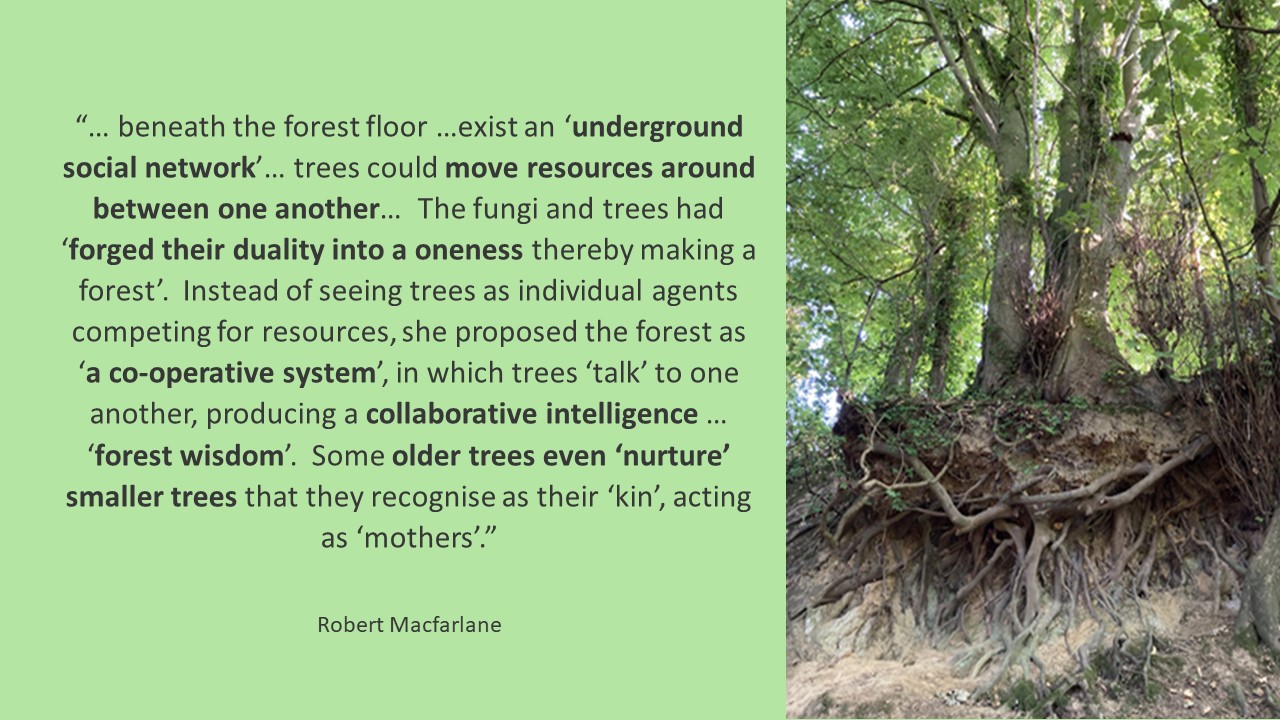
“…forests are complex adaptive systems, comprised of many species that adjust and learn, …and these parts interact in intricate dynamic networks, with information feedback and self-organisation. System-level properties emerge from this that add up to more than the sum of the parts.” Suzanne Simard

Building a platform

Human organisations invest in platforms of shared approaches for colleagues to collaborate on. This liberates colleagues to add value and seek greater impact by getting much better at the same. Playing in one field, free to innovate and add value based on a foundation, rather than playing in the woods or on the hill or in the fields: where a thousand flowers fail to add value.

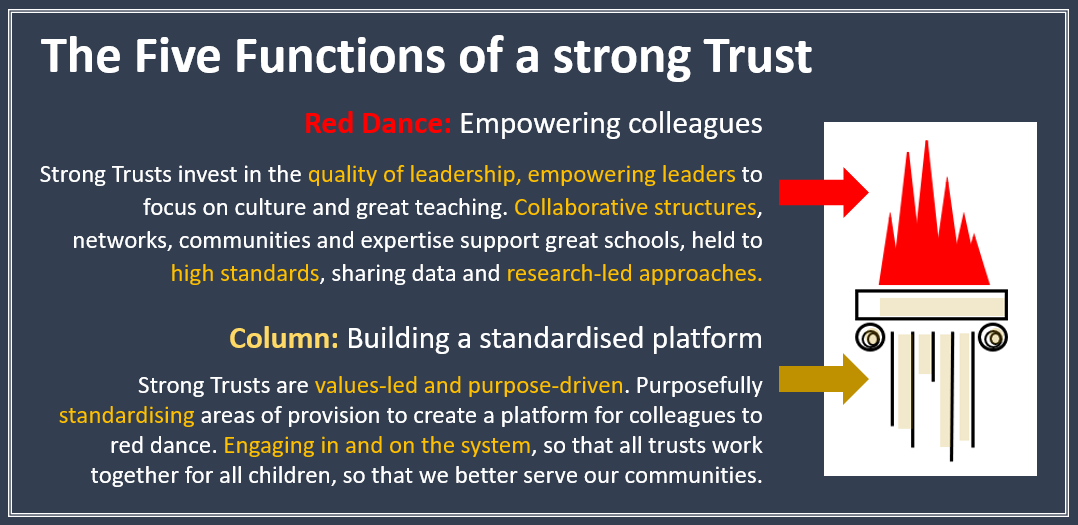
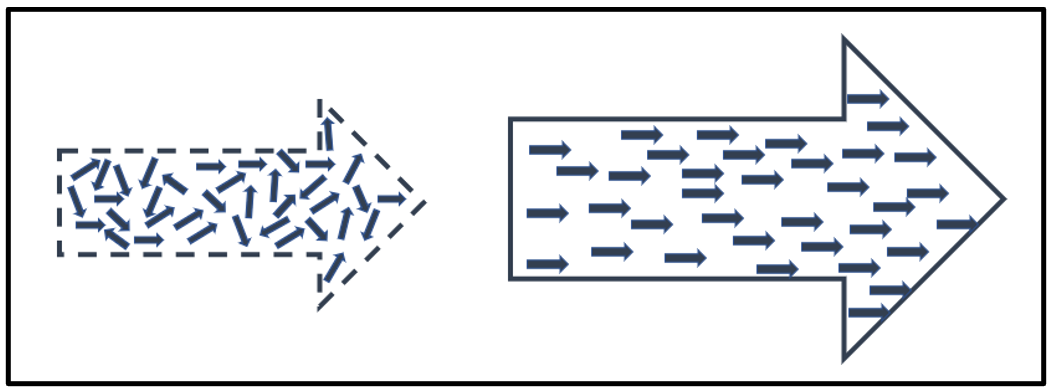
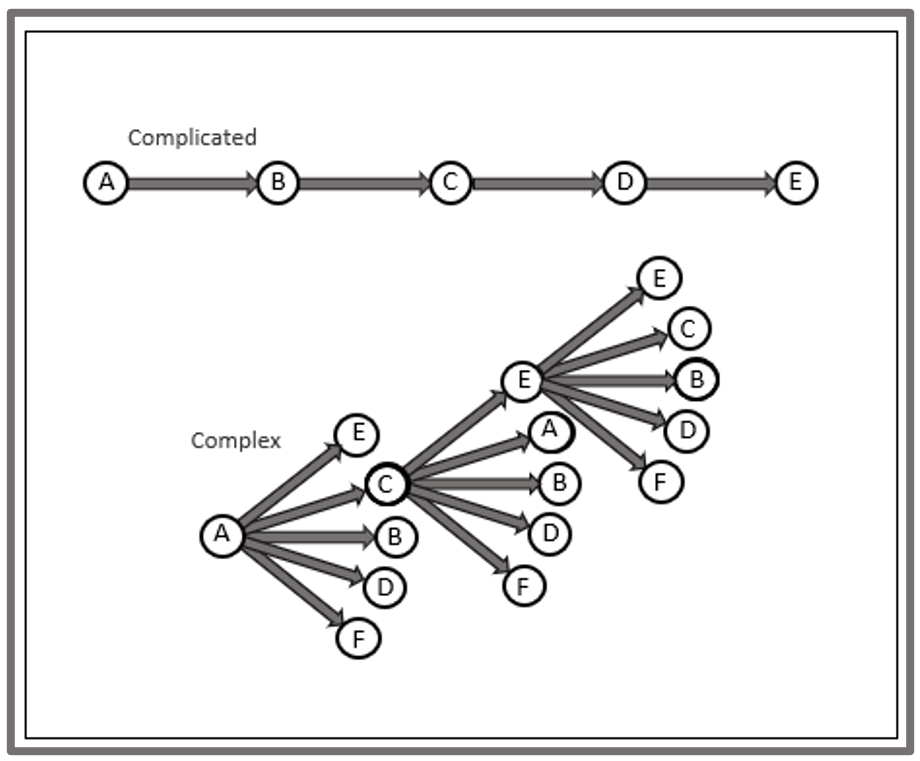
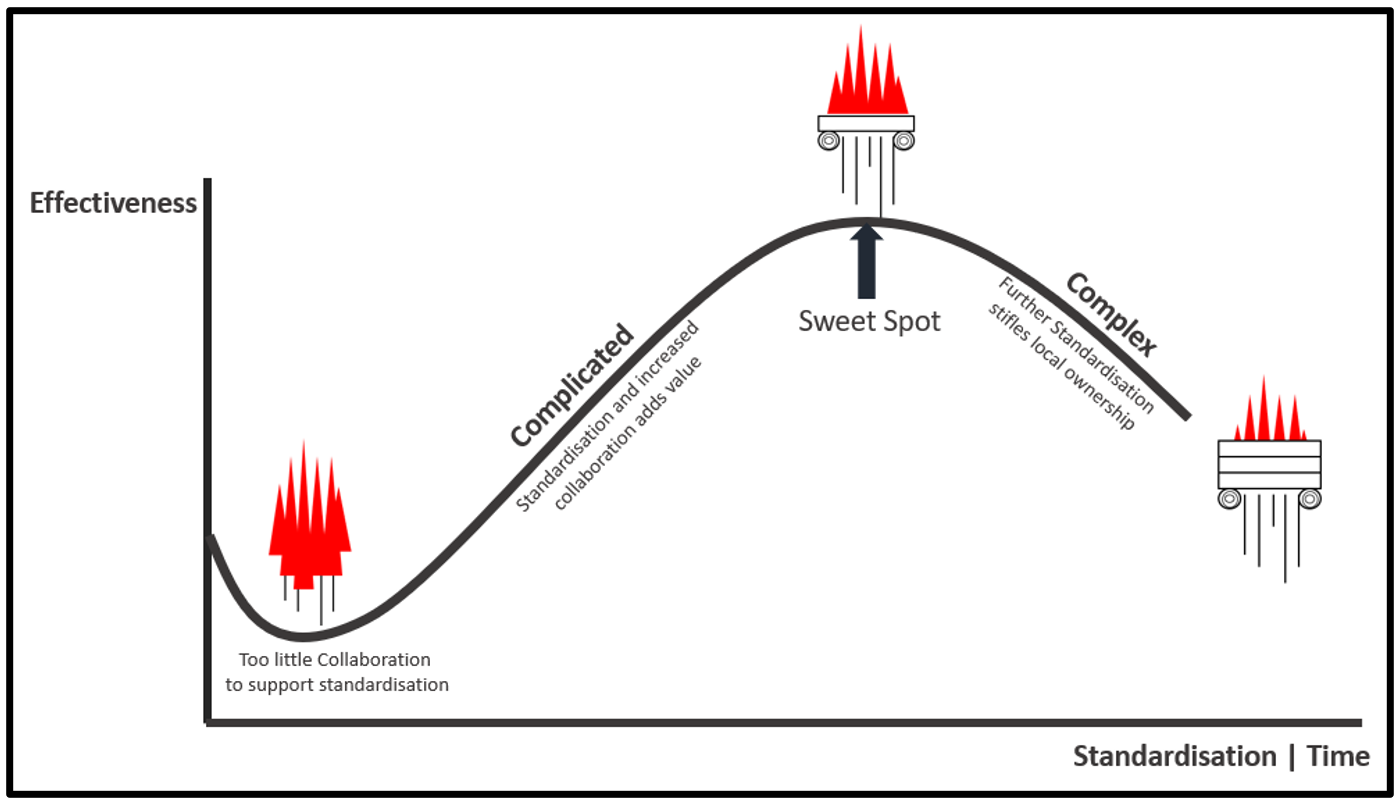
This is an intelligent dance, that balances standardised and empowered approaches, and connects colleagues to embed and improve both. For Trusts what should be standardised or empowered is largely objective not subjective, driven by the difference between complicated or complex. The dividend is derived from investing in both.

Empowerment

Standardised approaches liberate rather than stifle schools and enables attention on the quality of education. On this platform, empowerment, sensitive to context generates local ownership and accountability for improvement. Colleagues empowered on the platform to collaborate with colleagues, aligned to the purpose, toward the destination, to drive local improvement is the engine room of self-improvement.

Trusts of parallel ecosystems

Each school is an ecosystem within the wider Trust ecosystem. In their part they run ‘experiments’ in parallel with other schools, with roughly the same resources, on a platform of shared approaches and seeking the same goals (helpful controls). With greater horizontal collaboration between trust leaders and colleagues the conditions exist to compare, contrast, iterate, develop and learn what it takes to add value.

“A golden age is associated with a culture of optimism, which encourages people to explore new knowledge, experiment with new methods and technologies, and exchange the results with others.” Johan Norberg

Seeking improvement requires the transparent sharing of all performance data. A self-improving system requires open access to all performance information to identify the conditions and approaches that secure strong performance.

Alchemy and alloys

Within the ecosystem (a large enough ecosystem) there is the best of everything. With enough connectivity, alchemy, alloying and forging, magic is possible. This is the intelligent melding of contextually sensitive approaches, enhancing a theory of action that is deliberately implemented. This expects heads and colleagues to intelligently exploit the resource in the trust, implementing for impact, and not to blindly stagger from one initiative to another.

“The mythical “butterfly effect” does exist, but we don’t spend enough time butterfly hunting.” Rory Sutherland

Imitation + adaptation

Leaders as alchemists, seek to alloy new approaches and strategies, by iteration, combination and adaptation, to spark greater impact. Deeply connected, open, collaborative cultures can learn from each other and interrogate new ways, ideas and methods to imitate and adapt: utilising the wisdom of the forest in their part of the ecosystem.

“The basic raw materials are a wide variety of ideas and methods to learn from and to combine in new ways.” Johan Norberg

Crowdsourcing

Human organisations create the opportunity and expectation for leaders to crowdsource solutions, tapping into the expertise and approaches of others across the ecosystem: setting out challenges for others to solve. Within a culture of openness, shared responsibility and because we are playing the same game, the ability to crowdsource improvement is the advantage of connected, human organisations.


Self-improving (eco)system

Taken together this forms a blueprint for a human organisation that is purpose driven, relational, generative and seeking value, together. Leaders and colleagues formally and informally networked, often horizontally, engaged in the business of improvement, fuelled by collaborative intelligence and forest wisdom: propagating a high performing ecosystem.

“… beneath the forest floor …exist an ‘underground social network’… trees could move resources around between one another…  ‘a co-operative system’, in which trees ‘talk’ to one another, producing a collaborative intelligence … ‘forest wisdom’.” Robert Macfarlane

So, seek greater connectivity to empower and permit colleagues to be alchemists, to collaborate, generate greater value and perhaps create a little magic.

Build human organisations.


Dan Nicholls | August 2025

Be More Pirate | time for good trouble

Amidst the turbulent waves of change we must re-imagine what education and our system can be; it is the opportunity of now, because next matters. It is at this point in our maturing sector that we should venture for greater coherence, collaboration and connection. By embarking on shared quests, we can better navigate toward a new North Star for all places and plunder our shared capability for all children. We need to be more pirate.

“Pirates trouble the edges of society and make enough shock waves to influence the middle ground. Trouble is their tool, although it’s more accurate to call it good trouble.” Sam Conniff Allende

Next needs to be more collective, more adjoined, more than the sum of the present parts, because too often, we are in parts. The view from the crow’s nest reveals inequity and that our pieces rarely fit well to serve our places and the children that need us most. It is the incongruousness of our pieces, the dominance of ‘I’ over ‘we’ and conditions that drive isolationism and competition that is constraining our collective potential. As system altruists, and sector architects we should rise and act on and not just in our system; seeking good trouble.

“…acting on the system gives us an opportunity to think differently. We should think of leadership as the ability to shape the system.” Leora Cruddas


Charting new waters | shared mutinies of good trouble

There are times in history when a group of like-minded individuals chart new waters and from the fringes find new ways to live and be; creating a movement based on new rules, a new code. Pirates challenged the world-order and flipped the accepted shared truths about how things could be, they created a movement so successful and agile that their approach and thinking might just influence and provoke us into our next-phase; toward better. This is our time to be a little more Pirate to strengthen and connect Trusts, to rebel, rewrite, reorganise, redistribute and retell the hell out of what could be.

Whilst pirates get a bad press, there is significant evidence that these merry men (and women) actually transformed the world and challenged the oppressive status quo. The golden age for pirating 1710-1740 was progressive and counter-establishment – it provided the basis and conditions for significant change. Now as it was then the need for change and a shift of ownership is required.” Sam Conniff Allende


We are the System | Charting new waters, re-finding old maps

There is a significant opportunity to re-imagine the future. There are waters, territories and opportunities, for plundering that could create an education system more aligned with the needs of all children and the places we serve. Whilst our educational landscape is fragmented, the forces that have pushed and pulled academies together have also created the conditions for leaders to better shape our system, to act on it, not just in it. And we must, because we are the system and these are our shared waters.

We exist in a period of uncommon opportunity, where there is now enough maturity in our system, beyond the stormy waters of early academisation, and within calmer waters, for greater horizontal collaboration and shared responsibility for all children and every place. There is no Armada coming over the horizon, so it is time to be more pirate and engage in good rebellion, small arrrrgh.

“I’d rather be a pirate than join the navy” Steve Jobs

The next phase requires greater alignment of the soft and hard power within our system. And more crucially secure a shift in our intrinsic motivation to collectively do better for all, attaching greater currency for collaborative place-based leadership. Stronger extrinsic motivators as part of the new code, held by us, alongside regulators will galvanise the change we seek.


Treasure worth seeking | next-phase thinking

Our sector needs to do more to address the inequity in our society and seek greater social justice. We must better balance the haphazard opportunities that are not evenly distributed in our communities or between peers even in the same neighbourhood. We need to be braver and bolder to build our system to liberate and empower those who find themselves adrift and stranded in life. A band of educators collectively motivated to apply equity and build provision for those that most need an anchor.

The next-phase must build ‘great Trusts’ driven by a Trust Improvement Model that places Trust and place-based improvement at the heart of our mutiny. As we seek to connect and collaborate for the good of all children and to ‘educate a place’ the increased openness and connection will concurrently build stronger Trusts within a more capable system. This is the real treasure worth seeking: Trusts, in partnership, unearthing and aligning much greater capacity for securing social justice and inclusion.

“A major benefit of effective ‘place-based’ reform is seen as the provision of essential “glue” or coordination, by mobilising a collective sense of responsibility to reduce competition which drives local hierarchies and decreases the effects of disadvantage.” Cousin and Crossley-Holland


A new look crew required | Pirating, banding and plundering more capacity

We need a new look crew, educators banding together, collectively questing, compelled by a stronger yearning for the endless immensity and possibility of the sea ahead of us.

“If you want to build a ship, don’t drum up people to collect wood and don’t assign them tasks and work, but rather teach them to long for the endless immensity of the sea.” Antoine de Saint-Exupery

Captains and crews must invest beyond the present boundaries, giving time and resource, committing to plunder and better directing the existing capacity towards those most adrift. New crews know that the real treasure is in levelling-up, in greater social justice for all, that is not constrained by our present boundaries. Re-finding geographic territories, places and communities across the land can offer greater opportunity and choice.

“There is one idea that whenever it has been applied has had the power to change the world. Cultures that shift from ‘I’ to ‘We’.” …restore the Common Good in divided times.” Jonathan Sacks


A new Pirate Code | seeking good trouble, a sector-led mutiny for our next phase

  1. “We, not I, Captain.” The next phase is one that must preference ‘We’ over ‘I’. To take shared responsibility for the education of all children across communities, not just those closest to us. A fundamental adoption of a ‘we’ mindset as the basis of our next phase.
  2. Build a values system that directs energy to that which is worth having. A sector that rewards those that connect and collaborate to achieve value beyond themselves and their time. A new values system that rewards those who close gaps for children and the gaps in our places, those who create coherence and partnerships to plunder resources and expertise for the greater good.
  3. Banding crews together. As system architects we must prioritise meaningful partnerships and collaboration between Trusts, Local Authorities and community partners. This is place-based collaborative leadership that connects crews who invest, across boundaries, in informal and formal alliances, releasing expertise. Place-based, because children grow-up in communities not in Trusts and their success and security is bound to that of their peers and their community.
  4. Unearthing old maps, seeking lost territories. We need to re-consider our boundaries, around the importance of ‘place’ to collectively “educate a city, a town, a county… a coherent locality.” By seeking to educate a locality we adjoin partners in shared endeavour to direct, release and use our collective resources and intelligence, to add more capacity and serve the whole. Kintsugi, repairing broken pottery by joining parts with gold, treating the repair as part of the history of a place, strengthening the whole; seeking gold.
  5. Captains and new crews needed. Into the next phase we need braver educators willing to navigate, beyond their waters, and venture into partnerships for the greater good of all children, in all communities. This requires stronger system leadership and collaborative structures that extend beyond settings and to depth, to educate a place.
  6. Connecting and strengthening Trusts. As Trusts work more in neighbouring waters, engaged in place-based improvement, with other crews, we have the basis for a Trust Improvement Model, a form of co-opetition. The next phase requires the development of great Trusts, improving in partnership, to secure greater social justice. Just as Roman concrete is strengthened by exposure to sea water, Trusts will improve through deeper connection beyond their waters: symbiotically.
  7. The treasure we seek, championing those unmoored and cast adrift. We should seek to win for all children. The success of our pirating and joint questing will be measured by how far we close gaps, particularly, the attainment and attendance of those under-resourced, lost at sea and those with needs that we are not yet meeting.  Our children and communities need a system and a collective quest for inclusive excellence. We should deliberately apply equity to close gaps across communities and not just seek the escape of a few.
  8. The laws of the sea. We care about what we measure and reward. Our accountability structures and regulators must align to reward the new code. Only if we align soft and hard power toward this quest and re-orientate the laws of the sea to articulate a new North Star, will we create the conditions where educators who boldly navigate by these stars are encouraged.

Setting Sail | being bolder and braver

“The moment we turn outward and concern ourselves with the welfare of others no less than with our own, we begin to change the world in the only way we can, one act at a time, one day at a time, one life at a time.”Jonathan Sacks

So, we should set sail, hold ourselves and each other to the new pirate code, seek good trouble and venture for greater coherence, collaboration and connection, so that we better serve those children stranded in our system and under-served by our places.

Of course, we don’t need everyone, we just need enough. Movements and mutinies tend to require surprisingly few pirates, engaged in counterintuitively small actions to transform our territories and secure greater social justice.

Time to be more pirate and seek good trouble, it is our time at the edge…

“It’s St. Elmo’s Fire. Electric flashes of light that appear in dark skies out of nowhere. Sailors would guide entire journeys by it … they thought they needed it to keep them going when times got tough. … We’re all going through this. It’s our time at the edge.” Billy


Dan Nicholls | March 2025

Poor | inspiring childhoods shaped by poverty

Pause. Before we launch into the new term, we should check we are prioritising what matters… serving those who need us most.


Childhoods that are constrained by poverty are shaped by steep challenges, limited resources, and few opportunities. Children surviving under the weight of hardship, cope with more, with less help, are more vigilant, anxious, and mistrusting of the world they navigate. Childhoods that are shaped by poverty lead to adulthoods that never quite escape the impact of growing up poor, because childhoods last a lifetime (Floella Benjamin).

“Even as an adult the ripples of that (poverty) still affect me.” (Katriona O’Sullivan)

As educators we must do more to understand what it is to grow up poor, to grasp some understanding of the lived experience and the visceral truth. We should cut through our own jargon, our own perceptions and assumptions to understand the barriers, the struggle and the occupying weight of what some children are forced to carry.

“‘Poor’ cuts through a lot of jargon – words like ‘disadvantaged’, ‘underprivileged’, ‘deprived’, ‘under-class’, ‘under-resourced’. Words that have their place but don’t capture the visceral truth of what it is to grow up the way I did. The way thousands of children are growing up right now.” (Katriona O’Sullivan)


We need equity | inspiring lives with greater opportunity and choice

“We need equity in education, not equality. If someone can’t see straight because the world is falling in around them, we need to raise them up to clearer skies.” (Katriona O’Sullivan)

In these times, as schools return, we must apply the equity required to enable all children to flourish, to clear their skies, and to not feel marginalised in their world. “We cannot keep pretending it’s an equal opportunities education system. It is not.” (Katriona O’Sullivan) Applying equity is giving what is needed, offering the opportunities for more children to thrive, to have greater choice in their lives, to open doors that let in the future.

“There is always one moment in childhood when the door opens and lets the future in.” (Graham Greene)

This is not about planning and plotting an escape for a few but creating the conditions for all children to feel success in their school and their community. Applying equity to create the opportunities and experiences that inspire lives and unlock doors.


Tipping the odds | valuing what matters

As educators, we need to choose to better use our power, to be braver, to tip the odds and create the conditions that enable more children to flourish in their lives, where they are. To do so requires us to value and measure what matters, high attainment and attendance for the most vulnerable. This reveals the quality of provision and the closing of gaps is the evidence of success. We can and should do better.

“I was lucky, the timing for me was right – I managed but so many others don’t. The world is less because of that. The education system can and should do better. We all should do better.” (Katriona O’Sullivan)

Children living in poverty are not problems to be solved, the system is mis-aligned, lop-sided and intransigent. An uneven playing field that starts from birth and is exacerbated though childhood. Our system creates adverse conditions, fails to value diversity and has narrow success measures that perpetuate the present order and condemns those with the least. Poor assumptions and preconceived views of ability and ambition fail to unleash the potential and contribution of too many children. We need to re-engineer and reconfigure our system, avoiding the traps of meritocracy.

Our deficit discourse, language and vocabulary, both intended and unintended is deafening and maintaining the status quo, ensuring that a child’s poverty extends into all aspects of their lives. Only the deliberate application of equity addresses the a-symmetry of childhoods. Equity, tips the odds.


The deeper implications of poverty | levelling up

“Most of the time being poor felt like a sodden blanket was lying heavy across my shoulders, dragging me down into dark waters.” (Katriona O’Sullivan)

Whilst poverty is fundamentally about having less money, the impact of poverty extends far beyond, eroding self-confidence and a sense of worth:

“… ‘poor’ for me was also feeling like I had no worth. It was poverty of mind, poverty of stimulation, poverty of safety and poverty of relationships. Being poor controls how you see yourself, how you trust and speak, how you see the world and how you dream.” (Katriona O’Sullivan)

If we are to influence how children see the world, how they dream and how they build their future, we need to be bolder, to call out our unhelpful narratives, excuses, and assumptions that fixate on escape and tales of rags to riches. We must enrich their world, create more opportunity, more experiences, offer greater belief in individual children so that they feel more success and have stronger self-belief. You’ve got this.

“… opportunity, money and support. The middle classes are born with those three things in spades; the poor are born with none of them. And the truth is, we are losing some brilliant minds in the trenches of poverty.” (Katriona O’Sullivan).

Beyond the brilliant minds, there is considerable benefit to society when we create conditions that include, that value diversity and broaden access to success. Conditions that privilege all children disproportionately levels-up those who are traversing a world that is loaded against them.

“Sometimes, even these days, I feel like an interloper. I need reassurance sometimes that I am okay. Deserving. Worthwhile.” (Katriona O’Sullivan)


The smallest act | surfing on the ripples of others

Our influence on those closest to us and those that depend on us is more significant than we believe. How we are, what we say, do, behave, deeply affect those around us; children particularly so, who seek clues and are vigilant of snakes…

Are there snakes here? …you become hyperaware. Mistrust becomes a tool of survival. Whenever I met anyone in authority, I was instantly suspicious, instantly mistrustful… it is actually a safety meter.” (Katriona O’Sullivan)

We have an opportunity as educators, as schools and trusts to shape and inspire lives, to remove snakes, hold ladders, create the conditions for children to feel secure, to belong, to have status, to feel less anxious, less wired, more trusting and to grow in an environment that values the uniqueness of each child. And one of our greatest gifts is to give children their voice, the oracy to confidently contribute, to step forward, and stop their lives being narrated by others.

“My life was narrated for me by others. Their voices were forceful, emphatic, absolute. It had never occurred to me that my voice might be as strong as theirs.” (Tara Westover)

Sadly, not our present system, which is perfectly designed to create the reverse, to exclude children from and within schools. Schools need to be riddled with details, interactions, and sparks that pivot young lives.

“Every development in life pivots on small, contingent details, ad infinitum. We’d like to pretend it isn’t true, but reality doesn’t care what we think. We forever surf on the ripples of others.” (Brian Klass)

But, here is the thing, whilst our influence on others carries significant responsibility, humans are beautifully contagious; And, amazingly, importantly, thankfully, even the simplest acts, set of words, an acknowledgement, a moment of belief in another, changes every constellation, shapes a life and creates ripples for others to surf.

“The smallest act in the most limited circumstances bears the seed of boundlessness, because one deed, and sometimes one word, suffices to change every constellation.” (Hannah Arendt)


Excellence | Expectation | Equity | Currency | Culture | …our identity

So, at the start of term, we should pause, and plan to create the conditions for more to flourish, to apply equity and build schools that privilege all children and disproportionately support those who need us most. Prioritising what matters…

…to seek excellent educational provision: the strongest curriculum, enacted well, inspiring thought and stalking awe, where assessment follows learning to meet need.

…to never lower our expectations of what a child can achieve, because if we let them off, we let them down. Focused on high attainment and attendance, to build belonging and gift agency so that all children possess the keys to thrive through childhood, into adulthood. Because there is no lack of ambition, and a significant desire for self-agency

“We don’t need to waste time raising people’s ambitions. Idleness and low aspiration have never explained the lack of mobility. Presented with greater opportunity, most people grasped them …(seeking) the control over their lives and (the) choices that offered.” (Selina Todd)

…to apply equity, the permission to give what is specifically needed, to meet need, remove barriers, do different for those that need us most and give strong, timely, specific feedback, the golden thread of an advantaged upbringing. To need want to do different, to create the pathways and encouragement for children to ‘play on’ (Jemima Montag).

“I am giving you this feedback because I believe in you.” (Jo Boaler)

…to create incentives, currency, performance indicators that place value and reward the closing of gaps and gap-closers, so that no child is left behind, written off or able to be discounted. The attainment and attendance of disadvantage, reveals the true quality of provision.

…to build culture that privileges disadvantage and those in poverty, unswervingly never giving up on a child, because it is who we are and what we do. A commitment etched into our identity.


Perhaps then…

…we can create the conditions for colleagues to wittingly and unwittingly inspire lives with more opportunity so that we create the conditions for those living in poverty to prosper in their world, in these times. It is why we are here … to be the Myles for others.

“If not for Myles, I wouldn’t have been on that train. As distant as he was, his impact on my life was still tangible – only wishing I had the chance to thank Myles for the path he unwittingly set me on.” (Ashley John-Baptiste)

so, breathe, commit … and go inspire lives


Much of this piece is inspired by Katriona O’Sullivan, whose book “Poor” is an extraordinary exploration of what it is to grow up in poverty. Read it.  

Dr Dan Nicholls | The White Horse Federation | August 2024

Our Future | building culture

The next stage of our Trust will seek to connect and empower all colleagues as one organisation. Colleagues trusted to transform lives, so that children thrive and flourish now and into adulthood. We will use the power of education to unlock and inspire young lives, particularly for those children who carry more than others, in these difficult times.

“There is no trust more sacred than the one the world holds with children.” (Kofi Annan)

Building on strong foundations

Your expertise and commitment have built the platform on which our Trust now stands. Because of this work, over time, you have developed provision and approaches that are making a difference to the lives of children and is the foundation for our next stage. On this maturity we will seek greater influence on the lives of colleagues and children, strategically plotting and shaping our path, together.

In the next stage there are key approaches and principles that will establish a cultural model that will inform our relationships, interactions and underpin the strategy. This will build the conditions, culture, and climate for colleagues to do meaningful work. We will prioritise psychological safety for colleagues, so that they feel greater belonging and to be given permission to do work that transforms lives. Offering the opportunities for more children to flourish, to have a sense of wonder and be wonder-smitten: I am here, that I may wonder.

“To live wonder-smitten with reality is the gladdest way to live.” (Maria Popova)

One organisation

We are one organisation, serving children, aged 2 to 19, responsible for all children, with every school and colleague woven into a collective cultural fabric: school is trust, trust is school. A collection of great schools, meeting need, held in a strong trust.

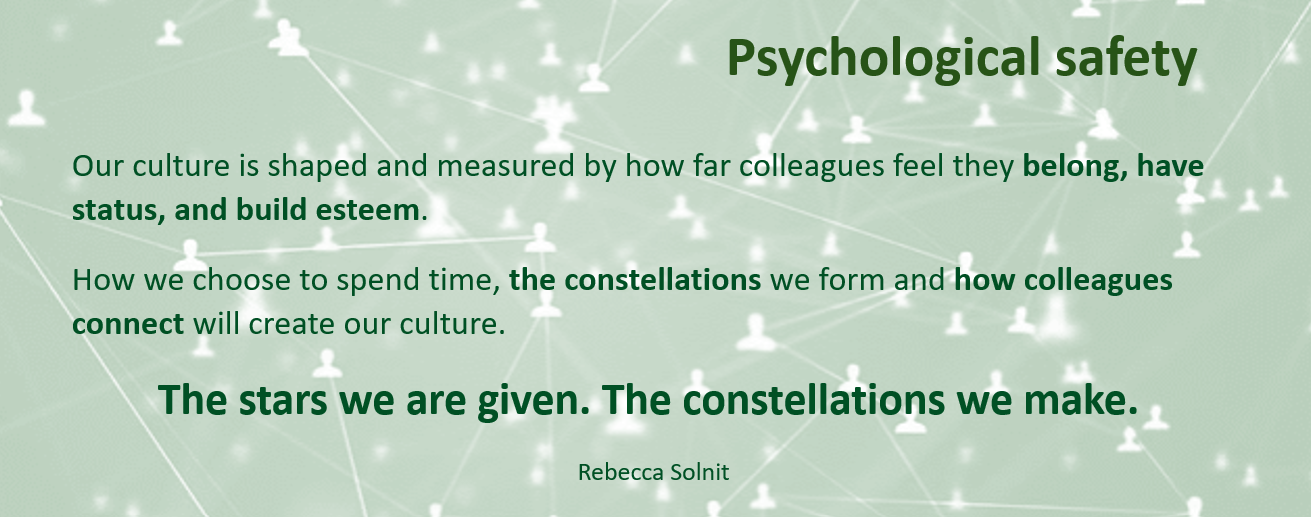
Our culture matters to us. It is built and shaped, in every interaction, everywhere, all the time and ever onward. Our cultural landscape is carved over time towards our shared purpose and is guided by deeply held lived values and shared rituals and routines. It is shaped and measured by how far colleagues feel they belong, have status, and build esteem. How we choose to spend time, the constellations we form and how colleagues connect will create our culture.

“The stars we are given. The constellations we make.” (Rebecca Solnit)

Making good decisions together

We make good decisions together. We seek and value expertise across our schools and the Trust as a whole. We are open and transparent as an organisation, making the best decisions we can, with the information we have, whilst seeking to do the right thing. We act without fear or favour.

First say yes. If a colleague feels the need to ask for support or resource, we should say yes, first, and work out how, later. Paying forward as an exercise in collective endeavour and shared responsibility.

The second mistake. It is rarely the case that the first mistake matters, it is often the second or third that turns mistake into problem. Because we make good decisions together, are open and transparent we share and resolve challenges at the first opportunity. Almost everything becomes easier when things are shared, it builds trust, and importantly avoids the second and third mistake.

A Human organisation, valuing relationships

We make time to listen, learn and build relationships. Being present. This is about ensuring colleagues are known as individuals, individuals with a unique story, a story that is heard. Understanding an individual’s story allows us to weave collective stories into the future; generating a greater sense of belonging. How we treat anyone, is how we treat everyone.

Humans are beautifully contagious

Use time well, seek simplicity

We will seek to use time well. Deliberately prioritising time towards the Main Thing(s). Logically sequencing our routines and networks and creating simple approaches that focus on making the greatest difference. We will work to reduce unnecessary burdens on individuals, to be as agile and nimble as is appropriate to our scale. As simple as possible, but not more so.

We will seek clarity because it is kind. Humans like rules, it is clarity that creates safety. We will share all data and information transparently to understand performance and drive improvement, part of our joint endeavour and collective responsibility for all children.

Primacy of Headteachers, the drivers of change

We understand the importance and primacy of Headteachers. The strongest Heads are great with people, understand provision and lead with purpose, prioritising and implementing key strategies and approaches, over time, to enable colleagues to change lives. They are open and able to utilise the capacity of the Trust, and to add into the strength of the Trust; a mutually beneficial symbiosis that adds value.

We are the sum of our decisions

Our effectiveness could be simplified as the sum of all decisions, by all colleagues, all the time, everywhere across our Trust that either accumulates value, or not. Our role as Trust Leaders is to influence, nudge, direct, enable better decisions to be made more often, to deliver a dividend. We will continue to dance between what we decide to do together and where we choose to empower colleagues to act.

Deliberately choosing where to standardise and where to empower colleagues

We will continue to standardise aspects of provision, to become more than the sum of our parts. Standardising, building things together, has tremendous power to liberate, support and give permission (and opportunity) for colleagues to focus on the Main Thing(s); creating a platform for colleagues. Our shared, common curriculum exemplifies the power of this collective endeavour.

Leadership is the art of giving people a platform for spreading ideas that work. (Seth Godin)

We will standardise and empower deliberately and strategically. Holding ideas in tension, informed by context, because context matters; it is not a compromise. Whilst recognising the importance of standardisation and of empowering colleagues on platforms, we will not seek to over dictate the complex areas of provision where experts and professionals make decisions, informed in the moment, in context, for their community.

“…under the conditions of true complexity – where unpredictability reigns – efforts to dictate every step from the centre will fail. People … require a seemingly contradictory mix of freedom and expectation.” (Atul Gawande)

We understand the influence we have on others

Back to the Future. Whilst Marty McFly travelled back in time and understood the future consequences of his actions, we are much less conscious of our influence on the future. Whilst we cannot foresee the future we can, together, create the conditions, sow the seeds, prepare the ground for humans to flourish and for more good than bad to happen. We, collectively create a crucible of serendipity where colleagues shape what is possible. Lives are shaped by opportunity. Our collective capacity can and will transform lives, evidenced in the smallest acts, every day.

“The smallest act in the most limited circumstances bears the seed of boundlessness, because one deed, and sometimes one word, suffices to change every constellation.” (Hannah Arendt)

We are collaborative by nature

We will build on our existing collaborative architecture, our co-operative system, to connect colleagues with purpose and to each other, seeking collaborative advantage. Connecting colleagues within professional networks and subject/year communities, where hard and soft-wired collaboration secures collaborative intelligence and wisdom that becomes self-improving and irreversible. The biggest influence on colleagues is colleagues.

Getting today right and building for the future

Two speed. As we forge forward, we will build our future, based on where we have been, where we are, and toward what we seek. We will seek to get today right and the future right. We will seek change and improvement in months and years, concurrently.

What do we seek? We decide, next, together.


Into our future

So, based on the platform that you have built, we will work with humanity, humility and openness, to shape the future, together. So, at this time, as I join you as CEO, my optimism, hope and determination for what we will achieve is galvanised by the brilliant people in our Trust.

“When we build a culture of people who eagerly seek out and take responsibility, we build a culture that enables a special kind of resilient freedom.” (Seth Godin)

We have an opportunity to enable all colleagues across our Trust to collaborate, connect and feel empowered to make a difference. To work as one organisation, sharing responsibility, engaged in collective endeavour to secure greater social justice, particularly for our most vulnerable children, those that carry the most through life, and particularly at this time. A worthy cause.

“To be hopeful in bad times is not just foolishly romantic.” (Howard Zinn)


Postscript

There is no way to build high-performing organisations without a cultural model that drives the strategy. Or to put it differently, strategy without culture is just wishful thinking.


Dan Nicholls | July 2024

Towards Social Justice

Featured

Every system is perfectly designed to get the results it gets.”

Our education system is perfectly designed to secure and maintain the conditions that accumulate disadvantage over time. A system so ingrained and accepted that we unwittingly perpetuate it and see the results as inevitable. Against the backdrop of the fracturing social contract, the aftermath of the pandemic and in darkening times, the cogs of the system continue unabated, galvanised and renewed to further widen gaps and disenfranchise an ever-larger number of children.

To not feel belonging is to experience the precarious and insecure sense of an outsider.” (Owen Eastwood, 2021)

The system is strengthening, forging greater division in society precisely at a time when individual agency and mobility is decreasing. A system that has powerful ways of telling children that they do not belong, playing out asymmetrically to make life precarious and insecure for far too many. A national crisis rages, children are becoming more invisible, opting out of education and they are being pushed to the edges. Those who most need school are not there, absent and missing from the very place that could offer social justice and opportunity.

We need to create a system that is for all children, a system of opportunity that is on their side, a place to belong, where equity gives them what they need. A system where we go beyond just caring about closing gaps. Recognising that the system and our accepted norms often exclude children whose experience of multi micro-exclusions, accumulate disadvantage and erode self-agency.


Using our architecture to tilt the system towards social justice

What if we have more power in this system than we think, than we have come to accept? What if we were to use the architecture of our system, the maturation of groups of schools connected within Trusts to tilt the system, to re-align and re-engineer the system? Taking braver, more courageous decisions that unswervingly seek social justice and challenge the status quo. We choose to do this not because it is easy, but because it is hard; a loonshot.

Never tell me the odds.” (Han Solo)

What if Trusts, engage in deep(er) connection and collaboration, offering the security and permission to go after something that really matters? Trusts working together for all children transforming and re-aligning the system to secure greater social justice for disadvantaged learners.


It is not that we don’t care, it is that we do not care enough

… because if we did we would seek to influence, adapt, re-orientate the very system that we are part of, that we are responsible for; understanding the we are the system. What we presently do as educationalists is not working, gaps are growing, we are getting no closer to social justice.

Ubuntu – a quality that includes the essential human virtues; compassion and humanity: I am what I am because of who we all are

We need greater expressions of compassion and humanity to overcome the forces in our society and schools that insidiously widen gaps. We need to be more ferocious, more tenacious in creating the conditions that enable our disadvantaged learners to flourish. This requires educators to be more honest, to ask uncomfortable questions and make braver decisions to enact greater equity: a deeper expression of care.


Social justice as the aim, social mobility as an outcome.

Social mobility” is about escaping disadvantage, whereas social justice is about eradicating that disadvantage in the first place. Education as a tool for social justice ought to be the goal of any civic-minded (society) university, and indeed our collective goal as a sector for our widening participation efforts to be capable of actually producing meaningful change.” (Claire Sosienski Smith)

Seeking social justice and how our system increases participation, connection, opportunity and experience is better placed than initiatives focused on mobility, which seek to enable relatively few individuals to escape the system, to defy the odds. We need a bottom-up investment in all individuals; we need to change the rules of the game with social justice as the goal and social mobility as an outcome.

Social justice: Access, Equity, Diversity, Participation, Human Rights

Seeking social justice requires us to work in the system at an individual-level to integrate and engineer connection between all attainment bands and groups, and through this deliberate act of inclusion, create supported opportunity, participation and experiences that close gaps.  Reaching in and applying equity to lift lives; counterintuitively, one by one. A redistribution of esteem to increase the number of those that see they are able to live lives of decency and dignity.

“…we need a redistribution of esteem… to live lives of decency and dignity, winning social esteem. …(to) travel the road to 2045 with purpose, dignity and accomplishment.” (Peter Hennessy)
We need educators and leaders to act within the system, as agents of change, tilting our system to achieve greater social justice. Leadership from the inside to enact the equity required to create paths that have heart and secure social justice; heroes wanted.

“Look at every path closely. Then ask yourself, and yourself alone, the question: does this path have a HEART?” (Carlos Castenada)


Equity over Equality | giving what individuals actually need

We are baffled and compelled by equality, but equality is a brilliant way to maintain our perfect system. Equity in contrast is not offering the same to all, but securing what individuals actually need. This means that we need to be more comfortable with doing different, doing more and meeting the ‘actual’ needs of individuals so we give ourselves a chance at closing gaps and match fixing the system. Turning, where we can the system on itself.

The system is so ingrained, accepted and normalised that we are often blind to the influence of the system, and complicit in it. We do have a choice and the agency to actively disrupt the system, to apply equity and redirect the power of the system to level the playing field.


The multiplying effect of small acts | the power of the crowd

“Never doubt that a small group of thoughtful, committed citizens can change the world; indeed, it’s the only thing that ever has.” (Margret Mead)

The power of the crowds and the accumulation of small acts, of heroes who are alive to the system, call it out and tilt it with small and large actions towards those that need it most. Seeking to privilege disadvantaged learners in all that we do, redesigning our system for social justice.

“It is a matter of shared purpose and sustained application.”(Peter Hennessy)


Every child needs at least one person who believes in them | advantaging the disadvantaged

We need a system where all children have someone who believes in them. To grow up advantaged is to have adults who deeply believe in you, hold you to high expectations, encouraging (demanding) participation in supported opportunities over time. A childhood that encourages risk taking, whilst holding a safety net and offering commentary, narrating the journey through life, reaffirming and strengthening a child’s internal locus of control incrementally, day by day.

And in this we see what must be done, to re-design the system to enable disadvantaged to participate, to have supported opportunity and wider social connectivity, with a back stop of someone who believes in them, who creates a safety net and support them as they interpret life. Get up, go again, you have agency, you are always invited to dance.


Help me, Obi Wan, you’re my only hope

Educationalists need to work together to propagate a movement that re-engineers and re-aligns our system, increasing our impact on the everyday experience of every child, bottom up; great schools in strong Trusts, meeting need. So that together we realise and enhance a collective Trust Dividend that offers hope and achieves greater social justice for all children and particularly those presently or previously experiencing disadvantage.

“To be hopeful in bad times is not just foolishly romantic.” (Howard Zinn)

We need to seek greater collective endeavour that goes upstream in search of social justice for the many, demonstrating through our actions our deeply held desire to do more than just care, to be braver and to join in a quest that accumulates advantage. A quest that enacts equity through education to lift up disadvantaged children and make a difference, one life at a time, knowing that this collective sector wide effort might just tilt the system to something that befits our personal values and the collective desires for our sector.

What if we decided to seek greater social justice and re-engineer our system to…  

  • Privilege disadvantage everywhere and in everything? Prioritising disadvantage learners in all decision making, in provision, in opportunity, a culture of ambition for all children, going beyond just caring. A system, Trusts and schools that firmly privilege disadvantage in all that they do, such that it becomes the norm; a system perfectly designed to close gaps.
  • Measure what we really care about, what really matters? Securing the attainment and attendance of disadvantaged learners. Measure it, target it, expect it, publish it, reward it, make it the accepted and expected currency of our sector. Securing high attainment because grades really matter and attendance because there is no point in any other actions if they are not there; disadvantage even over, attendance first.
  • Apply Equity through education? Shaking the shackles of equality to give children what they specifically need. Doing differently by individuals, securing this as the normal; using the advantaged upbringing as a measure for the amount of equity required to tilt the system.
  • Seek deep and sustained participation for all children? Measure it, prioritise it, demand it and invest in it. Using the sharp elbows that create the supported opportunity for advantaged children and over-match for disadvantaged learners. Beyond enrichment, this is about entitlement for those who presently feel the opposite of entitled.
  • Mix all attainment bands and create a strong system of inclusion for all children? Actively addressing the school within a school phenomenon, that creates alternate realities and routes. Individuals measure status and standards against those that we are closest to. We must create the connections and influences that close gaps.
  • Deeply understand individual lives?  Working to understand each child so that they connect, belong, participate, feel success, thrive. Every child needs to have at least one adult who believes in them. Magic happens when all colleagues believe in all children.
  • Seek bottom-up mobilisation, a movement? Focus at the level of individual and mobilise the many in this shared endeavour to lift lives, one by one. Creating the conditions for a movement to lift up a generation. A counterintuitive focus on individuals and schools, in Trusts, to re-engineer our system toward social justice, seeking irreversible change in our society.

To do so is to be a bit more pirate and seek good trouble, rather than conform to the system and remain in the Navy. If not now, when, if not you, who?

“I’d rather be a pirate than join the Navy.” (Steve Jobs)


Dan Nicholls | October 2023

The Social Contract is fracturing

“Everyone participates in the social contract every day, and we rarely stop to think about it. Yet social contracts shape every aspect of our lives, including how we raise our children and engage in education.” (Minouche Shafik)

We live in difficult and darkening times. The growing gloom is becoming oppressive, encouraging retreat and reducing belonging. The social contract that shapes and guides every aspect of our lives is fracturing. For far too many children and families this is fundamentally altering their relationship with society, authority, and how we value and engage in education.

The “social contract” is a theoretical agreement between individuals and society wherein people relinquish certain freedoms and abide by agreed-upon rules and norms in exchange for social order and mutual benefits.

These are dark ages, characterised by challenging economics and social inequity, that are presenting both a psychological and material challenge. This is infecting and altering the narratives we tell ourselves and each other about what is important and what our contributions to society should be.

“We all … listen for an account of who we are and where we stand.” (George Monbiot)

Increasing numbers of children and adults are opting out from a world that finds multiple ways of challenging their sense of self, place, and agency. Whilst for some the light is not fading, for too many others, often the most vulnerable, the gloom is encouraging retreat from the agreed contract. Schools are at the heart of the maelstrom, open, available, and trusted enough for some families to fight against, because few others are listening, available or there. Schools stretch and respond to the needs that walk into school every day, attempting to fulfil their duty of care, often without the resource or expertise.

For increasing numbers of pupils and families, school is seen as optional, far from being irresistible or a place of opportunity. The prevailing narrative is replacing long held norms around the value of education, driven by a weakening social contract and the entrenched inequities in society. The disadvantage gap, on any measure, is wide and widening, embarrassingly so. Fundamentally, the social contract is built on trust– when the returns from society diminish or disappear, or where we become increasingly priced out of life, we see the contract weakening and the trust we hold erodes.

“Trusting others puts us in an inherently vulnerable position… the proof of the importance of trust is the intense emotional pain that accompanies it being broken. (Owen Eastwood)

We need a revised and reinforced social contract that seeks greater cohesion, strengthens belonging and places education at the heart of this nation. This needs to secure far greater equity through education and a much stronger architecture of opportunity. An architecture enacted by stronger trust and system leadership, greater connectivity and purposeful collaboration between trusts and schools so that we take collective responsibility and stewardship for our sector. All Trusts working together for all children.

“It is only through building a connected system that we will be able to address the multiple challenges facing our communities” (Leora Cruddas)

Building the effectiveness of our trust, civic and system leadership to build an education system that is able to address the multiple challenges, redistribute esteem and enable many more children to live lives of decency and dignity.

“…we need a redistribution of esteem… to live lives of decency and dignity, winning social esteem. …(to) travel the road to 2045 with purpose, dignity and accomplishment.” (Peter Hennessy)

Seeking together to build strong trusts with great schools that meet need. Enabling more children and families to belong and benefit from a renewed social contract, gaining a greater sense of agency in their lives and contributing towards the common good.

“Agency gives us control over our time, and it encourages us to choose what our contribution looks like.” (Seth Godin)


In the eye of the storm

The lines between school and society have blurred. Schools are trying to respond to the fracturing of the social contract. Where deprivation bites and societal problems leak into schools, colleagues can become overwhelmed. They take increasing amounts of time to support, resolve, and cope with difficult and widening societal issues of children and families, obligated to fulfil their deeply held duty of care for the communities they serve.

The present level of attendance, suspensions and disenfranchisement, particularly of those presently disadvantaged, is a national crisis – a social epidemic. As the narrative falters, individuals are making pragmatic decisions around survival and choosing to opt out, to not conform, to challenge authority, avoid commitment and to escape the perceived risk of failing in class.

If life is a game, too many are deciding not to play.


Fracturing built on entrenched inequity

It is not that the social contract has suddenly fractured, it has been creaking over time and is evident in the inequalities that characterise our society. Just as there are triggers for climate change, where it becomes irreversible and the impact is catastrophic, the same is true of the social contract. Multiple factors have triggered descent to this crisis point with our social contract.  


Strong Trusts, Great Schools, Meeting Need | An architecture of opportunity

“There is no trust more sacred than the one the world holds with children.” (Kofi Annan)

The present architecture of opportunity in our sector, exists within a developing Trust landscape. It is timely, urgent and imperative for Trusts and groups of schools to work together within stronger collaborative structures to build strong trusts capable of supporting more great schools that are well placed to meet need. The sector should grasp the opportunity to create a stronger architecture of opportunity that addresses the societal challenges and particularly the widening disadvantage gap. Trusts and schools need to work much more collaboratively to realise the promise of academisation and to secure greater equity through education.

We are the system

The development of great schools across the sector that enable all children to lead full, flourishing lives is at that heart of the renewal we seek.

“We need a broader and more ambitious vision of what a good life is. Human flourishing and dignity for all, requires us to have a wide set of success measures. Placing greater value on things such as contribution, difference, common values, and the process of learning and work itself.” (Ben Newmark, Tom Rees)

The collaborative structures we need to build within and across the sector are required to secure a greater dividend, one that rises the tide for all children. Schools need to grow good humans through strong culture and inspire young minds through great teaching held within a progressive, sequenced curriculum that liberates agency and meets the needs of children now and for their future. This requires us to develop leaders(hip) that understands how to improve schools within the collaborative structure of Trusts, accelerated by Trusts working closer together. This will demand a move from silos to deliberate collaboration, so that we, together, take greater collective stewardship of our sector.

The deficit narrative in society is reflected within our sector and in our schools. It is no accident that the current recruitment and retention challenges, the catastrophic decline in ITT applications and weakening working conditions are linked to the deficit narrative around schools and the value that our nation places on education. It is not that there isn’t an appetite to meet and reverse the challenges of the failing social contract, it is that it feels progressively more futile given the available funding, resourcing, staffing, and expertise that is required to meet the ever-increasing demand.


Stewardship and Longtermism

The investment in education needs to be long-term and it requires a commitment over generational timescales that inconveniently span timescales longer than political terms of office. We are prone to shortermism and this struggles to keep up with the complex needs of a growing number of children and families.

“We should shift our energies upstream: personally, organisationally, nationally and globally. We can, and should, stop dealing with the symptoms of problems, again and again, and start fixing them.” (Dan Heath)

This is urgent; it is not just about now, it is fundamentally about the future and the future health of our society and the standing, place and importance of education. Great schools are the hope, and increasingly the only hope, but they are exposed and creaking under the weight of the failing social contract. Schools and Trusts need to consider deeply their role in society and the educational offer that will better meet the needs of all children, now and into their adulthood.


The weather is oppressive

The prevailing climate is increasingly oppressive and characterised by profound uncertainty.

“How to live in a world where profound uncertainty is not a bug, but a feature?” (Yuval Noah Harari)

Our response to this uncertainty and the challenges of our time has influenced the national psyche and altered our narratives. So much has shifted in our lived experience…

The global pandemic, Brexit, standards in public life (Nolan Principles), high inflation, high interest rates, energy costs, mortgage rates, loan rates, cost of living, AI, inaccessible first homes, decline in living standards, shifting employment types and longevity, climate change, political turmoil, social media, conflicts across the world (including Europe), long waiting lists, funding crisis, erosion of local services and multi-agency services, mental health challenges, public service strikes, recruitment, retention…

… disconcerting, oppressive, challenging; encouraging retreat and a deafening backdrop to life.

All of which play out unevenly across society. Except that, this is not true for everyone. These oppressive conditions tend to maintain the status quo for those who have means and power.


The shifting locus of control; retreating from the noise

“Nations and peoples are largely the stories they feed themselves.” Ben Okri

Our society has always been divided into those who have and those who have not. Typically, the most disadvantaged in society have an external locus of control, one that encourages retreat, and one that negates a sense of agency. The current challenges are pushing more children into believing and acting as if they have an external locus of control. When this happens, they look to the contract that is meant to hold them, meant to say to them that they belong, and they pragmatically choose retreat and make decisions about their contribution to society; becoming more invisible.  

Ubuntu: “I am a person through other people; my humanity is tied to yours.” (Zulu proverb)

We must reinforce, redesign and improve the social contract. It is fractured and faltering. We must not stand-by and in doing so collude with this erosion. We need a society and an education system that builds back the social contract for the common good and creates an architecture of opportunity, so that more are invited to dance.


Architecture of Opportunity | an invitation to dance

1. We need to renew the invitation to dance, so that individuals contribute and benefit from the social contract. We need a new national and educational narrative around schools that places education at the heart of social renewal. This should seek to create a greater sense of belonging, status and esteem, a more just society and communities where children and families flourish.

“Those who imagine the ground beneath their feet is solid are probably managing the present, not leading into the future.” (Tracey Camilleri, et al.)

2. We are the system. As educators we have an opportunity and responsibility to make a difference, to tell a stronger narrative and to influence the national position of education. We need to review the present paradigm and ensure that we are keeping our side of the contract. We need to ensure that Trusts and schools develop organisational leadership to build a sector that rises the tide. Strong Trusts with Great Schools that Meet Need.

“You cannot take away someone’s story without giving them a new one. Whether the systems that emerge from this rupture are better or worse than the current dispensation depends on our ability to tell a new story.” (George Monbiot)

3. We need to invest more in education; an investment that yields a long-term dividend to our society and nation. The pay off will not just boost the economy, but it will improve well-being, mental health, community cohesion and deliver social justice. This investment will support schools to fulfil their duty of care and create an architecture of opportunity where the power of education will secure greater equity. Not for us, for them.

4. We need to take a longer-term view on the role of education in society, as the moral priority of our time. Taking greater stewardship of the future, building collaborative structures where all educationalist can share responsibility for all children. It is what we owe their future.

“Longtermism is about taking seriously just how big the future could be and how high the stakes are in shaping it. We need to act wisely.” (William Macaskill)

5. We need to invest more in the first 1001 days from conception and in readying children for school. This lights the fire, sets the stage and reinforces, at the earliest possible moment, that education and investing in human potential is part of the fabric of our social contract. This includes educating and influencing parenting and the nations understanding of key developmental stages. We need to follow through on that investment into early years to give the best possible start in life, to secure the importance of school, where children belong and where we genuinely work upstream to prevent downstream problems.

“We have the opportunity to help people become significant… build a culture of affiliation and status.” (Seth Godin)

6. We need more great schools that meet the needs of all children. Schools that secure strong culture and great teaching to build great humans and bestow the very best curriculum, for our children in these times. Trusts need to work together to develop system leadership and purposeful collaboration that accelerates our impact on the everyday experience of every child. So that together we realise and enhance the collective Trust Dividend on children and society. We should seek to secure greater attainment mobility, to close gaps for those presently disadvantaged, and meet the needs of those with SEND.

“There should be a national strategy to close the attainment gaps that have opened since the pandemic. Addressing these gaps should be a national priority, with a long-term plan in place, based on evidence.” (Sutton Trust)

7. We need to urgently address the attendance crisis in this country. Seeking to tackle the entrenched challenges of our time, to strengthen our narrative around the importance of education and build back the social contract. Improving attendance is urgent; the damage and implications for this generation will play out across society and over decades.

“Culture can change. And it is schools and school systems that have the power to change it.” (Lucy Crehan)

8. We need to invest in ‘place’, work in strong partnerships and fulfil our civic responsibilities. We need Trusts and schools to collaborate and develop civic leadership to take greater stewardship for the places that we educate. Without these collaborative structures in place, we will not create the architecture of opportunity and the multi-agency working required to serve the communities where children grow up.

“Civic leadership is about the protection and promotion of public values and addressing issues of place …creat(ing) the conditions for collective impact by addressing complex issues affecting children … that require different actors to work together.” (Leora Cruddas)

9. We need to invest in wider services, and find ways to effectively work in closer partnerships with others, including social care that sit in and around schools – renewing and reinforcing the broken contract, as an expression of care and duty. Taking greater opportunity to understand and meet the needs of all children and adults. Funding and supporting schools to realise their civic duty, with enough resource and expertise to meet demand and fulfil our duty of care.

10. We need to be clear on where the boundaries of the social contract sit between schools and society.  This clarity is required to understand where responsibilities sit and to reduce the flow of societal issues into schools. We need to either rebuild the agencies, services and expertise in our communities or significantly invest in schools as community hubs to meet the needs of society.


Through joint enterprise and shared responsibility we can build a society and an education system that renews the social contract for the common good and create an architecture of opportunity so that more are invited to dance.

“It is a matter of shared purpose and sustained application.” (Peter Hennessy)


Dan Nicholls | July 2023

Five functions of a strong Trust | strong Trust, great schools

Strong Trusts build collaborative structures and platforms for great schools to create more value for all children, over time. This trust dividend enables groups of schools to achieve more than the sum of their parts, and more than before. Strong Trusts are values-led, purpose-driven, learning organisations who establish the conditions for colleagues to create collaborative intelligence that becomes trust wisdom that strengthens great schools.

“Instead of seeing trees (schools) as individual agents competing for resources, she proposed the forest as ‘a co-operative system’, in which trees ‘talk’ to one another, producing a collaborative intelligence she described as ‘forest (trust) wisdom’.  Some older trees even ‘nurture’ smaller trees.” (Robert Macfarlane)

There is now enough maturity in our system to identify how strong Trusts create enough value to sustain groups of great schools; school is Trust, Trust is school. Deepening this understanding will enable educators to take greater stewardship of the sector and build strong Trusts that work together for all children. The following identifies five functions of a strong Trust that, taken together, create a trust dividend that supports, empowers and sustains great schools.


The five functions of a strong Trust | in brief

One: Strong Trusts are values-led and purpose-driven, they understand why they exist, live out their values, achieve their purpose, tell stories of the future, create coherence and clarity to establish a climate where colleagues belong to something bigger and are empowered to add value.

Two: Strong Trusts standardise areas of provision that build platforms for colleagues to stand on and exploit, areas that are high dividend and rise the tide, particularly a shared curriculum, shared assessment and wider professional services. These are significant investments in high dividend areas, over time, that add future value.

Three: Strong Trusts invest in leadership, particularly of headteachers, so that there is a deep investment in relationships, setting direction and implementation within schools. Leadership that builds and sustains a strong culture and great teaching, hallmarks of great schools and areas that are largely empowered to and owned by schools.

Four: Strong Trusts create collaborative structures, an architecture enabling colleagues to collaborate across the Trust in networks and communities, creating, designing, developing and aligning approaches that add value. Trusts are risk-informed, distorting resource and expertise to tackle underperformance.

Five: Strong Trusts maintain high standards creating the conditions for healthy competition, great schools joined in the shared endeavour of raising standards, transparently using trust-wide data, building shared intelligence and using research-led approaches to inform implementation and school improvement.

+One: Strong Trusts act within and on the system, working together with other Trusts, to create a collective dividend and take responsibility for the education system, serving communities as anchor institutions and working with other civic partners to support all children.


The Five Functions of a Strong Trust, the next level of detail

One: Values-led, purpose-driven | building culture and belonging

Strong Trusts know and understand why they exist. They have a set of compelling values and clarity of purpose that galvanises colleagues into shared endeavour and collective responsibility. This clarity aligns colleagues, informs the strategic investments and paints a compelling future, that guides the big and small decisions made across the Trust by all colleagues every day. It is in these actions, over time, and not in the written words, that culture emerges.

“…understanding the “cultural magic” that makes an organisation feel truly human, and creates a sense of connection and belonging.” (Tracey Camilleri, et al.)

Without this clarity of purpose, colleagues struggle to place themselves and their work within the Trust. Strong Trusts create a sense of belonging, give status and build esteem, because the rules of the game are clear, colleagues understand the journey and are empowered to add value. This is a significant investment in people, actively building well-being to create psychologically safe, high trust, heart felt collegiality that holds people in the Trust.

“To feel a sense of belonging is to feel accepted, to feel seen and to feel included by a group of people… to not feel belonging is to experience the precarious and insecure sense of an outsider.” (Owen Eastwood, 2021)

Strong Trusts bring coherence and clarity on how we do things here, what is standardised, empowered, the routines and collaborative structures that secure school improvement at scale. Deepening understanding of the Trust’s Theory of Action empowers colleagues to build great schools on the platform of the Trust.


Two: Standardisation | creating a platform for colleagues

Strong Trusts deliberately standardise areas of provision, typically complicated areas, that add value and create platforms for colleagues to focus on the Main Thing(s). Amongst the most important to standardise: a shared curriculum, shared assessment, syllabi and professional services.

A shared curriculum where learning is progressive, sequenced, and coherent over time is one of the most important levers available to Trusts; being experts and collaborating on one curriculum, rather than many.

A shared assessment system across all year groups, based on the shared curriculum and shared examination syllabi create an accountability framework and the intelligence for raising standards. This provides the elements required for co-opetition and the transparent sharing of data for the purposes of school improvement; school is Trust, Trust is school.


Three: Trust Leadership | empowering leaders to build great schools

Strong Trusts invest in leaders, particularly Headteachers, as the key agents in building and sustaining great schools, investing in their knowledge, development and wellbeing. Great leadership builds relationships, sets direction and implements well. Strong Trusts seek to drive-up the quality of this leadership, they build a curriculum for it and create the conditions that empower leaders to lead great schools, within a strong Trust.

Strong Trusts understand where to standardise (complicated) and where to empower (complex). Whilst great schools are great at many things, two areas stand out.  Firstly, great schools propagate a strong culture of high expectation that is scholarly and builds character. Secondly, they secure great teaching, through professional learning and developing individual teachers. Both areas are largely empowered to schools as they require contextualising and local decision making, to follow learning to meet need and to build culture in context.


Four: Deliberate collaboration I networks, communities and expertise

Strong Trusts create collaborative structures for colleagues to build collective intelligence and understanding; an investment in people. Networks and communities connect colleagues horizontally across the Trust and within and beyond phases to create the conditions for improvement, the sharing of practice and alignment; moving towards a self-improving Trust. Creating the architecture, time, artefacts and purpose of collaboration that empower colleagues to focus together on the Main Thing(s).

“…we can speed this process (trial and error) up by creating systems and platforms where we search for new knowledge systematically… integrate the result into our body of knowledge, and apply it into new ways of doing things.” (Johan Norberg)

Strong Trusts deliberately build expertise and improvement tools that support school improvement, particularly in areas of provision that are specialist and in high demand; one of the key advantages of Trusts. The accessibility and use of expertise commissioned and utilised by schools and headteachers creates the conditions for a self-improving Trust.

“The stars we are given. The constellations we make.” (Rebecca Solnit)

Strong Trusts are risk-informed, use information, intelligence and data to concentrate and distort the resources developed by the Trust to improve areas of underperformance. They develop expertise and capacity over time, commensurate with scale, and use school improvement teams and specific expertise to improve schools in a timely, proportionate and deliberate way.


Five: High Standards | competition and transparent performance data

Strong Trusts balance co-operation and competition to drive up trust standards; co-opetition. The transparent, deliberate use of data (democratised data) to understand performance and school improvement, in high-trust environments, builds intelligence and informs improvement. Great schools invest in quality assurance as part of strong implementation practices, supported by the trust and accessing trustworthy expertise, resources and tools.

Strong Trusts are research-led, often working in cognitive dissonance, holding opposing ideas in tension; resisting simplified swings based on trend; tempering influences and instead leaning on seminal readings and peer-reviewed research. They are learning organisations who use the Trust as a test-bed to understand performance and deliberately share intelligence.


+One: Sector engaged | all trusts working together for all children

Strong Trusts work within and on the wider system. They understand that the success of the Trust hinges on the success of other Trusts and that we all have a shared responsibility and stewardship for the education system as a whole; all trusts working together for all children. By working in partnership and with a sense of altruism, Trusts can better understand how to add value, achieve dividend, and take greater collective responsibility for our system.

By building strong, resilient Trusts that are connected as partner Trusts, we can seize our opportunity to serve communities, build partnerships and exploit the opportunities afforded by civic leadership, anchor trusts and investing in place. This creates a stronger education system, better able to secure equity through education, social mobility, justice and to reach those presently disadvantaged; disadvantaged even over.


Great schools, strong Trust | the five functions

The five functions seek to create a trust dividend, establishing a strong Trust with great schools. The functions create the opportunity for Trusts to be self-improving, with leaders empowered and connected to lead on the platform of the Trust. This long-term investment builds strong Trusts who can work with partner Trusts to add a collective dividend that transforms the life chances of children. All trusts working together for all children.


Dan Nicholls | February 2023

The thinking presented here is based on the work, experience and thinking of colleagues across Cabot Learning Federation.

Seeking a Trust Dividend | exploiting the power of collaboration

“We need a social contract that is about pooling and sharing more risks with each other to reduce the worries we all face while optimising the use of talent across our sector … It also means caring about the well-being not just of our own pupils, but of others’ too, since they will all occupy the same world in the future.” (Minouche Shafik)

For just over a decade, schools have been coalescing and forming into multi-academy trusts. The forces that push and pull these schools together are born as much out of circumstance and chance, than intelligent design. As Trusts mature, there is an ever-increasing responsibility falling on educators to find coherence, to create more value and to secure a Trust Dividend. A dividend that enables groups of schools to achieve more than the sum of their parts, and more than before.

Whilst Trusts have grown and matured, the sector remains under development, with trust leaders building purposeful collaboration across groups of schools to seek additional value. There is now enough maturity in our system, to understand and explore how Trusts create the conditions and climate for higher performance. This will require us to lift our horizon, to think beyond the immediate distractions, including growth and to take a longer-term view. So that together, altruistically, far-sightedly, we continue to build Trusts that make a difference now and into the future. It is a moment of uncommon opportunity to take greater stewardship and together build a stronger education system, where all Trusts, work together for all children.

“I would contend that now is a moment of uncommon opportunity, and we should seize it.” (Jon Yates)

By building strong, resilient Trusts that are connected as partner Trusts, we can seize our opportunity to serve communities and exploit the opportunities afforded by civic leadership, anchor trusts and investing in place. Seeking far greater equity through education, for all children in these challenging times and creating a stronger education system that creates social mobility, justice and reaches those presently disadvantaged; disadvantaged even over.

“Whether the systems that emerge… are better or worse than the current dispensation depends on our ability to tell a new story, a story that learns from the past, places us in the present and guides the future.” (George Monbiot)

We should continue to seek a story and a sector that is developed more through joint enterprise, than tribalism, and invest deeply in people and partnerships. A shared endeavour that explores how best to secure a trust dividend, adding value that is significant, persistent and contingent on the existence of the Trust, and a collective trust dividend that transforms our system now and into the future. We may need to re-orientate from a sector where Trusts struggle for existence to one where Trusts are joined in a struggle for performance. Creating an education system that is values driven and built on a collaborative model that transforms lives; the real promise of academisation and Multi Academy Trusts.

“History will judge us by the difference we make in the everyday lives of children.” (Nelson Mandela)

The following seeks to explore how Trusts can intelligently implement high dividend approaches and strategies to secure a trust dividend. Decisions made in these spaces on what is standardised, empowered and how these are sustained and intelligently implemented will determine the long-term trust dividend. It is not a framework or a checklist. It seeks to offer a language for discussing and thinking coherently about what Trusts are, what they need to be and what they can achieve.

“In these difficult times of upheaval and uncertainty, it is up to us now to build a resilient school system that has the capacity and can create the conditions to keep getting better. We believe that is the potential of a trust-based system.” (Leora Cruddas)


The Trust Dividend

The purpose of a Trust is to add more value than the sum of the parts and more than before. This additional value is the Trust Dividend: A significant and persistent level of performance that is contingent on the existence of the Trust and enables schools to work in a higher performance space over time, above that which would have been achieved without the Trust.

Securing a trust dividend, is contingent on the actions taken by a Trust, typically including a level of standardisation, empowerment and collaboration that creates value. As a Trust matures and makes good decisions about where to invest in high dividend strategies there is an inflection point when a discernible dividend is evident that holds the Trust in a higher performance space.

The following diagram compares the impact of a Trust (in blue) with the performance of the same schools if they had not become a Trust (in green). Over time, if the Trust successfully implements approaches that are significant and persistent a trust dividend is created above that of the original schools.

As a rule of thumb, a dividend is hard to achieve and to sustain, we should assume young and maturing Trusts have relatively low influence and capacity to secure a dividend. We should seek evidence of systemic and sustained influence of the Trust on performance and provision to build confidence in the existence of a dividend.  The timing of the inflection point is dependent on a range of factors, including scale of trust, strategic decisions, founding principles, values, capacity, capital (intellectual and financial), geography etc. Engaging as knowledge building organisations, Trusts can build a body of knowledge that informs decision making to create stronger dividends.

“…we can speed this process (trial and error) up by creating systems and platforms where we search for new knowledge systematically… integrate the result into our body of knowledge, and apply it into new ways of doing things.” (Johan Norberg)

A Trust Dividend is a composite suite of strategies and approaches that Trusts employ to add value over time. Consequently, some actions and strategies add value sooner, some are stubborn, and barely add value, and a few unintentionally decrease value.


The Trust Dividend needs to be significant and persistent

We need to exercise caution, too often we over-estimate the impact of the Trust, too often mis-understanding cause and effect and attributing impact where it is not warranted. Achieving a trust dividend is a high bar it requires Trusts to implement high dividend strategies and approaches that are significant and persistent.

Where it is neither significant or persistent it approximates to normal to status quo. If it is significant, but not persistent, it may have an impact, but not over time, may be dependent on transient conditions, inputs or specific people (Teflon). Something that is persistent and not significant, sticks, but is of low value (Velcro).


A higher performance space | seeking the signal in the noise and antifragility

The Trust Dividend holds schools in higher performance space that may become irreversible and ultimately self-improving (where normal routines hold the trust in the higher performance space) beyond that of stand-alone schools and the previous system. A dividend should be sought across provision and in schools within a Trust, it should act to reduce variance and improve standards within a Trust over time. A dividend that is identifiable, and undeniably contingent on the actions of the Trust. Whilst quantitative measures are the easiest to interrogate for evidence of a Trust Dividend, qualitative dividends add significant value and are often the foundation for quantitative measures.

Reliably identifying a trust dividend requires that we search for signal in the noise. The dividend that emerges from the noise needs to be beyond the noise of normal variations in performance over time. The emergence of a dividend is likely to not happen across a Trust at the same time or with the same potency. An evaluation of positive deviants in the population may indicate early dividend and/or where we should seek future value. Understanding the causes of variation between schools, particularly over time, in the same Trust is invaluable in understanding how value is added and dividends created.

Whilst a trust dividend should be significant and persistent, we should seek dividends that display antifragility, the dividend becomes stronger not weaker under stress. This indicates that the Trust is moving into a self-improving space that sustains and holds up performance that will go beyond our time and become a long-term dividend.


Seeking Expected Value (EV) and Future Value (FV)

As trusts seek a dividend it is helpful to consider the Expected Value (EV) and Future Value (FV) of strategic moves. Whilst this pushes us to think in bets, these are not one-off punts, more a strategic identification of areas of work (in the right order) that the Trust invests in deeply, to secure irreversible improvement and conditions for performance. It is an inconvenient truth that seeking this added value is typically high effort for lasting impact and, annoyingly, it is rarely quick to pay-off. Areas including shared curriculum, shared assessment, deep investment in Trust culture, professional services and building trust leadership are considerable undertakings, but carry high expected and future value.


Why do you (your Trust) exist?

If a Trust is to secure a dividend it needs to know where it is going and what it seeks to achieve; to know why it exists.

It is the reason for existence that directs the dividend. Too often values, mission statements and visions are cliché ridden, assumed, taken for granted and superficial. Unless you know where and what you specifically aim to achieve, where you want the trust to go, then anywhere will do. Leaders who paint the clearest picture of the preferred future, who tell stories of what will be, in high-definition, inspire movements, create greater value, and create the climate for stronger dividends.

“If everything is important, then nothing is… When you know your reason for existence, it should effect the decisions you make.” (Lencioni)

If the values, collective purpose and direction of the Trust is widely owned, this creates the climate, language, habits and behaviours that secure a dividend that is more self-sustaining; pointing colleagues in the right direction, joined in a shared endeavour and mission to make a difference.

Mis-aligned energies will weaken the force and dilute the dividend, we tend to approximate the value that would have been achieved if the Trust did not exist.

A Trust dividend acts like a force that holds the trust in a higher performance and cultural space. The values, principles, ethos and culture of a Trust creates psychological safety to colleagues, a place of belonging and one that gives status and esteem. This gives identity, motivates and encourages discretionary effort that taken together lifts the Trust into a self-improving space; creating the purpose and the autonomy to seek mastery.


Where to play? | Standardise the complicated, empower the complex

Achieving a significant dividend requires Trusts to make good decisions about how they work. Aspects of provision can be broadly divided in to complicated or complex. Understanding this difference supports decisions about where Trusts (and academies, departments or any team) should standardise and where they should empower colleagues.

Areas that are largely complicated are open to standardisation. Complicated areas act largely the same way each time. These areas can often be reduced to a checklist; if this, then do that. Trusts should play in these areas and standardise as there is limited need for local decision making or creativity. For example, shared curriculum, shared assessment, professional services, data, Trust values, Trust leadership, governance…

Areas that are largely complex should be empowered to schools and colleagues. Complex areas respond differently each time and are typically influenced by the unpredictability of human action and interaction, requiring in the moment decision making. In complex areas of provision, we need to push decisions closer to the action where quality and outcome is linked to the situation as it emerges. For example, academy culture, ethos, behaviour, teaching and learning, academy leadership, quality assurance…

…under the conditions of true complexity – where the knowledge required exceeds that of any individual and unpredictability reigns – efforts to dictate every step from the centre will fail. People need room to act and adapt.  …they require a seemingly contradictory mix of freedom and expectation …and also to measure progress towards common goals. (Atul Gawande)

“You can mandate to get the system from awful to adequate but not from adequate to great. To do that you have to unleash potential and creativity. This cannot be centrally mandated but has to be locally enabled.” (Michael Barber)


Where should Trusts standardise and empower?

“Leadership is the art of giving people a platform for spreading ideas that work” (Seth Godin)

As Trusts standardise areas of provision a column is built on which colleagues can lean and stand upon to focus on the Main Thing(s). Where these standardised areas are developed by teachers for teachers (curating curriculum and designing assessment), we move to a self-improving system owned by colleagues across the Trust. On this platform all colleague across the Trust are empowered to Red Dance, to do what they do best and what they signed-up for; to make a difference to the lives of children.

Areas of provision that are standardised and empowered need to be sustained, guided, held and validated. Empowerment can be supported and magnified by strong values, principles, trust standards, co-opetition, transparent data, horizontal collaboration and a deliberate development of trust leadership and implementation. It is the investment from the Trust in these sustained areas that reinforce the high dividend areas of work and create the conditions for a persistent Trust Dividend.

The following table identifies the key areas that are standardised (typically complicated) and areas where Trusts should empower (typically complex). Contextualisation ensures that standardised and empowered areas strengthen the dividend, owned locally; how we do things here.

The need to standardise, empower and sustain works at all levels within the trust, it is fractal, relevant at Trust, academy, team-level.

Creating the column holds colleagues, simplifies approaches and builds a platform for red dancing, to do what they do best, reducing workload and removing the need to re-invent complicated provision. Empowering colleagues is an expression of trust, it says that they are best placed to make decisions in complex areas and make a difference. We create the sustaining collaborative structures, invest in trust leadership, networks and communities, democratise data and quality assurance to create the conditions for colleagues to feel secure and feel success. This investment is about belonging, giving status and building esteem.


Overcooking Standardisation into the complex areas

It is desirable for Trusts to build standardised approaches that raise the tide and create Trust effectiveness. As the level of standardisation increases it reaches a sweet spot where there is a desirable balance. Beyond the sweet spot further standardisation stifles local decision making and reduces effectiveness.


Trust Leadership | Headteachers as the key agents of improvement

In any Trust it is hard to understate the importance of headteachers. Whilst a number of things separate high and low performing schools, it typically hinges on the quality of leadership and particularly that of the Head.

This is still very much true within Trusts. Seeking and securing a Trust Dividend is strongly hinged on the colleagues that turn up in schools every day. Great heads are experts in relationships and implementation, understanding the complicated and the complex and standardising, empowering and sustaining to seek a dividend. Trusts need to invest in an on-going leadership curriculum the secures and develops trust leadership, focused on Headteachers. Michael Barber’s model is useful for considering implementation, the importance of execution and the boldness/promise of a strategy.

Trusts and headteachers need to place a few bets well, principled innovation on high dividend strategies, that are executed well to achieve improvement and transformation, a dividend. Multiple initiatives that promise much (or little) that are not well executed will be ignored or cause controversy; if this happens too often it weakens the credibility of leadership.


Horizontal collaborative structures | seeking self-improvement

Sustaining and enhancing a Trust Dividend requires strong collaborative structures within a Trust that purposefully connects colleagues to collaborate, creating the conditions for intensely focused collaboration. This is perhaps the greatest advantage that Trusts have. Expert Networks allow the sharing of expertise and development of practice across the Trust, aligning and strengthening the standardised as well as the empowered. Subject Communities, curate curriculum, design assessment and focus on enactment and pedagogy: by teachers for teachers. The sum of this connectivity and collaboration enhances and develops practice that adds dividend and becomes self-sustaining, self-improving.

“Communities of Practice are groups of people who share a concern or a passion for something they do and learn how to do it better as they interact regularly.” (Etienne Wenger)


All Trusts working together for all children

We have an uncommon opportunity as educators to build an education system that is more about joint enterprise and shared endeavour. Trusts working together for all children, seeking trust and collective dividends that exploit our collaborative structures within and between Trusts to bring greater coherence and effectiveness; reaching all children and bringing light in these gloomy times.

A greater understanding of why we exist, what constitutes a trust dividend, and what does not, the nature of complicated and complex, how this links to standardisation, empowerment and how this can be sustained as well as the importance of Headteachers, implementation and collaborative networks and communities can secure dividends. Seeking a sector that is a co-operative system, where collaborative intelligence becomes wisdom and we enable groups of schools to achieve more than the sum of their parts, and more than before.

“Instead of seeing trees as individual agents competing for resources, she proposed the forest as ‘a co-operative system’, in which trees ‘talk’ to one another, producing a collaborative intelligence she described as ‘forest wisdom’.  Some older trees even ‘nurture’ smaller trees that they recognise as their ‘kin’, acting as ‘mothers’.” (Robert Macfarlane)

Dan Nicholls | February 2023

The thinking and ideas in this piece are heavily influenced and created by colleagues across Cabot Learning Federation.

Thunks | simple questions that prompt a new view

Thunks… beguiling questions about everyday things that stop you in your tracks and suggest new ways to look at the world… earthrise

Earthrise: “The vast loneliness is awe-inspiring and it makes you realise just what you have back there on Earth.” (Jim Lovell)

Thunks have the ability to change our view, our thinking, our behaviours, our habits and the way we lead and teach; just like seeing earth from space changes perspective and forces us to reflect. The following is a herd of thunks designed to add ideas and viewpoints that stop and force reflection…prompting improvement in our leadership and teaching…

All teaching and leadership blogs are here


Thunk #3 | What if… motivation needs to be ignited?

i-4e84ae6655ead4d2602ed030e890aa1f-ShuttleLiftOff

“Beneath every big talent lies an ignition story – the famously potent moment when a young person falls helplessly in love with their future passion.” Dan Coyle

We all have them; the moments in our past that have shaped the present and will influence the future. It may be a teacher, a sportsperson, a hero, a film, a piece of work, art, riding a bike, running, a poem, essay, a realisation, a chance encounter. It can be like a lightning bolt that ignites something deep inside that motivates a lifetime of passion for something; it causes the heart to flutter and captures the imagination.

“Success is not a random act. It arises out of a predictable and powerful set of circumstances and opportunities.” (Malcolm Gladwell)

It is probably true that there are moments in our lives that create core memories that have disproportionate influence on who we are, what we do and who we become. The Disney Pixar film Inside Out is a great tale that revolves around those forming experiences that shape each of us.

screen-shot-2015-06-22-at-7-00-43-pm

In the film each memory that Riley has is diligently stored in the short and long term memory, occasionally forgotten and removed (hoovered in the movie). There are however key core memories – it is these that shape Riley’s personality islands…those few things that define who  she is, what is important to her and what she is passionate about. The mind replays the key igniting memories that reinforce this passion and drives the intrinsic motivation for deep practice.

inside-out-personality-islands

“Talent begins with brief powerful encounters that spark motivation (ignition) by linking your identity to a high performing person or group (or self image). This is called ignition, and it consists of a tiny, world shifting thought lighting up your unconscious mind: I could be them (or do that, or achieve that)” Dan Coyle

The emerging thunk is that these moments are a lot like falling in love — we can’t force it, but we can increase the odds slightly by doing a few basic things. As teachers and leaders how do we create the conditions and the opportunities that are more likely to provoke these lightning bolt moments for children and our peers?

These moments are: (from Dan Coyle)

  1. Serendipitous. Happen by chance, and thus contain an inherent sense of noticing and discovery.
  2. They are joyful. Crazily, obsessively, privately joyful. As if a new, secret world is being opened.
  3. The discovery is followed directly by action. Not to just admire, but to act, do and practise.

One key lever in education is subject knowledge or rather subject passion from teachers who inspire. Teachers have huge influence – and with that opportunity comes great responsibility:

717296dd52443f5d014228877381418e

The language we use is also extremely powerful. It is language that can create ignition points and perhaps more importantly can confirm and propagate these sparks into passions that drive the motivation to shape and enhance young peoples lives…

Screen Shot 2015-03-10 at 9.18.46 AM

“Tread carefully on the dreams of children; they are fragile”

So, create moments of joy, inspiring facts, details and experiences that ignite a passion, perhaps not seen or witnessed early but for ever changing the individual. After all…

“Once a student sees that he or she is capable of excellence, that student is never quite the same. There is a new self-image, a new notion of possibility. There is an appetite for excellence.” (Ron Berger)

It just might be that supporting children to achieve the best work they have ever done ignites the sort of motivation that creates a personality island and the deep passion to engage in the practice that enriches a lifetime.

How do we create core memories, lightning bolts, ignition moments or at least the conditions for them to happen more often?

How do we use language to support children’s dreams and passions?

We may not create olympic medalists, chess grandmasters or a world-class composers, but the fun is in the journey, in having a passion, an interest and generating the kind of joy that sparks an interest – Teachers have no idea the influence they have on others.

Go create ignition opportunities and sparks that will enrich and empower young people to be passionately interested about stuff… and reinforce these passions with your language.

you have the privilege of sparking remarkable futures.

soulnote_heartflutter_grande

August 2015


Thunk #2 | What if… Mission + Campaigning = Momentum?

Untitled

Michael Hayman and Nick Giles identify: Mission: “A driving desire to change things, a higher purpose that drives (improvement).” (best expressed in 5 words) Campaigning: “Turning the mission into a powerful reality, the activist mentality.” Momentum: “The measure of success moving and growing faster than the competition.” Are you a campaigner, an activist, a disruptor? …on a mission to secure the momentum you require to change the piece of the world that you want to improve? This is a refreshing view of change (particularly the link to activism) and what it takes to move to action and secure the level of change that will make the difference. But what does it take to be an activist/campaigner? Hayman and Giles identify:

  1. Drive (or refusal to give in): Do you have the drive to keep going when it is easier to stop or when people tell you it will not work? Remember that there is a default movement against change and an inherent fear of new/different. Set your mission with care – it needs to be simply expressed and the focus of your drive.
  2. Self improvement: Do you build in enough time to reflect and learn? Treat experience and opportunity as stepping stones forward as part of the ups and downs of a campaign.
  3. Communication: Without communication there is no campaign. Reinforce the mission and the purpose often – drive the mission daily…this is the flywheel. If it is not simple and compelling there will be no followers.
  4. Disruption: To achieve change you need to disrupt the current status quo: If your mission is to address dissatisfaction or a need for change and this is multiplied by a Vision (Mission) and First Steps (Campaign) and this is greater than the Resistance you will achieve Momentum. (based on Gleicher formula)change-graphicOvercoming the Resistance of status quo requires a disruptive drive to succeed in achieving non-reversable change.
  5. Persuasion: You will not achieve your mission alone – persuasion is the key to securing followers – it is followers that transforms a lone nut into a leader. You need a tipping point to secure change – persuade through the strength of purpose, mission and ambition – people follow those with a deep and unshakable belief about what they seek to change. Unwavering commitment to change.
  6. Connection: Connect and network widely to secure support, seek feedback and make things happen.
  7. Optimism: To overcome the status quo activists and campaigners need to be optimistic. The vast majority of people will give up before they realise the change they seek. Develop the ability to bounce.

“Go big or go home. Because it’s true. What do you have to lose?” (Eliza Dushku)

Maybe then: As educators and leaders we should assume the role of activist and trigger campaigns to achieve missions. This language underlines the inertia of the status quo and that if we really want to trigger change and make a big difference – irreversible change – then activism and campaigning is more appropriate representation of the energy and commitment required to overcome the inherent resistance and secure the improvement we seek.

Go forth and disrupt, commit to a mission that you love, use ridiculous amounts of drive, communicate for buy-in, create a movement through persuasion and connect with others to achieve a level of momentum that makes the change stick and irreversible.

Go big or go home

Further Reading: (“Mission” by Michael Hayman and Nick Giles is excellent and very applicable to educational leadership)

and this blog: Great Leaders create movements that stick | Amazing is what spreads 

August 2015


Thunk #1 | What if… leading change and improvement is all about the nudge? Nudge “Nudges are ways of influencing choice” (Hausman & Welch 2010) …a fundamental aspect in education. The behavioural insights team, led by David Halpern, commonly known as the “nudge unit” was set up by David Cameron to “help people make better choices for themselves… (by gentle prompting or nudging).” The art of leadership, teaching and sparking change is often in the ability of “nudging” new ways of acting, learning and thinking in others. Nudges are similar in nature to other powerful change agents: butterflies (Brighouse), bright spots (Heaths) or positive deviants (Sternin)… those outliers present in any population that, when amplified, have the power to leverage change and improvement. Thaler et al. highlight that there are influential strategies (nudges) that leaders can use as choice architects to influence choice and behaviour. So leaders are choice architects; determining the environment in which noticed and un-noticed features influence the decisions that staff and students make. Leaders have the ability to influence behaviours, create social epidemics and use “nudges” to influence individual and group behaviour. We are surrounded by nudges; good leaders see them, look for them and use them (often automatically), great leaders have an increased awareness of nudges and use them to spark change; clever, cheap and effective ways that change behaviours intrinsically – without forcing choices. Perhaps some obvious nudges are:

  • What is placed onto observation forms and is therefore rewarded.
  • Telling students how many marks they are away from the next grade and not their actual grade.
  • Shifting Satisfactory to Requires Improvement.
  • Removing levels.
  • Any new performance measure  – nudging by shifting the goal to where you want it and not wasting time supporting the how it can improve.
  • Any new category that classifies performance of Academies or MATs – nudges improvement toward set criteria.
  • Asking (not telling) others what they will contribute.
  • Warning bell moved earlier to nudge punctuality.
  • Accepting that change is the norm and not saying things like, “we just need stability”
  • Never talking negatively as a leader – nudging that positive ethos that is desired.
  • Being in every classroom everyday.
  • Providing enough seating at lunchtime.
  • Finding and promoting teaching bright spots.
  • Removing all graffiti immediately.
  • Using “we” and not “I” or “you” when collaborating.
  • Investing in signage/branding that describes the accepted behaviour.
  • Leading with Why and telling emotive stories of a compelling future.
  • Not talking about behaviour and only about learning.
  • Praising the good habits, only highlighting that which is desirable.

…you will have other nudges. As the choice architect of your organisation, team, classroom… 

  • do you recognise the nudges around you? …the nudges that influence you as well as the nudges that you use to influence others?
  • how do you use nudges? Do we think and plan long enough to seek softer ways (nudges) to achieve the changes we wish to see?
  • how can you nudge improvement?

(a Future Thunk: Do we understand and recognise the constraints that we have around us; constraints that control what we do, how we think and how we behave?)

 August 2015