Growing Human Beans

We are in the business of growing human beans, and beans have dreams.

Some have dreams that are delicate, wispy-misty bubbles, but, more frightsome, some beans believe dreams are for others and not for them. So, whilst all kiddle beans have dreams, some are lost before they grow to be whunking. For the world has a habit of bursting the bubbles of beans.

“Dreams,” he said, “is very mysterious things. They is floating around in the air like little wispy-misty bubbles. And all the time they is searching for sleeping people.”  Roald Dahl


Tread softly | zozimus is fragile 

We grow beans and all beans spread their dreams under our feet.

But I, being poor, have only my dreams;
I have spread my dreams under your feet;
Tread softly because you tread on my dreams W.B. Yeats

So, tread softly, but do deliberately step and set the stage for dreams to appear, exist and grow. Dreams require our guardianship, for the moment a child ceases to believe, they step back and separate themselves from those whose dreams are well preserved and soundly protected. For the dreamless beans we are their only second chance: exunckly why we choose to be here, doing what we do.

“The moment you doubt whether you can fly, you cease for ever to be able to do it.”  Peter Pan


Leaders of Dreams | dealers in dreams

“Leadership is communicating to (human beans) their worth and potential so clearly that they are inspired to see it in themselves.” Stephen Covey

We must curate the conditions that convince beans of their worth and potential so clearly that they are inspired to see it in themselves. Leadership that deals in dreams and has the courage to apply equity, might just create the opportunities that change lives of human beans, because childhoods last a lifetime.

“Dreams is full of mystery and magic… Do not try to understand them.”  Roald Dahl


The land of less | surviving childhood

All human beans depend on supported opportunity to thrive. Opportunity, however, is largely a feature in the land of advantage. A place where beans go on quests, fueled by belief and held to high expectations. In their land, they stride sure-footedly, supported, resource laden, time enabled, in the direction of their dreams, with eyes affixed on the horizon.

Contrariwise, the land of disadvantage has less. Whilst, all beans are seeking to survive childhood, beans and often their grown-ups, in this land have less time, fewer resources and fleeting opportunity. Whilst ability and ambition are distributed equally in beans, dreams evaporate quicker in this land, quests revert to quiescence as under-resourced beans seek to survive, focused on the foreground, suspichy of their future.

Of course, the odd thing about the land of the less is that it is expensive to exist, to get by; there is a scarcity of money, and of resource and of time. But, we know this, and as educators we do have the resource and the expertise to offer the specific, targeted support that can lift horizons, to short cut and create cheat codes that close gaps and grow opportunity in the land of less. We are not yet brave or courageous enough to hack the system, one diddly and different bean at a time.

“Every human bean is diddly and different.” Roald Dahl


Igniting dreams | shifting self-image

Human beans are the sum of their experiences. Some of which are potent enough to ignite something deep inside making beans fall helplessly in love with their future passion. We are not yet experts in ignition; we pay too little attention to these life-changing moments and yet we are all shaped by them.

“Beneath every big talent lies an ignition story – the famously potent moment when a young person falls helplessly in love with their future passion.” Dan Coyle

All children are social beans, deeply sensitive to the words and actions of all adults. In every action, interaction and intonation we choose to construct or de-construct, to convey status, or not. Our role is to ignite and guard dreams, secure excellent provision and apply equity to gift beans a new notion of what is possible, daring them to dream, guiding them to look up and beyond.

“Once a student sees that he or she is capable of excellence, that student is never quite the same. There is a new self-image, a new notion of possibility.” Ron Berger


Fields of dreams | seeding serendipity

Only the application of equity in the right conditions can overcome the insidious influence and impact of having less. We must seed greater opportunity, deliberately to both specifically target and to increase the probability that unmoored beans will grow, flourish and accumulate advantage over time. For success is not a random act, it arises out of a predictable set of circumstances, more readily and typically evident in the advantaged realm.

“…success is not a random act. It arises out of a predictable and powerful set of circumstances and opportunities …replace the patchwork of lucky breaks, context and arbitrary advantages that determine success…with a system that provides opportunities and the conditions for all to feel success.” Malcolm Gladwell

To accumulate advantage for those with less, we should recreate the conditions of the land of more, being braver to give what is specifically needed so that beans do not feel unremarkable and separated from their world.


Full of Beans | inspiring lives with opportunity and choice

“Somewhere inside all of us is the power to change the world.” Matilda

We are full of beans, they are everywhere, and so are their dreams. Together, we have a responsibility, to grow both beans and dreams. To find that little bit of magic asleep inside each and everyone. In doing so we might just influence the lives of those who exist in the land of less, who carry more, who need, indeed rely upon, our expertise and our belief in them. As enthusiasts in life we can inspire the lives of those with less with greater opportunity and choice. But we should choose to close gaps at full speed, to embrace it with both arms, to become passionate about it, because lukewarm is no good.

“I began to realise how important it was to be an enthusiast in life. If you are interested in something, no matter what it is, go at it full speed, Embrace it with both arms, hug it, love it and above all else become passionate about it. Lukewarm is no good.” Roald Dahl


Dan Nicholls | January 2025

Be Braver | heroes needed

As educators, we choose to educate children, all children, and to make a difference to the lives of others; it is what brought us here. We do this surrounded by good people seeking to use the power of education, in darkening times, against the backcloth of a fracturing social contract and weak social justice, to do good. It is a noble quest, but for those that need us most, at this time, it is a quest that we are not winning, at least not collectively winning. We need to show greater courage, to be braver, to do more to close the gaps that tarnish our system; heroes needed.


Being Braver

Educators definitely do care, really care, about closing the disadvantage gap, we deeply do, and yet this care is not enough, because gaps are growing and our system is not working for too many children; far too many are becoming invisible. We are all involved, we all have skin in this game and we are all implicated in our inability to close the gap.

We could choose the comfort of an external locus of control, and say too big, too ingrained, too difficult and seek comfort in our personal insignificance, against the magnitude of the prevailing system; a resigned acceptance of how life is. Or we could choose to become braver, recognising that small (and big), deliberate strategies, the application of equity, advocacy and action, challenging norms, attitudes and behaviours can tip the system. Adjoined effort of collective strength to change and transform provision that privileges all children. To call out, build provision and influence a system so that it disproportionately advantages disadvantaged children; levelling the playing field, viewing our world through the disadvantage lens.

Whilst the forces that perpetuate the gaps, are insidious and part of the accepted fabric of schools and society, we have the power and agency to challenge our cultural norms, accepted truths, and attitudes that prevail in our system. We must be braver and bolder to build schools, provision and a system (including our accountability system) that addresses the chasm between those that have and those that have not; it will need to look and be quite different.


Being more Ferocious | An active not passive process.  

We need to be more ferocious, more tenacious in creating the conditions that enable our disadvantaged learners to flourish. This requires educators to be more honest, to ask uncomfortable questions and fiercely educate those that need us the most. To fiercely educate is to replicate the stage-managed, high expectation and sharpened elbows of an advantaged childhood. Being fierce means guarding a child’s education, expecting much, staying alongside, pushing from behind, consistently and persistently championing individual children. A shared endeavour to lift lives, one by one. Creating the conditions for a movement to lift-up a generation; a deeper, more ferocious, expression of care.

We are being braver and more ferocious in some schools that deliberately act to build cultures and approaches that successfully privilege disadvantage, that exercise equity and create the conditions that close gaps. Cultures that privilege all children and not just those who benefit from an education system “…which has been constructed and is maintained primarily in the interests of those who find learning easy*.” (Ben Newmark)

*an easiness born out of supported opportunity and experiences over time that present as more able (even talented).


Apply Equity | to give what an individual actually needs.

We must be braver and more courageous to apply equity, so that many more children get the care, focus, provision, resources, supported opportunities and experiences they, specifically, need. Adults willing to be braver, to question how things presently work to apply greater equity. This will require us to do different and feel happy to do differently; gaps are widening under the present conditions; equality achieved through equity, hunt don’t fish.

“Fair doesn’t mean giving every child the same thing, it means giving every child what they need.” (Rick Lavoie)


Privileging disadvantage | see through the lens, always.

We need to try harder to really understand what it is to be disadvantaged (in each setting and individual circumstance). Understanding the impact of the system, of attitudes, norms and beliefs that accumulate disadvantage. To privilege disadvantage everywhere and in everything requires us to prioritise disadvantaged learners in all decision making, in provision, in opportunity, a culture of ambition for all children, going beyond just caring. A system that firmly privileges disadvantage in all that it does, such that it becomes the norm; a system perfectly designed to close gaps. How we do anything has an impact, positive or negative, on disadvantaged learners. It is written deep in the ‘cultural fabric‘ of any organisation.

How we do anything, is how we do everything.


Measure what matters | attainment mobility.

“You should measure things you care about. If you’re not measuring, you don’t care and you don’t know.” (Steve Howard)

How far do we evaluate our provision and performance based on the attendance, attainment, and progress of disadvantaged learners; even over? This is the true test of the quality of provision, as advantaged children bring much of what they need to school, whereas disadvantaged learners rely on schools to close the gaps.

“…the evidence suggests that national education policy needs to be rebalanced to recognise the job many schools do in countering stark inequalities outside the school gates, while maintaining high expectations for under-resourced students.” (Lee Elliott Major)

We need systems and the system to motivate, give greater permission and reward provision that chases disadvantage attainment (and attendance); attainment mobility as the truest measure of the quality of provision. Attainment Mobility is the reversing of delayed attainment, linguistic under-privilege and lack of early opportunity,so that children self-select (not self-de-select) and accumulate advantage (not disadvantage) through life.


Attendance first | every day missed, widens the gap

“One measure of poverty is how little you have. Another is how difficult you find it to take advantage of what others try to give you.” (Michael Lewis)

One way to guarantee the gap widening, is to accept poor attendance, everyday a disadvantaged learner is not in school the gap grows, they cannot take advantage of what is offered to them. It takes a whole school to improve attendance, because it is a team sport, with an individual focus. Seeking preventative strategies based on really knowing our individual children and families, as well as our responsive actions, reaching out and building relationships that encourages/expects attendance. We must commit to persistently and insistently working to remove barriers to attendance. So that we, meet them there, apply equity, ensure that they are pushed and pulled to school, resisting the forces that encourage retreat.


Give Status | it is free.

Disadvantaged learners are more likely to have an external locus of control, to step back and to opt out of learning. Our sense of status determines how far we belong, connect, and ultimately whether we feel part of the game. If you do not see yourself as part of the game, you will opt out and protect yourself from further status harm by playing a different game or cutting losses to avoid playing and failing.

As individuals, we have an un-ending well of status and to give status is a fundamental human gift. To give status is to be interested in every child, who they are, what they are doing, smiling, acknowledging, encouraging, noticing, being present. It costs us nothing, is a measure of our shared values and plays out in every interaction. How far are schools places of status how far are all colleagues truly on the side of children?


I believe in you | An invitation to dance (always)

Every child needs to have at least one adult who believes in them. Magic happens when all colleagues believe in all children.

To grow up advantaged is to have adults who deeply believe in you, hold you to high expectations, encouraging (demanding) participation in supported opportunities over time. A childhood that encourages risk taking, whilst holding a safety net and offering commentary, narrating the journey through life, reaffirming and strengthening a child’s internal locus of control incrementally, day by day.

And in this we see what must be done, to re-design the system to enable disadvantaged to participate, to have supported opportunity and wider social connectivity, with a back stop of someone who believes in them, who creates a safety net and supports them as they interpret life. Get up, go again, you have agency, you are always invited to dance.


Lost in Transition mind the gap

Children navigate many transitions as they move through their education. Advantaged children leap confidently across these transitions, whilst disadvantaged gingerly and uncertainly step across; this is not for me. Whether it is the summer break (any break), moving schools, moving years, options or pathway choices, advantaged families step forward, stage manage, resource and guide readiness and decision making. At the same time disadvantaged learners get lost in transitions and lose connection, disconnected from seizing opportunities. In these transitions they are reminded that this is a world that happens to them, they step back, not forward and the gap widens, on repeat. We need to be braver and apply equity to stage manage and connect children so they find (not lose) themselves in transition.


Curriculum is the key lever | Quality of teaching the determining factor

The curriculum, and particularly what we choose to value, how we structure it and how we enact it, is the key lever and our best bet for disadvantaged learners. This long-term investment seeks to secure the key substantive and disciplinary concepts and powerful knowledge required to achieve attainment mobility for all children; placing our chips on curriculum, the golden ticket. Securing the spine of the curriculum (and tight to the spine), the core concepts and powerful knowledge that weaves the warp and weft of children’s schema to accumulate more, later. Really understanding where children are and teaching the next bit, assuming less and adapting teaching to meet need. Measuring and targetting the attainment of disadvantaged learners (and progress) as the true (only) measure of teaching quality.


Being braver

Children need us to be braver, to be more ferocious, to use our power and agency to apply equity, to give status, to measure what matters, to build culture and curriculum that closes gaps; attendance first. And if we do so, we just might create the conditions that disproportionately support disadvantaged learners to accumulate advantage and close the gaps that we currently perpetuate.

Are we brave enough to re-think, to be unswerving in building provision (schools and our system) to apply the equity and give the resource required to those children who are under-resourced, who need us to be braver?     

A quest worth pursuing. Heroes needed.


Dan Nicholls | December 2023

The world is getting darker | bringing light to those who need it most

“Of course, poverty isn’t the only way in which people get overlooked by society; there are many ways that the world has of saying, “you don’t belong here.” …  I wanted to say, “yes, you DO belong. We all belong here.” (Tom Percival, 2022, from “The Invisible”)

Our world is getting darker. In the enveloping gloom, individual children are becoming invisible, trapped by circumstance. We urgently need to wield our collective power and throw light on those who are fading. If we choose to work in education, and we do, then we also choose to make a difference to the lives of all children. And if it is about all children then we are compelled, through our shared duty of care, to tackle the eye-watering and widening inequality. Together we must secure far greater equity through education, giving individuals what they specifically need and seeking to close the growing chasm between those that have and those that have not.

It is already too dark, for too many: the cost-of-living crisis, fuel, inflation, pandemic, political uncertainty, instability, conflict, the education system… has disenfranchised and exacerbated hopelessness. Everywhere you look in education the gap is widening. Whilst advantaged children and families have some (much) immunity, the world is forcing disadvantaged children and families to re-prioritise and step further back. This is cumulatively, and seemingly irreversibly, eroding status, belonging and undermining esteem.

Over 4 million children, and rising, are growing up in poverty. Everywhere, families are struggling to meet their basic needs, forcing education and wider experiences to be inaccessible, unaffordable (in time and money). Securing the basic needs overwhelms, gradually removing the colour and slowly, intractably dissolving individuals who are ever more invisible in our world; hidden in plain sight.

”(Our) focus on (eye)sight means that we often are at a loss on how to deal with things that are invisible… and it works against us when it’s … invisible over time (like disadvantage). When there’s a conflict between what we know and what we see, we often default to the wrong one.” (Seth Godin)

As educators, we are, for many children, the only second chance, but we are evidently not yet meeting that challenge. There is a heartbreakingly large number of individuals fading within our society and in our schools. But it is not hopeless, we should take heart, because we have what we need. We can create the conditions that offer hope, build status, esteem and agency; empowering children to become more visible. Ensuring that those experiencing disadvantage, are given the opportunities and experiences to be the masters of their fate and captains of their soul. (William Henley)

Together we are obligated to tackle this invisibility and empower the marginalised, at a time when we are also distracted by these darkening times. Our collective endeavour, is to use education to illuminate and bring more colour, to more lives. It is through our leadership and in teams, that we can unswervingly focus on our best levers, teaching and culture to bring light to this darkness and to say, “yes, you do belong.”

The following explores the key bets for securing greater equity through education for presently disadvantaged children. Whilst far from exhaustive, they seek to stop children from fading and becoming invisible.

This builds on What if we are the hope? | Closing the gap curriculum as the lever  


Disadvantage even over attendance first (culture)

“One measure of poverty is how little you have. Another is how difficult you find it to take advantage of what others try to give you.” (Michael Lewis)

One way to guarantee the invisibility is to accept poor attendance, everyday a disadvantaged learner is not in school the gap grows. It takes a whole school to improve attendance, because it is a team sport, with an individual focus. Seeking preventative strategies based on really knowing our individual children and families, as well as our responsive actions, reaches out and encourages/expects attendance. We must commit to persistently and insistently working to remove barriers to attendance. So that we, meet them there, apply equity, ensure that they are pushed and pulled to school, resisting the forces that encourage retreat.

It is not good enough to just have good provision, we must support individuals to be present, visible and to take advantage. This is, of course, tightly linked to the quality of education, no one actively misses high quality provision, or the best party in town. Disadvantage attendance is the one measure that can be chased and improved every day; and every day counts when we tackle invisibility.

Measure what we care about (Leadership)

“You should measure things you care about. If you’re not measuring, you don’t care and you don’t know.” (Steve Howard)

Not measuring what matters adds another layer of invisibility. Measuring what matters focuses our accountability systems and our attention towards enacting the level and depth of equity required to make a difference. Giving permission and incentivising colleagues to chase what is worth having; giving children what they specifically, individually need.

“This is Vanity Fair a world where everyone is striving for what is not worth having.” (William Thackery)

The early advantage, linguistic privilege and supported opportunity that advantaged children enjoy, accumulates success, regardless and sometimes in spite of school. With less early advantage, disadvantaged learners need schools to be excellent, only then will provision reach and achieve the equity required to accumulate advantage. It is the attainment of disadvantaged learners, even over, that is the best measure of the effectiveness of provision. How far a school or Trust achieves attainment mobility and closes gaps to be in line with advantaged learners is the barometer of the quality of provision.

“Making good use of school time is the single most egalitarian function the schools perform, because for disadvantaged children, school time is the only academic learning time, whereas advantaged students can learn a lot outside of school.” (Hirsch)


Keeping the Main Thing the Main Thing (Teaching)

“Teaching quality is important. It is arguably the greatest lever at our disposal for improving the life chances of the young people in our care, particularly for those from disadvantaged backgrounds.” (Peps McCrea, 2016)

The quality of education, particularly teaching, and the culture of schools are the main things for securing equity and growing great humans, with the agency needed to exploit their future. This is the bet, consistently applied, over the 12,000 lessons and the 15,000 hours they are in school (age 4 to 16), that will reverse delayed attainment, linguistic under-privilege and accumulate advantage.

Disadvantage learners disproportionately thrive when teaching is strong. When it is weak, advantaged learners still make sense of it, whilst disadvantage learners fall even further behind.  When teaching is purposeful, precise and where language and explanation includes and does not exclude learners, disadvantage learners make more progress. Where expectations remain high and where we scaffold to fill gaps in understanding, spiralling and bouncing back and forth in the curriculum we secure a narrative that has the footholds, ropes and ladders for disadvantaged learners. We need to avoid presumptions of language, background knowledge and self-efficacy (Marc Rowland). Of course, disadvantage learners really need us to follow learning to meet need, to explain clearly and well, model expertly and to engage in explanation; making learning explicit, coherent and accessible.

Viewing teaching through the disadvantaged lens forces us to really explore, know and understand where learners are, find out what they know, what they don’t know and teach the next bit (Asubel). Whilst knowledge is power, it is understanding and application of knowledge that is king. The mind best understands facts when they are woven into a conceptual fabric, such as a narrative, mental map, or intuitive theory. Disconnected facts in the mind are like unlinked pages on the Web: they might as well not exist (Stephen Pinker). Teaching that deeply understands subject, the substantive concepts, its architecture, offers the best route map for disadvantage learners; it weaves nets.

Weaving curriculum nets (Teaching)

Decisions about what knowledge to teach is an exercise of power and therefore a weighty ethical responsibility. What we choose to teach confers or denies power (Christine Counsell). There is nothing more important for disadvantaged learners than a well sequenced, conceptually coherent curriculum that efficiently, and intentionally enacts the best of what has been thought and said. If the curriculum is overloaded, disconnected, full of arbitrary knowledge we will not be weaving conceptual nets and much will slip through as unresolved cognitive conflict. It is the progressive and precise sequence, coherence and clarity that disadvantaged learners really need.

When we teach out of sequence, disadvantage learners assume that they do not understand, and this encourages further retreat and desk top truancy. Really, deeply thinking about why this, why now is so important – we often seek to cover too much, to move on too quickly and to be activity/task driven, instead of securing the conceptual spine that, once in place, will hold and accelerate future learning. Disadvantage learners need us to really know our subject and the progression, they neither have the time or the wider schema to make sense and find their way through the arbitrary or the ill-sequenced. Curriculum is arguably the most important lever that we have, it is further developed here: Closing the gap curriculum as the lever 

Vocabulary | give the keys of language (Teaching)

“Education is the process of preparing us for the big world and the big world has big words. The more big words I know, the better I will survive in it. Because there are hundreds of thousands of big words in English, I cannot learn them all. But this does not mean that I shouldn’t try to learn some.” (David Crystal)

Big words, for a big world. Vocabulary gifts the keys of language, the basis for deeper understanding, but even more importantly gives access to culture, enfranchises and privileges learners. Being vocabulary-poor disenfranchises and excludes, it takes the colour away. Teaching (exploring, marvelling at) words in context, in subjects, connected to big ideas and concepts makes children feel clever, builds esteem and, most importantly, the words are stickier in schema.

“The large amount of school time spent in direct word study is not being spent on systemically becoming familiar with new knowledge domains, where word learning occurs naturally, and up to four times faster, without effort.” (Hirsch, 2017)

It is a feature of growing up in an advantaged home that words become jewels in conversations. And it is the etymology and structure of words that really intrigue and make individuals feel clever. Gifting a wealth of words to children, unlocks doors into the past, into interesting places and times, uncovering provenance, quirky connections and ; Joy filled learning.

By paying attention to vocabulary growth at the micro level, we can better understand it, we can go to cultivating it and in so doing every child will be gifted a wealth of words.” (Alex Quigley, 2018)

Oracy | valuing everyone’s voice (Teaching)

“It may seem an obvious thing to say, but one of the best things we can do with young children is to have interesting and enjoyable conversations with them.” (Michael Rosen)

Oracy exposes language, vocabulary, thought, cultural capital and understanding to all. Our sentences and words open the window to our understanding and how individuals navigate the world. Disadvantaged learners need full immersion in rich conversation, be given permission to listen, encouragement to be heard and the safety to articulate understanding out loud. In doing so they fire the connections, build word wealth and secure schema that grows confidence, cognition and enables musing and exploration. It is why we should be picky on full response, why we should provoke and encourage discussion and debate. It is also on this sea of talk that great writing happens. We need to articulate our ideas and thoughts, our opinions and cogitations to bring colour to learning, to revel in thinking and for individuals to find their voice.

“If we are truly committed to empowering every young person regardless of their background, with the belief that their voice has value and the ability to articulate their thoughts so others will listen, then it is time to get talking in class.” (Beccy Earnshaw)

Reading | opening eyes to multiple worlds (Teaching)

“The more that you read, the more things you will know. The more that you learn, the more places you’ll go.” (Dr Seuss)

Reading and the development of reading is fundamental for accumulating advantage. It is hard to over-state the importance of reading: it develops cultural capital, comprehension, vocabulary, thinking, empathy, inference, confidence, concentration, oracy, writing, esteem… all the ingredients required to achieve attainment mobility. Alex Quigley offers this helpful summary on developing reading:

  • Start with careful planning a broad and balanced curriculum that brings a world of knowledge alive.
  • Ensure pupils do lots and lots of reading of challenging texts.
  • Support pupils to develop, connect and cohere their knowledge.
  • Give pupils targeted, text sensitive support to deploy reading comprehension strategies, with a gradual release of responsibility.
  • Avoid over-practising comprehension assessments that can compromise curriculum time for read extended texts. (Alex Quigley, 2022)

More than any other subject, English – and especially reading – gives pupils access to the rest of the curriculum and is fundamental to their educational success. (Ofsted, English Research Review, 2022)

Hunt don’t fish (Teaching)

“Fair doesn’t mean giving every child the same thing, it means giving every child what they need.” (Rick Lavoie)

We are pre-programmed in education to seek equality, which in most areas of life is essential. But disadvantaged learners need more than equality, they need equity, they need what they need, not what everyone needs. This ensures that we privilege and prioritise the needs of disadvantage learners – to know exactly where they are and give them what they need – and to do that we need to hunt not fish. To fish is to cast the net and do the same for all (privileging advantaged) to hunt is to seek to meet the individual needs (privileging disadvantage).


Advantaged childhood; one of high-demand and expectations (Culture)

Sit up at the table, elbows, don’t talk with your mouth full, use the right tense, sit up, can you rephrase that, do you know where that word comes from, you know that links to this and what we saw there, finish all of that, put you knife and fork together, dry-up, put away, finish your homework, when is your tutoring, tidy your room, what time is training? have you got your violin out for tomorrow? do you need a new reading book? what time do I pick you up from rehearsal? we are going to the theatre on Saturday after hockey, have you applied for that part time job?….

To grow up advantaged, is to experience the constant drip of expectation, self-fulfilling and accumulating advantage over time. The shaping, informing, correcting, pickiness, opportunity laden, supported experiences add up to add advantage that presents to adults as innate ability, even talent. Those experiencing disadvantage (only an economic label) have had fewer opportunities, less education and guided experiences, which slows progress, accumulates disadvantage and presents as less able (less talented) and once this sets-in, it holds on through life. This perpetuates the opposite of a virtuous circle, a vicious circle, where we consistently over time (perhaps subconsciously) expect less of those with delayed attainment and increase the gap. Disadvantage is a process (born out of circumstance(s)), it is not an event (Marc Rowland).

Our job is not to collude with circumstance, but to maintain high expectations, understanding that if we let them off, we let them down. We must avoid deficit discourse, assumptions of innate talent and loose language that reinforces, often unintentionally, disadvantage. When we see delayed attainment, we acknowledge that nothing fundamental can stop attainment mobility or the closing of gaps, except, of course, if we fail to advantage those presently experiencing disadvantage.  

Give Status (Culture)

“It is difficult for us to realise how much information is socially transmitted, because the amount is staggering and the process is largely transparent.” (Pascal Boyer, 2018)

As individuals, we have an un-ending well of status to give to colleagues and to children. The opportunity to give status is a fundamental human gift to others. To give status is to be interested in every child, who they are, what they are doing, smiling, acknowledging, encouraging, noticing, being present. It costs us nothing, is a measure of our shared values and plays out in every interaction.

“…feeling deprived of status is a major source of anxiety and depression. When life is a game we’re losing, we hurt. …status is a resource as real as oxygen or water. When we lose it, we break.” (Will Storr, 2021)

Given that we measure our status against those with whom we spend time, our classrooms are crucibles of comparative status. Our classroom cultures must level status upwards and not inadvertently reinforce disadvantage or status based on early advantage and current attainment.

“We can’t help leaking expectations, through our gazes, our body language and our voices. My expectations about you define my attitude towards you.” (Rutger Bregman)

Build belonging, distribute esteem (Culture)

It may not appear obvious, but schools are the most trusted, resourced and the most able to tackle inequality and to combat the growing darkness in our communities. Our superpower is education and that is where we can shine the light and support children to find colour, to belong.

“To feel a sense of belonging is to feel accepted, to feel seen and to feel included by a group of people… to not feel belonging is to experience the precarious and insecure sense of an outsider.” (Owen Eastwood, 2021)

How then, do we create belonging in our language, values, artefacts, behaviours, routines in schools to say to all children that they belong. To what extent do we see the development of culture in schools as a curriculum to be taught and enacted, not left to social forces? This seeks to create an empowering and ordered culture to enable psychological safety, creating the climate to tackle disadvantage.

The development of shared language and lexicon is a purposeful activity that understands that some words, phrases and attitudes reduce status and belonging (often unconsciously). We must select, develop and reinforce an empowering language to enable individuals to belong, feel safe and be able to prioritise learning.

In this decade, with the inevitable challenges, our duty of care to the children we educate is to build their self-esteem, so that children have purpose, dignity and feel the glow of accomplishment. A marker of our success will be the extent to which we are able to distribute and redistribute esteem.

“…we need a redistribution of esteem… to live lives of decency and dignity, winning social esteem. …we can travel the road to 2045 with purpose, dignity and accomplishment.” (Peter Hennessy, 2022)


In the dark there is light (Team)

“How a society treats its most vulnerable is always the measure of its humanity.” (Matthew Rycroft)

Whilst it is darker and ever gloomier, we should remain optimistic and empowered. Those who are presently disadvantaged depend on us, we are their greatest hope, their best second chance. We do, however, need to actively choose to care, to privilege and to apply equity through education. To measure what matters, drive up attendance, focus on the main things, invest in curriculum, teaching, vocabulary, oracy, culture. To have high expectations, to give status, create belonging and systematically build esteem.

This is our duty of care, it is what matters, it is why you are here. Go forth, build a coalition, a movement within your schools, across schools and across Trusts, for communities, within our regions. A movement that seeks to bring light to those who need it, to support children who are fading, to build the colour back in and to make sure every child has a fair chance, so we can say, “yes, you DO belong. We all belong here.”  

“We are bound by a sense of shared belonging and collective responsibility; about strong local communities, active citizens and the devolution of responsibility. …ensuring that everyone has a fair chance to make the most of their capacities and their lives.” (Jonathan Sacks, 2020)


Dan Nicholls | October 2022

Thinking and content heavily influenced by colleagues within Cabot Learning Federation

If not now, when? Raising Achievement

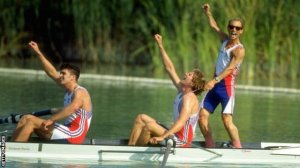
‘Garry was brilliant,’ …. ‘He told us exactly where the Italians were and he really motivated us with things like: ‘If not now, when? If not you, who? How much do you want this?’ We knew then that we wanted it more than them.’ (Greg Searle, Gold, Barcelona Olympics)

In the Barcelona Olympics the Searle brothers trailed the Italians by two lengths at 1250m…with 15 stokes remaining it was still more than a length…rising to the if not now, when? and the if not you, who? challenge…the brothers showed extraordinary courage and determination to overhaul the Italians in the last stroke to win Gold. (Click picture to view the race)

_61783432_searle1992_getty

It is probably true that when it comes to raising achievement (RA) a whatever it takes” mindset and culture is key and Term 4/5 is the engine room of opportunity to ensure that students perform. Where there is a focus on quality first teaching and a balance of being deliberate, precise and rigorous on strategies and approaches that matter… there are no limits to what can be achieved.


This begs the question: How do Academies/schools raise achievement most effectively ahead of summer exams? After all, “If not now, when?” … “If not you, who?”

“Success is not a random act. It arises out of a predictable and powerful set of circumstances and opportunities.” (Malcolm Gladwell)


What if we always kept central that it is quality first teaching that matters? – what students receive every lesson, every day is what raises achievement and this is best achieved through strong, precise and deliberate teaching over time. – This is the “flywheel” (Collins), the “One Thing” (Keller). Keep the main thing, the main thing…

Slide10

What if we also understood that RA approaches have much to inform us about everyday teaching, assessment and practices? So that RA is not about a sticking plaster or a bolt-on (panic) approach, but is built into effective progress-focussed teaching across all Year groups.


amplify-a-need

What if we realised that urgency is important when raising achievement and that it is crucial that this is communicated to encourage and insist on a move to action for both students and staff? We need to “amplify a need” to secure action that makes the difference.

What if it was the superheroes in our midst that led RA – each teacher, tutor, mentor, leader taking responsibility for RA and believing that anything is possible and being the change and impetus to move students to action? …the deliberate action that enables students to achieve. Blog: Connected Collaboration and Deliberate Altruism

Tumblr_mnh27a7WA31rir6lho1_1280

What if we are very clear about who is responsible for student performance? Class-level responsibility is key to RA – teachers being accountable for students – where there is quality conversation (support and challenge) around what can be achieved with a group of students – teaching becomes more focused on RA.


What if we reward teaching that is outcome-orientated? We value and reward teachers who achieve progress over time; placing more weight on outcomes and progress achieved than performance in observations. And what if we support and reward teaching that is more deliberate and grounded in formative assessment, so that it enables planning to close gaps and secure greater progress. (blog: progress over time)

What if we show a boldness of leadership that reshuffles students, alters groupings and changes staffing to ensure students get the best opportunity to perform? (they only get one shot) And What if where behaviour limits progress teachers and leaders are tenacious and quick to remove this barrier?

What if we fully recognised that Raising Achievement is not about doing more and stacking strategy on strategy … in the push to raise achievement… “not everything matters equally?” (Keller) see Strategic leadership | fanatical discipline and deliberate delivery. We should deliberately seek “marginal gains” (David Brailsford) but resist the temptation just to add strategy on top of strategy – such approaches are high energy, spread impact thinly and are often counter productive.


What if we embedded deliberate practice within teaching and RA? Deliberate Practice occurs when students…

1. …are be motivated and exert effort to improve their performance.

2. …engage in tasks that take into account their pre-existing knowledge.

3. …receive immediate informative feedback and knowledge of the results of their performance.

4. …repeatedly perform the same or similar tasks.

What if based on sound formative and summative assessment that allowed a deep understanding of what students are able to do and not do we used DTT and DDI to close gaps in understanding?…

  • DTT – Diagnosis, Therapy, Test, Diagnosis, Therapy, Test….
  • DDI – Data Driven Instruction.

What if using DDI allows for greater professional conversation around how to secure concepts with students? Why are there gaps shared by students in their understanding? If we focus on understanding how effective our instruction is then teaching will more quickly RA of students.


What if, like the Oakland As, RA is consistently Data Driven? If we ask the right questions and measure the most important performance indicators (the gaps) we get a sense of impact/performance and we direct teaching, planning and intervention to efficiently and effectively close gaps. See blog: Greatness isn’t born, it’s grown. Coyle What if we borrow and use more of Dan Coyle’s ideas on learning and performance? He identifies three important conditions that support learning:

  • Maximise reachfulness in the presence of an expert
  • Embrace the struggle – “You will become clever through your mistakes.”
  • Encourage theft – use feedback and copy others.

Dan Coyle: http://www.youtube.com/watch?v=Aq0pHpNy6bs (17 mins)

What if RA is based on the assumption that anyone can learn anything? That the physical development of myelin to secure pathways in the brain enables learning – it is practice that counts and that Dweck’s Growth Mindset ideas are central to highlighting what is possible?

“We all have the ability to profoundly change our levels of talent, our level of skill. Where clusters of great talent emerge there has been a culture created where individuals are constantly reaching and repeating, making mistakes, receiving feedback, building better brains, faster more fluent brains…inside the brain myelin acts like insulation on the pathways and connections in the brain – each time we reach and repeat we earn another layer – signal speeds in the brain start to increase from 2 mph to 200 mph – neuro broadband – (or the difference between normal and great).” (Dan Coyle)


What if Mock exams were regular and deliberately delivered, perhaps in this sequence? Quality teaching…Walking Talking Mock…Visualisation/deliberate instruction/preparation…Mock Exam…question-level feedback…moderation…diagnosis…DDI/DDT…deliberate results day…quality first teaching/intervention that precisely closes gaps.

Slide02

What if these Mocks are externally marked or moderated? such that a accurate “Actual Performance” is measured? …completed in exam halls, under full exam conditions, with full exam papers? …including all access arrangements?

What if Mock performance precisely informed what is taught and better still how it is taught (DDI)? What if Covey tables or similar identified specifically the gaps and opportunities for marks and that this is owned in subjects and at class-level? (remembering that some marks are easier than others)

What if fine grading was used across all subjects and that the criteria for each fine grade is consistently applied? And what if feedback from each exam provided question-level analysis and specifically directed students to when and how they can close gaps in understanding?

What if parents evenings were also results evenings where students receive results and specific question/area-level feedback on what is known and where the gaps…and how, where and when the gaps can/will be closed?


What if we meticulously had a plan for the seconds, minutes, hours and days prior to am and pm exams – that this tapered preparations, supported students and was consistent, dependable and reassuringly routine?

What if the period before and during the exams was precisely timetabled to make the very best use of the time available, such that quality teaching input existed up to each exam and that lessons and teachers whose courses had completed made an Academy contribution to support the preparation for other exams?

What if we also focused on student well-being, praise and reward? Cohort performance is often linked to cohort ethos and approach, such that there is a collective and wide-held value placed on performing and achieving? This can often be tangible and obvious – where cohorts tip outcomes improve. What approaches can be used to create a sense of belonging, a Year group sense of we are in this together and “your success is also my success?”

What if RA is a whole Academy drive such that a 100 day plan (to… 50 day plans) leading up to and through the summer exams is owned by all? And even better if this is translated into subject plans…that are very specific, deliberate and precise. What if there is a clear focus on the key students that make the difference the “key 34” the “critical 25” the “golden 28”?


Maybe then we would exploit a “whatever it takes” and “if not now, when” mindset that assumes everything is possible and ensures students perform and achieve. That we never let up on improving the quality of teaching as this is the most effective way of raising student achievement of students – what happens in every lesson really matters.

Maybe also we would be precise and deliberate about Raising Achievement, squeezing out the most from the strategies and approaches that matter the most.

…enabling students to perform unusually well.

March 2015