Igniting identity | circumstance and happenstance

Our self-identity forms over time, shaped by our experiences and interactions, particularly in our formative years. It is not a uniform development of self, but rather one that is punctuated disproportionately by high impact moments. These sit in our backstories, having ignited our identity and shaped who we have become.

These moments are often subtle, quiet experiences of awe and wonder: a sudden realisation, both unsettling and exciting, that the world and our role in it is not what we thought. In these moments of alchemy, brief serendipitous collisions create a hiatus between our old and new self-image.

“…in moments of alchemy, brief and serendipitous collisions, the beautiful texture of interwoven lives. There are many seeds of genius in the world, we must nurture as many as we can.” Helen Lewis
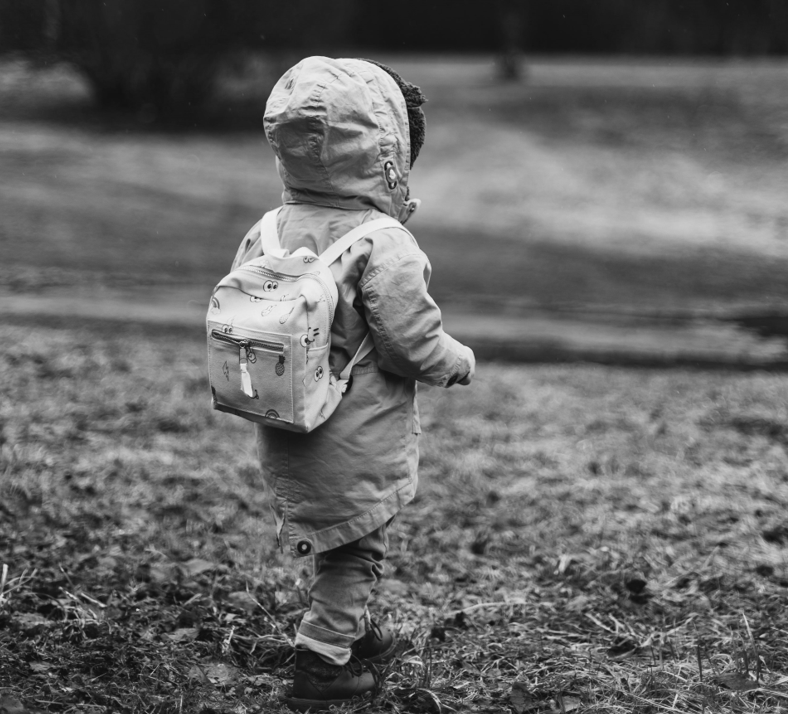

Circumstance and happenstance

The development of self is determined by our context, upbringing and by the influential adults and peers that we look to through childhood: an on-going influence of circumstance through our formative years.

But much, arguably, is happenstance, serendipitous moments that build our self-image. Brief events, often remarkably small, that disproportionately shape our lives. Rather awkwardly, they are often surprisingly quiet, private moments of self-realisation that are invisible to the provider.

“The smallest act in the most limited circumstances bears the seed of boundlessness, because one deed, and sometimes one word, suffices to change every constellation.” Hannah Arendt

Yet for some children the vagaries of life’s happenstances are less frequent, less influential or much less accessible. It also depends on a child’s circumstance and their pre-disposition to act on these moments. Whilst our childhood sets the conditions and the circumstances that influence our predispositions, the brief moments, the happenstances, disproportionately explain who we become.


Predispositions

Will, Should, Might, Could, Won’t, Can’t

Our context and circumstance, whether consciously or unconsciously, determine our predispositions and the strength of our self-agency. For any given aspect of life we align to one of the following dispositions:

I Will  …. I fully expect to do this, unswerving, predestined, locked in, self-fulfilling.

I Should … Highly likely, people like me do things like this (reinforced by peer status).

I Might … Entirely possible and within my gift, requires a step forward, focus and resourced adults.

I Could … It is possible, but could be difficult to achieve – requires ignition, support and must be followed by resource.

I Won’t … People like me don’t do this, locked out, keys hard to find, and not sought, no capacity or resource, unable to see the future or be part in it.

I Can’t … Not possible, nobody like me does things like this, psychologically and materially forbidden.

If you are under-resourced and have experienced much less privilege, then too often your agency is limited to the bottom few dispositions. This offers a form of immunity to moments of ignition and even if ignited a lack of resource to follow your triggered passion. In a world of privilege, however, you occupy the top few dispositions: emboldened to accessible experiences and open to life-changing moments. And yet, ‘ambition’ is equally distributed, but enhanced or stifled from birth and perhaps before birth.

If you are lucky enough to be born in a world made in your image, you probably think of a failure as an obstacle on the path to eventual success. If you are a marginalised person in any way you internalise that failure more closely.” Elizabeth Day


Moments of wow… igniting identity

Regardless of who we are there are moments we witness that change our passions, our identity and motivation for what we wish to become…

“But the moment that changed everything came on 29 July 1992 … the Barcelona Olympics. Chris Boardman was about to go in the final of the men’s individual pursuit. I sat in front of the TV and watched him … Four and a bit minutes later, Chris had overtaken his German counterpart and become Britain’s first Olympic cycling gold medallist in 72 years. I was 12 and knew straightaway I wanted to emulate his feat. Another 12 years later I did just that.” Bradley Wiggins

…or influential adults who we are desperate to emulate…

“When I’m 13, my mum gives me a load of photos that she’s found. There he is, in his cycling kit, racing. It’s a definite “Wow!” moment, like he’s been brought to life in my hands. Those photos become my greatest treasure. The closest connection I could have with my father was by following in his footsteps” Bradley Wiggins

…or experiences that ignite our identity…

“My love for cinema began at a very early age, as early as I can remember… I was just a little kid in a darkened theatre, and I remember that beam of light just cut across the room and I remember looking up, and it seemed to just explode on the screen. … and suddenly, the world was so much larger than the one that I knew … it opened my eyes. It opened my imagination to the possibility that life could expand far beyond the boundaries that I then perceived in my own life.” Tom Cruise

“Making films is not what I do, it is who I am.” Tom Cruise


Owning the future

How far are children able to focus on the future? If you exist in an under-resourced world where you seek to survive the day, the week, your effective horizon is limited, perhaps irrelevant to you: there is no bandwidth to contemplate your future. This fundamentally forces you toward the weaker predispositions, I Won’t and Can’t, and breaks the connection between recognising that the efforts of now are an investment in next. The future will act on me.

Resourced children are able to make the investments now, fill their lockers and are typically compelled to do so, supported to strong dispositions, I Will and Should. I create my future.

To be or not to be

To be or not to be, that is the question that children wrestle with as they navigate the world. We know, though, that some children have much less capacity to be, forced into a not to be mindset. Growing in a world that tips the odds against you, denies a starting disposition, or ladder to, ‘Will, Should, Could’ and restricts the under-resourced to ‘Can’t and Won’t’. Only the application of equity can offer a ladder and break the cycle.

Lockers filled with belief

In every aspect of a child’s life, a child holds a locker of self-belief. Advantaged children have bursting lockers, filled by circumstance and opportunity, narrated by resourced adults, affirmed through experience. The lockers of under resourced children are sparse, short on belief, encouragement or affirming experiences. When they look to their lockers for self-confidence and self-belief they are encouraged, perhaps compelled, to step back, to not take risks and internalise the failure. We must be better at filling the lockers of under-resourced children.

“When you are born into wealth and privilege, you inherit a plan that outlines the paths ahead, indicating the shortcuts and byways available to reach your destination … If you enter the world without such a map, you are bereft of proper guidance. You lose your way more easily.” Elif Shafak

Chasing status

What you become depends largely on who you find yourself with. We measure status on those around us, typically the 5 peers that we spend time with that we look to and derive our own sense of status. Our belief in what is possible is shaped by our peers, and our schools are the crucible for these interactions.


Our verbal quota

“…we speak about 16,000 words a day, that is a lot of chances to tease, complain and criticise, but also to encourage, inspire and comfort. I know I can do a lot more good with my verbal quota.” Matt Woodcock

In every interaction, exchange and conversation our words are a powerful force for good (or ill). We never know for certain the weight of our words on a child, but we do know that children are adult-watchers, seeking to decode the world around them. Awkwardly or helpfully, in every interaction our words always carry weight and have influence, intended or otherwise. Often just 13 words deliver a self-belief that becomes unshakable and propels a dopamine-soaked desire to follow a passion:

“…I was introduced to a club coach, Stan Knight. Immediately he took hold of my wrist. “I’ve never felt a pulse like it,” he said. He looked me in the eye – “You’re going to be the best cyclist this country has ever produced.” … I liked the fact he had belief in me… Stan didn’t tell me I was special because of who my dad was. He told me I was special. Me.” Bradley Wiggins


Inspiring lives

“I began to realise how important it was to be an enthusiast in life. If you are interested in something, no matter what it is, go at it full speed, Embrace it with both arms, hug it, love it and above all else become passionate about it. Lukewarm is no good.” Roald Dahl

As educators we chose to inspire lives – and yet we spend little time understanding how children exist in the world or how their lives unfold through their circumstance and happenstance. How do we ensure that curiosity, hope and ambition is a feature of all childhoods not just those that are privileged?

Perhaps we should maintain a greater sense of awe and wonder, of possibility and back it with the application of equity and protect the flickering flames of hope, so that more children can embrace an interest with both arms. If we are to ignite a child’s self-identity, so that they have agency into their adulthood, we must create greater opportunity and apply the equity that will give all children the choice to follow their dreams.

...inspire lives with greater opportunity and choice.


Dan Nicholls | December 2025

Privileging disadvantage | Excellence, Equity, Culture

Securing provision that privileges disadvantaged children requires a deliberate balance of Excellence, Equity and Culture. A system in 3 dimensions. An excellent education made accessible by the application of equity held within a culture of high expectation closes gaps into adulthood for under-resourced children.  Shifting the identity of schools and organisations to systemically privilege those that need us most, because it is who they are and what they do.

Privileging disadvantage and closing gaps is futile without excellent provision. Effective enactment of a progressive, sequenced curriculum, every lesson, every day, as a universal entitlement, offers far greater opportunity for all. Whilst our strongest lever is an excellent education, this alone, is not enough. Schools also need to apply far greater equity, to be braver and fiercer to do different for under-resourced children, so that they are empowered and able to exploit the excellent education. An alchemy of excellence and equity.

“One measure of poverty is how little you have. Another is how difficult you find it to take advantage of what others try to give you.” (Michael Lewis)

When schools secure an excellent education, allied with the deliberate application of equity, children are enabled to, supported to, and expected to take the opportunity. This creates the conditions that disproportionately advantage disadvantaged learners. A potent mix of excellence and opportunity.

“…schools remain one of the few remaining trusted institutions equipped to help create a fairer society. -explicitly thinking about how teaching can be genuinely inclusive to benefit all pupils, while relentlessly identifying, understanding and overcoming barriers to learning outside (and inside) school – are the interlocking foundations of equity-based education.” (Lee Elliot Major)

Privileging disadvantage in three dimensions.

Sustaining this potent combination of excellence and equity requires a strong culture, where colleagues take responsibility for enacting the very best provision and to unlock it for all children (psychologically and structurally). Cultures of high expectation, never give up on individuals, let them down or off, they meet them there, step (push) them forward, in an ‘advantaged-like’ environment, upheld by all. Creating a culture that changes the life chances of those that have had the least, because childhoods last a lifetime, and we may be their only second chance.

“4.3 million children, 30% are growing up in poverty in the UK.” (Department of Work and Pensions)

Closing gaps and privileging disadvantage requires Excellence, Equity and Culture:


Excellence | Securing an excellent education for all learners – our strongest lever.

An excellent curriculum, sequenced, progressive and enacted to secure powerful knowledge and understanding, with eye-wateringly high expectations of all children, is our strongest lever. It requires our full attention to be uncompromising in pursuing social justice, confer power and an entitlement to the strongest possible provision. 

“Curriculum is all about power. Decisions about what knowledge to teach are an exercise of power and therefore a weighty ethical responsibility. What we choose to teach confers or denies power.” (Christine Counsell)

To disproportionately support disadvantage learners, we need all teachers and leaders to really understand the architecture of each subject, the most fundamental substantive core concepts, the most powerful knowledge and the key disciplinary concepts. We need to not stray far from this spine of the curriculum so that we weave baskets and schema that fundamentally support children to make links and learn more in the future. Arbitrary subject wanderings is kryptonite for disadvantage learners, confirming it is not for them and too abstract to connect and engage with.

Seeking to bounce up and down through a spiral curriculum, often, reinforces the spine, increases the proximity of the presently known to new knowledge and reinforces over time what is the most important and fundamental for learning. Do seek to inspire, expect much, and be geeky about the subject spine.

Excellent teaching must invest in strong explanation and direct instruction that assumes less about previous knowledge and experiences, tethered closely to the spine of the curriculum. Don’t hide explanation in slides or complicated context. Exposition is teaching and learning. Prioritise human explanation, modelling and analogy, enacted in real time, in plain sight, in simple language, visually accumulates advantage. High quality teaching triggers attainment mobility and realises potential.

Enabling disadvantaged learners to find their voice requires an effective school-wide systematic development of oracy. When there is strong oracy we privilege disadvantaged learners, because…

“… it is utterly transformative. It changes the way we feel about ourselves. It changes the way in which other people see us. It changes the way in which we relate to friends and family members. It changes our ideas about what we might go on to do in the future.” (James Mannion)

Seek to prioritise the building of vocabulary, particularly tier 2 vocabulary. This is key for joining thoughts and ideas together, deepens oracy and enables deeper thinking. Also actively lift the quality of all conversations, in all interactions, all the time, in the school. All colleagues have influence and skin in this game.

Reading and the development of reading is fundamental for accumulating advantageIt is hard to over-state the importance of reading: it develops cultural capital, comprehension, vocabulary, thinking, empathy, inference, confidence, concentration, oracy, writing, esteem, unlocks the world, quality of life, belonging…

“I didn’t know words could hold so much.” (Kya Clark)

Nudging, narrating, and coaching is a feature of an advantaged upbringing. From formative years advantaged children receive constant feedback and commentary that supports growth and is the driver for accumulating advantage. Formative assessment needs to be an intentional and deliberate part of an excellent education, it is a strong expression of care. I am giving you this feedback because I believe in you. The strongest teaching seeks to hunt, not fish, being precise about where individual children are and offering specific feedback. Follow learning to meet need.

Creating a strong culture of professional learning, with colleagues engaged in incremental coaching, often and specifically on aspects of teaching creates classrooms of opportunity for disadvantaged learners.

Children taught by the most effective teacher in that group of 50 teachers, learn in six months what those taught by the average teacher learn in a year. (Hanushek & Rivkin)


Equity | to enable all children to take advantage of an outstanding education.

“Fair doesn’t mean giving every child the same thing, it means giving every child what they need.” (Rick Lavoie)

We tend to under-use equity, in favour of equality, which often stops us giving what individual children really need. Applying equity, fiercely, bravely and deliberately, enables children to access and take advantage of excellent provision, but it requires us to understanding children as individuals. To do so requires us to genuinely walk in their shoes and see the world through their eyes and then to remove barriers and create an optimal environment. Applying the disadvantaged lens.

“90% of my time is spent thinking about and watching people … (to) genuinely get inside their shoes and see the world through their eyes … (to) create an optimal environment where a human being is going to have the best chance of being the best they could possibly be.” (David Brailsford)

To grow up advantaged is to exist in a world of opportunity and high expectation, it is demanding. We need to have the highest of expectations for disadvantaged learners, if we let them off, we will let them down. Each time we lower the bar we are complicit in widening the gap. Disadvantaged learners are not less able, it is an economic label only… and labels are dangerous.

To grow up advantaged is to be held to high expectations and encouraged to participate in supported opportunities over time. A childhood that encourages risk taking, a low safety bar (with safety net), offers commentary of the journey through life and reaffirms a child’s internal locus of control. We need a system where all children have someone who believes in them, someone (maybe many) to meet them there.

“The biggest benefit in being the child of a scientist? Low safety bar. As soon as Mad could walk, Elizabeth (Zott) encourages her to touch, taste, toss, bounce, burn, rip, spill, shake, mix, splatter, sniff, and lick nearly everything she encountered… Nevertheless, she lived.” (Bonnie Garmus)

Focus on Attendance first, compelling and engaging all colleagues to drive up attendance of disadvantaged children, as the priority. If children aren’t in, our influence is zero, they need us to reach out and pull them in.

Mentoring and tutoring, in addition, is an overt expression of equity and a typical feature of an advantaged upbringing.  Schools must focus on careers and future planning, so that disadvantaged learners see and know what is possible, because disadvantaged children are not less ambitious.

We need to apply equity to every transition point, to step in, hold disadvantaged learners and build a secure sense of psychological safety. It is within transitions that advantaged parents step in, navigate, and support children over the multiple transitions of childhood. It is not just between schools, or years, or terms, or days, it is all the time; our lives are punctuated by transitions. We need to be the bridge, to be the ladder.

Beware of being complicit in creating schools within schools. Too often schools inadvertently create pathways, perfectly designed to widen gaps and exacerbate disadvantage. Alternate realities do not exist in schools that privilege disadvantage. We measure ourselves and our status against those we spend time with. We should seek to create conditions for attainment mobility and wide social connection.


Culture | Privileging into the long term is about culture change, seeking irreversibility.

“Your goal is your desired outcome. Your system is the collection of daily habits that will get you there… you do not rise to the level of your goals. You fall to the level of your systems.” (James Clear)

In schools where under-resourced children thrive the strength of culture and shared responsibility is evident and tangible, you feel it. These schools have systems that entirely privilege all children, subconsciously carved into the expected norms, habits, routines, language and behaviour as an irreversible commitment to educate and apply equity to all children. Disadvantage even over

Schools that privilege disadvantage have exothermic systems that generate their own energy and subconsciously (but by design) close gaps, rather than endothermic systems that require external energy, conscious focus, initiative, strategy and tables on websites. The first is a permanent shift in identity and values, the latter is ill-equipped to close gaps. Schools becoming what they repeatedly do.

Our interactions, language, and the attention we give to others defines our attitude towards themand influences the way children see themselves. Language really matters, it warrants deep consideration and development over time, it is the artefact of any culture.You belong here. Systems that privilege disadvantage call out behaviours, attitudes, actions, language and intent that widen gaps.

Schools that close gaps measure what matters, because and what we measure, we care about. The true measure of the effectiveness of an education is revealed in the attainment, progress, and attendance of disadvantaged learners. The best schools prime the conditions, reward gap closers and gap closing as part of the values, even over other metrics.


Closing gaps in 3D | In brief

Step one: Seek to secure an excellent education, where great teaching of a well sequenced, progressive, conceptually driven curriculum, disproportionately supports learning of disadvantaged children, every lesson, every day to close gaps.

Step two: Really understand all children, remove barriers, maintain very high expectations, and apply equity to secure full access for all children to an excellent education (over privileging and applying equity as necessary).

Step three: Build a culture that ensures the excellent education is accessible and unavoidable for all children by applying equity. Shift the identity, to one that privileges disadvantage in everything.

Then: stop talking about disadvantage, disadvantage strategies, PP Plans and initiatives, instead talk about high quality provision, accessed by all, because it is who we are and it is what we do for all.

If we do so, we just might create the conditions that disproportionately support disadvantaged learners to accumulate advantage and close the gaps that we currently perpetuate. An education, where all children belong and feel success because it privileges disadvantage.

Seek Excellence, Equity, Culture | close gaps in 3D.


Dan Nicholls | May 2024