The Formative and Middle Years

There are phases in a child’s education that matter more. The formative Early Years, and the first 1000 days from conception, offer the chance to give children the Best Start in Life: a life-changing influence before destinies begin to harden.

The Middle Years, or Early Secondary Years, follow the key stage transition, when school approach significantly changes and adolescence begins to influence identity, confidence and learning. It can be the confirmer of destiny.

If we are to close gaps, we need to constrain our focus so that our expertise is focused in the phases that offer us the most influence on children’s lives. The children who carry the greatest disadvantage need us most at these pivotal times, when our leadership can still change the course of their lives.


The Formative Years

The first 1000 days from conception and through Early Years fundamentally influence, but not irreversibly, the future success of all children. Whilst the attainment and developmental gaps open around birth and widen ahead of Nursery, these are not irretrievable; early years offers a one-off window to close these gaps. This is our greatest opportunity to offer all children their Best Start in Life and to achieve greater social justice.

Tell me, what is it you plan to do with your one wild and precious life? (Mary Oliver)

The economics also work: investing money, time, resource and focus into the Early Years significantly reduces downstream costs to society; more importantly, closing gaps and applying equity in these formative years will last into adulthood.  

It is this investment that lays the gauntlet in each of the following years to ensure that the catch up leads firmly to keep up and the best schools do that. It is who they are and they consider it inconceivable that they would fumble the gap-closing secured by colleagues in Early Years. Catching up is harder than keeping up.


The Middle Years | Early Secondary Years

The Early Secondary Years are the great confirmer of destiny, and rarely reversible. A time where gaps re-open or widen to the point of no return. We know that being under-resourced has a long-term drag on children: if schools are passive in the Early Secondary Years, children will step back, the hope built through primary education begins to fade, and an external locus of control reduces agency and opportunity.

The following brilliant extract from Mary Myatt is exactly why the Middle Years, the Early Secondary Years, are the opportunity to inspire lives, to enact a phase of education that, for too many children, acts as the great confirmer of destiny:

“…This is why ambition in these formative years matters so profoundly. Done well, we raise the intellectual pitch, we present pupils with demanding texts, with carefully sequenced ideas and genuine opportunities to think like historians, scientists and mathematicians. In doing so we don’t just prepare them for future exams, we open our whole world up to them.” (Mary Myatt, 2026)

And this considers the application of equity and the importance of the Early Secondary Years on those who rely of schools to open doors:

At the heart of this is a burning question about equity. A curriculum that lacks coherence or challenge does not fall equally on all pupils. Those who arrive at secondary school already fluent in the language of academic success and with expert support at home can compensate for what is missing in school. Those who rely on school to open doors, who need school the most, cannot. An ambitious Key Stage 3 is therefore one of the most significant moves towards true inclusion a school can make, not through rhetoric, not through more add-ons or interventions, but through the daily experience of expert teaching of a rigorous, thoughtful curriculum.” (Mary Myatt, 2026)


Much more important than that…

If your life depended on it …. you would (…achieve the required level of urgency, prioritisation and focus to close gaps)

We know that the most effective schools enable all children to catch-up and keep-up, achieving sector contrasting outcomes in Year 6 and continuing to close gaps in the Early Secondary Years. These schools typically do normal things incredibly well, seek to close any gap regardless of context, enact a curriculum deeply informed by assessment, with high expectations and with constrained and unswerving focus on high quality education. These schools struggle to talk about specific gap-closing strategies, because gap closing is what they do, it is their identity. They apply equity as normal, specifically gifting what each child needs, a deep understanding of pupil performance and an ability to not be distracted from it.

 “Some people believe football closing the disadvantage gap is a matter of life and death, I am very disappointed with that attitude. I can assure you it is much, much more important than that.” (Bill Shankly)

Leadership of constraint and prioritisation

Closing the disadvantage gap and prioritising these pivotal phases of education requires leadership to deploy constraints and restraint; a level of prioritisation that orients attention and rewards gap closing. Schools and Trusts must resist chasing anything and everything, to dancing to all the tunes, so that they concentrate on what they are good at and directing their attention into the phases that carry the most hope for under-resourced children.

chase two rabbits, catch neither.

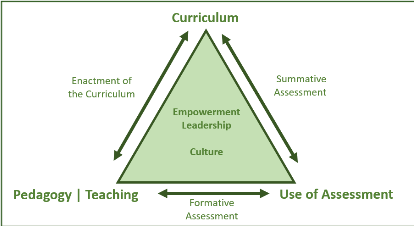
The hackneyed, yet true Hedgehog Concept (Collins) prompts us to remember why we exist as educators and to focus our energies on what we are best at – using education to transform lives, principally through the interaction of curriculum, assessment and pedagogy.

David Epstein (2026) points leaders toward the importance of seeking a greater understanding and deployment of constraints to achieve greater and sustained impact:

  • Constraints sharpen focus: when everything is possible, priorities blur. Clear constraints force people and organisations to decide what matters most.
  • The right limits improve creativity: Constraints push people beyond default solutions. They create the conditions for deeper problem-solving and more original thinking on well-defined problems and challenges.
  • Too many resources can create waste and complexity: an abundance of resource and time leads to over-engineering, distraction and weak discipline.
  • Leaders should design useful boundaries: Good leadership is not just about removing barriers; it is about setting intelligent limits: timeframes, decision rules, scope and priorities.
  • Progress often comes from subtraction, not addition: improvement may come from stopping, simplifying or narrowing work rather than adding more initiatives.

“The more constraints one imposes, the more one frees one’s self… the anguish into which an unrestricted freedom plunges… I have no use for a theoretic freedom. Let me have something finite, definite… my freedom will be so much the greater and more meaningful the more narrowly I limit my field of action and the more I surround myself with obstacles.” (Igor Stravinsky)


Inspiring lives with greater opportunity and choice

The formative and middle years of education are life changing. We must, therefore, employ greater urgency, make a deeper investment and increase our focus on the quality of provision in these phases. This requires both constraint and constraints to harness our attention and place value where we have the greatest leverage to close gaps. So that we gift the Best Start in Life to all children and increase their life chances in the Early Secondary Years. Securing greater agency for children as they journey toward adulthood.

Inspiring lives with greater opportunity and choice.


Dan Nicholls | July 2026

Privileging disadvantage | Excellence, Equity, Culture

Securing provision that privileges disadvantaged children requires a deliberate balance of Excellence, Equity and Culture. A system in 3 dimensions. An excellent education made accessible by the application of equity held within a culture of high expectation closes gaps into adulthood for under-resourced children.  Shifting the identity of schools and organisations to systemically privilege those that need us most, because it is who they are and what they do.

Privileging disadvantage and closing gaps is futile without excellent provision. Effective enactment of a progressive, sequenced curriculum, every lesson, every day, as a universal entitlement, offers far greater opportunity for all. Whilst our strongest lever is an excellent education, this alone, is not enough. Schools also need to apply far greater equity, to be braver and fiercer to do different for under-resourced children, so that they are empowered and able to exploit the excellent education. An alchemy of excellence and equity.

“One measure of poverty is how little you have. Another is how difficult you find it to take advantage of what others try to give you.” (Michael Lewis)

When schools secure an excellent education, allied with the deliberate application of equity, children are enabled to, supported to, and expected to take the opportunity. This creates the conditions that disproportionately advantage disadvantaged learners. A potent mix of excellence and opportunity.

“…schools remain one of the few remaining trusted institutions equipped to help create a fairer society. -explicitly thinking about how teaching can be genuinely inclusive to benefit all pupils, while relentlessly identifying, understanding and overcoming barriers to learning outside (and inside) school – are the interlocking foundations of equity-based education.” (Lee Elliot Major)

Privileging disadvantage in three dimensions.

Sustaining this potent combination of excellence and equity requires a strong culture, where colleagues take responsibility for enacting the very best provision and to unlock it for all children (psychologically and structurally). Cultures of high expectation, never give up on individuals, let them down or off, they meet them there, step (push) them forward, in an ‘advantaged-like’ environment, upheld by all. Creating a culture that changes the life chances of those that have had the least, because childhoods last a lifetime, and we may be their only second chance.

“4.3 million children, 30% are growing up in poverty in the UK.” (Department of Work and Pensions)

Closing gaps and privileging disadvantage requires Excellence, Equity and Culture:


Excellence | Securing an excellent education for all learners – our strongest lever.

An excellent curriculum, sequenced, progressive and enacted to secure powerful knowledge and understanding, with eye-wateringly high expectations of all children, is our strongest lever. It requires our full attention to be uncompromising in pursuing social justice, confer power and an entitlement to the strongest possible provision. 

“Curriculum is all about power. Decisions about what knowledge to teach are an exercise of power and therefore a weighty ethical responsibility. What we choose to teach confers or denies power.” (Christine Counsell)

To disproportionately support disadvantage learners, we need all teachers and leaders to really understand the architecture of each subject, the most fundamental substantive core concepts, the most powerful knowledge and the key disciplinary concepts. We need to not stray far from this spine of the curriculum so that we weave baskets and schema that fundamentally support children to make links and learn more in the future. Arbitrary subject wanderings is kryptonite for disadvantage learners, confirming it is not for them and too abstract to connect and engage with.

Seeking to bounce up and down through a spiral curriculum, often, reinforces the spine, increases the proximity of the presently known to new knowledge and reinforces over time what is the most important and fundamental for learning. Do seek to inspire, expect much, and be geeky about the subject spine.

Excellent teaching must invest in strong explanation and direct instruction that assumes less about previous knowledge and experiences, tethered closely to the spine of the curriculum. Don’t hide explanation in slides or complicated context. Exposition is teaching and learning. Prioritise human explanation, modelling and analogy, enacted in real time, in plain sight, in simple language, visually accumulates advantage. High quality teaching triggers attainment mobility and realises potential.

Enabling disadvantaged learners to find their voice requires an effective school-wide systematic development of oracy. When there is strong oracy we privilege disadvantaged learners, because…

“… it is utterly transformative. It changes the way we feel about ourselves. It changes the way in which other people see us. It changes the way in which we relate to friends and family members. It changes our ideas about what we might go on to do in the future.” (James Mannion)

Seek to prioritise the building of vocabulary, particularly tier 2 vocabulary. This is key for joining thoughts and ideas together, deepens oracy and enables deeper thinking. Also actively lift the quality of all conversations, in all interactions, all the time, in the school. All colleagues have influence and skin in this game.

Reading and the development of reading is fundamental for accumulating advantageIt is hard to over-state the importance of reading: it develops cultural capital, comprehension, vocabulary, thinking, empathy, inference, confidence, concentration, oracy, writing, esteem, unlocks the world, quality of life, belonging…

“I didn’t know words could hold so much.” (Kya Clark)

Nudging, narrating, and coaching is a feature of an advantaged upbringing. From formative years advantaged children receive constant feedback and commentary that supports growth and is the driver for accumulating advantage. Formative assessment needs to be an intentional and deliberate part of an excellent education, it is a strong expression of care. I am giving you this feedback because I believe in you. The strongest teaching seeks to hunt, not fish, being precise about where individual children are and offering specific feedback. Follow learning to meet need.

Creating a strong culture of professional learning, with colleagues engaged in incremental coaching, often and specifically on aspects of teaching creates classrooms of opportunity for disadvantaged learners.

Children taught by the most effective teacher in that group of 50 teachers, learn in six months what those taught by the average teacher learn in a year. (Hanushek & Rivkin)


Equity | to enable all children to take advantage of an outstanding education.

“Fair doesn’t mean giving every child the same thing, it means giving every child what they need.” (Rick Lavoie)

We tend to under-use equity, in favour of equality, which often stops us giving what individual children really need. Applying equity, fiercely, bravely and deliberately, enables children to access and take advantage of excellent provision, but it requires us to understanding children as individuals. To do so requires us to genuinely walk in their shoes and see the world through their eyes and then to remove barriers and create an optimal environment. Applying the disadvantaged lens.

“90% of my time is spent thinking about and watching people … (to) genuinely get inside their shoes and see the world through their eyes … (to) create an optimal environment where a human being is going to have the best chance of being the best they could possibly be.” (David Brailsford)

To grow up advantaged is to exist in a world of opportunity and high expectation, it is demanding. We need to have the highest of expectations for disadvantaged learners, if we let them off, we will let them down. Each time we lower the bar we are complicit in widening the gap. Disadvantaged learners are not less able, it is an economic label only… and labels are dangerous.

To grow up advantaged is to be held to high expectations and encouraged to participate in supported opportunities over time. A childhood that encourages risk taking, a low safety bar (with safety net), offers commentary of the journey through life and reaffirms a child’s internal locus of control. We need a system where all children have someone who believes in them, someone (maybe many) to meet them there.

“The biggest benefit in being the child of a scientist? Low safety bar. As soon as Mad could walk, Elizabeth (Zott) encourages her to touch, taste, toss, bounce, burn, rip, spill, shake, mix, splatter, sniff, and lick nearly everything she encountered… Nevertheless, she lived.” (Bonnie Garmus)

Focus on Attendance first, compelling and engaging all colleagues to drive up attendance of disadvantaged children, as the priority. If children aren’t in, our influence is zero, they need us to reach out and pull them in.

Mentoring and tutoring, in addition, is an overt expression of equity and a typical feature of an advantaged upbringing.  Schools must focus on careers and future planning, so that disadvantaged learners see and know what is possible, because disadvantaged children are not less ambitious.

We need to apply equity to every transition point, to step in, hold disadvantaged learners and build a secure sense of psychological safety. It is within transitions that advantaged parents step in, navigate, and support children over the multiple transitions of childhood. It is not just between schools, or years, or terms, or days, it is all the time; our lives are punctuated by transitions. We need to be the bridge, to be the ladder.

Beware of being complicit in creating schools within schools. Too often schools inadvertently create pathways, perfectly designed to widen gaps and exacerbate disadvantage. Alternate realities do not exist in schools that privilege disadvantage. We measure ourselves and our status against those we spend time with. We should seek to create conditions for attainment mobility and wide social connection.


Culture | Privileging into the long term is about culture change, seeking irreversibility.

“Your goal is your desired outcome. Your system is the collection of daily habits that will get you there… you do not rise to the level of your goals. You fall to the level of your systems.” (James Clear)

In schools where under-resourced children thrive the strength of culture and shared responsibility is evident and tangible, you feel it. These schools have systems that entirely privilege all children, subconsciously carved into the expected norms, habits, routines, language and behaviour as an irreversible commitment to educate and apply equity to all children. Disadvantage even over

Schools that privilege disadvantage have exothermic systems that generate their own energy and subconsciously (but by design) close gaps, rather than endothermic systems that require external energy, conscious focus, initiative, strategy and tables on websites. The first is a permanent shift in identity and values, the latter is ill-equipped to close gaps. Schools becoming what they repeatedly do.

Our interactions, language, and the attention we give to others defines our attitude towards themand influences the way children see themselves. Language really matters, it warrants deep consideration and development over time, it is the artefact of any culture.You belong here. Systems that privilege disadvantage call out behaviours, attitudes, actions, language and intent that widen gaps.

Schools that close gaps measure what matters, because and what we measure, we care about. The true measure of the effectiveness of an education is revealed in the attainment, progress, and attendance of disadvantaged learners. The best schools prime the conditions, reward gap closers and gap closing as part of the values, even over other metrics.


Closing gaps in 3D | In brief

Step one: Seek to secure an excellent education, where great teaching of a well sequenced, progressive, conceptually driven curriculum, disproportionately supports learning of disadvantaged children, every lesson, every day to close gaps.

Step two: Really understand all children, remove barriers, maintain very high expectations, and apply equity to secure full access for all children to an excellent education (over privileging and applying equity as necessary).

Step three: Build a culture that ensures the excellent education is accessible and unavoidable for all children by applying equity. Shift the identity, to one that privileges disadvantage in everything.

Then: stop talking about disadvantage, disadvantage strategies, PP Plans and initiatives, instead talk about high quality provision, accessed by all, because it is who we are and it is what we do for all.

If we do so, we just might create the conditions that disproportionately support disadvantaged learners to accumulate advantage and close the gaps that we currently perpetuate. An education, where all children belong and feel success because it privileges disadvantage.

Seek Excellence, Equity, Culture | close gaps in 3D.


Dan Nicholls | May 2024