Poor | inspiring childhoods shaped by poverty

Pause. Before we launch into the new term, we should check we are prioritising what matters… serving those who need us most.


Childhoods that are constrained by poverty are shaped by steep challenges, limited resources, and few opportunities. Children surviving under the weight of hardship, cope with more, with less help, are more vigilant, anxious, and mistrusting of the world they navigate. Childhoods that are shaped by poverty lead to adulthoods that never quite escape the impact of growing up poor, because childhoods last a lifetime (Floella Benjamin).

“Even as an adult the ripples of that (poverty) still affect me.” (Katriona O’Sullivan)

As educators we must do more to understand what it is to grow up poor, to grasp some understanding of the lived experience and the visceral truth. We should cut through our own jargon, our own perceptions and assumptions to understand the barriers, the struggle and the occupying weight of what some children are forced to carry.

“‘Poor’ cuts through a lot of jargon – words like ‘disadvantaged’, ‘underprivileged’, ‘deprived’, ‘under-class’, ‘under-resourced’. Words that have their place but don’t capture the visceral truth of what it is to grow up the way I did. The way thousands of children are growing up right now.” (Katriona O’Sullivan)


We need equity | inspiring lives with greater opportunity and choice

“We need equity in education, not equality. If someone can’t see straight because the world is falling in around them, we need to raise them up to clearer skies.” (Katriona O’Sullivan)

In these times, as schools return, we must apply the equity required to enable all children to flourish, to clear their skies, and to not feel marginalised in their world. “We cannot keep pretending it’s an equal opportunities education system. It is not.” (Katriona O’Sullivan) Applying equity is giving what is needed, offering the opportunities for more children to thrive, to have greater choice in their lives, to open doors that let in the future.

“There is always one moment in childhood when the door opens and lets the future in.” (Graham Greene)

This is not about planning and plotting an escape for a few but creating the conditions for all children to feel success in their school and their community. Applying equity to create the opportunities and experiences that inspire lives and unlock doors.


Tipping the odds | valuing what matters

As educators, we need to choose to better use our power, to be braver, to tip the odds and create the conditions that enable more children to flourish in their lives, where they are. To do so requires us to value and measure what matters, high attainment and attendance for the most vulnerable. This reveals the quality of provision and the closing of gaps is the evidence of success. We can and should do better.

“I was lucky, the timing for me was right – I managed but so many others don’t. The world is less because of that. The education system can and should do better. We all should do better.” (Katriona O’Sullivan)

Children living in poverty are not problems to be solved, the system is mis-aligned, lop-sided and intransigent. An uneven playing field that starts from birth and is exacerbated though childhood. Our system creates adverse conditions, fails to value diversity and has narrow success measures that perpetuate the present order and condemns those with the least. Poor assumptions and preconceived views of ability and ambition fail to unleash the potential and contribution of too many children. We need to re-engineer and reconfigure our system, avoiding the traps of meritocracy.

Our deficit discourse, language and vocabulary, both intended and unintended is deafening and maintaining the status quo, ensuring that a child’s poverty extends into all aspects of their lives. Only the deliberate application of equity addresses the a-symmetry of childhoods. Equity, tips the odds.


The deeper implications of poverty | levelling up

“Most of the time being poor felt like a sodden blanket was lying heavy across my shoulders, dragging me down into dark waters.” (Katriona O’Sullivan)

Whilst poverty is fundamentally about having less money, the impact of poverty extends far beyond, eroding self-confidence and a sense of worth:

“… ‘poor’ for me was also feeling like I had no worth. It was poverty of mind, poverty of stimulation, poverty of safety and poverty of relationships. Being poor controls how you see yourself, how you trust and speak, how you see the world and how you dream.” (Katriona O’Sullivan)

If we are to influence how children see the world, how they dream and how they build their future, we need to be bolder, to call out our unhelpful narratives, excuses, and assumptions that fixate on escape and tales of rags to riches. We must enrich their world, create more opportunity, more experiences, offer greater belief in individual children so that they feel more success and have stronger self-belief. You’ve got this.

“… opportunity, money and support. The middle classes are born with those three things in spades; the poor are born with none of them. And the truth is, we are losing some brilliant minds in the trenches of poverty.” (Katriona O’Sullivan).

Beyond the brilliant minds, there is considerable benefit to society when we create conditions that include, that value diversity and broaden access to success. Conditions that privilege all children disproportionately levels-up those who are traversing a world that is loaded against them.

“Sometimes, even these days, I feel like an interloper. I need reassurance sometimes that I am okay. Deserving. Worthwhile.” (Katriona O’Sullivan)


The smallest act | surfing on the ripples of others

Our influence on those closest to us and those that depend on us is more significant than we believe. How we are, what we say, do, behave, deeply affect those around us; children particularly so, who seek clues and are vigilant of snakes…

Are there snakes here? …you become hyperaware. Mistrust becomes a tool of survival. Whenever I met anyone in authority, I was instantly suspicious, instantly mistrustful… it is actually a safety meter.” (Katriona O’Sullivan)

We have an opportunity as educators, as schools and trusts to shape and inspire lives, to remove snakes, hold ladders, create the conditions for children to feel secure, to belong, to have status, to feel less anxious, less wired, more trusting and to grow in an environment that values the uniqueness of each child. And one of our greatest gifts is to give children their voice, the oracy to confidently contribute, to step forward, and stop their lives being narrated by others.

“My life was narrated for me by others. Their voices were forceful, emphatic, absolute. It had never occurred to me that my voice might be as strong as theirs.” (Tara Westover)

Sadly, not our present system, which is perfectly designed to create the reverse, to exclude children from and within schools. Schools need to be riddled with details, interactions, and sparks that pivot young lives.

“Every development in life pivots on small, contingent details, ad infinitum. We’d like to pretend it isn’t true, but reality doesn’t care what we think. We forever surf on the ripples of others.” (Brian Klass)

But, here is the thing, whilst our influence on others carries significant responsibility, humans are beautifully contagious; And, amazingly, importantly, thankfully, even the simplest acts, set of words, an acknowledgement, a moment of belief in another, changes every constellation, shapes a life and creates ripples for others to surf.

“The smallest act in the most limited circumstances bears the seed of boundlessness, because one deed, and sometimes one word, suffices to change every constellation.” (Hannah Arendt)


Excellence | Expectation | Equity | Currency | Culture | …our identity

So, at the start of term, we should pause, and plan to create the conditions for more to flourish, to apply equity and build schools that privilege all children and disproportionately support those who need us most. Prioritising what matters…

…to seek excellent educational provision: the strongest curriculum, enacted well, inspiring thought and stalking awe, where assessment follows learning to meet need.

…to never lower our expectations of what a child can achieve, because if we let them off, we let them down. Focused on high attainment and attendance, to build belonging and gift agency so that all children possess the keys to thrive through childhood, into adulthood. Because there is no lack of ambition, and a significant desire for self-agency

“We don’t need to waste time raising people’s ambitions. Idleness and low aspiration have never explained the lack of mobility. Presented with greater opportunity, most people grasped them …(seeking) the control over their lives and (the) choices that offered.” (Selina Todd)

…to apply equity, the permission to give what is specifically needed, to meet need, remove barriers, do different for those that need us most and give strong, timely, specific feedback, the golden thread of an advantaged upbringing. To need want to do different, to create the pathways and encouragement for children to ‘play on’ (Jemima Montag).

“I am giving you this feedback because I believe in you.” (Jo Boaler)

…to create incentives, currency, performance indicators that place value and reward the closing of gaps and gap-closers, so that no child is left behind, written off or able to be discounted. The attainment and attendance of disadvantage, reveals the true quality of provision.

…to build culture that privileges disadvantage and those in poverty, unswervingly never giving up on a child, because it is who we are and what we do. A commitment etched into our identity.


Perhaps then…

…we can create the conditions for colleagues to wittingly and unwittingly inspire lives with more opportunity so that we create the conditions for those living in poverty to prosper in their world, in these times. It is why we are here … to be the Myles for others.

“If not for Myles, I wouldn’t have been on that train. As distant as he was, his impact on my life was still tangible – only wishing I had the chance to thank Myles for the path he unwittingly set me on.” (Ashley John-Baptiste)

so, breathe, commit … and go inspire lives
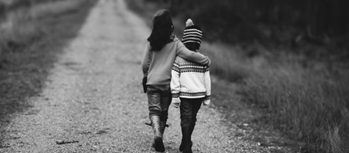

Much of this piece is inspired by Katriona O’Sullivan, whose book “Poor” is an extraordinary exploration of what it is to grow up in poverty. Read it.  

Dr Dan Nicholls | The White Horse Federation | August 2024

Our Future | building culture

The next stage of our Trust will seek to connect and empower all colleagues as one organisation. Colleagues trusted to transform lives, so that children thrive and flourish now and into adulthood. We will use the power of education to unlock and inspire young lives, particularly for those children who carry more than others, in these difficult times.

“There is no trust more sacred than the one the world holds with children.” (Kofi Annan)

Building on strong foundations

Your expertise and commitment have built the platform on which our Trust now stands. Because of this work, over time, you have developed provision and approaches that are making a difference to the lives of children and is the foundation for our next stage. On this maturity we will seek greater influence on the lives of colleagues and children, strategically plotting and shaping our path, together.

In the next stage there are key approaches and principles that will establish a cultural model that will inform our relationships, interactions and underpin the strategy. This will build the conditions, culture, and climate for colleagues to do meaningful work. We will prioritise psychological safety for colleagues, so that they feel greater belonging and to be given permission to do work that transforms lives. Offering the opportunities for more children to flourish, to have a sense of wonder and be wonder-smitten: I am here, that I may wonder.

“To live wonder-smitten with reality is the gladdest way to live.” (Maria Popova)

One organisation

We are one organisation, serving children, aged 2 to 19, responsible for all children, with every school and colleague woven into a collective cultural fabric: school is trust, trust is school. A collection of great schools, meeting need, held in a strong trust.

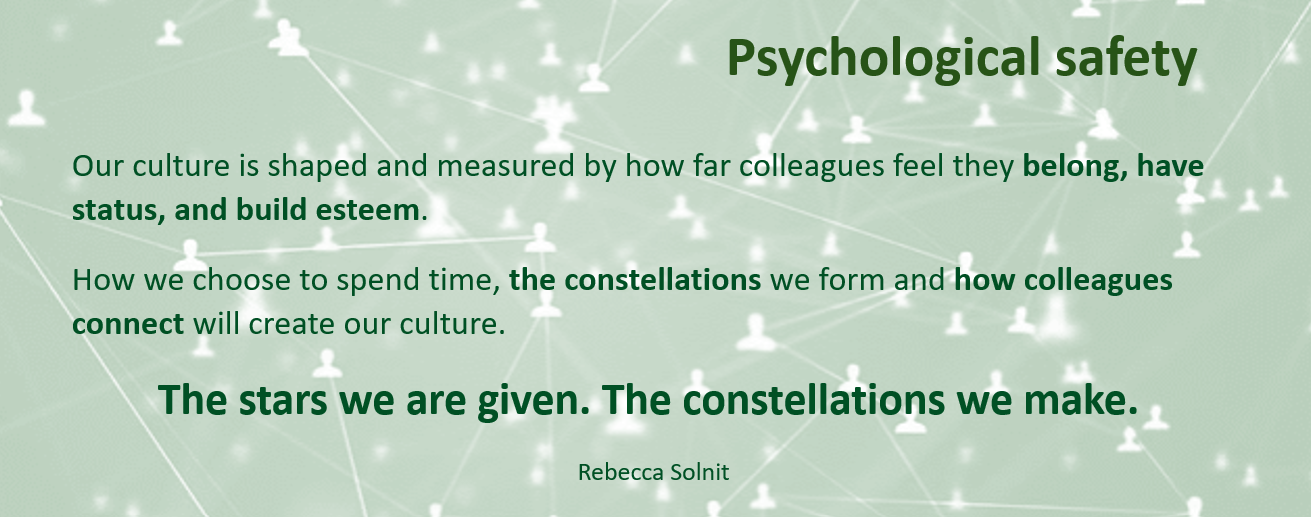
Our culture matters to us. It is built and shaped, in every interaction, everywhere, all the time and ever onward. Our cultural landscape is carved over time towards our shared purpose and is guided by deeply held lived values and shared rituals and routines. It is shaped and measured by how far colleagues feel they belong, have status, and build esteem. How we choose to spend time, the constellations we form and how colleagues connect will create our culture.

“The stars we are given. The constellations we make.” (Rebecca Solnit)

Making good decisions together

We make good decisions together. We seek and value expertise across our schools and the Trust as a whole. We are open and transparent as an organisation, making the best decisions we can, with the information we have, whilst seeking to do the right thing. We act without fear or favour.

First say yes. If a colleague feels the need to ask for support or resource, we should say yes, first, and work out how, later. Paying forward as an exercise in collective endeavour and shared responsibility.

The second mistake. It is rarely the case that the first mistake matters, it is often the second or third that turns mistake into problem. Because we make good decisions together, are open and transparent we share and resolve challenges at the first opportunity. Almost everything becomes easier when things are shared, it builds trust, and importantly avoids the second and third mistake.

A Human organisation, valuing relationships

We make time to listen, learn and build relationships. Being present. This is about ensuring colleagues are known as individuals, individuals with a unique story, a story that is heard. Understanding an individual’s story allows us to weave collective stories into the future; generating a greater sense of belonging. How we treat anyone, is how we treat everyone.

Humans are beautifully contagious

Use time well, seek simplicity

We will seek to use time well. Deliberately prioritising time towards the Main Thing(s). Logically sequencing our routines and networks and creating simple approaches that focus on making the greatest difference. We will work to reduce unnecessary burdens on individuals, to be as agile and nimble as is appropriate to our scale. As simple as possible, but not more so.

We will seek clarity because it is kind. Humans like rules, it is clarity that creates safety. We will share all data and information transparently to understand performance and drive improvement, part of our joint endeavour and collective responsibility for all children.

Primacy of Headteachers, the drivers of change

We understand the importance and primacy of Headteachers. The strongest Heads are great with people, understand provision and lead with purpose, prioritising and implementing key strategies and approaches, over time, to enable colleagues to change lives. They are open and able to utilise the capacity of the Trust, and to add into the strength of the Trust; a mutually beneficial symbiosis that adds value.

We are the sum of our decisions

Our effectiveness could be simplified as the sum of all decisions, by all colleagues, all the time, everywhere across our Trust that either accumulates value, or not. Our role as Trust Leaders is to influence, nudge, direct, enable better decisions to be made more often, to deliver a dividend. We will continue to dance between what we decide to do together and where we choose to empower colleagues to act.

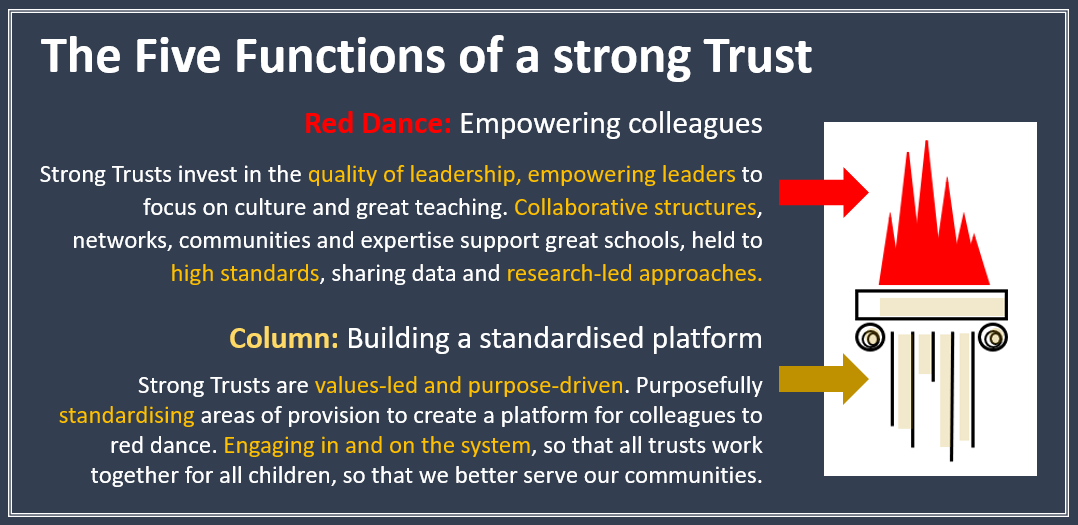
Deliberately choosing where to standardise and where to empower colleagues

We will continue to standardise aspects of provision, to become more than the sum of our parts. Standardising, building things together, has tremendous power to liberate, support and give permission (and opportunity) for colleagues to focus on the Main Thing(s); creating a platform for colleagues. Our shared, common curriculum exemplifies the power of this collective endeavour.

Leadership is the art of giving people a platform for spreading ideas that work. (Seth Godin)

We will standardise and empower deliberately and strategically. Holding ideas in tension, informed by context, because context matters; it is not a compromise. Whilst recognising the importance of standardisation and of empowering colleagues on platforms, we will not seek to over dictate the complex areas of provision where experts and professionals make decisions, informed in the moment, in context, for their community.

“…under the conditions of true complexity – where unpredictability reigns – efforts to dictate every step from the centre will fail. People … require a seemingly contradictory mix of freedom and expectation.” (Atul Gawande)

We understand the influence we have on others

Back to the Future. Whilst Marty McFly travelled back in time and understood the future consequences of his actions, we are much less conscious of our influence on the future. Whilst we cannot foresee the future we can, together, create the conditions, sow the seeds, prepare the ground for humans to flourish and for more good than bad to happen. We, collectively create a crucible of serendipity where colleagues shape what is possible. Lives are shaped by opportunity. Our collective capacity can and will transform lives, evidenced in the smallest acts, every day.

“The smallest act in the most limited circumstances bears the seed of boundlessness, because one deed, and sometimes one word, suffices to change every constellation.” (Hannah Arendt)

We are collaborative by nature

We will build on our existing collaborative architecture, our co-operative system, to connect colleagues with purpose and to each other, seeking collaborative advantage. Connecting colleagues within professional networks and subject/year communities, where hard and soft-wired collaboration secures collaborative intelligence and wisdom that becomes self-improving and irreversible. The biggest influence on colleagues is colleagues.

Getting today right and building for the future

Two speed. As we forge forward, we will build our future, based on where we have been, where we are, and toward what we seek. We will seek to get today right and the future right. We will seek change and improvement in months and years, concurrently.

What do we seek? We decide, next, together.


Into our future

So, based on the platform that you have built, we will work with humanity, humility and openness, to shape the future, together. So, at this time, as I join you as CEO, my optimism, hope and determination for what we will achieve is galvanised by the brilliant people in our Trust.

“When we build a culture of people who eagerly seek out and take responsibility, we build a culture that enables a special kind of resilient freedom.” (Seth Godin)

We have an opportunity to enable all colleagues across our Trust to collaborate, connect and feel empowered to make a difference. To work as one organisation, sharing responsibility, engaged in collective endeavour to secure greater social justice, particularly for our most vulnerable children, those that carry the most through life, and particularly at this time. A worthy cause.

“To be hopeful in bad times is not just foolishly romantic.” (Howard Zinn)


Postscript

There is no way to build high-performing organisations without a cultural model that drives the strategy. Or to put it differently, strategy without culture is just wishful thinking.


Dan Nicholls | July 2024

Unwarranted Optimism

    For there is always light,

    If only we’re brave enough to see it.

    If only we’re brave enough to be it.

    (Amanda Gorman)

    When everything around appears dark and it is hard to see the light, we need to be brave enough to have unwarranted optimism. It is unwarranted because of the number of challenges faced by colleagues working in education that push us into hopelessness and toward helplessness. And, perhaps worse, there is a real danger that this helplessness is increasingly learnt, mutually reinforced and influencing the stories we tell each other about our profession.

    “Do you have the resilience to show unwarranted optimism, and to regard crisis as the norm and complexity as fun, while maintaining a bottomless well of intellectual curiosity?” (Tim Brighouse)

    To work in our profession requires unwarranted optimism. It always has, but it feels harder than ever to view the future with hope. Optimism (particularly unwarranted) is the life blood of our sector, the fuel that drives good people to do good and change lives. We must not sink our profession by peddling pessimism, even if it is warranted.

    “The problem is that people mistake optimism for ‘blind optimism’.” (Hannah Ritchie)

    However, this is no time for ‘blind optimism’, a naive faith or passive hope that things will turn out well. We need a ‘conditional’, ‘urgent’ optimism that empowers us to act, to step forward and build together a future for all children. Even if optimism, at this time, is unwarranted, it is a far better basis for offering colleagues and children a sense of possibility.


    Warranted Optimism | Everyday acts of heroism.

    “Optimism is seeing challenges as opportunities to make progress; it’s having the confidence that there are things we can do to make a difference. We can shape the future, and we can build a great one if we want to.” (Hannah Ritchie)

    Our schools may well be performing better than ever, providing provision that is meeting the steepest of challenges, post pandemic, and in the face of the fracturing social contract. In all schools, heroic acts are changing lives, exemplifying the power of human connection, offering real hope and optimism for the future; a powerful force for good.

    Warranted Pessimism | poor choice for children and colleagues.

    Warranted pessimism is not an option. Despite the oppressive background music and the darkening light, if we choose to be pessimistic, we may well extinguish the fading light. Too much pessimism, warranted or unwarranted disturbs us deeply, encourages retreat and pushes us to become victims of circumstance. And whilst we can individually decide to retreat, it comes at a cost for all and our profession, as well as the children who need optimism, not pessimism, from the adults they trust.

    “There is no trust more sacred than the one the world holds with children.” (Kofi Annan)

    Skin in the game | our influence lives beyond us

    We all have an opportunity to be and bring the light to others. We cannot choose to sit outside the lives of others or be silent in the narratives that we tell each other; we have skin in other people’s lives. How we choose to move through life, reinforces or erodes the narrative and norms that set the stage far beyond ourselves, in schools, classrooms, and more broadly in life.  How we choose to live in this world, matters.

    How to live in a world where profound uncertainty is not a bug, but a feature? (Yuval Noah Harari)

    We are also hugely influenced by the need to fit in. It is coded deep in us that to be outside of a group hurts, is unsafe and a danger. So, we often take opportunities to align ourselves with the beliefs, attitudes, norms and behaviours of those closest to us. Often choosing against our independent beliefs to follow trend and fit in; a trend that is too often pessimistic. It matters, therefore, whether we choose unwarranted optimism or not, it radiates and infects beyond ourselves to other beings and happenings, all of the time.

    “Your response has to be to reject cynicism and reject pessimism and push forward, with a certain infectious and relentless optimism. Not blind optimism, not one that ignores the scale and scope of our challenges, but that hard-earned optimism, that’s rooted in the stories of very real progress.” (Barack Obama)

    Fairy Lights over Spotlights | a marvellous victory

    “What we choose to emphasise … will determine our lives. If we see only the worst, it destroys our capacity to do something… and at least the possibility of sending this spinning top of a world in a different direction. …to live now as we think human beings should live, in defiance of all that is bad around us, is itself a marvellous victory.” (Howard Zinn)

    To live with unwarranted optimism is to seek the joy of fairy lights over spotlights. A focus on fairy lights enables us to see the joy woven through life, to value the happenings and humans around us. Shifting our focus to the normal, everyday, magic that happens in schools, reveals the power of human relationships and places value on what really matters.

    “To be hopeful in bad times is not just foolishly romantic.” (Howard Zinn)

    The future then is built on an accumulation of small acts, a bottom-up movement, where change becomes possible and we have the chance to send this spinning top of a world in a different direction.

    meaningful movements start bottom-up.

    Seeking spotlights on the other hand is like waiting for big things or changes, often viewing them as a salvation that will save the day. It is the hope that kills, the waiting for the next station that stops us from living now and enjoying the journey.

    “I’ve very deliberately chosen to notice the smaller things, the joys I might have otherwise missed had I looked too broad, too big. The thousands of joys that lattice and join and thread into and around our daily school life.” (Claire Stoneman)

    Uncommon Opportunity | striving for what is worth having.

    There might just be an uncommon opportunity to re-evaluate what really matters in education. Some of the most courageous and heroic work is happening in unfavoured areas of our sector; areas where the challenge is steepest and recognition the lowest.

    “This is Vanity Fair a world where everyone is striving for what is not worth having.” (William Thackeray)

    The narrowness of what is valued in education belies the vibrance and range of opportunity that exists in our world and the eclectic abilities of human beings. It is this narrowness that disenfranchises the many. We must throw more light on what is worth having, what children need for their future; a system more geared towards those it serves.

    I deal my own deck, sometimes the ace, sometimes the deuces.” (Gloria Gaynor)

    When we are pushed by powers beyond our control we should strive to go in the opposite direction and enable others to take more control, to step forward and make a difference to their part of the world. We should continue to deal our own cards, and empower others, to deal from their decks, optimistically, regardless of what is dealt; because we have collective power and we are the system.

    Too many feel unremarkable | in a remarkable world.

    In a darkening world children, particularly under-resourced children, need us to have unwarranted optimism, to offer more light and a greater sense of possibility. Creating the conditions for children to adventure down rabbit holes of curiosity and to feel the wonder of our remarkable world. We seek this wonder, so that children have the chance to walk a step or two with genius and because childhoods last a lifetime.

    “Do you believe with a passion that brooks no denial that all pupils, whatever their background, can walk a step or two with genius and that your staff will embrace the aim that all students will grow up to think for themselves and act for others?” (Tim Brighouse)

    We must not allow a pervading pessimism to extinguish the light for children and create a self-fulfilling narrative that damages our profession. We must encourage more to serve in education to reveal the magic that exist in ordinary lives and to bring more light.

    “…treading the intriguing line between the everyday and the otherworldly, revealing the magic that exists in our ordinary lives.” (The Lost Bookshop)

    Not our story to finish | true but useless.

    We should not pretend to know the future or how this story plays out. We must tread carefully on the dreams of children and seek to create provision that is more born out of optimism than pessimism. It is the difference between setting the stage for children to stumble forward in the dark, steeped in pessimism, and stepping with confidence into a future that is full of optimism and possibility. Children need to grow up in a world where they feel remarkable, opportunity is unbound, and where children do not feel separate from the world.

    “…although her childhood, had left her feeling separate from the world.” (Steven Rogers)

    Lest we forget that children are vulnerable to the beliefs and narratives of the adults in their lives. The challenges we face are true but useless for the children we educate. They do not choose the conditions, location, or time that they inhabit, and they are largely unaware of pressures, turmoil, and upset of colleagues in our sector. They profit nothing from a sector that fights, argues, gives-up, or fails to work optimistically with the hand that they are dealt.


    Unwarranted optimism | An invitation to dance

    We choose our approach to life and to work. It is too easy to see the challenges that surround us and retreat into the security of pessimism, into narratives that reduce agency and reinforce helplessness. But, when we do, it is not an individual choice, the impact of this stance reverberates through other beings and happenings. It denies a sense of possibility.

    Conversely, to bravely choose optimism, conditional optimism, we offer a greater sense of possibility, to reassess what is valued and to see the magic and the light in the everyday. This is a stronger basis for the future, more generous and a greater investment in colleagues and children.

    “Ignore those who say that we are doomed. We are not doomed. We can build a better future for everyone.” (Hannah Ritchie)

    So, to choose individually, collectively, and organisationally to pursue unwarranted optimism is to contribute to a growing narrative that encourages us not just to see the light, but to be the light. To step forward rather than shy away from the future and collectively build it.

    And in this optimistic light perhaps all children and colleagues will accept an invitation to dance.


    Dan Nicholls | February 2024

    Five functions of a strong Trust | strong Trust, great schools

    Strong Trusts build collaborative structures and platforms for great schools to create more value for all children, over time. This trust dividend enables groups of schools to achieve more than the sum of their parts, and more than before. Strong Trusts are values-led, purpose-driven, learning organisations who establish the conditions for colleagues to create collaborative intelligence that becomes trust wisdom that strengthens great schools.

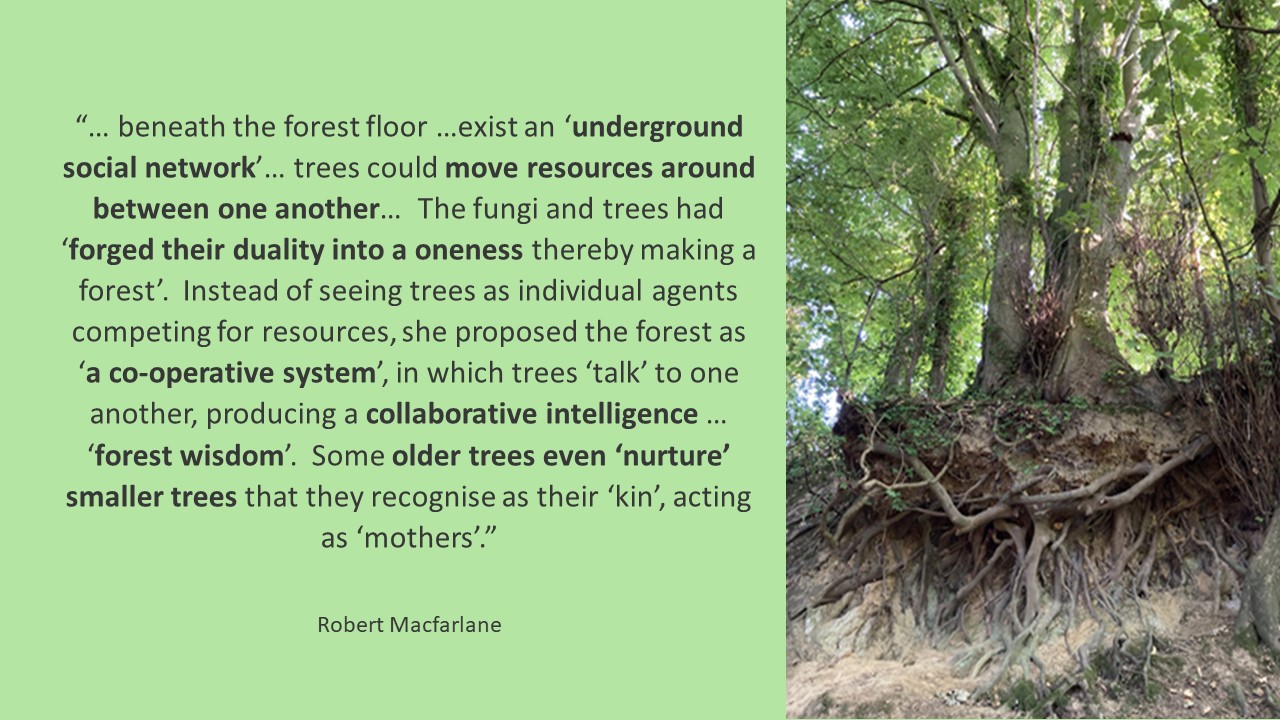
    “Instead of seeing trees (schools) as individual agents competing for resources, she proposed the forest as ‘a co-operative system’, in which trees ‘talk’ to one another, producing a collaborative intelligence she described as ‘forest (trust) wisdom’.  Some older trees even ‘nurture’ smaller trees.” (Robert Macfarlane)

    There is now enough maturity in our system to identify how strong Trusts create enough value to sustain groups of great schools; school is Trust, Trust is school. Deepening this understanding will enable educators to take greater stewardship of the sector and build strong Trusts that work together for all children. The following identifies five functions of a strong Trust that, taken together, create a trust dividend that supports, empowers and sustains great schools.


    The five functions of a strong Trust | in brief

    One: Strong Trusts are values-led and purpose-driven, they understand why they exist, live out their values, achieve their purpose, tell stories of the future, create coherence and clarity to establish a climate where colleagues belong to something bigger and are empowered to add value.

    Two: Strong Trusts standardise areas of provision that build platforms for colleagues to stand on and exploit, areas that are high dividend and rise the tide, particularly a shared curriculum, shared assessment and wider professional services. These are significant investments in high dividend areas, over time, that add future value.

    Three: Strong Trusts invest in leadership, particularly of headteachers, so that there is a deep investment in relationships, setting direction and implementation within schools. Leadership that builds and sustains a strong culture and great teaching, hallmarks of great schools and areas that are largely empowered to and owned by schools.

    Four: Strong Trusts create collaborative structures, an architecture enabling colleagues to collaborate across the Trust in networks and communities, creating, designing, developing and aligning approaches that add value. Trusts are risk-informed, distorting resource and expertise to tackle underperformance.

    Five: Strong Trusts maintain high standards creating the conditions for healthy competition, great schools joined in the shared endeavour of raising standards, transparently using trust-wide data, building shared intelligence and using research-led approaches to inform implementation and school improvement.

    +One: Strong Trusts act within and on the system, working together with other Trusts, to create a collective dividend and take responsibility for the education system, serving communities as anchor institutions and working with other civic partners to support all children.


    The Five Functions of a Strong Trust, the next level of detail

    One: Values-led, purpose-driven | building culture and belonging

    Strong Trusts know and understand why they exist. They have a set of compelling values and clarity of purpose that galvanises colleagues into shared endeavour and collective responsibility. This clarity aligns colleagues, informs the strategic investments and paints a compelling future, that guides the big and small decisions made across the Trust by all colleagues every day. It is in these actions, over time, and not in the written words, that culture emerges.

    “…understanding the “cultural magic” that makes an organisation feel truly human, and creates a sense of connection and belonging.” (Tracey Camilleri, et al.)

    Without this clarity of purpose, colleagues struggle to place themselves and their work within the Trust. Strong Trusts create a sense of belonging, give status and build esteem, because the rules of the game are clear, colleagues understand the journey and are empowered to add value. This is a significant investment in people, actively building well-being to create psychologically safe, high trust, heart felt collegiality that holds people in the Trust.

    “To feel a sense of belonging is to feel accepted, to feel seen and to feel included by a group of people… to not feel belonging is to experience the precarious and insecure sense of an outsider.” (Owen Eastwood, 2021)

    Strong Trusts bring coherence and clarity on how we do things here, what is standardised, empowered, the routines and collaborative structures that secure school improvement at scale. Deepening understanding of the Trust’s Theory of Action empowers colleagues to build great schools on the platform of the Trust.


    Two: Standardisation | creating a platform for colleagues

    Strong Trusts deliberately standardise areas of provision, typically complicated areas, that add value and create platforms for colleagues to focus on the Main Thing(s). Amongst the most important to standardise: a shared curriculum, shared assessment, syllabi and professional services.

    A shared curriculum where learning is progressive, sequenced, and coherent over time is one of the most important levers available to Trusts; being experts and collaborating on one curriculum, rather than many.

    A shared assessment system across all year groups, based on the shared curriculum and shared examination syllabi create an accountability framework and the intelligence for raising standards. This provides the elements required for co-opetition and the transparent sharing of data for the purposes of school improvement; school is Trust, Trust is school.


    Three: Trust Leadership | empowering leaders to build great schools

    Strong Trusts invest in leaders, particularly Headteachers, as the key agents in building and sustaining great schools, investing in their knowledge, development and wellbeing. Great leadership builds relationships, sets direction and implements well. Strong Trusts seek to drive-up the quality of this leadership, they build a curriculum for it and create the conditions that empower leaders to lead great schools, within a strong Trust.

    Strong Trusts understand where to standardise (complicated) and where to empower (complex). Whilst great schools are great at many things, two areas stand out.  Firstly, great schools propagate a strong culture of high expectation that is scholarly and builds character. Secondly, they secure great teaching, through professional learning and developing individual teachers. Both areas are largely empowered to schools as they require contextualising and local decision making, to follow learning to meet need and to build culture in context.


    Four: Deliberate collaboration I networks, communities and expertise

    Strong Trusts create collaborative structures for colleagues to build collective intelligence and understanding; an investment in people. Networks and communities connect colleagues horizontally across the Trust and within and beyond phases to create the conditions for improvement, the sharing of practice and alignment; moving towards a self-improving Trust. Creating the architecture, time, artefacts and purpose of collaboration that empower colleagues to focus together on the Main Thing(s).

    “…we can speed this process (trial and error) up by creating systems and platforms where we search for new knowledge systematically… integrate the result into our body of knowledge, and apply it into new ways of doing things.” (Johan Norberg)

    Strong Trusts deliberately build expertise and improvement tools that support school improvement, particularly in areas of provision that are specialist and in high demand; one of the key advantages of Trusts. The accessibility and use of expertise commissioned and utilised by schools and headteachers creates the conditions for a self-improving Trust.

    “The stars we are given. The constellations we make.” (Rebecca Solnit)

    Strong Trusts are risk-informed, use information, intelligence and data to concentrate and distort the resources developed by the Trust to improve areas of underperformance. They develop expertise and capacity over time, commensurate with scale, and use school improvement teams and specific expertise to improve schools in a timely, proportionate and deliberate way.


    Five: High Standards | competition and transparent performance data

    Strong Trusts balance co-operation and competition to drive up trust standards; co-opetition. The transparent, deliberate use of data (democratised data) to understand performance and school improvement, in high-trust environments, builds intelligence and informs improvement. Great schools invest in quality assurance as part of strong implementation practices, supported by the trust and accessing trustworthy expertise, resources and tools.

    Strong Trusts are research-led, often working in cognitive dissonance, holding opposing ideas in tension; resisting simplified swings based on trend; tempering influences and instead leaning on seminal readings and peer-reviewed research. They are learning organisations who use the Trust as a test-bed to understand performance and deliberately share intelligence.


    +One: Sector engaged | all trusts working together for all children

    Strong Trusts work within and on the wider system. They understand that the success of the Trust hinges on the success of other Trusts and that we all have a shared responsibility and stewardship for the education system as a whole; all trusts working together for all children. By working in partnership and with a sense of altruism, Trusts can better understand how to add value, achieve dividend, and take greater collective responsibility for our system.

    By building strong, resilient Trusts that are connected as partner Trusts, we can seize our opportunity to serve communities, build partnerships and exploit the opportunities afforded by civic leadership, anchor trusts and investing in place. This creates a stronger education system, better able to secure equity through education, social mobility, justice and to reach those presently disadvantaged; disadvantaged even over.


    Great schools, strong Trust | the five functions

    The five functions seek to create a trust dividend, establishing a strong Trust with great schools. The functions create the opportunity for Trusts to be self-improving, with leaders empowered and connected to lead on the platform of the Trust. This long-term investment builds strong Trusts who can work with partner Trusts to add a collective dividend that transforms the life chances of children. All trusts working together for all children.


    Dan Nicholls | February 2023

    The thinking presented here is based on the work, experience and thinking of colleagues across Cabot Learning Federation.