Our self-identity forms over time, shaped by our experiences and interactions, particularly in our formative years. It is not a uniform development of self, but rather one that is punctuated disproportionately by high impact moments. These sit in our backstories, having ignited our identity and shaped who we have become.
These moments are often subtle, quiet experiences of awe and wonder: a sudden realisation, both unsettling and exciting, that the world and our role in it is not what we thought. In these moments of alchemy, brief serendipitous collisions create a hiatus between our old and new self-image.
“…in moments of alchemy, brief and serendipitous collisions, the beautiful texture of interwoven lives. There are many seeds of genius in the world, we must nurture as many as we can.” Helen Lewis
Circumstance and happenstance
The development of self is determined by our context, upbringing and by the influential adults and peers that we look to through childhood: an on-going influence of circumstance through our formative years.
But much, arguably, is happenstance, serendipitous moments that build our self-image. Brief events, often remarkably small, that disproportionately shape our lives. Rather awkwardly, they are often surprisingly quiet, private moments of self-realisation that are invisible to the provider.
“The smallest act in the most limited circumstances bears the seed of boundlessness, because one deed, and sometimes one word, suffices to change every constellation.” Hannah Arendt
Yet for some children the vagaries of life’s happenstances are less frequent, less influential or much less accessible. It also depends on a child’s circumstance and their pre-disposition to act on these moments. Whilst our childhood sets the conditions and the circumstances that influence our predispositions, the brief moments,the happenstances, disproportionately explain who we become.
Predispositions
Will, Should, Might, Could, Won’t, Can’t
Our context and circumstance, whether consciously or unconsciously, determine our predispositions and the strength of our self-agency. For any given aspect of life we align to one of the following dispositions:
•I Will …. I fully expect to do this, unswerving, predestined, locked in, self-fulfilling.
•I Should … Highly likely, people like me do things like this (reinforced by peer status).
•I Might … Entirely possible and within my gift, requires a step forward, focus and resourced adults.
•I Could … It is possible, but could be difficult to achieve – requires ignition, support and must be followed by resource.
•I Won’t … People like me don’t do this, locked out, keys hard to find, and not sought, no capacity or resource, unable to see the future or be part in it.
•I Can’t … Not possible, nobody like me does things like this, psychologically and materially forbidden.
If you are under-resourced and have experienced much less privilege, then too often your agency is limited to the bottom few dispositions. This offers a form of immunity to moments of ignition and even if ignited a lack of resource to follow your triggered passion. In a world of privilege, however, you occupy the top few dispositions: emboldened to accessible experiences and open to life-changing moments. And yet, ‘ambition’ is equally distributed, but enhanced or stifled from birth and perhaps before birth.
“If you are lucky enough to be born in a world made in your image, you probably think of a failure as an obstacle on the path to eventual success. If you are a marginalised person in any way you internalise that failure more closely.” Elizabeth Day
Moments of wow… igniting identity
Regardless of who we are there are moments we witness that change our passions, our identity and motivation for what we wish to become…
“But the moment that changed everything came on 29 July 1992 … the Barcelona Olympics. Chris Boardman was about to go in the final of the men’s individual pursuit. I sat in front of the TV and watched him … Four and a bit minutes later, Chris had overtaken his German counterpart and become Britain’s first Olympic cycling gold medallist in 72 years. I was 12 and knew straightaway I wanted to emulate his feat. Another 12 years later I did just that.” Bradley Wiggins
…or influential adults who we are desperate to emulate…
“When I’m 13, my mum gives me a load of photos that she’s found. There he is, in his cycling kit, racing. It’s a definite “Wow!” moment, like he’s been brought to life in my hands. Those photos become my greatest treasure. The closest connection I could have with my father was by following in his footsteps” Bradley Wiggins
…or experiences that ignite our identity…
“My love for cinema began at a very early age, as early as I can remember… I was just a little kid in a darkened theatre, and I remember that beam of light just cut across the room and I remember looking up, and it seemed to just explode on the screen. … and suddenly, the world was so much larger than the one that I knew … it opened my eyes. It opened my imagination to the possibility that life could expand far beyond the boundaries that I then perceived in my own life.” Tom Cruise
“Making films is not what I do, it is who I am.” Tom Cruise
Owning the future
How far are children able to focus on the future? If you exist in an under-resourced world where you seek to survive the day, the week, your effective horizon is limited, perhaps irrelevant to you: there is no bandwidth to contemplate your future. This fundamentally forces you toward the weaker predispositions, I Won’t and Can’t, and breaks the connection between recognising that the efforts of now are an investment in next. The future will act on me.
Resourced children are able to make the investments now, fill their lockers and are typically compelled to do so, supported to strong dispositions, I Will and Should.I create my future.
To be or not to be
To be or not to be, that is the question that children wrestle with as they navigate the world. We know, though, that some children have much less capacity to be, forced into a not to be mindset. Growing in a world that tips the odds against you, denies a starting disposition, or ladder to, ‘Will, Should, Could’ and restricts the under-resourced to ‘Can’t and Won’t’. Only the application of equity can offer a ladder and break the cycle.
Lockers filled with belief
In every aspect of a child’s life, a child holds a locker of self-belief. Advantaged children have bursting lockers, filled by circumstance and opportunity, narrated by resourced adults, affirmed through experience. The lockers of under resourced children are sparse, short on belief, encouragement or affirming experiences. When they look to their lockers for self-confidence and self-belief they are encouraged, perhaps compelled, to step back, to not take risks and internalise the failure. We must be better at filling the lockers of under-resourced children.
“When you are born into wealth and privilege, you inherit a plan that outlines the paths ahead, indicating the shortcuts and byways available to reach your destination … If you enter the world without such a map, you are bereft of proper guidance. You lose your way more easily.” Elif Shafak
Chasing status
What you become depends largely on who you find yourself with. We measure status on those around us, typically the 5 peers that we spend time with that we look to and derive our own sense of status. Our belief in what is possible is shaped by our peers, and our schools are the crucible for these interactions.
Our verbal quota
“…we speak about 16,000 words a day, that is a lot of chances to tease, complain and criticise, but also to encourage, inspire and comfort. I know I can do a lot more good with my verbal quota.” Matt Woodcock
In every interaction, exchange and conversation our words are a powerful force for good (or ill). We never know for certain the weight of our words on a child, but we do know that children are adult-watchers, seeking to decode the world around them. Awkwardly or helpfully, in every interaction our words always carry weight and have influence, intended or otherwise. Often just 13 words deliver a self-belief that becomes unshakable and propels a dopamine-soaked desire to follow a passion:
“…I was introduced to a club coach, Stan Knight. Immediately he took hold of my wrist. “I’ve never felt a pulse like it,” he said. He looked me in the eye – “You’re going to be the best cyclist this country has ever produced.” … I liked the fact he had belief in me… Stan didn’t tell me I was special because of who my dad was. He told me I was special. Me.” Bradley Wiggins
Inspiring lives
“I began to realise how important it was to be an enthusiast in life. If you are interested in something, no matter what it is, go at it full speed, Embrace it with both arms, hug it, love it and above all else become passionate about it. Lukewarm is no good.” Roald Dahl
As educators we chose to inspire lives – and yet we spend little time understanding how children exist in the world or how their lives unfold through their circumstance and happenstance. How do we ensure that curiosity, hope and ambition is a feature of all childhoods not just those that are privileged?
Perhaps we should maintain a greater sense of awe and wonder, of possibility and back it with the application of equity and protect the flickering flames of hope, so that more children can embrace an interest with both arms. If we are to ignite a child’s self-identity, so that they have agency into their adulthood, we must create greater opportunityand apply the equity that will give all children the choiceto follow their dreams.
...inspire lives with greater opportunity and choice.
You are not that important, but your influence on others and the future is.
The influence we have as leaders to trigger change in others is what matters. The proliferation of influence beyond ourselves, through a deliberate investment in other human beings, pays forward. It is through this investment that leaders influence greater numbers and further into the future. Ego-less, values-driven leadership that knows it is not about them, but about how they extend their reach and influence.
paying forward, through others, for the future
The strongest leaders invest disproportionately in relationships and interactions that very intentionally influences the leadership of others, far-sightedly. Quietly and deliberately seeking micro and macro investments in others, who are better able to make a greater difference over time. Whilst some acts of influence are seen and purposefully public, most are unseen, systematic and deliberately enacted. It is what they do: the hidden work of leadership.
(very) Intentional acts of influence
Too often we are taken by bold, shout about acts of leadership that serve the individual. In contrast effective leaders deliberately invest over time, seeking greater value through others, to achieve a common good. This leadership is effortful, thoughtful and deliberate. It calculates expected value and acts to increase returns in the long term. The reverse is lazy, wasteful and short-termist; no friend to our ancestors.
be the ancestor that our future generations need
Leadership is the influence we have on others, those near and far, to make a difference now and next. Effective leaders seek to develop the mental models in others focused on how to lead and pay forward so that they deepen their influence. In creating these models in others we might create the quality of leadership that grows capacity and inspires more lives.
Relationships, ad infinitum
Leadership is relationships, ad infinitum. Our ability to connect, influence, enable, inspire and leave residual value in those we meet, in those we lead, permeates our influence in and through the lives of others. Leaders who give time, are present, give thought, experience, expertise and who purposefully invest through others, seed possibility beyond themselves. As social beings we thrive on the belief others have in us.
“The relationships we build with each other provide the foundations of change. We are social beings who thrive on connections.” Sir Hamid Patel
Leaders are emotional catalysts, experts in motivation (and motivations). They energise, inspire, elevate and encourage commitment from others, unleashing our natural biases to belong and do meaningful work. This orchestration requires leaders to create the conditions, opportunities and choices for colleagues to lead with purpose and take responsibility, to make a difference.
Our sphere of influence | through who and how far?
How far does your influence extend, to…
…self, a few, some, others, many?
…now, tomorrow, next, beyond your tenure, beyond your time?
It is a choice. The emphasis of your priorities and how you use time, with who, will determine the impact and the reach of your leadership. It is both proximal and longitudinal. How far your leadership travels and how contagious it becomes determines legacy: in the trails you leave and open for others.
We do not just leave trails we create new trails, tread lightly.
Some leaders are fixated on now, today, tomorrow, getting through (and sometimes that is ok), others lift horizons and seek future returns, seeding the ground and deeply investing in others to change more and into the future. Your leadership is the sum of the actions taken by others, because of your leadership. Most of the impact of which will never be seen or known by you, paying forward.
“Become the ancestor you’d like to thank.” Seth Godin
Eco-systems and overstory I the theatre of leadership
Effective leadership is hyper-aware of the peer and cultural codes that influence the motivation of humans within their ecosystem. Deliberate leadership is sensitive to these codes and acts to trigger ripple effects that take hold and add value.
“…as tribal animals, we are bound to our peers, heroes, and ancestors … understanding ourselves as tribal helps us see the ripple effects of our actions.” Micheal Morris
Effective leaders know that in this theatre their role is to enable the ecosystem to thrive, enhancing symbiotic relationships and connections that see beyond survival, toward something worthy. Knowing that their worth is measured in the health of all parts of the ecosystem and after their time.
Each ecosystem has an overstory, a canopy that guides and shapes norms, decisions, actions, language that create or subtract value. People like us (here) do things like this. The stories we tell, the destinations we describe influences the ecosystem, and the effectiveness of leadership. Leaders…
“…tend to forget about the overstory because we’re so focused on the life going on in front of and around us. But overstories turn out to be really, really powerful. The overstory is specific. It is tied to a place. It is powerful. It shapes behaviour. And it does not emerge out of nowhere. It happens for a reason…” Malcolm Gladwell.
To pay forward, with intent, through others, requires leaders to calculate the expected value of their influence through others into the future. To do so requires an understanding of the ecosystem, motivation, peer codes, the overstory… a study of how social costs and cultural codes shape the decisions and actions of others overtime.
Our landscape | Far-sighted leaders required
“Our challenge is to ‘build’ the future society we (they) wish to see. This has implications for the curriculum, partnerships and school communities we develop.” Sir Hamid Patel
The petri dish that is our sector is growing and maturing, the cultures are separate and largely in survival or winning mode. The future, however, is not about successful individuals or individual organisations. It is in the collective leadership and the networks we grow, that influences the sector, through others, that just might generate the capacity to reach all children.
“…humankind gains enormous power by building large networks of co-operation, but the way these networks are built predisposes us to use the power unwisely. Our problem, then, is a network problem.” Yuval Noah Harari
It is leadership that builds capacity through networks and deeper collaboration that will determine our stewardship of the future. The future starts with us, in our understanding of why we exist, how far we wish to lift and enable others, close to us, far from us, now and way into the future.
What if the challenges we face as a sector are, in large part, a leadership challenge, and we are coming up short?
Catch-up mode
Our worth is seen in our influence on the lives of others. Our choices and priorities determine the difference that we make not just now, but next. We need to influence others in a way that will travel into the future, beyond our time. Leadership that propagates and adds value, ever-onward. Paying forward, through others, into the future.
And yet our leadership is in catch-up mode, a feature reflected in the immaturity of our sector. There is much to do, but we have what we need and importantly the permission and obligation to lead more effectively. This weighty responsibility requires us to use our power well and to transfer and pass it through others to multiply and maximise our influence.
In catch-up mode we must re-imagine what educational leadership is, their future depends on it. Our leadership must be more potent, generative and farsighted so that we do better than now, much better. Or else, we will not reach those children scrabbling for a foot hold on the fringes of education. Our present leadership paradigm does not generate enough capacity to do so.
It is time to elevate the conversation, align our actions with our rhetoric and deliver far stronger leadership across the sector. We have far more influence than we are willing to admit. But there is hope, leadership that pays forward, through others, for the future just might generatively add the value, tip the balance for those who need us most, the ones we know and the ones we will not know.
Pause. Before we launch into the new term, we should check we are prioritising what matters… serving those who need us most.
Childhoods that are constrained by poverty are shaped by steep challenges, limited resources, and few opportunities. Children surviving under the weight of hardship, cope with more, with less help, are more vigilant, anxious, and mistrusting of the world they navigate. Childhoods that are shaped by poverty lead to adulthoods that never quite escape the impact of growing up poor, because childhoods last a lifetime (Floella Benjamin).
“Even as an adult the ripples of that (poverty) still affect me.” (Katriona O’Sullivan)
As educators we must do more to understand what it is to grow up poor, to grasp some understanding of the lived experience and the visceral truth. We should cut through our own jargon, our own perceptions and assumptions to understand the barriers, the struggle and the occupying weight of what some children are forced to carry.
“‘Poor’ cuts through a lot of jargon – words like ‘disadvantaged’, ‘underprivileged’, ‘deprived’, ‘under-class’, ‘under-resourced’. Words that have their place but don’t capture the visceral truth of what it is to grow up the way I did. The way thousands of children are growing up right now.” (Katriona O’Sullivan)
We need equity | inspiring lives with greater opportunity and choice
“We need equity in education, not equality. If someone can’t see straight because the world is falling in around them, we need to raise them up to clearer skies.” (Katriona O’Sullivan)
In these times, as schools return, we must apply the equity required to enable all children to flourish, to clear their skies, and to not feel marginalised in their world. “We cannot keep pretending it’s an equal opportunities education system. It is not.” (Katriona O’Sullivan) Applying equity is giving what is needed, offering the opportunities for more children to thrive, to have greater choice in their lives, to open doors that let in the future.
“There is always one moment in childhood when the door opens and lets the future in.” (Graham Greene)
This is not about planning and plotting an escape for a few but creating the conditions for all children to feel success in their school and their community. Applying equity to create the opportunities and experiences that inspirelives and unlock doors.
Tipping the odds | valuing what matters
As educators, we need to choose to better use our power, to be braver, to tip the odds and create the conditions that enable more children to flourish in their lives, where they are. To do so requires us to value and measure what matters, high attainment and attendance for the most vulnerable. This reveals the quality of provision and the closing of gaps is the evidence of success. We can and should do better.
“I was lucky, the timing for me was right – I managed but so many others don’t. The world is less because of that. The education system can and should do better. We all should do better.” (Katriona O’Sullivan)
Children living in poverty are not problems to be solved, the system is mis-aligned, lop-sided and intransigent. An uneven playing field that starts from birth and is exacerbated though childhood. Our system creates adverse conditions, fails to value diversity and has narrow success measures that perpetuate the present order and condemns those with the least. Poor assumptions and preconceived views of ability and ambition fail to unleash the potential and contribution of too many children. We need to re-engineer and reconfigure our system, avoiding the traps of meritocracy.
Our deficit discourse, language and vocabulary, both intended and unintended is deafening and maintaining the status quo, ensuring that a child’s poverty extends into all aspects of their lives. Only the deliberate application of equity addresses the a-symmetry of childhoods. Equity, tips the odds.
The deeper implications of poverty | levelling up
“Most of the time being poor felt like a sodden blanket was lying heavy across my shoulders, dragging me down into dark waters.” (Katriona O’Sullivan)
Whilst poverty is fundamentally about having less money, the impact of poverty extends far beyond, eroding self-confidence and a sense of worth:
“… ‘poor’ for me was also feeling like I had no worth. It was poverty of mind, poverty of stimulation, poverty of safety and poverty of relationships. Being poor controls how you see yourself, how you trust and speak, how you see the world and how you dream.” (Katriona O’Sullivan)
If we are to influence how children see the world, how they dream and how they build their future, we need to be bolder, to call out our unhelpful narratives, excuses, and assumptions that fixate on escape and tales of rags to riches. We must enrich their world, create more opportunity, more experiences, offer greater belief in individual children so that they feel more success and have stronger self-belief. You’ve got this.
“… opportunity, money and support. The middle classes are born with those three things in spades; the poor are born with none of them. And the truth is, we are losing some brilliant minds in the trenches of poverty.” (Katriona O’Sullivan).
Beyond the brilliant minds, there is considerable benefit to society when we create conditions that include, that value diversity and broaden access to success. Conditions that privilege all children disproportionately levels-up those who are traversing a world that is loaded against them.
“Sometimes, even these days, I feel like an interloper. I need reassurance sometimes that I am okay. Deserving. Worthwhile.” (Katriona O’Sullivan)
The smallest act | surfing on the ripples of others
Our influence on those closest to us and those that depend on us is more significant than we believe. How we are, what we say, do, behave, deeply affect those around us; children particularly so, who seek clues and are vigilant of snakes…
“Are there snakes here? …you become hyperaware. Mistrust becomes a tool of survival. Whenever I met anyone in authority, I was instantly suspicious, instantly mistrustful… it is actually a safety meter.” (Katriona O’Sullivan)
We have an opportunity as educators, as schools and trusts to shape and inspire lives, to remove snakes, hold ladders, create the conditions for children to feel secure, to belong, to have status, to feel less anxious, less wired, more trusting and to grow in an environment that values the uniqueness of each child. And one of our greatest gifts is to give children their voice, the oracy to confidently contribute, to step forward, and stop their lives being narrated by others.
“My life was narrated for me by others. Their voices were forceful, emphatic, absolute. It had never occurred to me that my voice might be as strong as theirs.” (Tara Westover)
Sadly, not our present system, which is perfectly designed to create the reverse, to exclude children from and within schools. Schools need to be riddled with details, interactions, and sparks that pivot young lives.
“Every development in life pivots on small, contingent details, ad infinitum. We’d like to pretend it isn’t true, but reality doesn’t care what we think. We forever surf on the ripples of others.” (Brian Klass)
But, here is the thing, whilst our influence on others carries significant responsibility, humans are beautifully contagious; And, amazingly, importantly, thankfully, even the simplest acts, set of words, an acknowledgement, a moment of belief in another, changes every constellation, shapes a life and creates ripples for others to surf.
“The smallest act in the most limited circumstances bears the seed of boundlessness, because one deed, and sometimes one word, suffices to change every constellation.” (Hannah Arendt)
So, at the start of term, we should pause, and plan to create the conditions for more to flourish, to apply equity and build schools that privilege all children and disproportionately support those who need us most. Prioritising what matters…
…to seek excellent educational provision: the strongest curriculum, enacted well, inspiring thought and stalking awe, where assessment follows learning to meet need.
…to never lower our expectations of what a child can achieve, because if we let them off, we let them down. Focused on high attainment and attendance, to build belonging and gift agency so that all children possess the keys to thrive through childhood, into adulthood. Because there is no lack of ambition, and a significant desire for self-agency …
“We don’t need to waste time raising people’s ambitions. Idleness and low aspiration have never explained the lack of mobility. Presented with greater opportunity, most people grasped them …(seeking) the control over their lives and (the) choices that offered.” (Selina Todd)
…to apply equity, the permission to give what is specifically needed, to meet need, remove barriers, do different for those that need us most and give strong, timely, specific feedback, the golden thread of an advantaged upbringing. To need want to do different, to create the pathways and encouragement for children to ‘play on’ (Jemima Montag).
“I am giving you this feedback because I believe in you.” (Jo Boaler)
…to create incentives, currency, performance indicators that place value and reward the closing of gaps and gap-closers, so that no child is left behind, written off or able to be discounted. The attainment and attendance of disadvantage, reveals the true quality of provision.
…to build culture that privileges disadvantage and those in poverty, unswervingly never giving up on a child, because it is who we are and what we do. A commitment etched into our identity.
Perhaps then…
…we can create the conditions for colleagues to wittingly and unwittingly inspirelives with more opportunity so that we create the conditions for those living in poverty to prosper in their world, in these times. It is why we are here … to be the Myles for others.
“If not for Myles, I wouldn’t have been on that train. As distant as he was, his impact on my life was still tangible – only wishing I had the chance to thank Myles for the path he unwittingly set me on.” (Ashley John-Baptiste)
so, breathe, commit … and go inspirelives
Much of this piece is inspired by Katriona O’Sullivan, whose book “Poor” is an extraordinary exploration of what it is to grow up in poverty. Read it.
Dr Dan Nicholls | The White Horse Federation | August 2024
The next stage of our Trust will seek to connect and empower all colleagues as one organisation. Colleagues trusted to transform lives, so that children thrive and flourish now and into adulthood. We will use the power of education to unlock and inspire young lives, particularly for those children who carry more than others, in these difficult times.
“There is no trust more sacred than the one the world holds with children.” (Kofi Annan)
Building on strong foundations
Your expertise and commitment have built the platform on which our Trust now stands. Because of this work, over time, you have developed provision and approaches that are making a difference to the lives of children and is the foundation for our next stage. On this maturity we will seek greater influence on the lives of colleagues and children, strategically plotting and shaping our path, together.
In the next stage there are key approaches and principles that will establish a cultural model that will inform our relationships, interactions and underpin the strategy. This will build the conditions, culture, and climate for colleagues to do meaningful work. We will prioritise psychological safety for colleagues, so that they feel greater belonging and to be given permission to do work that transforms lives. Offering the opportunities for more children to flourish, to have a sense of wonder and be wonder-smitten: I am here, that I may wonder.
“To live wonder-smitten with reality is the gladdest way to live.” (Maria Popova)
One organisation
We are one organisation, serving children, aged 2 to 19, responsible for all children, with every school and colleague woven into a collective cultural fabric: school is trust, trust is school. A collection of great schools, meeting need, held in a strong trust.
Our culture matters to us. It is built and shaped, in every interaction, everywhere, all the time and ever onward. Our cultural landscape is carved over time towards our shared purpose and is guided by deeply held lived values and shared rituals and routines. It is shaped and measured by how far colleagues feel they belong, have status, and build esteem. How we choose to spend time, the constellations we form and how colleagues connect will create our culture.
“The stars we are given. The constellations we make.” (Rebecca Solnit)
Making good decisions together
We make good decisions together. We seek and value expertise across our schools and the Trust as a whole. We are open and transparent as an organisation, making the best decisions we can, with the information we have, whilst seeking to do the right thing. We act without fear or favour.
First say yes. If a colleague feels the need to ask for support or resource, we should say yes, first, and work out how,later. Paying forward as an exercise in collective endeavour and shared responsibility.
The second mistake. It is rarely the case that the first mistake matters, it is often the second or third that turns mistake into problem. Because we make good decisions together, are open and transparent we share and resolve challenges at the first opportunity. Almost everything becomes easier when things are shared, it builds trust, and importantly avoids the second and third mistake.
A Human organisation, valuing relationships
We make time to listen, learn and build relationships. Being present. This is about ensuring colleagues are known as individuals, individuals with a unique story, a story that is heard. Understanding an individual’s story allows us to weave collective stories into the future; generating a greater sense of belonging.How we treat anyone, is how we treat everyone.
Humans are beautifully contagious
Use time well, seek simplicity
We will seek to use time well. Deliberately prioritising time towards the Main Thing(s). Logically sequencing our routines and networks and creating simple approaches that focus on making the greatest difference. We will work to reduce unnecessary burdens on individuals, to be as agile and nimble as is appropriate to our scale. As simple as possible, but not more so.
We will seek clarity because it is kind. Humans like rules, it is clarity that creates safety. We will share all data and information transparently to understand performance and drive improvement, part of our joint endeavour and collective responsibility for all children.
Primacy of Headteachers, the drivers of change
We understand the importance and primacy of Headteachers. The strongest Heads are great with people, understand provision and lead with purpose, prioritising and implementing key strategies and approaches, over time, to enable colleagues to change lives. They are open and able to utilise the capacity of the Trust, and to add into the strength of the Trust; a mutually beneficial symbiosis that adds value.
We are the sum of our decisions
Our effectiveness could be simplified as the sum of all decisions, by all colleagues, all the time, everywhere across our Trust that either accumulates value, or not. Our role as Trust Leaders is to influence, nudge, direct, enable better decisions to be made more often, to deliver a dividend. We will continue to dance between what we decide to do together and where we choose to empower colleagues to act.
Deliberately choosing where to standardise and where to empower colleagues
We will continue to standardise aspects of provision, to become more than the sum of our parts. Standardising, building things together, has tremendous power to liberate, support and give permission (and opportunity) for colleagues to focus on the Main Thing(s); creating a platform for colleagues. Our shared, common curriculum exemplifies the power of this collective endeavour.
“Leadership is the art of giving people a platform for spreading ideas that work.” (Seth Godin)
We will standardise and empower deliberately and strategically. Holding ideas in tension, informed by context, because context matters; it is not a compromise. Whilst recognising the importance of standardisation and of empowering colleagues on platforms, we will not seek to over dictate the complex areas of provision where experts and professionals make decisions, informed in the moment, in context, for their community.
“…under the conditions of true complexity – where unpredictability reigns – efforts to dictate every step from the centre will fail. People … require a seemingly contradictory mix of freedom and expectation.”(Atul Gawande)
We understand the influence we have on others
Back to the Future. Whilst Marty McFly travelled back in time and understood the future consequences of his actions, we are much less conscious of our influence on the future. Whilst we cannot foresee the future we can, together, create the conditions, sow the seeds, prepare the ground for humans to flourish and for more good than bad to happen. We, collectively create a crucible of serendipity where colleagues shape what is possible. Lives are shaped by opportunity. Our collective capacity can and will transform lives, evidenced in the smallest acts, every day.
“The smallest act in the most limited circumstances bears the seed of boundlessness, because one deed, and sometimes one word, suffices to change every constellation.” (Hannah Arendt)
We are collaborative by nature
We will build on our existing collaborative architecture, our co-operative system, to connect colleagues with purpose and to each other, seeking collaborative advantage. Connecting colleagues within professional networks and subject/year communities, where hard and soft-wired collaboration secures collaborative intelligence and wisdom that becomes self-improving and irreversible. The biggest influence on colleagues is colleagues.
Getting today right and building for the future
Two speed. As we forge forward, we will build our future, based on where we have been, where we are, and toward what we seek. We will seek to get today right and the future right. We will seek change and improvement in months and years, concurrently.
What do we seek? We decide, next, together.
Into our future
So, based on the platform that you have built, we will work with humanity, humility and openness, to shape the future, together. So, at this time, as I join you as CEO, my optimism, hope and determination for what we will achieve is galvanised by the brilliant people in our Trust.
“When we build a culture of people who eagerly seek out and take responsibility, we build a culture that enables a special kind of resilient freedom.” (Seth Godin)
We have an opportunity to enable all colleagues across our Trust to collaborate, connect and feel empowered to make a difference. To work as one organisation, sharing responsibility, engaged in collective endeavour to secure greater social justice, particularly for our most vulnerable children, those that carry the most through life, and particularly at this time. A worthy cause.
“To be hopeful in bad times is not just foolishly romantic.”(Howard Zinn)
Postscript
There is no way to build high-performing organisations without a cultural model that drives the strategy. Or to put it differently, strategy without culture is just wishful thinking.
When everything around appears dark and it is hard to see the light, we need to be brave enough to have unwarranted optimism. It is unwarranted because of the number of challenges faced by colleagues working in education that push us into hopelessness and toward helplessness. And, perhaps worse, there is a real danger that this helplessness is increasingly learnt, mutually reinforced and influencing the stories we tell each other about our profession.
“Do you have the resilience to show unwarranted optimism, and to regard crisis as the norm and complexity as fun, while maintaining a bottomless well of intellectual curiosity?” (Tim Brighouse)
To work in our profession requires unwarranted optimism. It always has, but it feels harder than ever to view the future with hope. Optimism (particularly unwarranted) is the life blood of our sector, the fuel that drives good people to do good and change lives. We must not sink our profession by peddling pessimism, even if it is warranted.
“The problem is that people mistake optimism for ‘blind optimism’.” (Hannah Ritchie)
However, this is no time for ‘blind optimism’, a naive faith or passive hope that things will turn out well. We need a ‘conditional’, ‘urgent’ optimism that empowers us to act, to step forward and build together a future for all children. Even if optimism, at this time, is unwarranted, it is a far better basis for offering colleagues and children a sense of possibility.
Warranted Optimism | Everyday acts of heroism.
“Optimism is seeing challenges as opportunities to make progress; it’s having the confidence that there are things we can do to make a difference. We can shape the future, and we can build a great one if we want to.” (Hannah Ritchie)
Our schools may well be performing better than ever, providing provision that is meeting the steepest of challenges, post pandemic, and in the face of the fracturing social contract. In all schools, heroic acts are changing lives, exemplifying the power of human connection, offering real hope and optimism for the future; a powerful force for good.
Warranted Pessimism | poor choice for children and colleagues.
Warranted pessimism is not an option. Despite the oppressive background music and the darkening light, if we choose to be pessimistic, we may well extinguish the fading light. Too much pessimism, warranted or unwarranted disturbs us deeply, encourages retreat and pushes us to become victims of circumstance. And whilst we can individually decide to retreat, it comes at a cost for all and our profession, as well as the children who need optimism, not pessimism, from the adults they trust.
“There is no trust more sacred than the one the world holds with children.” (Kofi Annan)
Skin in the game | our influence lives beyond us
We all have an opportunity to be and bring the light to others. We cannot choose to sit outside the lives of others or be silent in the narratives that we tell each other; we have skin in other people’s lives. How we choose to move through life, reinforces or erodes the narrative and norms that set the stage far beyond ourselves, in schools, classrooms, and more broadly in life. How we choose to live in this world, matters.
“How to live in a world where profound uncertainty is not a bug, but a feature?”(Yuval Noah Harari)
We are also hugely influenced by the need to fit in. It is coded deep in us that to be outside of a group hurts, is unsafe and a danger. So, we often take opportunities to align ourselves with the beliefs, attitudes, norms and behaviours of those closest to us. Often choosing against our independent beliefs to follow trend and fit in; a trend that is too often pessimistic. It matters, therefore, whether we choose unwarranted optimism or not, it radiates and infects beyond ourselves to otherbeings and happenings, all of the time.
“Your response has to be to reject cynicism and reject pessimism and push forward, with a certain infectious and relentless optimism. Not blind optimism, not one that ignores the scale and scope of our challenges, but that hard-earned optimism, that’s rooted in the stories of very real progress.” (Barack Obama)
Fairy Lights over Spotlights | a marvellous victory
“What we choose to emphasise … will determine our lives. If we see only the worst, it destroys our capacity to do something… and at least the possibility of sending this spinning top of a world in a different direction. …to live now as we think human beings should live, in defiance of all that is bad around us, is itself a marvellous victory.” (Howard Zinn)
To live with unwarranted optimism is to seek the joy of fairy lights over spotlights. A focus on fairy lights enables us to see the joy woven through life, to value the happenings and humans around us. Shifting our focus to the normal, everyday, magic that happens in schools, reveals the power of human relationships and places value on what really matters.
“To be hopeful in bad times is not just foolishly romantic.”(Howard Zinn)
The future then is built on an accumulation of small acts, a bottom-up movement, where change becomes possible and we have the chance to send this spinning top of a world in a different direction.
meaningful movements start bottom-up.
Seeking spotlights on the other hand is like waiting for big things or changes, often viewing them as a salvation that will save the day. It is the hope that kills, the waiting for the next station that stops us from living now and enjoying the journey.
“I’ve very deliberately chosen to notice the smaller things, the joys I might have otherwise missed had I looked too broad, too big. The thousands of joys that lattice and join and thread into and around our daily school life.” (Claire Stoneman)
Uncommon Opportunity | striving for what is worth having.
There might just be an uncommon opportunity to re-evaluate what really matters in education. Some of the most courageous and heroic work is happening in unfavoured areas of our sector; areas where the challenge is steepest and recognition the lowest.
“This is Vanity Fair a world where everyone is striving for what is not worth having.” (William Thackeray)
The narrowness of what is valued in education belies the vibrance and range of opportunity that exists in our world and the eclectic abilities of human beings. It is this narrowness that disenfranchises the many. We must throw more light on what is worth having, what children need for their future; a system more geared towards those it serves.
“I deal my own deck, sometimes the ace, sometimes the deuces.” (Gloria Gaynor)
When we are pushed by powers beyond our control we should strive to go in the opposite direction and enable others to take more control, to step forward and make a difference to their part of the world. We should continue to deal our own cards, and empower others, to deal from their decks, optimistically, regardless of what is dealt; because we have collective power and we are the system.
Too many feel unremarkable | in a remarkable world.
In a darkening world children, particularly under-resourced children, need us to have unwarranted optimism, to offer more light and a greater sense of possibility. Creating the conditions for children to adventure down rabbit holes of curiosity and to feel the wonder of our remarkable world. We seek this wonder, so that children have the chance to walk a step or two with genius and because childhoods last a lifetime.
“Do you believe with a passion that brooks no denial that all pupils, whatever their background, can walk a step or two with genius and that your staff will embrace the aim that all students will grow up to think for themselves and act for others?” (Tim Brighouse)
We must not allow a pervading pessimism to extinguish the light for children and create a self-fulfilling narrative that damages our profession. We must encourage more to serve in education to reveal the magic that exist in ordinary lives and to bring more light.
“…treading the intriguing line between the everyday and the otherworldly, revealing the magic that exists in our ordinary lives.” (The Lost Bookshop)
Not our story to finish | true but useless.
We should not pretend to know the future or how this story plays out. We must tread carefully on the dreams of children and seek to create provision that is more born out of optimism than pessimism. It is the difference between setting the stage for children to stumble forward in the dark, steeped in pessimism, and stepping with confidence into a future that is full of optimism and possibility. Children need to grow up in a world where they feel remarkable, opportunity is unbound, and where children do not feel separate from the world.
“…although her childhood, had left her feeling separate from the world.” (Steven Rogers)
Lest we forget that children are vulnerable to the beliefs and narratives of the adults in their lives. The challenges we face are true but useless for the children we educate. They do not choose the conditions, location, or time that they inhabit, and they are largely unaware of pressures, turmoil, and upset of colleagues in our sector. They profit nothing from a sector that fights, argues, gives-up, or fails to work optimistically with the hand that they are dealt.
Unwarranted optimism | An invitation to dance
We choose our approach to life and to work. It is too easy to see the challenges that surround us and retreat into the security of pessimism, into narratives that reduce agency and reinforce helplessness. But, when we do, it is not an individual choice, the impact of this stance reverberates through other beings and happenings. It denies a sense of possibility.
Conversely, to bravely choose optimism, conditional optimism, we offer a greater sense of possibility, to reassess what is valued and to see the magic and the light in the everyday. This is a stronger basis for the future, more generous and a greater investment in colleagues and children.
“Ignore those who say that we are doomed. We are not doomed. We can build a better future for everyone.” (Hannah Ritchie)
So, to choose individually, collectively, and organisationally to pursue unwarranted optimism is to contribute to a growing narrative that encourages us not just to see the light, but to be the light. To step forward rather than shy away from the future and collectively build it.
And in this optimistic light perhaps all children and colleagues will accept an invitation to dance.
As educationalists we still have an urgent, deeper problem; one that may already be irreversibly entrenched by a pandemic whose impact has not been felt evenly. It is more important than ever for us to work together to deliberately and systematically address deep-seated inequality and act now to slow the growing gulf between advantaged and disadvantaged children; so that children are not permanently defined by the pandemic, because they have the tools to choose what they become…
To give the power of choice is deeply embedded in our values as educators, but we will require the bravery to step into the light of the new normal and be the change that is needed, if only we’re brave enough to be it…
“When day comes, we step out of the shade aflame and unafraid. The new dawn blooms as we free it. For there is always light. If only we’re brave enough to see it. If only we’re brave enough to be it.” (Amanda Gorman, 2021)
Ten months after writing Urgent Action Required | addressing disadvantage we find ourselves still in the midst of a Pandemic, one which has touched our lives. The sad truth is that the stark asymmetry of society, education and opportunity, embarrassingly revealed by the pandemic, still dominates, condemns and limits the lives of disadvantaged children. It is very hard to under-play the steepness of the challenge that we as educators face.
“We must have a bold and comprehensive plan … a long-term strategy, fully funded, planned by educationalists with cross party consensus, that looks forward for the next five years to support those most impacted by COVID-19 over their educational lifetime.” (Sammy Wright, Social Mobility Commissioner, 2021)
There is increasing hope as we extricate ourselves from the pandemic, but the sickening reality remains, the impact of the pandemic and the deep economic and social cost will burden communities and individuals into the middle of this century. This piece of writing, however, is born out of optimism not pessimism, hope not futility. It offers a framework for understanding how we can support all individual disadvantaged children to thrive in our increasingly asymmetric society and acceleratingly complex future.
Accumulating disadvantage, the past, present and future | the asymmetry of life
“…what future?” (Enola Holmes) “There are two paths that you can take Enola, yours or the path others choose for you…” (Eudoria Holmes) “Our future is up to us!” (Enola Holmes, Film, 2020)
Accumulating disadvantage and advantage is founded in early life and is perpetuated through education to fundamentally influence and determine the opportunities that are available through adulthood. This accumulation cements and calcifies the asymmetries that are hard wired into our society and education system. The interaction and compounding impact of the factors that accumulate disadvantage and advantage are detailed below: (the table contrasts key factors that influence disadvantaged and advantaged children in the past and into their future)
Accumulating advantaged and disadvantage in the past and future: self-perpetuating and reinforcing
“…with each new thing you learn, the better you’re able to absorb the next related fact.” (David Eagleman, 2020)
Life as a series of opportunities | those that we take and those we miss
Between life and death there are opportunities that we play going forwards through childhood and adulthood. For some this is a a joyous stroll through a land full of possibility for others it is a world that happens to them, a life that limits their opportunity to try another life…
“Between life and death there is a library,” she said. “And within that library, the shelves go on for ever. Every book provides a chance to try another life you could have lived. To see how things would be if you had made other choices. Would you have done anything different, if you had the chance to undo your regrets?” (Matt Haig, The Midnight Library, 2020)
Considering life as a one way journey along routes punctuated by opportunities helps our understanding of disadvantage by pushing us to look forward and not just backwards to support disadvantaged children.
“…you possess only a single life, what you devote yourself to (or the experiences you have) send you down a particular roads, while the other paths will forever remain untrodden by you.” (David Eagleman, 2020)
Early experience and opportunity lay the ground (load the deck, build the foundation) for the future. Some individuals accumulate knowledge, understanding, self-esteem, self-confidence, self-belief, a set of tools that open doors and routes in their future (not initially foreseeable); the foundation for self-agency; picking and choosing and playing with opportunities as they present themselves.
The reverse is also true, if we consider life as a set of opportunities, disadvantaged children and individuals have had fewer opportunities in the past, now and in their future. Disadvantaged are, therefore, more likely to…
… have fewer opportunities (recognised or not) now and in the future, those that appear and those that are self-created.
… are far less likely to step forward when opportunities present; more likely to self-de-select themselves and step back.
… and have fewer tools to use, previous experiences or self-belief to exploit each opportunity.
Tackling our disadvantaged problem forwards (as well as backwards)
We remain very uncomfortable with the truth that…. however effective we believe our present education system is, it fails, year after year to address the disadvantaged gap; there is very limited evidence of attainment mobility in our schools; disadvantaged children at age 16 are 18.1 months behind their more affluent peers, and worse still “…we could be at a turning point .. we could soon enter a period where the gap starts to widen.” (EPI, 2019)
Whilst we need to assess the deficits in learning of disadvantaged children by looking back at what is missed or insecure (literacy, language being key levers), we should also look forward into their future and consider how we can load their dice and increase their (life) chances. Increasing the child’s chance of recognising, creating, stepping into opportunities in their future with a set of personal and academic tools and keys that will exploit the opportunities that life throws up.
How far do we consider the future and the specific tools that individuals need to thrive and make the most of opportunities that present themselves within the enigmatic variation of life (Michael Blastland, 2020)? Whilst academic qualifications act as a passport through future doorways, what else allows individuals to thrive? What is the balance of competence and character that supports progression? What secures a good quality of life? To be able to make their own choices? To be able to influence the world around them (directly and distantly)? How do we best support disadvantaged to be competitive?
A personalised approach that may also consider how best we build specialisms, areas of competence to accumulate advantage so that they are competitive with their more advantaged peers may prove a useful enablers for individuals. Essentially accumulating advantage for disadvantaged children (and in specific areas), to create character and competence so that their, “Childhood is not a destiny.” (Robert Sampson)
“… lives are lived forwards but can only be understood backwards. Though life is shaped by various forces, as we know, it is also shaped by living, by particular experience as it unfolds.” (Michael Blastland, 2019)
Present level of attainment, delayed attainment and attainment mobility
We must work harder to recognise a child’s present level of attainment as just that the present levelof attainment. This understanding of attainment removes assumptions, language (either conscious or unconscious) that attainment or ability is fixed. It usefully opens the door to discussions about delayed attainment (particularly pertinent now) and to attainment mobility the ability for children to progress from low to high attaining compared to peers (something that education does not achieve well). In this sense learning is a way of creating abilities; how far can we support disadvantaged to create their own potential...
“Learning now becomes a new way of creating abilities rather than bringing people to the point where they can take advantage of their innate ones … People are not born with fixed reserves of potential; instead potential is an expandable vessel, shaped by the various things we do throughout our lives. Learning isn’t a way of reaching one’s potential but rather a way of developing it. We can create our own potential.” (Anders Eriksson)
… it is also helpful not to be fooled into believing disadvantaged children are less ambitious and aspirational. This maybe how they present, but often the opposite is true, not having the means and being deeply influenced by our lived experience may tell a different story.
Talent identified in hindsight as the consequence of effort and practice over time
Creating the opportunity to bring innate talent to the surface for all individuals. Creating the opportunity for individuals to be inspired by, experience and persist long enough with something so that they become better than average; triggering something in their self identity that allows them to continue to develop confidence and competence in something over time that then in hindsight appears to be talent.
What we see as talent is almost always the product of practice (deliberate) over time. How then do we support disadvantage to develop competence that might in the future be deemed to be a talent?
Life chances turn on small things, moments and chance | an opportunity to sow seeds and load the dice for the future
“..we are each made up of numerous possibilities.. “We discover the possibilities by doing, by trying new activities, building new networks, finding new role models.” “We learn who we are in practice, not in theory.” (Herminia Ibarra, quoted by David Epstein, 2019)
The thing with disadvantage is that regardless of the present level of disadvantage we can accumulate advantage over time, at anytime, it is not something that starts when disadvantage is removed and it may well turn on small things as well as complex things, in seconds or years. How do we support children to fall helplessly in love with their future passion, perhaps in brief powerful encounters?
“Beneath every big talent lies an ignition story – the famously potent moment when a young person falls helplessly in love with their future passion. … Talent begins with brief powerful encounters that spark motivation (ignition) by linking your identity to a high performing person or group (or self image). This is called ignition, and it consists of a tiny, world shifting thought lighting up your unconscious mind: I could be them (or do that, or achieve that)” (Dan Coyle)
The path we take through life is influenced in complex ways as a journey of loadedchance and opportunity. How accessible the opportunities are depends on the level of advantage or disadvantage. The way that opportunities playout over a lifetime, in often unpredictable ways, means that increasing the future chances of success and accumulating advantage can arise in even the smallest conversation, some praise, meeting them there, asking how things went, building confidence, knowledge and understanding all have the ability to build a can-do identity and increase agency that unlocks opportunities. As educators we cannot see the future, but we can increase the chances of disadvantaged by creating a broader toolbox for these future opportunities and experimentation:
“… mental meandering and personal experimentation are sources of power, and head starts are overrated.” (David Epstein , 2019)
We are all responsible, there is no opt out | It is everyone’s problem
As educators we have significant influence on all individuals that we interact with; we leak our expectations and attitudes. Some of these will be inconsequential, but others may be life changing.
“Every day, we make each other smarter or stupider, stronger or weaker, faster or slower. We can’t help leakingexpectations, through our gazes, our bodylanguage and our voices. My expectationsabout you define my attitude towards you.” (Rutger Bregman, 2020)
The good and the bad news is that every interaction along life’s journey has an impact on us and informs our sense of self and our self identity. The good is that everyday there are multiple ways to influence those around us. The impact can be fundamental and is likely to bear little relation to the amount of time or investment it takes. Because we live life forwards there is no telling the impact the educators have on children on their journey through childhood into adulthood. Applying this underlines the importance of culture, the importance that it is everyone’s job, that we should not partition our disadvantaged work into time-limited strategies – it is an all the time thing. And we are all responsible.
“…who you are emerges from everything you’ve interacted with: your environment, all of your experiences, your friends, your enemies, your culture, your belief system, your era – all of it.” (David Eagleman, 2020)
The bad is that everyday in every interaction between educator and child we will consciously or unconsciously do one (or a mix) of the following. Underlining the complexity of addressing disadvantage we need to consider how far our culture, curriculum, teaching, culture, rules, routines, language, our assumptions, bias – condemns, confers, colludes, mitigates, or removes disadvantage?
Condemn: to assume fixed attainment and capability making disadvantage the defining feature of an individual. “That child’s disadvantage is permanent.”
Confer: to give someone the identity of disadvantaged. Applying all of the damaging stereotypes and generalities of disadvantage. “Yes, you are disadvantaged”
Collude: to act together in order to deceive through agreeing the extent and on going impact of disadvantage. “Yes, life is difficult because you are disadvantaged”
Mitigate: to support and reduce the impact of disadvantage “No, you have agency over what you do and where you go”
Remove: to undo disadvantage by accumulating advantage “This does not define you or pre-determine your future.” (could have been ‘reverse‘, but this does not fit with choices made going forward, and may inadvertently suggest unpicking the past, rather than adding to a character and competence toolbox that takes advantage of opportunities in the future, further this might be better termed as ‘adding advantage or accumulating advantage‘
Educators are not consciously the creators of disadvantage, but we do make choices, minute by minute, that can limit the impact of disadvantage on a child’s future, so that collectively, consciously, together, we enable our disadvantaged children to write their own stories, to grasp, shape and wrestle with their own future. Giving them access to the game and the rules and the tactics and the confidence and self-identity to have agency.
“It was impossible to connect the dots looking forward when I was in college, but it was very, very clear looking backwards 10 years later. You have to trust that the dots will somehow connect in the future … believing the dots will connect down the road will give you the confidence to follow your heart …and that will make all the difference.” (Steve Jobs)
Keeping the main thing the main thing | Teaching as the key lever for accumulating advantage
One of the biggest levers for accumulating advantage for disadvantaged is to invest deeply in supporting and developing professionals to teach well; professional development that focuses on:
the key spine of what matters most in the curriculum, delivered with purpose and passion; making it unavoidable and compelling. Build curiosity and questioning in all children to secure their ability to make decisions, take chances and have agency now and in the future.
direct instruction, explanation, modelling. Investing deeply in explanation so that we scaffold understanding, based on a progression of key organising concepts and ideas brought alive by judicious selection of the most relevant and compelling knowledge. Building schema that provides the foundation and touch points that will come easier to advantaged children.
deliberate practice. To build confidence and success on meaningful and challenging tasks.
diagnostic assessment, high quality feedback. The biggest advantage that advantaged children have had and have are rapid, high quality feedback loops. From a young age advantaged children are corrected and encouraged; this matures into a self-directed search for feedback as a positive mechanism for growth and improvement. For disadvantaged it can be something that exposes, humiliates or offers confirmation that the world happens to them. Feedback has the potential to be transformational and comes in all forms, a glance, a smile, a comment, conversation, caring, valuing the person, simply repeating what has been said, questioning, pausing, motivating, (written feedback), comparison, modelling… again revealing the importance of human connection
Literacy and Language: the cornerstones of unlocking disadvantage. All teachers and wider colleagues have a role in both literacy (all aspects) and language (including vocabulary). Particular focus on oracy is leveraging for disadvantaged; again this is precisely what happens in the homes of the advantaged from an early age.
Teaching that has a strong narrative that is conceptually strong, relevant and feels important so that learning is irresistible supports the likelihood that we will accumulate advantage in disadvantaged students. Particularly where we are able to cumulatively support and expect individuals to complete meaningful and challenging work; building self-belief, self esteem and igniting the curiosity present in us all.
“This change-only-when-relevant feature reminds us that the brain is not simply a blank slate upon which the world scrawls all its stories. .. Experiences turn into memories when they are germane (to our lives).” (David Eagleman, 2020)
Teachers who, “foster rethinking cycles by instilling intellectual humility, disseminating doubt and cultivating curiosity,” (Adam Grant, 2021) are more likely to equip students for their future; to know what to do when they do not know what to do.
“Collecting a teacher’s knowledge may help us solve the challenges of the day, but understanding how a teacher thinks can help us navigate the challenges of a lifetime. Ultimately education is more than the information we accumulate in our heads.” (Adam Grant, 2021)
What if our connection with Education is elasticated to the point of failure?
In middle and long distance races athletes describe the rubber band that exists between themselves and the runner(s) in front. Once this extends too far there is a point of no return, the band snaps and it is impossible to catch-up.
Sadly this may also be true for disadvantaged children over time (and accelerated during the pandemic). There is a point when disadvantaged children increasingly self-deselect themselves from engaging, attending and trying; they become disenfranchised from education. The elastic snapping and the checking-out of education may sadly be the case for an eye-wateringly high number of disadvantaged children. Our challenge, for these individuals, will not be simply to close gaps, but to prove to those who are no longer in the game that education, itself, is worthwhile.
What you have (or have not) in your locker counts (you in or counts you out)
When advantaged children get good at something they stack their internal locker with evidence of success (their sense of identity or self). Numerous affirmations build up in their locker to reaffirm their ability and alter, enhance their self belief and agency. The number of affirmations and the amount of evidence is not compromised by odd failures or negative comments; their sense of self (worth) is unwounded and their agency undiminished.
The reinforced, affirmation and evidence rich locker of advantaged individuals
For disadvantage, their lived experience can leave their locker for a range of aspects of their life sparse. This leads to a propensity to not try again and risk further weakening the locker that may lower self-agency and give a suffocating sense that the world happens to them. The downward spiral of which leads to on-going self de-selection from trying, risking failure, (that their locker will not resist). New opportunities are not seen as such (in fact the opposite) and the disadvantaged step back, not forward, further accumulating disadvantage.
The disproportionate impact of achieving meaningful and challenging work
Disadvantaged individuals (and all children) need to have the opportunity to wrestle with and succeed at meaningful and challenging work. This speaks directly to their identity as a learner. It gives a new sense of achievement, alters the self identity, contributes to their self-belief locker, accumulates advantage, loads the dice for the future, decreases the likelihood of self de-selection and strengthens agency. Bit by bit the more we, as educators, build these opportunities the more we mitigate disadvantage and accumulate advantage.
“Once a student sees that he or she is capable of excellence, that student is never quite the same. There is a new self-image, a new notion of possibility. There is an appetite for excellence.” (Ron Berger)
For a disadvantaged strategy, look within as much as out for answers, think in years not terms, reject initiatives, think systemic change, build culture not working groups
The scale of our disadvantaged problem is too big for short term strategy, initiative and short term interventions, it requires something deeper and systemic; our approach needs to become what we do (without trying), because it is in the culture, in the approach, owned by all. So…
… do look outside for inspiration, but build your approach on what you learn about disadvantage in your context; the answers and approach lie within you and your community; strategies do not travel well. Thinking deeply about disadvantage and context and ownership with strong execution matters.
… do not seek initiatives and short term interventions. Systemic change is required that is irreversible (not least because disadvantage holds on to individuals over time).
… plan to address disadvantage in the long term, think 3 to 5 to 10 years in terms of timeline. Resist the one year plan punctuated by short term interventions.
… do not think of disadvantage as one homogenous group; this issue is only understood by fully understanding each individual disadvantaged child and how best to accumulate advantage for them.
… do not just fixate on the past and gaps that exist, also consider the future for disadvantaged students, what do they need to thrive?
… do invest in teaching (the every lesson, everyday lever) and culture to accumulate advantage through the lens of competence and character (particularly self-belief and self-esteem) to give self-agency.
“Success is not a random act. It arises out of a predictable and powerful set of circumstances and opportunities.”(Malcolm Gladwell)
This is personal | the need for human to human contact | post-pandemic rocket fuel
Children typically think in the now. Emphasising human contact and quality interaction between and adult and learner in the magical places we call schools may well be the best recovery from the pandemic. Dwelling and colluding on the impact may not serve children well; keeping the Main Event, every lesson, everyday as the focus will likely best serve disadvantaged children.
“It is difficult for us to realise how much information is socially transmitted. because the amount is staggering and the process is largely transparent.” (Pascal Boyer, 2018)
Human connection is perhaps the most important contributor to accumulating advantage; it is perhaps the key ingredient in early advantage before the age of 4. The pandemic significantly reduced socialisation and human connection; reducing the staggering amount of information that is socially transmitted. We all bear this responsibility, that young people watch, imitate and learn from us and that this shapes them over time. This human connection may be the biggest loss during the pandemic, but may well prove our greatest super power in the post pandemic.
“We have to see to be able to do. … You play a role in passing on cultural norms and nuances. …people who we connect with, who we trust and who we are exposed to. These are the three fundamental factors that underpin who we learn from or imitate … shaping us at each and every moment of our lives.” (Fiona Murden, 2020)
Seeking equity | giving disadvantaged what they need
“Fair doesn’t mean giving every child the same thing, it means giving every child what they need.” (Rick Lavoie)
We should not consider disadvantaged as a single homogenous group; considering them as a group has significant negative consequences and troublesome stereotypes that will mis-serve disadvantaged children. We must maintain the view that disadvantaged children are individuals and as such we should not confer or label as disadvantage, but understand each child and give them what they need; seek equity give individuals what they need.
But what about the post-pandemic? | gifts for disadvantage from the pandemic?
The advancement of and use of technology to support learning has the opportunity to supplement the main event (every lesson, everyday) to support learning and to deepen learning. There is also significant opportunity to democratise learning and increase accessibility to teaching and learning 24/7. Securing accessibility to technology needs to remain a key priority post pandemic.
Starker understanding of the role of assessment in leaning and the need for feedback to support progress; the significantly weakened or limited in distance learning.
Disadvantaged individuals are likely to have weakened their present level of attainment relative to more affluent, advantaged peers. We should avoid demoting disadvantaged down set or to allow the new attainment level to limit our expectation of them. Before our situational blindness kicks in and the new level becomes defining; we need to seek equity alongside teaching the Main Event (every lesson, everyday)
We need to understand the impact of the pandemic on the self-identity/self-esteem locker of each child. Actively encourage and secure early success on meaningful and challenging work; building self-esteem, filling their lockers and ensuring they increasingly step forward, not back.
The deeper connections with family that have developed through the pandemic provide a significant opportunity to support disadvantaged children: whilst children spend c.950 hours in classroom and well over c.1200 hours in school each year, accounting for sleeping, they spend closer to 4000 hours per year with parents and carers.
The So What? | How far are we meeting the following challenges?
The following is offered as a set of challenging questions for us to consider how we are accumulating advantage for individual disadvantaged children, so that they feel and are more successful now and in adulthood; how best do we gift each child with the self-agency that allow them to make choices, seize opportunities and thrive in life.
How far do we know, at an individual level, the nature of disadvantage in our context: how it accumulates over time to limit opportunity generally and specifically in our community?
How far are we able to recognise “present level of attainment” and “delayed attainment” so that we do not inadvertently assume fixed ability and reduce attainment mobility?
How far is addressing our disadvantaged problem everyone’s business? Understanding that we are all responsible and leak our expectations all of the time.
do we condemn, confer, collude, mitigate or remove disadvantage?
do we focus on our language, actual and body language?
How far do we believe and invest in human connection as the key to accumulating advantage. The lack of human connection may have done the most damage in the pandemic, by contrast it is likely to be our superpower to influence and gift choice to our disadvantaged children in the post-pandemic.
How far do we know that this needs to be an investment over the longer term, aimed at system change (teaching and culture). Initiatives and intervention are poor substitutes for systemic, irreversible change that influences how we educate over time to accumulate advantage?
How far do we focus on the main thing as the main thing for accumulating advantage: teaching well? How far is this focused on:
what matters most, building curiosity and questioning in all children,
direct instruction, explanation, modelling; progression of key organising concepts and ideas brought alive by judicious selection of compelling knowledge.
deliberate practice, building success on meaningful and challenging tasks.
diagnostic assessment, high quality feedback: rapid, high quality feedback loops.
Literacy and Language: the cornerstones of unlocking disadvantage.
How far are we looking not to just to fill the past gaps for disadvantaged, but equally seek to load the dice for disadvantaged children by looking into the future and equipping them with the tools required to recognise and step forward for opportunities with competence and character that allow them to thrive and influence their world (building self agency)?
How well do we prepare disadvantaged students to:
recognise and create opportunities for themselves? (including being curious and asking question)
have the agency to step forward for opportunities?
have the tools to be able to exploit their opportunities?
How far have we really considered what it is that allows individuals to thrive now and in the future? How far does the present education system set individuals up for success? How do we tip the balance, load the dice to give disadvantaged access to life and the rules?
How far do we understand that an individual’s self identity and motivation to continue is determined by their sense of self and what they have in the locker? How far do we build in affirmations and evidence of success for children to actively build this confidence?
How far are we exploiting the opportunities afforded by our deeper connection with families and communities and our use of technology to democratise learning?
How far would addressing the above make everything else in education either less important or not required?
We should remain optimistic and hopeful for the future; we have remarkable educators in all areas of our sector; with the right focus we can help all children to make something of their lives in a future that is unlikely to be dull.
“Our task is to educate their whole being so they can face the future. We may not see the future, but they will and our job is to help them make something of it.” (Ken Robinson)

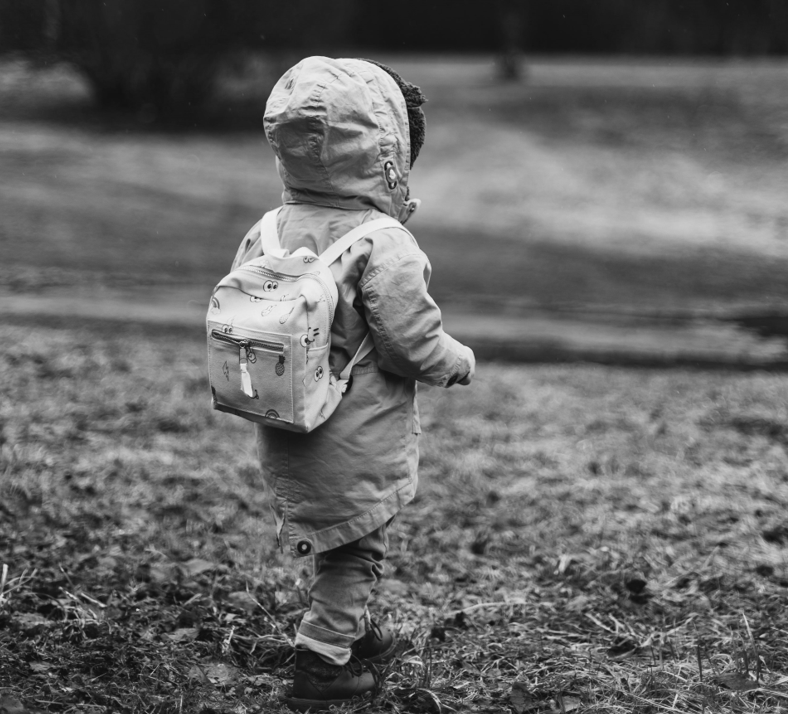

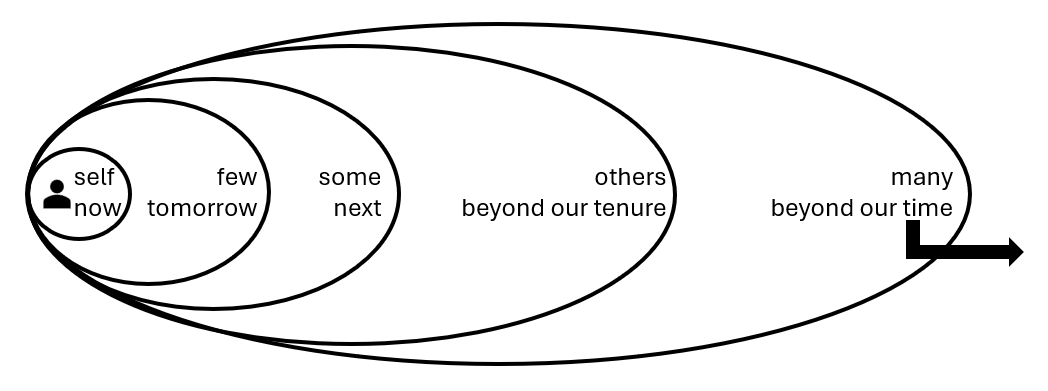






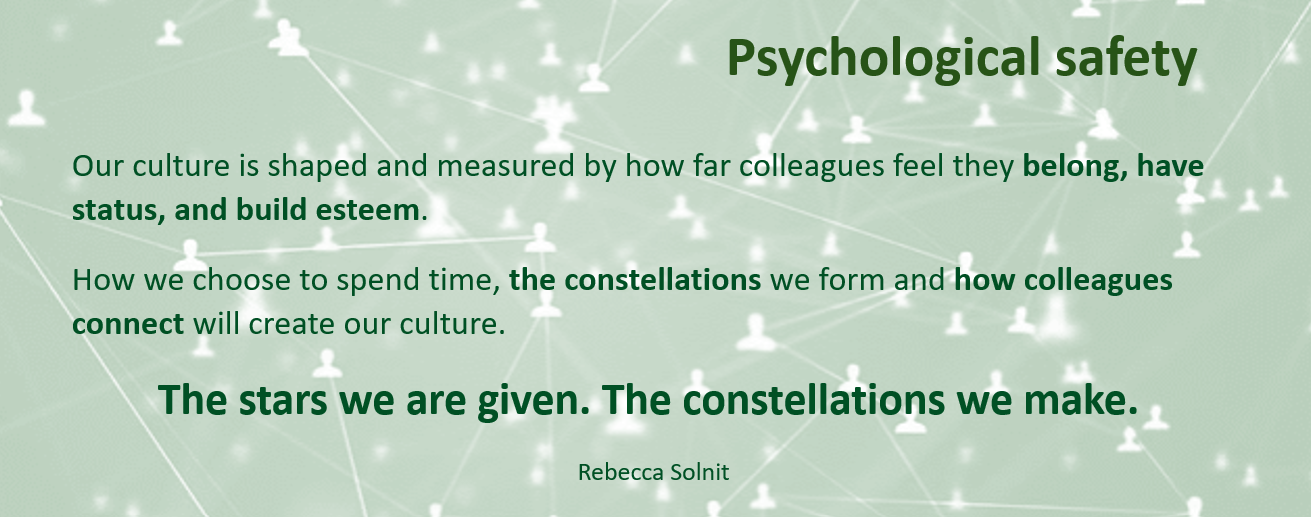
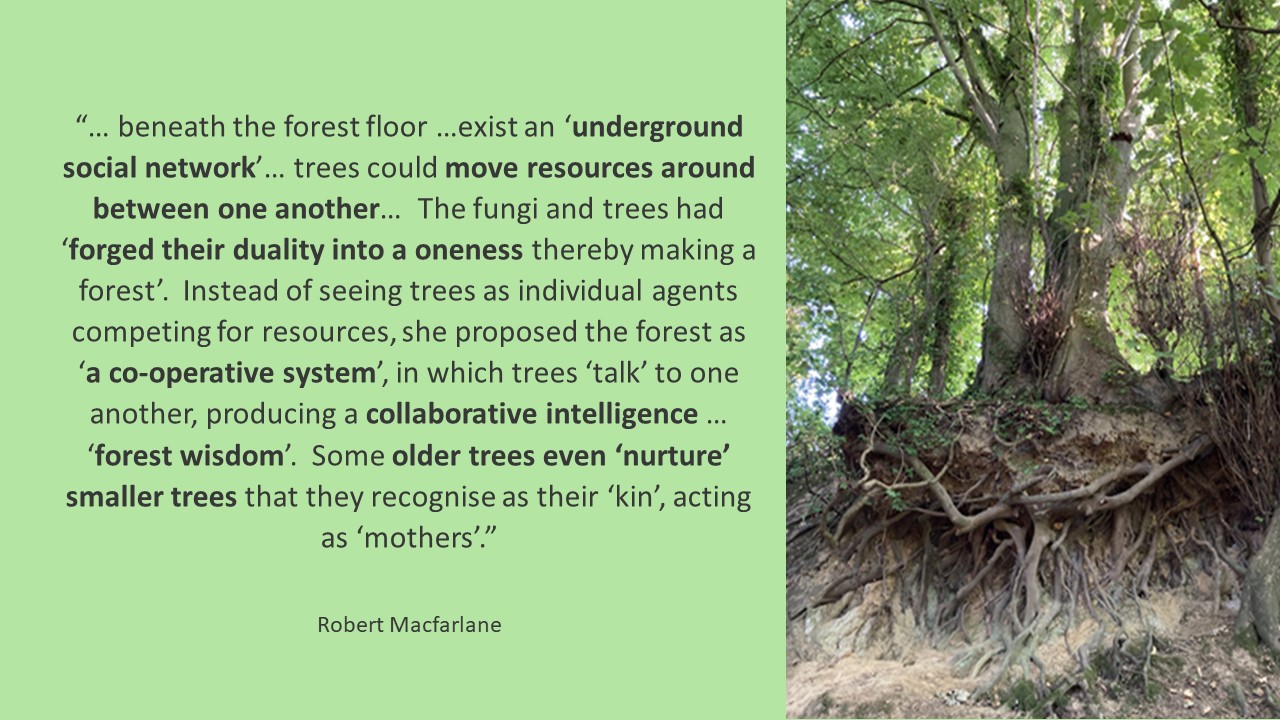








 Dan Nicholls