In the next phase we will strengthen our trust, deepen our connection and collaboration to add more value to each other and to all children. This is a venture in shared responsibility and joint endeavour to inspirelives with greater opportunity and choice. Succeeding in our mission:
Inspiring every child to flourish through an inclusive, all-through education that nurtures opportunity, equity, and agency for life.
A mission that ensures 11,000 children flourish and develop greater self-agency, becoming the masters of their fate. A worthy quest powered by 1,500 connected colleagues, empowered to do meaningful work.
For those that carry the most
We recognise that some children carry more than most, have had less opportunity and experiences in their early childhood and so need us more. They neither lack ambition or ability, but they have less capacity, fewer resources and face barriers that tip odds against them. In difficult times education has the power to transform lives, which is the business we are in. The performance and development of these children is the most important measure of our worth.
“We need equity in education, not equality. If someone can’t see straight because the world is falling in around them, we need to raise them up to clearer skies.” Poor, Katriona O’Sullivan
Anchored by our Values
Everything we do is held by our shared values:
Our stable core enables our innovative edge
We continue to build a strong trust with great schools that focuses on getting every day right and building a stable core: consistently delivering high quality provision with effective systems and shared approaches, enables our frontlineobsession.
We stand on our stable core and what we choose to do the same, so that we can innovate on the edge, expertly developing approaches to improve provision and inspirelives. This is a collective, connected and developmental endeavour through collaboration.
Towards 2030 | why we exist
To build a strong trust with great schools. Offering high quality education over 570-weeks that closes gaps for those that most need us. So that the trust exists in a higher performance space and exploits our collaborative advantage that yields a trust dividend.
Our focus on partnerships and places builds better communities for children to grow up in and flourish. Colleagues create greater opportunity through deliberate local and regional collaboration,seeking to improve other trusts and the sector.
The trust is deeply connected within itself. There is a strong collective desire and shared responsibility to add value for all children in every setting. This collaboration enables a level of innovation and shared approaches that add more value. As part of a human organisation colleagues are well connected, making a greater difference to others in and beyond our trust.
The consequence of our work over five years is that the trust becomes self-improving, the systems, shared approaches, trust improvement model, collaboration, horizontal leadership and empowerment is creating more value over time and is self-sustaining.
Colleagues enjoy more opportunity and are proud to do meaningful work that is enabling all children to flourish through an inclusive, all-through education that nurtures opportunity, equity, and agency for life
Higher performance space | in search of the trust dividend
There is an unswerving, shared responsibility and desire to raise standards. To build a strong trust and great schools that exist in a higher performance space that particularly enables disadvantaged learners to thrive and attain well.
So, where next…this year
In the next phase, to summer 2026 we will prioritise these six areas:
Innovative Edge | Inspiringlives
This year we will invest in our inclusive all-through education (570-weeks) and apply greater equity to close gaps for children that need us most. A focus on place-based improvement will build strong community partnerships and support improvement beyond our trust.
Stable Core | frontlineobsession
We will continue to invest in our stable core, by building a strong trust that enables great schools. Our colleague focused strategy will invest in all colleagues and create the conditions for our frontline obsession. Aiming to create a self-improving trust, investing in lateral leadership, connection, collaboration and strong systems.
570 Weeks | inspiring all-through education
To build an inspiring, inclusive, all-through education: as an entitlement for all children. Enacting excellent provision for every child throughout their 570 weeks of education. Prioritising:
Trust Curriculum | curating and enacting a shared curriculum across all year groups. (SDP)
Attendance, inclusion and transitions | to secure stronger attendance, strong inclusion and high-quality transitions, disadvantage first. (SDP)
Best Start in life | investing in the strongest possible start for all children through nursery and early years, enabled through a set of core commitments. (SDP)
Outstanding Personal Development | outstanding personal development curriculum builds character and offers greater opportunity for all children in every setting.
Closing gaps | seeking social justice
To apply equity and unswervingly commit to meeting the needs of children experiencing disadvantage and SEND, securing attainment and attendance that closes gaps and builds agency for each child. Securing greater social justice by prioritising:
The trust-wide development of teaching | systematic focus on the development of teaching to enact our shared curriculum. Our strongest lever for closing gaps. (SDP)
Disadvantage first | unswerving focus on the performance of disadvantaged pupils, through targets, data and quality assurance, as the indicator of the quality of our provision. (SDP)
Catch-up, Keep-up | systematic tracking all learners and applying equity, doing different and more, so that all children are caught up and kept up. (SDP)
All leaders, leaders of SEND | developing our SEND provision, focusing on ‘all leaders as leaders of SEND’ – securing a systematic strategy to meet SEND needs.
The importance of place | community partnerships
To build partnerships with educational and community partners to secure stronger communities and 570-week educations for all children. Using expertise in the trust to reach out and secure improvement in schools, trusts and the sector. Growing our reputation and influence by prioritising:
Strong recruitment built on growing reputation | securing stronger recruitment of pupils into our schools to inspire more lives and better serve our communities.
Trust Growth | securing appropriate and strategic growth of the trust to secure financial opportunities and grow our reputation and influence.
Collaboration with local trusts, local authorities and partners | seeking strong collaboration to secure improvement beyond the trust – seeking to influence all 570-weeks
Sector reputation and influence | playing an active role beyond the trust, including with the DfE and other partners, to influence policy, improve other trusts and the sector.
Colleague focused | developmental and collaborative
Investing in all colleagues to be connected, to collaborate, develop and grow to lead and contribute toward the mission and feel empowered to do meaningful work. Prioritising:
Recruitment and Retention | building a strategy to recruit well and to attract and retain strong colleagues. Considering our approach to flexible working.
Professional Development | creating on-going opportunities for professional development, held in a curriculum. Developing, inspiring and creating more opportunities for colleagues.
Induction | investing in and building strong induction to support all colleagues to have the best possible start to their career in our trust.
Well-being and mental health strategy | securing approaches across the trust to support all colleagues with their well-being and mental health.
Strong Trust, Great Schools | standardise, empower, sustain
Ensuring that the trust improvement model offers the foundation for colleagues to lead great schools. Complicated systems well embedded across the trust to drive effectiveness and efficiency. Prioritising:
Deliberate enactment of the Trust Improvement Model (SIM) | developing our standardised approaches, enabling empowered areas and sustaining the model to secure improvement.
Financial stability and clarity | Ensuring the trust maintains the present financial security, secures wider responsibility and enables greater investment in the trust.
Professional Services | developing professional services, to strengthen platform, offer capacity, expertise and secure the environment to empower all colleagues to deliver the mission.
IT Strategy | ensuring colleagues and pupils have the tools they need to thrive now and in the future. Developing our digital vision and cloud-first approach. Exploring the opportunities of AI.
Towards a self-improving trust | lateral trust leadership
Creating the expectation and conditions for horizontal improvement across the trust. Connectivity and collaboration that are more effective and efficient at driving the School Improvement. Prioritising:
Trust Leadership Curriculum | investing in and enacting a trust leadership curriculum and to extend the sense of leadership curriculum through networks and the layers of the trust.
Networks and Subject Communities | connecting colleagues with purpose, formally and informally, to enable the development of strategies that raise standards.
Lateral leadership, 20% time | creating the expectation and the structure for colleagues to work beyond setting to support lateral leadership and secure a self-improving trust.
Succession Planning | investing in succession planning and talent management to ensure the future leadership security for our trust.
First Steps… into Term 1
And our first steps in Term 1 will see us deepen our connection and collaboration and prioritise:
Understanding performance and setting the ambition and targets for 2026.
High quality Induction and line management, starting out strong.
Strong start and focus on Attendance, disadvantage first.
Best Start in Life, embedding our core commitments.
Enacting our shared curriculum.
Focus on the development of teaching through Steplab.
Embedding the new Planergy software in Finance.
We choose to venture on this journey to 2030 not because it is easy, but because it is hard, and because our ambition will serve to organise and measure the best of our energies and skills, because the challenge is one that we are willing to accept, one we are unwilling to postpone, and one which we intend to win (adapted, John F. Kennedy)
So, breathe, commit … and go inspire lives with greater opportunity and choice.
The building of Trusts as Human Organisations offers the best opportunity to exploit the collaborative advantage created by deeply connecting colleagues and groups of schools. Human organisations are deliberately designed to be colleague-centred, relational, collaborative and generative. Aligning individual purpose with the collective mission, empowers colleagues to seek improvement.
Human organisations require deliberate ‘Trust’ leadership to orchestrate collaboration and to understand that Trusts are adaptive, living systems that with the right culture and architecture can trigger greater connection and value. This value is multiplied when peers connect with purpose to explore and exploit their collective imagination and expertise: alchemists creating magic. Too often the capacity and connection for improvement remains latent within Trusts.
“…magic should have a place in our lives – it is never too late to discover your inner alchemist.” Rory Sutherland
The following describes a human organisation—one that seeks a collaborative advantage so that groups of schools perform better than before and are more able to tackle the challenges of our time.
The power of purpose
Human organisations articulate why they exist. Leaders draw maps, set destinations, raise expectations and describe the desired future in technicolour. The narration of the journey and importance placed on it offers the cultural currency, the validation, the reward for collaborating toward the destination.
“Never doubt that a small group of thoughtful, committed citizens can change the world. Indeed, it is the only thing that ever has.” Margaret Mead
A shared quest, in something worthwhile, something meaningful, something that lights a fire, and something anchored in why we exist, creates a generative shared desire and motivation. It sustains and directs energy across the organisation, toward that which is worthy.
Built on relationships3
Human organisations are driven by an unswerving investment in relationships, to secure motivation and to connect peers with purpose, to seek our moral ambition.
“Leadership is communicating to colleagues their worth and potential so clearly that they are inspired to see it in themselves.” Stephen Covey
In human organisations colleagues need to feel the purpose, have enough empowerment and autonomy to seek mastery. It is this investment in colleagues as social beings that taps our deeply engrained tribalist desire, to belong and do meaningful things.
“The relationships we build with each other provide the foundations of change. We are social beings who thrive on connections.” Sir Hamid Patel
The investment in relationships directed toward the purpose is the life blood of human organisations where success is the sum of all decisions made, by all colleagues, every second, of everyday, everywhere in the Trust.
Hard wiring
Human organisations hard wire, design and develop networks and communities as fundamental to their being: seeking connectivity and conductivity. It is not just an exercise in bringing colleagues together, networks must create enough conductivity to shift behaviour and actions intelligently toward the purpose and higher standards.
The architecture and design of networks is very deliberate and requires colleagues to be open, critical and ego-less in the deliberate search for better.
Soft Wiring
“The stars we are given. The constellations we (and they) make.” Rebecca Solnit
Human organisations encourage, permit and expect colleagues to collaborate beyond the set piece networks; connecting in informal, organic and dynamic groups of colleagues motivated to share and solve, in service to the mission. This collaboration propagates value, horizontally and organically across the organisation, adding up to more than the sum of the parts and becoming self-improving.
“…forests are complex adaptive systems, comprised of many species that adjust and learn, …and these parts interact in intricate dynamic networks, with information feedback and self-organisation. System-level properties emerge from this that add up to more than the sum of the parts.” Suzanne Simard
Building a platform
Human organisations invest in platforms of shared approaches for colleagues to collaborate on. This liberates colleagues to add value and seek greater impact by getting much better at the same. Playing in one field, free to innovate and add value based on a foundation, rather than playing in the woods or on the hill or in the fields: where a thousand flowers fail to add value.
This is an intelligent dance, that balances standardised and empowered approaches, and connects colleagues to embed and improve both. For Trusts what should be standardised or empowered is largely objective not subjective, driven by the difference between complicated or complex. The dividend is derived from investing in both.
Empowerment
Standardised approaches liberate rather than stifle schools and enables attention on the quality of education. On this platform, empowerment, sensitive to context generates local ownership and accountability for improvement. Colleagues empowered on the platform to collaborate with colleagues, aligned to the purpose, toward the destination, to drive local improvement is the engine room of self-improvement.
Trusts of parallel ecosystems
Each school is an ecosystem within the wider Trust ecosystem. In their part they run ‘experiments’ in parallel with other schools, with roughly the same resources, on a platform of shared approaches and seeking the same goals (helpful controls). With greater horizontal collaboration between trust leaders and colleagues the conditions exist to compare, contrast, iterate, develop and learn what it takes to add value.
“A golden age is associated with a culture of optimism, which encourages people to explore new knowledge, experiment with new methods and technologies, and exchange the results with others.” Johan Norberg
Seeking improvement requires the transparent sharing of all performance data. A self-improving system requires open access to all performance information to identify the conditions and approaches that secure strong performance.
Alchemy and alloys
Within the ecosystem (a large enough ecosystem) there is the best of everything. With enough connectivity, alchemy, alloying and forging, magic is possible. This is the intelligent melding of contextually sensitive approaches, enhancing a theory of action that is deliberately implemented. This expects heads and colleagues to intelligently exploit the resource in the trust, implementing for impact, and not to blindly stagger from one initiative to another.
“The mythical “butterfly effect” does exist, but we don’t spend enough time butterfly hunting.” Rory Sutherland
Imitation + adaptation
Leaders as alchemists, seek to alloy new approaches and strategies, by iteration, combination and adaptation, to spark greater impact. Deeply connected, open, collaborative cultures can learn from each other and interrogate new ways, ideas and methods to imitate and adapt: utilising the wisdom of the forest in their part of the ecosystem.
“The basic raw materials are a wide variety of ideas and methods to learn from and to combine in new ways.” Johan Norberg
Crowdsourcing
Human organisations create the opportunity and expectation for leaders to crowdsource solutions, tapping into the expertise and approaches of others across the ecosystem: setting out challenges for others to solve. Within a culture of openness, shared responsibility and because we are playing the same game, the ability to crowdsource improvement is the advantage of connected, human organisations.
Self-improving (eco)system
Taken together this forms a blueprint for a human organisation that is purpose driven, relational, generative and seeking value, together. Leaders and colleagues formally and informally networked, often horizontally, engaged in the business of improvement, fuelled by collaborative intelligence and forest wisdom: propagating a high performing ecosystem.
“… beneath the forest floor …exist an ‘underground social network’… trees could move resources around between one another… ‘a co-operative system’, in which trees ‘talk’ to one another, producing a collaborative intelligence … ‘forest wisdom’.” Robert Macfarlane
So, seek greater connectivity to empower and permit colleagues to be alchemists, to collaborate, generate greater value and perhaps create a little magic.
Amidst the turbulent waves of change we must re-imagine what education and our system can be; it is the opportunity of now, because next matters. It is at this point in our maturing sector that we should venture for greater coherence, collaboration and connection. By embarking on shared quests, we can better navigate toward a new North Star for all places and plunder our shared capability for all children. We need to be more pirate.
“Pirates trouble the edges of society and make enough shock waves to influence the middle ground. Trouble is their tool, although it’s more accurate to call it good trouble.” Sam Conniff Allende
Next needs to be more collective, more adjoined, more than the sum of the present parts, because too often, we are in parts. The view from the crow’s nest reveals inequity and that our pieces rarely fit well to serve our places and the children that need us most. It is the incongruousness of our pieces, the dominance of ‘I’ over ‘we’ and conditions that drive isolationism and competition that is constraining our collective potential. As system altruists, and sector architects we should rise and act on and not just in our system; seeking good trouble.
“…acting on the system gives us an opportunity to think differently. We should think of leadership as the ability to shape the system.” Leora Cruddas
Charting new waters | shared mutinies of good trouble
There are times in history when a group of like-minded individuals chart new waters and from the fringes find new ways to live and be; creating a movement based on new rules, a new code. Pirates challenged the world-order and flipped the accepted shared truths about how things could be, they created a movement so successful and agile that their approach and thinking might just influence and provoke us into our next-phase; toward better. This is our time to be a little more Pirate to strengthen and connect Trusts, to rebel, rewrite, reorganise, redistribute and retell the hell out of what could be.
“Whilst pirates get a bad press, there is significant evidence that these merry men (and women) actually transformed the world and challenged the oppressive status quo. The golden age for pirating 1710-1740 was progressive and counter-establishment – it provided the basis and conditions for significant change. Now as it was then the need for change and a shift of ownership is required.” Sam Conniff Allende
We are the System | Charting new waters, re-finding old maps
There is a significant opportunity to re-imagine the future. There are waters, territories and opportunities, for plundering that could create an education system more aligned with the needs of all children and the places we serve. Whilst our educational landscape is fragmented, the forces that have pushed and pulled academies together have also created the conditions for leaders to better shape our system, to act on it, not just in it. And we must, because we are the system and these are our shared waters.
We exist in a period of uncommon opportunity, where there is now enough maturity in our system, beyond the stormy waters of early academisation, and within calmer waters, for greater horizontal collaboration and shared responsibility for all children and every place. There is no Armada coming over the horizon, so it is time to be more pirate and engage in good rebellion, small arrrrgh.
“I’d rather be a pirate than join the navy” Steve Jobs
The next phase requires greater alignment of the soft and hard power within our system. And more crucially secure a shift in our intrinsic motivation to collectively do better for all, attaching greater currency for collaborative place-based leadership. Stronger extrinsic motivators as part of the new code, held by us, alongside regulators will galvanise the change we seek.
Treasure worth seeking | next-phase thinking
Our sector needs to do more to address the inequity in our society and seek greater social justice. We must better balance the haphazard opportunities that are not evenly distributed in our communities or between peers even in the same neighbourhood. We need to be braver and bolder to build our system to liberate and empower those who find themselves adrift and stranded in life. A band of educators collectively motivated to apply equity and build provision for those that most need an anchor.
The next-phase must build ‘great Trusts’ driven by a Trust Improvement Model that places Trust and place-based improvement at the heart of our mutiny. As we seek to connect and collaborate for the good of all children and to ‘educate a place’ the increased openness and connection will concurrently build stronger Trusts within a more capable system. This is the real treasure worth seeking: Trusts, in partnership, unearthing and aligning much greater capacity for securing social justice and inclusion.
“A major benefit of effective ‘place-based’ reform is seen as the provision of essential “glue” or coordination, by mobilising a collective sense of responsibility to reduce competition which drives local hierarchies and decreases the effects of disadvantage.” Cousin and Crossley-Holland
A new look crew required | Pirating, banding and plundering more capacity
We need a new look crew, educators banding together, collectively questing, compelled by a stronger yearning for the endless immensity and possibility of the sea ahead of us.
“If you want to build a ship, don’t drum up people to collect wood and don’t assign them tasks and work, but rather teach them to long for the endless immensity of the sea.” Antoine de Saint-Exupery
Captains and crews must invest beyond the present boundaries, giving time and resource, committing to plunder and better directing the existing capacity towards those most adrift. New crews know that the real treasure is in levelling-up, in greater social justice for all, that is not constrained by our present boundaries. Re-finding geographic territories, places and communities across the land can offer greater opportunity and choice.
“There is one idea that whenever it has been applied has had the power to change the world. Cultures that shift from ‘I’ to ‘We’.” …restore the Common Good in divided times.” Jonathan Sacks
A new Pirate Code | seeking good trouble, a sector-led mutiny for our next phase
“We, not I, Captain.” The next phase is one that must preference ‘We’ over ‘I’. To take shared responsibility for the education of all children across communities, not just those closest to us. A fundamental adoption of a ‘we’ mindset as the basis of our next phase.
Build a values system that directs energy to that which is worth having. A sector that rewards those that connect and collaborate to achieve value beyond themselves and their time. A new values system that rewards those who close gaps for children and the gaps in our places, those who create coherence and partnerships to plunder resources and expertise for the greater good.
Banding crews together. As system architects we must prioritise meaningful partnerships and collaboration between Trusts, Local Authorities and community partners. This is place-based collaborative leadership that connects crews who invest, across boundaries, in informal and formal alliances, releasing expertise. Place-based, because children grow-up in communities not in Trusts and their success and security is bound to that of their peers and their community.
Unearthing old maps, seeking lost territories. We need to re-consider our boundaries, around the importance of ‘place’ to collectively “educate a city, a town, a county… a coherent locality.” By seeking to educate a locality we adjoin partners in shared endeavour to direct, release and use our collective resources and intelligence, to add more capacity and serve the whole. Kintsugi, repairing broken pottery by joining parts with gold, treating the repair as part of the history of a place, strengthening the whole; seeking gold.
Captains and new crews needed. Into the next phase we need braver educators willing to navigate, beyond their waters, and venture into partnerships for the greater good of all children, in all communities. This requires stronger system leadership and collaborative structures that extend beyond settings and to depth, to educate a place.
Connecting and strengthening Trusts. As Trusts work more in neighbouring waters, engaged in place-based improvement, with other crews, we have the basis for a Trust Improvement Model, a form of co-opetition. The next phase requires the development of great Trusts, improving in partnership, to secure greater social justice. Just as Roman concrete is strengthened by exposure to sea water, Trusts will improve through deeper connection beyond their waters: symbiotically.
The treasure we seek, championing those unmoored and cast adrift. We should seek to win for all children. The success of our pirating and joint questing will be measured by how far we close gaps, particularly, the attainment and attendance of those under-resourced, lost at sea and those with needs that we are not yet meeting. Our children and communities need a system and a collective quest for inclusive excellence. We should deliberately apply equity to close gaps across communities and not just seek the escape of a few.
The laws of the sea. We care about what we measure and reward. Our accountability structures and regulators must align to reward the new code. Only if we align soft and hard power toward this quest and re-orientate the laws of the sea to articulate a new North Star, will we create the conditions where educators who boldly navigate by these stars are encouraged.
Setting Sail | being bolder and braver
“The moment we turn outward and concern ourselves with the welfare of others no less than with our own, we begin to change the world in the only way we can, one act at a time, one day at a time, one life at a time.”Jonathan Sacks
So, we should set sail, hold ourselves and each other to the new pirate code, seek good trouble and venture for greater coherence, collaboration and connection, so that we better serve those children stranded in our system and under-served by our places.
Of course, we don’t need everyone, we just need enough. Movements and mutinies tend to require surprisingly few pirates, engaged in counterintuitively small actions to transform our territories and secure greater social justice.
Time to be more pirate and seek good trouble, it is our time at the edge…
“It’s St. Elmo’s Fire. Electric flashes of light that appear in dark skies out of nowhere. Sailors would guide entire journeys by it … they thought they needed it to keep them going when times got tough. … We’re all going through this. It’s our time at the edge.” Billy
We are in the business of growing human beans, and beans have dreams.
Some have dreams that are delicate, wispy-misty bubbles, but, more frightsome, some beans believe dreams are for others and not for them. So, whilst all kiddle beans have dreams, some are lost before they grow to be whunking. For the world has a habit of bursting the bubbles of beans.
“Dreams,” he said, “is very mysterious things. They is floating around in the air like little wispy-misty bubbles. And all the time they is searching for sleeping people.” Roald Dahl
Tread softly | zozimus is fragile
We grow beans and all beans spread their dreams under our feet.
But I, being poor, have only my dreams; I have spread my dreams under your feet; Tread softly because you tread on my dreams W.B. Yeats
So, tread softly, but do deliberately step and set the stage for dreams to appear, exist and grow. Dreams require our guardianship, for the moment a child ceases to believe, they step back and separate themselves from those whose dreams are well preserved and soundly protected. For the dreamless beans we are their only second chance: exunckly why we choose to be here, doing what we do.
“The moment you doubt whether you can fly, you cease for ever to be able to do it.” Peter Pan
Leaders of Dreams | dealers in dreams
“Leadership iscommunicating to (human beans) their worth and potential so clearly that they are inspired to see it in themselves.” Stephen Covey
We must curate the conditions that convince beans of their worth and potential so clearly that they are inspired to see it in themselves. Leadership that deals in dreams and has the courage to apply equity, might just create the opportunities that change lives of human beans, because childhoods last a lifetime.
“Dreams is full of mystery and magic… Do not try to understand them.” Roald Dahl
The land of less | surviving childhood
All human beans depend on supported opportunity to thrive. Opportunity, however, is largely a feature in the land of advantage. A place where beans go on quests, fueled by belief and held to high expectations. In their land, they stride sure-footedly, supported, resource laden, time enabled, in the direction of their dreams, with eyes affixed on the horizon.
Contrariwise, the land of disadvantage has less. Whilst, all beans are seeking to survive childhood, beans and often their grown-ups, in this land have less time, fewer resources and fleeting opportunity. Whilst ability and ambition are distributed equally in beans, dreams evaporate quicker in this land, quests revert to quiescence as under-resourced beans seek to survive, focused on the foreground, suspichy of their future.
Of course, the odd thing about the land of the less is that it is expensive to exist, to get by; there is a scarcity of money, and of resource and of time. But, we know this, and as educators we do have the resource and the expertise to offer the specific, targeted support that can lift horizons, to short cut and create cheat codes that close gaps and grow opportunity in the land of less. We are not yet brave or courageous enough to hack the system, one diddly and different bean at a time.
“Every human bean is diddly and different.” Roald Dahl
Igniting dreams | shifting self-image
Human beans are the sum of their experiences. Some of which are potent enough to ignite something deep inside making beans fall helplessly in love with their future passion. We are not yet experts in ignition; we pay too little attention to these life-changing moments and yet we are all shaped by them.
“Beneath every big talent lies an ignition story – the famously potent moment when a young person falls helplessly in love with their future passion.” Dan Coyle
All children are social beans, deeply sensitive to the words and actions of all adults. In every action, interaction and intonation we choose to construct or de-construct, to convey status, or not. Our role is to ignite and guard dreams, secure excellent provision and apply equity to gift beans a new notion of what is possible, daring them to dream, guiding them to look up and beyond.
“Once a student sees that he or she is capable of excellence, that student is never quite the same. There is a new self-image, a new notion of possibility.” Ron Berger
Fields of dreams | seeding serendipity
Only the application of equity in the right conditions can overcome the insidious influence and impact of having less. We must seed greater opportunity, deliberately to both specifically target and to increase the probability that unmoored beans will grow, flourish and accumulate advantage over time. For success is not a random act, it arises out of a predictable set of circumstances, more readily and typically evident in the advantaged realm.
“…success is not a random act. It arises out of a predictable and powerful set of circumstances and opportunities …replace the patchwork of lucky breaks, context and arbitrary advantages that determine success…with a system that provides opportunities and the conditions for all to feel success.” Malcolm Gladwell
To accumulate advantage for those with less, we should recreate the conditions of the land of more, being braver to give what is specifically needed so that beans do not feel unremarkable and separated from their world.
Full of Beans | inspiring lives with opportunity and choice
“Somewhere inside all of us is the power to change the world.” Matilda
We are full of beans, they are everywhere, and so are their dreams. Together, we have a responsibility, to grow both beans and dreams. To find that little bit of magic asleep inside each and everyone. In doing so we might just influence the lives of those who exist in the land of less, who carry more, who need, indeed rely upon, our expertise and our belief in them. As enthusiasts in life we can inspire the lives of those with less with greater opportunity and choice. But we should choose to close gaps at full speed, to embrace it with both arms, to become passionate about it, because lukewarm is no good.
“I began to realise how important it was to be an enthusiast in life. If you are interested in something, no matter what it is, go at it full speed, Embrace it with both arms, hug it, love it and above all else become passionate about it. Lukewarm is no good.” Roald Dahl
The next stage of our Trust will seek to connect and empower all colleagues as one organisation. Colleagues trusted to transform lives, so that children thrive and flourish now and into adulthood. We will use the power of education to unlock and inspire young lives, particularly for those children who carry more than others, in these difficult times.
“There is no trust more sacred than the one the world holds with children.” (Kofi Annan)
Building on strong foundations
Your expertise and commitment have built the platform on which our Trust now stands. Because of this work, over time, you have developed provision and approaches that are making a difference to the lives of children and is the foundation for our next stage. On this maturity we will seek greater influence on the lives of colleagues and children, strategically plotting and shaping our path, together.
In the next stage there are key approaches and principles that will establish a cultural model that will inform our relationships, interactions and underpin the strategy. This will build the conditions, culture, and climate for colleagues to do meaningful work. We will prioritise psychological safety for colleagues, so that they feel greater belonging and to be given permission to do work that transforms lives. Offering the opportunities for more children to flourish, to have a sense of wonder and be wonder-smitten: I am here, that I may wonder.
“To live wonder-smitten with reality is the gladdest way to live.” (Maria Popova)
One organisation
We are one organisation, serving children, aged 2 to 19, responsible for all children, with every school and colleague woven into a collective cultural fabric: school is trust, trust is school. A collection of great schools, meeting need, held in a strong trust.
Our culture matters to us. It is built and shaped, in every interaction, everywhere, all the time and ever onward. Our cultural landscape is carved over time towards our shared purpose and is guided by deeply held lived values and shared rituals and routines. It is shaped and measured by how far colleagues feel they belong, have status, and build esteem. How we choose to spend time, the constellations we form and how colleagues connect will create our culture.
“The stars we are given. The constellations we make.” (Rebecca Solnit)
Making good decisions together
We make good decisions together. We seek and value expertise across our schools and the Trust as a whole. We are open and transparent as an organisation, making the best decisions we can, with the information we have, whilst seeking to do the right thing. We act without fear or favour.
First say yes. If a colleague feels the need to ask for support or resource, we should say yes, first, and work out how,later. Paying forward as an exercise in collective endeavour and shared responsibility.
The second mistake. It is rarely the case that the first mistake matters, it is often the second or third that turns mistake into problem. Because we make good decisions together, are open and transparent we share and resolve challenges at the first opportunity. Almost everything becomes easier when things are shared, it builds trust, and importantly avoids the second and third mistake.
A Human organisation, valuing relationships
We make time to listen, learn and build relationships. Being present. This is about ensuring colleagues are known as individuals, individuals with a unique story, a story that is heard. Understanding an individual’s story allows us to weave collective stories into the future; generating a greater sense of belonging.How we treat anyone, is how we treat everyone.
Humans are beautifully contagious
Use time well, seek simplicity
We will seek to use time well. Deliberately prioritising time towards the Main Thing(s). Logically sequencing our routines and networks and creating simple approaches that focus on making the greatest difference. We will work to reduce unnecessary burdens on individuals, to be as agile and nimble as is appropriate to our scale. As simple as possible, but not more so.
We will seek clarity because it is kind. Humans like rules, it is clarity that creates safety. We will share all data and information transparently to understand performance and drive improvement, part of our joint endeavour and collective responsibility for all children.
Primacy of Headteachers, the drivers of change
We understand the importance and primacy of Headteachers. The strongest Heads are great with people, understand provision and lead with purpose, prioritising and implementing key strategies and approaches, over time, to enable colleagues to change lives. They are open and able to utilise the capacity of the Trust, and to add into the strength of the Trust; a mutually beneficial symbiosis that adds value.
We are the sum of our decisions
Our effectiveness could be simplified as the sum of all decisions, by all colleagues, all the time, everywhere across our Trust that either accumulates value, or not. Our role as Trust Leaders is to influence, nudge, direct, enable better decisions to be made more often, to deliver a dividend. We will continue to dance between what we decide to do together and where we choose to empower colleagues to act.
Deliberately choosing where to standardise and where to empower colleagues
We will continue to standardise aspects of provision, to become more than the sum of our parts. Standardising, building things together, has tremendous power to liberate, support and give permission (and opportunity) for colleagues to focus on the Main Thing(s); creating a platform for colleagues. Our shared, common curriculum exemplifies the power of this collective endeavour.
“Leadership is the art of giving people a platform for spreading ideas that work.” (Seth Godin)
We will standardise and empower deliberately and strategically. Holding ideas in tension, informed by context, because context matters; it is not a compromise. Whilst recognising the importance of standardisation and of empowering colleagues on platforms, we will not seek to over dictate the complex areas of provision where experts and professionals make decisions, informed in the moment, in context, for their community.
“…under the conditions of true complexity – where unpredictability reigns – efforts to dictate every step from the centre will fail. People … require a seemingly contradictory mix of freedom and expectation.”(Atul Gawande)
We understand the influence we have on others
Back to the Future. Whilst Marty McFly travelled back in time and understood the future consequences of his actions, we are much less conscious of our influence on the future. Whilst we cannot foresee the future we can, together, create the conditions, sow the seeds, prepare the ground for humans to flourish and for more good than bad to happen. We, collectively create a crucible of serendipity where colleagues shape what is possible. Lives are shaped by opportunity. Our collective capacity can and will transform lives, evidenced in the smallest acts, every day.
“The smallest act in the most limited circumstances bears the seed of boundlessness, because one deed, and sometimes one word, suffices to change every constellation.” (Hannah Arendt)
We are collaborative by nature
We will build on our existing collaborative architecture, our co-operative system, to connect colleagues with purpose and to each other, seeking collaborative advantage. Connecting colleagues within professional networks and subject/year communities, where hard and soft-wired collaboration secures collaborative intelligence and wisdom that becomes self-improving and irreversible. The biggest influence on colleagues is colleagues.
Getting today right and building for the future
Two speed. As we forge forward, we will build our future, based on where we have been, where we are, and toward what we seek. We will seek to get today right and the future right. We will seek change and improvement in months and years, concurrently.
What do we seek? We decide, next, together.
Into our future
So, based on the platform that you have built, we will work with humanity, humility and openness, to shape the future, together. So, at this time, as I join you as CEO, my optimism, hope and determination for what we will achieve is galvanised by the brilliant people in our Trust.
“When we build a culture of people who eagerly seek out and take responsibility, we build a culture that enables a special kind of resilient freedom.” (Seth Godin)
We have an opportunity to enable all colleagues across our Trust to collaborate, connect and feel empowered to make a difference. To work as one organisation, sharing responsibility, engaged in collective endeavour to secure greater social justice, particularly for our most vulnerable children, those that carry the most through life, and particularly at this time. A worthy cause.
“To be hopeful in bad times is not just foolishly romantic.”(Howard Zinn)
Postscript
There is no way to build high-performing organisations without a cultural model that drives the strategy. Or to put it differently, strategy without culture is just wishful thinking.
“Everyone participates in the social contract every day, and we rarely stop to think about it. Yet social contracts shape every aspect of our lives, including how we raise our children and engage in education.” (Minouche Shafik)
We live in difficult and darkening times. The growing gloom is becoming oppressive, encouraging retreat and reducing belonging. The social contract that shapes and guides every aspect of our lives is fracturing. For far too many children and families this is fundamentally altering their relationship with society, authority, and how we value and engage in education.
The “social contract” is a theoretical agreement between individuals and society wherein people relinquish certain freedoms and abide by agreed-upon rules and norms in exchange for social order and mutual benefits.
These are dark ages, characterised by challenging economics and social inequity, that are presenting both a psychological and material challenge. This is infecting and altering the narratives we tell ourselves and each other about what is important and what our contributions to society should be.
“We all … listen for an account of who we are and where we stand.” (George Monbiot)
Increasing numbers of children and adults are opting out from a world that finds multiple ways of challenging their sense of self, place, and agency. Whilst for some the light is not fading, for too many others, often the most vulnerable, the gloom is encouraging retreat from the agreed contract. Schools are at the heart of the maelstrom, open, available, and trusted enough for some families to fight against, because few others are listening, available or there. Schools stretch and respond to the needs that walk into school every day, attempting to fulfil their duty of care, often without the resource or expertise.
For increasing numbers of pupils and families, school is seen as optional, far from being irresistible or a place of opportunity. The prevailing narrative is replacing long held norms around the value of education, driven by a weakening social contract and the entrenched inequities in society. The disadvantage gap, on any measure, is wide and widening, embarrassingly so. Fundamentally, the social contract is built on trust– when the returns from society diminish or disappear, or where we become increasingly priced out of life, we see the contract weakening and the trust we hold erodes.
“Trusting others puts us in an inherently vulnerable position… the proof of the importance of trust is the intense emotional pain that accompanies it being broken.” (Owen Eastwood)
We need a revised and reinforced social contract that seeks greater cohesion, strengthens belonging and places education at the heart of this nation. This needs to secure far greater equity through education and a much stronger architecture of opportunity. An architecture enacted by stronger trust and system leadership, greater connectivity and purposeful collaboration between trusts and schools so that we take collective responsibility and stewardship for our sector. All Trusts working together for all children.
“It is only through building a connected system that we will be able to address the multiple challenges facing our communities” (Leora Cruddas)
Building the effectiveness of our trust, civic and system leadership to build an education system that is able to address the multiple challenges, redistribute esteem and enable many more children to live lives of decency and dignity.
“…we need a redistribution of esteem… to live lives of decency and dignity, winning social esteem. …(to) travel the road to 2045 with purpose, dignity and accomplishment.” (Peter Hennessy)
Seeking together to build strong trusts with great schools that meet need. Enabling more children and families to belong and benefit from a renewed social contract, gaining a greater sense of agency in their lives and contributing towards the common good.
“Agency gives us control over our time, and it encourages us to choose what our contribution looks like.” (Seth Godin)
In the eye of the storm
The lines between school and society have blurred. Schools are trying to respond to the fracturing of the social contract. Where deprivation bites and societal problems leak into schools, colleagues can become overwhelmed. They take increasing amounts of time to support, resolve, and cope with difficult and widening societal issues of children and families, obligated to fulfil their deeply held duty of care for the communities they serve.
The present level of attendance, suspensions and disenfranchisement, particularly of those presently disadvantaged, is a national crisis – a social epidemic. As the narrative falters, individuals are making pragmatic decisions around survival and choosing to opt out, to not conform, to challenge authority, avoid commitment and to escape the perceived risk of failing in class.
If life is a game, too many are deciding not to play.
Fracturing built on entrenched inequity
It is not that the social contract has suddenly fractured, it has been creaking over time and is evident in the inequalities that characterise our society. Just as there are triggers for climate change, where it becomes irreversible and the impact is catastrophic, the same is true of the social contract. Multiple factors have triggered descent to this crisis point with our social contract.
Strong Trusts, Great Schools, Meeting Need | An architecture of opportunity
“There is no trust more sacred than the one the world holds with children.” (Kofi Annan)
The present architecture of opportunity in our sector, exists within a developing Trust landscape. It is timely, urgent and imperative for Trusts and groups of schools to work together within stronger collaborative structures to build strong trusts capable of supporting more great schoolsthat are well placed to meet need. The sector should grasp the opportunity to create a stronger architecture of opportunity that addresses the societal challenges and particularly the widening disadvantage gap. Trusts and schools need to work much more collaboratively to realise the promise of academisation and to secure greater equity through education.
We are the system
The development of great schools across the sector that enable all children to lead full, flourishing lives is at that heart of the renewal we seek.
“We need a broader and more ambitious vision of what a good life is. Human flourishing and dignity for all, requires us to have a wide set of success measures. Placing greater value on things such as contribution, difference, common values, and the process of learning and work itself.” (Ben Newmark, Tom Rees)
The collaborative structures we need to build within and across the sector are required to secure a greater dividend, one that rises the tide for all children. Schools need to grow good humans through strong culture and inspire young minds through great teaching held within a progressive, sequenced curriculum that liberates agency and meets the needs of children now and for their future. This requires us to develop leaders(hip) that understands how to improve schools within the collaborative structure of Trusts, accelerated by Trusts working closer together. This will demand a move from silos to deliberate collaboration, so that we, together, take greater collective stewardship of our sector.
The deficit narrative in society is reflected within our sector and in our schools. It is no accident that the current recruitment and retention challenges, the catastrophic decline in ITT applications and weakening working conditions are linked to the deficit narrative around schools and the value that our nation places on education. It is not that there isn’t an appetite to meet and reverse the challenges of the failing social contract, it is that it feels progressively more futile given the available funding, resourcing, staffing, and expertise that is required to meet the ever-increasing demand.
Stewardship and Longtermism
The investment in education needs to be long-term and it requires a commitment over generational timescales that inconveniently span timescales longer than political terms of office. We are prone to shortermism and this struggles to keep up with the complex needs of a growing number of children and families.
“We should shift our energies upstream: personally, organisationally, nationally and globally. We can, and should, stop dealing with the symptoms of problems, again and again, and start fixing them.” (Dan Heath)
This is urgent; it is not just about now, it is fundamentally about the future and the future health of our society and the standing, place and importance of education. Great schools are the hope, and increasingly the only hope, but they are exposed and creaking under the weight of the failing social contract. Schools and Trusts need to consider deeply their role in society and the educational offer that will better meet the needs of all children, now and into their adulthood.
The weather is oppressive
The prevailing climate is increasingly oppressive and characterised by profound uncertainty.
“How to live in a world where profound uncertainty is not a bug, but a feature?” (Yuval Noah Harari)
Our response to this uncertainty and the challenges of our time has influenced the national psyche and altered our narratives. So much has shifted in our lived experience…
The global pandemic, Brexit, standards in public life (Nolan Principles), high inflation, high interest rates, energy costs, mortgage rates, loan rates, cost of living, AI, inaccessible first homes, decline in living standards, shifting employment types and longevity, climate change, political turmoil, social media, conflicts across the world (including Europe), long waiting lists, funding crisis, erosion of local services and multi-agency services, mental health challenges, public service strikes, recruitment, retention…
… disconcerting, oppressive, challenging; encouraging retreat and a deafening backdrop to life.
All of which play out unevenly across society. Except that, this is not true for everyone. These oppressive conditions tend to maintain the status quo for those who have means and power.
The shifting locus of control; retreating from the noise
“Nations and peoples are largely the stories they feed themselves.” Ben Okri
Our society has always been divided into those who have and those who have not. Typically, the most disadvantaged in society have an external locus of control, one that encourages retreat, and one that negates a sense of agency. The current challenges are pushing more children into believing and acting as if they have an external locus of control. When this happens, they look to the contract that is meant to hold them, meant to say to them that they belong, and they pragmatically choose retreat and make decisions about their contribution to society; becoming more invisible.
Ubuntu: “I am a person through other people; my humanity is tied to yours.” (Zulu proverb)
We must reinforce, redesign and improve the social contract. It is fractured and faltering. We must not stand-by and in doing so collude with this erosion. We need a society and an education system that builds back the social contract for the common good and creates an architecture of opportunity, so that more are invited to dance.
Architecture of Opportunity | an invitation to dance
1. We need to renew the invitation to dance, so that individuals contribute and benefit from the social contract. We need a new national and educational narrative around schools that places education at the heart of social renewal. This should seek to create a greater sense of belonging, status and esteem, a more just society and communities where children and families flourish.
“Those who imagine the ground beneath their feet is solid are probably managing the present, not leading into the future.” (Tracey Camilleri, et al.)
2. We are the system. As educators we have an opportunity and responsibility to make a difference, to tell a stronger narrative and to influence the national position of education. We need to review the present paradigm and ensure that we are keeping our side of the contract. We need to ensure that Trusts and schools develop organisational leadership to build a sector that rises the tide. Strong Trusts with Great Schools that Meet Need.
“You cannot take away someone’s story without giving them a new one. Whether the systems that emerge from this rupture are better or worse than the current dispensation depends on our ability to tell a new story.” (George Monbiot)
3. We need to invest more in education; an investment that yields a long-term dividend to our society and nation. The pay off will not just boost the economy, but it will improve well-being, mental health, community cohesion and deliver social justice. This investment will support schools to fulfil their duty of care and create an architecture of opportunity where the power of education will secure greater equity. Not for us, for them.
4. We need to take a longer-term view on the role of education in society, as the moral priority of our time. Taking greater stewardship of the future, building collaborative structures where all educationalist can share responsibility for all children. It is what we owe their future.
“Longtermism is about taking seriously just how big the future could be and how high the stakes are in shaping it. We need to act wisely.” (William Macaskill)
5. We need to invest more in the first 1001 days from conception and in readying children for school. This lights the fire, sets the stage and reinforces, at the earliest possible moment, that education and investing in human potential is part of the fabric of our social contract. This includes educating and influencing parenting and the nations understanding of key developmental stages. We need to follow through on that investment into early years to give the best possible start in life, to secure the importance of school, where children belong and where we genuinely work upstream to prevent downstream problems.
“We have the opportunity to help people become significant… build a culture of affiliation and status.” (Seth Godin)
6. We need more great schools that meet the needs of all children. Schools that secure strong culture and great teaching to build great humans and bestow the very best curriculum, for our children in these times. Trusts need to work together to develop system leadership and purposeful collaboration that accelerates our impact on the everyday experience of every child. So that together we realise and enhance the collective Trust Dividend on children and society. We should seek to secure greater attainment mobility, to close gaps for those presently disadvantaged, and meet the needs of those with SEND.
“There should be a national strategy to close the attainment gaps that have opened since the pandemic. Addressing these gaps should be a national priority, with a long-term plan in place, based on evidence.” (Sutton Trust)
7. We need to urgently address the attendance crisis in this country. Seeking to tackle the entrenched challenges of our time, to strengthen our narrative around the importance of education and build back the social contract. Improving attendance is urgent; the damage and implications for this generation will play out across society and over decades.
“Culture can change. And it is schools and school systems that have the power to change it.” (Lucy Crehan)
8. We need to invest in ‘place’, work in strong partnerships and fulfil our civic responsibilities. We need Trusts and schools to collaborate and develop civic leadership to takegreater stewardship for the places that we educate. Without these collaborative structures in place, we will not create the architecture of opportunity and the multi-agency working required to serve the communities where children grow up.
“Civic leadership is about the protection and promotion of public values and addressing issues of place …creat(ing) the conditions for collective impact by addressing complex issues affecting children … that require different actors to work together.” (Leora Cruddas)
9. We need to invest in wider services, and find ways to effectively work in closer partnerships with others, including social care that sit in and around schools – renewing and reinforcing the broken contract, as an expression of care and duty. Taking greater opportunity to understand and meet the needs of all children and adults. Funding and supporting schools to realise their civic duty, with enough resource and expertise to meet demand and fulfil our duty of care.
10. We need to be clear on where the boundaries of the social contract sit between schools and society. This clarity is required to understand where responsibilities sit and to reduce the flow of societal issues into schools. We need to either rebuild the agencies, services and expertise in our communities or significantly invest in schools as community hubs to meet the needs of society.
Through joint enterprise and shared responsibility we can build a society and an education system that renews the social contract for the common good and create an architecture of opportunity so that more are invited to dance.
“It is a matter of shared purpose and sustained application.” (Peter Hennessy)
A sense of belonging: is one of humanity’s most basic needs; feeling an affinity with a group, that accepts you.
Enabling colleagues to feel a sense of belonging is an exercise in leadership. Leadership that creates the conditions for colleagues to feel psychologically safe and able to engage in meaningful work. It is under these conditions and when the climate is right, that colleagues feel a sense of belonging, that they have status and are empowered to use their agency to add value. When colleagues are encouraged and empowered they feel the protected and secure sense of being an insider.
“To feel a sense of belonging is to feel accepted, to feel seen and to feel included by a group of people… to not feel belonging is to experience the precarious and insecure sense of an outsider.”(Owen Eastwood, 2021)
Organisations that seek to be as amazing as the colleagues within, actively create the conditions for belonging. Under these conditions colleagues feel an affinity to the group and to the mission, they feel the security and acceptance that gives them the mandate to bring themselves to others and to their work. Where leaders create these conditions there is an alchemy of purposeful engagement that is self-sustaining and creates momentum; the momentum of the many on a mission.
Enhancing belonging requires nuanced leadership that understands the complexity of humans and human motivation to empower and align collective effort; freeing capability and capacity. It is this nuanced leadership that deliberately leads, makes decisions, upholds values, sets parameters and direction to a compelling future that empowers colleagues. Under these conditions colleagues feel the security of deliberate leadership that both holds and frees colleagues to make good decisions, more often and aligned in the pursuit of meaningful work.
“…an organisation is not a machine – it is a collection of individual human beings. …built on normal, everyday human relationships, and it will work so much better for us if we approach its design from a human-level perspective …understanding the “cultural magic” that makes an organisation feel truly human and creates a sense of connection and belonging.” (Tracey Camilleri, et al., 2023)
The following identifies the conditions required for connection and belonging.
Relationships, relationships, relationships
“It is difficult for us to realise how much information is socially transmitted, because the amount is staggering and the process is largely transparent.” (Pascal Boyer)
Treat people well. If belonging is an exercise in leadership, then leadership is an exercise in relationships. Leaders who engage with, listen to, seek to understand, learn, connect colleagues and at the same time make decisions, bring clarity, lead and set direction, create the climate for belonging. Be a host, not a guest.
Strong leaders use time to listen, learn and build relationships. This is about ensuring colleagues are known as individuals, individuals with a unique story, a story that is heard. Understanding an individual’s story allows colleagues to weave collective stories into the future; creating insiders, who feel and believe that they each belong.
“Isn’t it odd. We can only see our outsides, but nearly everything happens on the inside.” (Charlie Mackesy)
Taking time to build relationships and understanding what is on the inside is not just about securing belonging, it is also a matter of status and esteem.
Belonging that is alive in the DNA
Creating the conditions for belonging is not accidental, it is a deliberate attempt to influence the climate in which colleagues thrive. The organisation’s values, explicit and implicit, are the antecedent conditions for creating the climate for belonging. Values are never achieved just in words. Values need to be lived, to be meant, to be evident in artefacts, actions, behaviours, routines and language; our words matter, a lot, they are the window into the soul.
“…your culture is… (the) assumptions your colleagues use to resolve the problems they face every day …how they behave when no one is looking. If you do not methodically set your culture, then two thirds of it will end up being accidental, and the rest will be a mistake.” (Ben Horowitz)
Values that are just written, cliché ridden or tokenistic will erode, not build, belonging. Colleagues want to feel part of something bigger than themselves, something tangible and meaningful. Building culture is the result of all interactions and actions, over time, secured in years not months. Strong organisations invest deeply in values, they map values through the organisation, challenge anti-value behaviours and seek to nudge and reinforce values over time; it is what we do, it is what we are, it is how we come to be.
“Integrity is doing the right thingeven when no one is watching.” (C.S. Lewis)
Connect peers with purpose | describe a compelling future
Life is too short not to do something that matters. Connecting peers with purpose, encourages joint enterprise and individuals to have skin in the game, in the shared pursuit of something bigger, triggering a greater sense of belonging. Strong leaders paint pictures of what could be; building loyalty to the joint mission, rather than the leader.
Communication from set pieces to seemingly inconsequential comments, constantly set tone, reinforce culture and create the lived experience of what it is to be a member of this group. The art of leadership is revealed in meaningful communication, which connects colleagues to a shared purpose; knowing why we exist, gives us identity and something to belong to.
Belonging evaporates in a vacuum. Colleagues are cast adrift and feel a reduced sense of belonging where leaders fail to make decisions, set rules and implement well. Colleagues are not well held in an environment of constant initiative and u-turn or one that lacks direction or purpose. Place a few bets well; bets that all colleagues have a stake in, long term investments.
…and connect peers with each other. Build collaborative structures, give permission, provide mandates and expect colleagues to collaborate in a shared quest that adds value. This is at the heart of a learning organisation, one that frees colleagues to explore together, to learn together, to support each other and to make a difference.
“To be successful beyond the very short run, all organisations must incorporate moral purpose, respect, build, and draw on human relationships; and foster purposeful collaboration inside and outside the organisation.” (Michael Fullan)
Give away the ending, step away from the plot and the characters.
Leaders should give away the ending of the story/quest/mission in technicolour detail. They should also begin the story with the truth of the present situation, setting the scene, the baseline for the quest to follow. With the start and the end in place, leaders need to empower others to develop the plot, the twists, the character development that create the story; empowering others to find the way.
“…people rise to the occasion when they are helped by leaders who develop others to do something that is individually and collectively worthwhile. Such leaders tap into fundamental virtues of humans – and when they do, improvement happens quickly.” (Michael Fullan)
Leadership is not a passive activity, it is deliberate, seeking to empower colleagues, giving permission to exercise agency within the bounds of the shared values, headed toward our compelling, shared future. Colleagues thrive when they have purpose and the autonomy to seek mastery (Dan Pink).
Clarity is kindness. Colleagues need to understand the rules of the game and to understand what constitutes success in this team; how they belong. Without clarity, there is an uncertainty in action and a risk in expressing agency. Humans like rules, it is this clarity that creates safety.
Resist the temptation to simplify the complex.
Leave room for colleagues to express their agency. The dance between leading/directing and empowering drives the dividend, the value an organisation adds. The sweet spot between directing and empowering, enables more to contribute to the mission. Over directing, stifles contributions and agency, it denies professionalism and local decision making.
“When we build a culture of people who eagerly seek out and take responsibility, we build a culture that enables a special kind of resilient freedom.” (Seth Godin)
Feel the tension, leaders need to live and be happy with cognitive dissonance. Holding ideas in tension and resisting simplifications, or the urge to codify too far into the professional space. Whilst being clear about how we do things here is important (for the complicated), where provision is complex, leaders must invest in professional learning and the professional judgement of those closest to the action. We tend to be compelled to simplify, when many areas in education are in tension and require nuance; strong leaders live with and exploit this tension.
As a general rule people do not simply do what they are told to do (or at least not well or over time). Creating the conditions for colleagues to bring art to their work creates the climate for ownership, experimentation to get excited about the work.
Creating places of belonging is an exercise in nuanced leadership that invests deeply in human relationships. Leadership that influences the daily weather to create the long term climate that builds organisations as great as the colleagues within.
“In the end, all that matters is how we feel about the places we spend most of our time in. It is the sense of belonging that defines our experiences.” (Rob Carpenter)
When the weather conditions in our sector seem to be decreasing belonging, it is reassuring that belonging is typically situational, built, grown and strengthened locally with leaders building havens that we need to deliberately nurture more widely for our sector; a sector worth belonging to and where more feel that they belong.
Strong Trusts build collaborative structures and platforms for great schools to create more value for all children, over time. This trust dividend enables groups of schools to achieve more than the sum of their parts, and more than before. Strong Trusts are values-led, purpose-driven, learning organisations who establish the conditions for colleagues to create collaborative intelligence that becomes trust wisdom that strengthens great schools.
“Instead of seeing trees (schools) as individual agents competing for resources, she proposed the forest as ‘a co-operative system’, in which trees ‘talk’ to one another, producing a collaborative intelligence she described as ‘forest (trust) wisdom’. Some older trees even ‘nurture’ smaller trees.” (Robert Macfarlane)
There is now enough maturity in our system to identify how strong Trusts create enough value to sustain groups of great schools; school is Trust, Trust is school. Deepening this understanding will enable educators to take greater stewardship of the sector and build strong Trusts that work together for all children. The following identifies five functions of a strong Trust that, taken together, create a trust dividend that supports, empowers and sustains great schools.
The five functions of a strong Trust | in brief
One: Strong Trusts are values-led and purpose-driven, they understand why they exist, live out their values, achieve their purpose, tell stories of the future, create coherence and clarity to establish a climate where colleagues belong to something bigger and are empowered to add value.
Two: Strong Trusts standardise areas of provision that build platforms for colleagues to stand on and exploit, areas that are high dividend and rise the tide, particularly a shared curriculum, shared assessment and wider professional services. These are significant investments in high dividend areas, over time, that add future value.
Three: Strong Trusts invest in leadership, particularly of headteachers, so that there is a deep investment in relationships, setting direction and implementation within schools. Leadership that builds and sustains a strong culture and great teaching, hallmarks of great schools and areas that are largely empowered to and owned by schools.
Four: Strong Trusts create collaborative structures, an architecture enabling colleagues to collaborate across the Trust in networks and communities, creating, designing, developing and aligning approaches that add value. Trusts are risk-informed, distorting resource and expertise to tackle underperformance.
Five: Strong Trusts maintain high standards creating the conditions for healthy competition, great schools joined in the shared endeavour of raising standards, transparently using trust-wide data, building shared intelligence and using research-led approaches to inform implementation and school improvement.
+One: Strong Trusts act within and on the system, working together with other Trusts, to create a collective dividend and take responsibility for the education system, serving communities as anchor institutions and working with other civic partners to support all children.
The Five Functions of a Strong Trust, the next level of detail
One: Values-led, purpose-driven | building culture and belonging
Strong Trusts know and understand why they exist. They have a set of compelling values and clarity of purpose that galvanises colleagues into shared endeavour and collective responsibility. This clarity aligns colleagues, informs the strategic investments and paints a compelling future, that guides the big and small decisions made across the Trust by all colleagues every day. It is in these actions, over time, and not in the written words, that culture emerges.
“…understanding the “cultural magic” that makes an organisation feel truly human, and creates a sense of connection and belonging.” (Tracey Camilleri, et al.)
Without this clarity of purpose, colleagues struggle to place themselves and their work within the Trust. Strong Trusts create a sense of belonging, give status and build esteem, because the rules of the game are clear, colleagues understand the journey and are empowered to add value. This is a significant investment in people, actively building well-being to create psychologically safe, high trust, heart felt collegiality that holds people in the Trust.
“To feel a sense of belonging is to feel accepted, to feel seen and to feel included by a group of people… to not feel belonging is to experience the precarious and insecure sense of an outsider.”(Owen Eastwood, 2021)
Strong Trusts bring coherence and clarity on how we do things here, what is standardised, empowered, the routines and collaborative structures that secure school improvement at scale. Deepening understanding of the Trust’s Theory of Action empowers colleagues to build great schools on the platform of the Trust.
Two: Standardisation | creating a platform for colleagues
Strong Trusts deliberately standardise areas of provision, typically complicated areas, that add value and create platforms for colleagues to focus on the Main Thing(s). Amongst the most important to standardise: a shared curriculum, shared assessment, syllabi and professional services.
A shared curriculum where learning is progressive, sequenced, and coherent over time is one of the most important levers available to Trusts; being experts and collaborating on one curriculum, rather than many.
A shared assessment system across all year groups, based on the shared curriculum and shared examination syllabi create an accountability framework and the intelligence for raising standards. This provides the elements required for co-opetition and the transparent sharing of data for the purposes of school improvement; school is Trust, Trust is school.
Three: Trust Leadership | empowering leadersto build great schools
Strong Trusts invest in leaders, particularly Headteachers, as the key agents in building and sustaining great schools, investing in their knowledge, development and wellbeing. Great leadership builds relationships, sets direction and implements well. Strong Trusts seek to drive-up the quality of this leadership, they build a curriculum for it and create the conditions that empower leaders to lead great schools, within a strong Trust.
Strong Trusts understand where to standardise (complicated) and where to empower (complex). Whilst great schools are great at many things, two areas stand out. Firstly, great schools propagate a strong cultureof high expectation that is scholarly and builds character. Secondly, they secure greatteaching, through professional learning and developing individual teachers. Both areas are largely empowered to schools as they require contextualising and local decision making, to follow learning to meet need and to build culture in context.
Four: Deliberate collaboration I networks, communities and expertise
Strong Trusts create collaborative structures for colleagues to build collective intelligence and understanding; an investment in people. Networks and communities connect colleagues horizontally across the Trust and within and beyond phases to create the conditions for improvement, the sharing of practice and alignment; moving towards a self-improving Trust. Creating the architecture, time, artefacts and purpose of collaboration that empower colleagues to focus together on the Main Thing(s).
“…we can speed this process (trial and error) up by creating systems and platforms where we search for new knowledge systematically… integrate the result into our body of knowledge, and apply it into new ways of doing things.” (Johan Norberg)
Strong Trusts deliberately build expertise and improvement tools that support school improvement, particularly in areas of provision that are specialist and in high demand; one of the key advantages of Trusts. The accessibility and use of expertise commissioned and utilised by schools and headteachers creates the conditions for a self-improving Trust.
“The stars we are given. The constellations we make.” (Rebecca Solnit)
Strong Trusts are risk-informed, use information, intelligence and data to concentrate and distort the resources developed by the Trust to improve areas of underperformance. They develop expertise and capacity over time, commensurate with scale, and use school improvement teams and specific expertise to improve schools in a timely, proportionate and deliberate way.
Five: High Standards | competition and transparent performance data
Strong Trusts balance co-operation and competition to drive up trust standards; co-opetition. The transparent, deliberate use of data (democratised data) to understand performance and school improvement, in high-trust environments, builds intelligence and informs improvement. Great schools invest in quality assurance as part of strong implementation practices, supported by the trust and accessing trustworthy expertise, resources and tools.
Strong Trusts are research-led, often working in cognitive dissonance, holding opposing ideas in tension; resisting simplified swings based on trend; tempering influences and instead leaning on seminal readings and peer-reviewed research. They are learning organisations who use the Trust as a test-bed to understand performance and deliberately share intelligence.
+One: Sector engaged| all trusts working together for all children
Strong Trusts work within and on the wider system. They understand that the success of the Trust hinges on the success of other Trusts and that we all have a shared responsibility and stewardship for the education system as a whole; all trusts working together for all children. By working in partnership and with a sense of altruism, Trusts can better understand how to add value, achieve dividend, and take greater collective responsibility for our system.
By building strong, resilient Trusts that are connected as partner Trusts, we can seize our opportunity to serve communities, build partnerships and exploit the opportunities afforded by civic leadership, anchor trusts and investing in place. This creates a stronger education system, better able to secure equity through education, social mobility, justice and to reach those presently disadvantaged; disadvantaged even over.
Great schools, strong Trust |the five functions
The five functions seek to create a trust dividend, establishing a strong Trust with great schools. The functions create the opportunity for Trusts to be self-improving, with leaders empowered and connected to lead on the platform of the Trust. This long-term investment builds strong Trusts who can work with partner Trusts to add a collective dividend that transforms the life chances of children. All trusts working together for all children.
Dan Nicholls | February 2023
The thinking presented here is based on the work, experience and thinking of colleagues across Cabot Learning Federation.
“We need a social contract that is about pooling and sharing more risks with each other to reduce the worries we all face while optimising the use of talent across our sector … It also means caring about the well-being not just of our own pupils, but of others’ too, since they will all occupy the same world in the future.” (Minouche Shafik)
For just over a decade, schools have been coalescing and forming into multi-academy trusts. The forces that push and pull these schools together are born as much out of circumstance and chance, than intelligent design. As Trusts mature, there is an ever-increasing responsibility falling on educators to find coherence, to create more value and to secure a Trust Dividend. A dividend that enables groups of schools to achieve more than the sum of their parts, and more than before.
Whilst Trusts have grown and matured, the sector remains under development, with trust leaders building purposeful collaboration across groups of schools to seek additional value. There is now enough maturity in our system, to understand and explore how Trusts create the conditions and climate for higher performance. This will require us to lift our horizon, to think beyond the immediate distractions, including growth and to take a longer-term view. So that together, altruistically, far-sightedly, we continue to build Trusts that make a difference now and into the future. It is a moment of uncommon opportunity to take greater stewardship and together build a stronger education system, where all Trusts, work together for all children.
“I would contend that now is a moment of uncommon opportunity, and we should seize it.” (Jon Yates)
By building strong, resilient Trusts that are connected as partner Trusts, we can seize our opportunity to serve communities and exploit the opportunities afforded by civic leadership, anchor trusts and investing in place. Seeking far greater equity through education, for all children in these challenging times and creating a stronger education system that creates social mobility, justice and reaches those presently disadvantaged; disadvantaged even over.
“Whether the systems that emerge… are better or worse than the current dispensation depends on our ability to tell a new story, a story that learns from the past, places us in the present and guides the future.” (George Monbiot)
We should continue to seek a story and a sector that is developed more through joint enterprise, than tribalism, and invest deeply in people and partnerships. A shared endeavour that explores how best to secure a trust dividend, adding value that is significant, persistent and contingent on the existence of the Trust, and a collective trust dividend that transforms our system now and into the future. We may need to re-orientate from a sector where Trusts struggle for existence to one where Trusts are joined in a struggle for performance. Creating an education system that is values driven and built on a collaborative model that transforms lives; the real promise of academisation and Multi Academy Trusts.
“History will judge us by the difference we make in the everyday lives of children.” (Nelson Mandela)
The following seeks to explore how Trusts can intelligently implement high dividendapproaches and strategies to secure a trust dividend. Decisions made in these spaces on what is standardised, empowered and how these are sustained and intelligently implemented will determine the long-term trust dividend. It is not a framework or a checklist. It seeks to offer a language for discussing and thinking coherently about what Trusts are, what they need to be and what they can achieve.
“In these difficult times of upheaval and uncertainty, it is up to us now to build a resilient school system that has the capacity and can create the conditions to keep getting better. We believe that is the potential of a trust-based system.” (Leora Cruddas)
The Trust Dividend
The purpose of a Trust is to add more value than the sum of the parts and more than before. This additional value is the Trust Dividend: A significant and persistent level of performance that is contingenton the existence of the Trust and enables schools to work in a higher performance space over time, above that which would have been achieved without the Trust.
Securing a trust dividend, is contingent on the actions taken by a Trust, typically including a level of standardisation, empowerment and collaboration that creates value. As a Trust matures and makes good decisions about where to invest in high dividend strategies there is an inflection point when a discernibledividend is evident that holds the Trust in a higher performance space.
The following diagram compares the impact of a Trust (in blue) with the performance of the same schools if they had not become a Trust (in green). Over time, if the Trust successfully implements approaches that are significant and persistent a trust dividend is created above that of the original schools.
As a rule of thumb, a dividend is hard to achieve and to sustain, we should assume young and maturing Trusts have relatively low influence and capacity to secure a dividend. We should seek evidence of systemic and sustained influence of the Trust on performance and provision to build confidence in the existence of a dividend. The timing of the inflection point is dependent on a range of factors, including scale of trust, strategic decisions, founding principles, values, capacity, capital (intellectual and financial), geography etc. Engaging as knowledge building organisations, Trusts can build a body of knowledge that informs decision making to create stronger dividends.
“…we can speed this process (trial and error) up by creating systems and platforms where we search for new knowledge systematically… integrate the result into our body of knowledge, and apply it into new ways of doing things.” (Johan Norberg)
A Trust Dividend is a composite suite of strategies and approaches that Trusts employ to add value over time. Consequently, some actions and strategies add value sooner, some are stubborn, and barely add value, and a few unintentionally decrease value.
The Trust Dividend needs to be significant and persistent
We need to exercise caution, too often we over-estimate the impact of the Trust, too often mis-understanding cause and effect and attributing impact where it is not warranted. Achieving a trust dividend is a high bar it requires Trusts to implement high dividend strategies and approaches that are significant and persistent.
Where it is neither significant or persistent it approximates to normal to status quo. If it is significant, but not persistent, it may have an impact, but not over time, may be dependent on transient conditions, inputs or specific people (Teflon). Something that is persistent and not significant, sticks, but is of low value (Velcro).
A higher performance space | seeking the signal in the noise and antifragility
The Trust Dividend holds schools in higher performance space that may become irreversible and ultimately self-improving (where normal routines hold the trust in the higher performance space) beyond that of stand-alone schools and the previous system. A dividend should be sought across provision and in schools within a Trust, it should act to reduce variance and improve standards within a Trust over time. A dividend that is identifiable, and undeniably contingent on the actions of the Trust. Whilst quantitative measures are the easiest to interrogate for evidence of a Trust Dividend, qualitative dividends add significant value and are often the foundation for quantitative measures.
Reliably identifying a trust dividend requires that we search for signal in the noise. The dividend that emerges from the noise needs to be beyond the noise of normal variations in performance over time. The emergence of a dividend is likely to not happen across a Trust at the same time or with the same potency. An evaluation of positive deviants in the population may indicate early dividend and/or where we should seek future value. Understanding the causes of variation between schools, particularly over time, in the same Trust is invaluable in understanding how value is added and dividends created.
Whilst a trust dividend should be significant and persistent, we should seek dividends that display antifragility, the dividend becomes stronger not weaker under stress. This indicates that the Trust is moving into a self-improving space that sustains and holds up performance that will go beyond our time and become a long-term dividend.
Seeking Expected Value (EV) and Future Value (FV)
As trusts seek a dividend it is helpful to consider the Expected Value (EV) and Future Value (FV) of strategic moves. Whilst this pushes us to think in bets, these are not one-off punts, more a strategic identification of areas of work (in the right order) that the Trust invests in deeply, to secure irreversible improvement and conditions for performance. It is an inconvenient truth that seeking this added value is typically high effort for lasting impact and, annoyingly, it is rarely quick to pay-off. Areas including shared curriculum, shared assessment, deep investment in Trust culture, professional services and building trust leadership are considerable undertakings, but carry high expected and future value.
Why do you (your Trust) exist?
If a Trust is to secure a dividend it needs to know where it is going and what it seeks to achieve; to know why it exists.
It is the reason for existence that directs the dividend. Too often values, mission statements and visions are cliché ridden, assumed, taken for granted and superficial. Unless you know where and what you specifically aim to achieve, where you want the trust to go, then anywhere will do. Leaders who paint the clearest picture of the preferred future, who tell stories of what will be, in high-definition, inspire movements, create greater value, and create the climate for stronger dividends.
“If everything is important, then nothing is… When you know your reason for existence, it should effect the decisions you make.” (Lencioni)
If the values, collective purpose and direction of the Trust is widely owned, this creates the climate, language, habits and behaviours that secure a dividend that is more self-sustaining; pointing colleagues in the right direction, joined in a shared endeavour and mission to make a difference.
Mis-aligned energies will weaken the force and dilute the dividend, we tend to approximate the value that would have been achieved if the Trust did not exist.
A Trust dividend acts like a force that holds the trust in a higher performance and cultural space. The values, principles, ethos and culture of a Trust creates psychological safety to colleagues, a place of belonging and one that gives status and esteem. This gives identity, motivates and encourages discretionary effort that taken together lifts the Trust into a self-improving space; creating the purpose and the autonomy to seek mastery.
Where to play? | Standardise the complicated, empower the complex
Achieving a significant dividend requires Trusts to make good decisions about how they work. Aspects of provision can be broadly divided in to complicated or complex. Understanding this difference supports decisions about where Trusts (and academies, departments or any team) should standardise and where they should empower colleagues.
Areas that are largely complicated are open to standardisation. Complicated areas act largely the same way each time. These areas can often be reduced to a checklist; if this, then do that. Trusts should play in these areas and standardise as there is limited need for local decision making or creativity. For example, shared curriculum, shared assessment, professional services, data, Trust values, Trust leadership, governance…
Areas that are largely complex should be empowered to schools and colleagues. Complex areas respond differently each time and are typically influenced by the unpredictability of human action and interaction, requiring in the moment decision making. In complex areas of provision, we need to push decisions closer to the action where quality and outcome is linked to the situation as it emerges. For example, academy culture, ethos, behaviour, teaching and learning, academy leadership, quality assurance…
…under the conditions of true complexity – where the knowledge required exceeds that of any individual and unpredictability reigns – efforts to dictate every step from the centre will fail. People need room to act and adapt. …they require a seemingly contradictory mix of freedom and expectation …and also to measure progress towards common goals. (Atul Gawande)
“You can mandate to get the system from awful to adequatebut not from adequate to great. To do that you have to unleash potential and creativity. This cannot be centrally mandated but has to be locally enabled.” (Michael Barber)
Where should Trusts standardise and empower?
“Leadership is the art of giving people a platform for spreading ideas that work” (Seth Godin)
As Trusts standardise areas of provision a column is built on which colleagues can lean and stand upon to focus on the Main Thing(s). Where these standardised areas are developed by teachers for teachers (curating curriculum and designing assessment), we move to a self-improving system owned by colleagues across the Trust. On this platform all colleague across the Trust are empowered to Red Dance, to do what they do best and what they signed-up for; to make a difference to the lives of children.
Areas of provision that are standardised and empowered need to be sustained, guided, held and validated. Empowerment can be supported and magnified by strong values, principles, trust standards, co-opetition, transparent data, horizontal collaboration and a deliberate development of trust leadership and implementation. It is the investment from the Trust in these sustained areas that reinforce the high dividend areas of work and create the conditions for a persistent Trust Dividend.
The following table identifies the key areas that are standardised (typically complicated) and areas where Trusts should empower (typically complex). Contextualisation ensures that standardised and empowered areas strengthen the dividend, owned locally; how we do things here.
The need to standardise, empower and sustain works at all levels within the trust, it is fractal, relevant at Trust, academy, team-level.
Creating the column holds colleagues, simplifies approaches and builds a platform for red dancing, to do what they do best, reducing workload and removing the need to re-invent complicated provision. Empowering colleagues is an expression of trust, it says that they are best placed to make decisions in complex areas and make a difference. We create the sustaining collaborative structures, invest in trust leadership, networks and communities, democratise data and quality assurance to create the conditions for colleagues to feel secure and feel success. This investment is about belonging, giving status and building esteem.
Overcooking Standardisation into the complex areas
It is desirable for Trusts to build standardised approaches that raise the tide and create Trust effectiveness. As the level of standardisation increases it reaches a sweet spot where there is a desirable balance. Beyond the sweet spot further standardisation stifles local decision making and reduces effectiveness.
Trust Leadership | Headteachers as the key agents of improvement
In any Trust it is hard to understate the importance of headteachers. Whilst a number of things separate high and low performing schools, it typically hinges on the quality of leadership and particularly that of the Head.
This is still very much true within Trusts. Seeking and securing a Trust Dividend is strongly hinged on the colleagues that turn up in schools every day. Great heads are experts in relationships and implementation, understanding the complicated and the complex and standardising, empowering and sustaining to seek a dividend. Trusts need to invest in an on-going leadership curriculum the secures and develops trust leadership, focused on Headteachers. Michael Barber’s model is useful for considering implementation, the importance of execution and the boldness/promise of a strategy.
Trusts and headteachers need to place a few bets well, principled innovation on high dividend strategies, that are executed well to achieve improvement and transformation, a dividend. Multiple initiatives that promise much (or little) that are not well executed will be ignored or cause controversy; if this happens too often it weakens the credibility of leadership.
Sustaining and enhancing a Trust Dividend requires strong collaborative structures within a Trust that purposefully connects colleagues to collaborate, creating the conditions for intensely focused collaboration. This is perhaps the greatest advantage that Trusts have. Expert Networks allow the sharing of expertise and development of practice across the Trust, aligning and strengthening the standardised as well as the empowered. Subject Communities, curate curriculum, design assessment and focus on enactment and pedagogy: by teachers for teachers. The sum of this connectivity and collaboration enhances and develops practice that adds dividend and becomes self-sustaining, self-improving.
“Communities of Practice are groups of people who share a concern or a passion for something they do and learn how to do it better as they interact regularly.” (Etienne Wenger)
All Trusts working together for all children
We have an uncommon opportunity as educators to build an education systemthat is more about joint enterprise and shared endeavour. Trusts working together for all children, seeking trust and collective dividends that exploit our collaborative structures within and between Trusts to bring greater coherence and effectiveness; reaching all children and bringing light in these gloomy times.
A greater understanding of why we exist, what constitutes a trust dividend, and what does not, the nature of complicated and complex, how this links to standardisation, empowerment and how this can be sustained as well as the importance of Headteachers, implementation and collaborative networks and communities can secure dividends. Seeking a sector that is a co-operative system, where collaborative intelligence becomes wisdom and we enable groups of schools to achieve more than the sum of their parts, and more than before.
“Instead of seeing trees as individual agents competing for resources, she proposed the forest as ‘a co-operative system’, in which trees ‘talk’ to one another, producing a collaborative intelligence she described as ‘forest wisdom’. Some older trees even ‘nurture’ smaller trees that they recognise as their ‘kin’, acting as ‘mothers’.” (Robert Macfarlane)
Dan Nicholls | February 2023
The thinking and ideas in this piece are heavily influenced and created by colleagues across Cabot Learning Federation.
Building a sequenced, coherent, cumulatively sufficient and spiraled curriculum from 3 to 19 is perhaps the most important bet we can place for disadvantaged learners
The world is an increasingly challenging place to be a child; the compounding combination of the pandemic, economic hardship and political uncertainty has exposed and entrenched disadvantage in society; threatening to define and harm a generation. Without stronger leadership and greater action, our legacy may reflect that we did not do enough for those who needed us most.
This think piece explores our best bets for closing the disadvantage gap. Whilst far from exhaustive, it highlights the central and critical role that curriculum (and the enactment of curriculum) needs to play as the key lever; a bet that accumulates advantage year-on-year and is best placed to privilege those who are presently or previously experiencing disadvantage. (and all children)
How … do we privilege those presently and previously experiencing disadvantage … (and) apply a lens (to) ask searching questions about what we should value and how we must act. Now is the time to use the expertise and experience across our region to make a discernible difference? from: what if we are the hope and we fail
Placing the curriculum under the disadvantage lens allows much greater specificity in response to this challenge. Identifying the connected best bets that will secure the circumstances and opportunities for children to accumulate advantage in our schools; disproportionately supporting disadvantage learners so that we (upwardly) close the disadvantage gap…
“Success is not a random act. It arises out of a predictable and powerful set of circumstances and opportunities…” (Malcolm Gladwell)
Successful people are not gifted; they just work hard, then succeed on purpose.” (G.K. Nielson)
The curriculum, and particularly what we choose to value, how we structure it and how we enact it, is the key lever and our best bet for disadvantaged learners.This long term investment seeks to secure the irreversible conditions required to achieve attainment mobility for all children and prepare disadvantage to thrive in an uncertain world; placing our chips on curriculum.
The impact of disadvantage on learning is not static. It is a long-term process, not a moment or an event. (Marc Rowland)
Give the golden ticket: As educators what we choose to include and how we sequence and curate the curriculum confers or denies power for our disadvantaged learners. Designing the curriculum as the golden ticket to the world for all children is a weighty ethical responsibility. We must think hard about what is in and what is out; what of all that has been thought, written and said gives the very best chance for disadvantaged children to thrive and have self agency throughout their lives. Not everything is of equal importance; we need to seek deep subject domain expertise to consider, identify and curate the key substantive concepts, disciplinary knowledge and powerful necessary knowledge wrapped together in a well-conceived curriculum; as an ever-onward investment.
Curriculum is all about power. Decisions about what knowledge to teach are an exercise of power and therefore a weighty ethical responsibility. What we choose to teach confers or denies power. (Christine Counsell)
The potential of a progressive, sequenced, cumulatively sequenced Curriculum is our best bet for securing greater…
Social justice: Theequal access to wealth, opportunities, and privileges within a society.
Social mobility: The ability of individuals, families or groups to move up or down the social ladder in a society. Social mobility is often used to describe changes in wealth, but it can also be used to describe general social standing or access to education.
Equity: Ensuring that everyone receives what they need to be successful. In short, equality is not enough to combat disadvantage. “While the world in which we live distributes talent equally, it does not equally distribute opportunity,”
…as well as systemically and upwardly closing the disadvantage gap year-on-year.
Think hard about the Conceptual Backbone of the curriculum. Prioritise, as our most important bet, a progressive, cumulatively sufficient curriculum that has a well-conceived conceptual backbone; the key substantive and disciplinary concepts that provide the conceptual fabric and holding baskets (Mary Myatt) for future learning. Weaving vertical threads through subject ropes.
Cognitive psychology has shown that the mind best understands facts when they are woven into a conceptual fabric, such as a narrative, mental map, or intuitive theory. Disconnected facts in the mind are like unlinked pages on the Web: They might as well not exist. (Stephen Pinker)
We know that the mind best understands facts when they are woven into a conceptual fabric of the subject. Thinking hard about the conceptual backbone and how this identifies the Big Ideas/Substantive Concepts to be considered through a disciplinary approach, imprints and builds the cognitive architecture. Onto this backbone substantive concepts are thrown into sharp relief and brought to life by judiciously selected necessary, powerful (subject) knowledge, seeding the ground, weaving the nets, creating the Velcro for future learningand for remembering more.Schema sticks knowledge.
It is precisely this schema development, this access to the organising concepts, that is the nurtured gift that advantaged learners bring to our schools as the consequence of experience and supported opportunity over time. It is why the year-on-year progression and securing of the substantive concepts, as threads through the curriculum, is so essential for disadvantaged learners to connect and create conceptual holding baskets for powerful knowledge that self-perpetuates in the future… creating precisely the Mathew Effect that has given an advantage to advantaged learners from birth (and before).
It is this conceptual architecture, schema and backbone that secures the big ideas, makes sense of and holds necessary, powerful knowledge that develops disciplinary understanding to build historians, authors, mathematicians, geographers, artists… who develop their states of being over time (…and with it their identity, self-esteem, sense of place, agency and belonging).
Concepts are sitting in every part of the curriculum and they cannot be left to chance, because they are acting as holding baskets for a lot of information. (Mary Myatt)
See the Curriculum as the progression model; it raises the tide. It is the year-on-year progression through a cumulatively sufficient curriculum that is the biggest opportunity and the best bet for disadvantaged learners to close the gap.
Learning should not only take us somewhere; it should allow us later to go further more easily. (Bruner, 1960)
Constructing and curating the curriculum and the enactment of it is a long term bet that requires a long term investment – it is precisely the coherence and sequence built progressively over time that lifts and raises the tide for all and particularly disadvantaged learners. As educationalists we need to give the capacity, space and time for subject experts to carefully craft, curate and develop curriculum. Children get one chance, one opportunity to experience a coherent, progressive curriculum; incoherence and arbitrary knowledge is leaving the guesswork to chance and children.
The curriculum requires an infinite mindset; one that requires educators to plant trees for the future. The development of curriculum through a child’s lens lasts at least from age 3 (although we also know the first 1001 days from conception is a significant determinant) to age 19 and beyond; approaching two decades. A daunting, yet helpful perspective. If the power of curriculum is its cumulative coherence and sufficiency over time – regular revolution and change of curriculum is detrimental for learners; and particularly disadvantaged learners. (how often has curriculum changed in the last 15 years? how has this lack of continuity and coherence impacted on the progress of disadvantaged learners?)
The curriculum should not be half baked. Random curriculum (or poorly conceived curriculum), can present the prospect of multi-serendipitous findings for advantaged learners to make sense of within their well-connected schema, an opportunity to meander and make meaning. For disadvantaged learners it feels more like a trek into an abstract unknown, poorly structured and sequenced, day on day struggle to work out how this bit fits. This cognitive conflict and dissonance gradually erodes confidence and shifts the blame onto themselves, reaffirming that they do not belong. (Discontinuity and incoherence is damaging for disadvantaged learners; hence the presently widening gap as the impact is not felt evenly).
Stay close to the backbone– its strength isrealised over time; it holds, supports and directs the curriculum, but it is an investment that should be viewed in years… decades (resist mission creep into a world of arbitrary knowledge, topics, lists, whims… ). Too much curriculum and teaching steers too far from both the substantive concepts and disciplinary approach to deliver arbitrary knowledge not held by the conceptual/big ideas of the subject or supported through the development of disciplinary knowledge and states of being.
Staying close to the backbone requires teachers to consider less content and to deepen teaching that hangs around on the big ideas, concepts and the judiciously selected necessary knowledge that catalyses and provides the stickier holding baskets for future learning; covering what matters most, better.
Beware the noisy, content heavy, multi-topic curriculumthat is bursting with arbitrary knowledge – chasing that which is not worth having (or that which will not stick in the absence of a conceptual backbone or secure holding baskets, or because ultimately much detail is forgotten in the long term).
Arbitrary: based on random choice or personal whim, rather than any reason or system ‘an arbitrary decision’
Instead judiciously select necessary knowledge that exposes, simplifies and exemplifies the organising concepts and big ideas of our curriculum; think networks of knowledge held by concepts and less about facts and lists. Understanding that it is the substantive concepts and the disciplinary understanding that is the goal of the curriculum, which is brought to life through judiciously selected knowledge; gifting the thrill of insight and knowing more to disadvantaged learners.
Arbitrary knowledge, content and topics selected randomly or as a personal (or historic) whim is kryptonite for disadvantaged learners. Understanding the organising concepts gives the thrill of insight and the ‘feeling of being clever’ that super-charges curiosity; as disadvantaged become advantaged and see the world differently and are then in turn increasingly motivated to test new experiences and information against their new view of the world. Gifting how subjects are organised and the concepts that define it not only tackles disadvantage in the present, but also into the futurewithin and beyond the subject – setting the type of schema and conceptual awareness that many advantaged learners bring to school.
Subject is King. Curriculum is enacted through the lens of subject. These domains organise and structure our curriculum into distinct realms. Only deep investment over time on how subjects are constructed will provide the insight that teachers need to teach (not present) the substantive concepts, build disciplinary understanding and secure the pertinent and president knowledge that allows pupils to know more, remember more and do more. (understanding that much will be forgotten, but that the organising concepts will live on to allow learners to know what to do when they do not know what to do, throughout their lives). Pushing wide open a door for colleagues to think deeply and celebrate widely the unique aspects of their subject; to get their subject geek on(but not in the undisciplined pursuit of content, but in the underlying structure that is so important to learning).
There is significant‘polymathic’ demand on primary teachers and schools. To realise the intention of the new framework and to invest deeply in curriculum and subject requires significant subject domain expertise… unlikely to exist within a single primary. Educators from across 3-19 must work together altruistically across our sector to think hard about and curate accessible and understood subject curricular for teachers (and pupils). Groups of school creating the collaborative structures and subject knowledge expertise to curate curriculum that will disproportionately support those presently experiencing disadvantage.
There is a reverse problem in secondary, where the degree-level expertise tends to lean towards content-heavy curricula that are prone to ‘arbitrary’ knowledge, whims and a breadth of curriculum that is too noisy and not efficient enough to secure and deepen understanding of the conceptual framework; placing responsibility for drawing connections across subjects with students. For some learners, this autonomy leads to meaning making and mastery and for others the incoherence leads to dislocation and disconnection. We need much greater debate and discussion on what it means to be a teacher of…
Sequence matters; really matters within learning episodes. Learning happens when we think hard and where we can connect new ideas securely into our existing schema. When disadvantaged learners meet new learning in our classrooms they really need it to be enacted in a sequence that is coherent and cumulative. Whilst advantaged learners have cultural capital and developed schema that is more resistant to poorly sequenced learning, disadvantaged learners are much less able to make sense of poor sequence; the curriculum literally becomes out-of-order (and out of reach) for disadvantaged learners if it is enacted out of order.
Disadvantaged learners are likely to have less well developed schema, which makes them far more sensitive to learning that is out of sequence. Given that disadvantaged learners often need to structure and re-structure schema as opposed to accrete or tune schema it really matters the order in which areas are taught. Learners with limited or less stable schema are more likely to reject (fail to resolve cognitive conflict) new learning that is not well sequenced and sensitive to previous knowledge and existing schema.
Sequencing that achieve an hours-worth of learning for an hours-worth of input will close the gap for disadvantaged learners. Typically, disadvantaged learners are far more likely to assume that they alone do not understand when learning/teaching is out of sequence; “that does not make sense, it must be me,” compared to advantaged learners who are self-confident enough to recognise poor sequence, “this is a bit odd, but I am confident with what I already know, I’ll tolerate the learning and assimilate as I go.”
Give Status; Small Moments of Prestige, that say you belong. Disadvantaged learners are more likely to have an external locus of control, to step back and to opt out of learning. Our perceived status drives are sense of belonging, our connectedness, our value and ultimately whether we are part of the game (and entitled to be…). The Pandemic has driven far greater disenfranchisement in education; if you do not see yourself as part of the game, you will opt out and protect yourself from further status harm by playing a different game or cutting losses to avoid playing and failing.
It is easy to forget we have status to give, that it costs nothing and it never runs out. …Allowing others to feel statusful makes it more likely they’ll accept our influence. (Will Storr, 2021)
It’s probably not a surprise to discover that feeling deprived of status is a major source of anxiety and depression. When life is a game we’re losing, we hurt. …To our brains, status is a resource as real as oxygen or water. When we lose it, we break. (Will Storr, 2021)
As humans we seek status, typically measuring against those that we are closest to. Classrooms are on-going status games, one that reflects a key aspect of being human.
…our curriculum should whisper to our children, “You belong. You did not come from nowhere. All this came before you, and one day you too might add to it.” (Ben Newmark)
Create learning spaces where all children belong. Without psychological safety we cannot attend to what is to be learnt. Within these spaces how do we gift Small Moments of Prestige and build every learners status, how do we have greater awareness of how we give status and build a fully inclusive space for all and particularly those learners experiencing disadvantage.
To feel a sense of belonging is to feel accepted, to feel seen and to feel included by a group of people… to not feel belonging is to experience the precarious and insecure sense of an outsider. (Owen Eastwood, 2021)
Build schema by weaving (conceptual) nets. Do not presume previous knowledge, weave conceptual nets, stop throwing fish at broken nets. We are the sum of our memories (and opportunities and experiences) over time. This means that each individual is unique; be wary of working to the average. This uniqueness is to be celebrated and yet it provides the wickedest of problems for teaching. Each of us bring a range of schema to our learning; some advanced and deep, others beginning and shallow.
People are not born with fixed reserves of potential; instead potential is an expandable vessel, shaped by the various things we do throughout our lives. Learning isn’t a way of reaching one’s potential but rather a way of developing it. We can create our own potential.” (Anders Ericsson)
Our understanding of the world and our place in it is built over time through the development of schema.
“…our brains do something vastly more impressive, forming neural nets from billions of cells, each connected to thousands of others. And these networks are organized into larger structures, … and so on, in a complex hierarchical scheme..” (Leonard Mlodinow, 2018)
When we meet new information (and when we are primed to attend to it) we typically do one of four things:
Accretion: Add it into existing schema with little cognitive conflict, like inserting a new puzzle pieceinto existing puzzle.
Tuning: Tweak and reshape what is already known or understood in light of new insight. The puzzle picture shifts to reveal a new truth or connection.
Restructure or structuring: New information is acquired by thinking hard about it and securing a few connections together that can hold fast. New puzzle under construction (without repeating or see in other contexts, learning likely to be insecure).
Rejection: New information is beyond proximal zone, cannot resolve the cognitive conflict. No puzzle to add too, starting a new puzzle is too abstract or teaching not made the leap to existing puzzles.
Deepening the wicked problem; the importance of the proximal zone a space that is typically narrower for disadvantaged learners. Understanding where children are in their learning and the scope of previous knowledge is particularly important for disadvantaged learners who have much less scope to wrestle with learning that is beyond schema.
Disadvantaged learners typically have less developed schema supported by cultural capital and opportunities and experiences over time. This is not linked to innate ability. Whilst advantaged learners typically spend time in the accreting and tuning space, and within their proximal zone much more often, disadvantaged learners typically spend more time structuring or restructuring, wrestling often beyond the proximal zone to build understanding and retain exemplifying knowledge. Careful structuring of learning episodes to systematically build in the fundamental and foundational concepts and the introduction of ‘necessary knowledge’ gives a greater chance for cognitive dissonance to be resolved.
“The sweet spot: that productive, uncomfortable terrain located just beyond our current abilities, where our reach exceeds our grasp. Deep practice is not simply about struggling; it’s about seeking a particular struggle, which involves a cycle of distinct actions.” (Dan Coyle, 2009)
In this way we can build conceptual nets that allow more knowledge and understanding to be caught by disadvantaged learners; levelling-up the playing field towards advantaged learners who drag thickly woven nets (conceptual fabric of the subject) that are steeped in cultural capital and understanding that collect much of what is available in classrooms (even where it is poorly taught). It is why advantaged still make progress with poor teaching and why poor teaching has a disproportionately negative impact on the progress of disadvantaged… (Helpfully the reverse is true, highly effective teaching secures greater progress for disadvantaged compared to advantaged).
Consistent, insightful formative assessment, that allows teachers to build conceptual understanding and to teach the next bit, disproportionately advantages disadvantaged learners. We need to consider particularly the pre-work and the structure of sequences of learning to address previous conceptual and knowledge gaps and at the same time consistently build learning with one eye on future learning.
Seek subject domain experts to inform, curate, collaborate and evolve the conceptual backbone of the curriculum (as an ever-onward); those who will know and understand the threads that weave vertically through the subject. Subject Communities and Subject Groups who together curate an efficient curriculum that enables all learners to secure the substantive concepts, disciplinary knowledge, meaning and understanding through the judicious selection of powerful knowledge. Where subject is celebrated and seen as an academic pursuit, where the discussion and talk is deep, expert and about how subjects are uniquely structured and organised, revealing the conceptual backbone essential for holding and accelerating learning over time…
“Communities of practice are groups of people who share a passion for something they do and want to learn how to do it better by interacting regularly.” (Etienne Wenger)
Double down on and build deep understanding of the conceptual backbone with teachers and other colleagues. Teachers and colleagues often engaging in deep professional subject specific discussion and debate on the nuances and peculiarities of concept development over time. So that against this backcloth and architecture we can identify and judiciously select the necessary powerful knowledge, Tier 3 vocabulary, and secure understanding and meaning to allow all learners to know more, remember more and do more. We must create the conditions for collective endeavour, the pursuit of subject and collaboration; creating Communities of Practice in each subject/department, where teachers deliberately plan, sequence and play with pedagogy that will best enact the shared curriculum. A powerful alchemy is created when colleagues discuss practice on aligned curriculum across schools and evaluate often.
Teachers ensure that pupils embed key concepts in their long term memory and apply them fluently (Ofsted Framework)
Create much more space for teachers to debate, discuss, test and evaluate the pedagogy and teaching that is most efficacious in every way for the delivery of the specific subject necessary knowledge and conceptual framework; this can only be done in the consideration and shared planning of specific sequences of learning that fit the curriculum backbone and are an exploration of curriculum, assessment and pedagogy. We should deeply invest in Communities of Practice; the result of these curriculum conversations are our disadvantaged learners best chance of experiencing teaching that is efficient, effective and focused on what matters most.
Deeply consider and discuss Pedagogy. Teachers teach, presenters present. The careful selection of pedagogy in planning sequence and in response to following learning to meet need within learning episodes is the determining factor on the quality of the curriculum. Where the teacher habits, skills, strategies and approaches are highly aligned to the subject content and disciplinary nature of the subject we will accelerate learning, year-on-year. Whilst it is important to build habits and skills of teachers, particularly those that maximise learning time, secure routines and create climates that maximise attention and attending to learning, these are just the starting point of establishing the climate for learning. Those habits and skills that are deeply linked to the specific subject knowledge acquisition and for developing subject conceptual understanding and the disciplinary aspects of the subject will secure greater learning now and in the future. Matching the pedagogical choices to the particular curriculum item, subject nuance and specific desired learning over time.
Don’t build Knowledge in a vacuum; curriculum is not a list it is a network. We learn and remember knowledge and build understanding in relation to what is already known and understood. We compare and contrast and attempt to resolve/assimilate what is new with what we already know.
“The importance of knowledge is not in question, but knowledge alone is not enough.” (Mick Waters)
Stacking knowledge in isolation of context and concept slows learning. Acquiring knowledge and building understanding in context accelerates learning.
The large amount of school time spent in direct word study is not being spent on systemically becoming familiar with new knowledge domains, where word learning occurs naturally, and up to four times faster, without effort. (Hirsch, 2017)
…we should be wary of assuming stacking vocabulary in a list for some quick quizzing offers anything like the deep understanding and rich connections pupils need to make between words, phrases, concepts and big ideas. (Alex Quigley)
We also need to balancing another wicked problem: how do we judiciously introduce new knowledge and new understanding in and within context, without increasing noise and surplus information far beyond the conceptual scope of some disadvantaged learners?
We need to offer insight and examples to embed learning so that learners wrestle with co-occurrences, varied examples and contexts to secure connections and deepen understanding. Using analogy, explaining and modelling expertly so that we explore the multi-faceted richness experienced when growing up advantaged.
By paying attention to vocabulary growth at the micro level, we can better understand it, we can go to cultivating it and in so doing every child will be gifted a wealth of words.” (Alex Quigley, 2018, Closing the Vocabulary Gap))
Seek rich retrieval. Retrieval practices should seek rich context based retrieval in preference to memory tests; teaching should seek to be memorable more than a test of memory. Engaging, rehearsing, exploring, discussing, explaining, defending… are far richer for memory than fact checks and quizzing.
It is inefficient to learn facts, vocab, knowledge in the absence of the conceptual fabric of the curriculum. Tier 3 vocabulary for example requires anchoring in learner’s schema. Where necessary knowledge is built within context and where it is judiciously selected to reinforce the conceptual fabric of the curriculum backbone the new information is stickier and retained up to four time faster. Where this is linked to a strong narrative and mental model we have an opportunity to disproportionately enable disadvantaged learners to close gaps efficiently and more precisely.
Investing deeply in debate, discussion and oracy. We have an opportunity to accelerate the learning of those experiencing the most disadvantage through effective oracy practice. As we support our learners to discover and use their voice as part of their learning and as a result of their learning, we enable them to develop more deeply their own sense of belonging and sense of self, with significant impact on mental health and well-being – not as a tokenistic sidebar, but as an embedded pedagogy upon which the curriculum rides. The very thinking needed as children journey through our curriculum can in many cases most effectively be done as part of dialogic learning, using subject as the ‘grammar’ and talk as the vehicle to develop critical thought. (Neil Phillipson, Dialogic Education: Mastering Core Concepts). Understanding that the development of individual and collective oracy as curriculum is essential for accelerating advantage for disadvantaged learners.
Tell Stories to tap into what makes us human. Dan Willingham highlights that, “our brain privileges story.” Fortunately, stories exist across the whole curriculum and yet our enactment of the curriculum can often revert to something far colder and transactional.
“…stories perform a fundamental cognitive function… when we encounter a complex issue and try to understand it, what we look for is not consistent and reliable facts, but a consistent and comprehensible story.” (from Out of the Wreckage, George Monbiot, 2017)
There are many things that attract and hold the attention of brains. Storytellers engage a number of neural processes that evolved for a variety of reasons and are waiting to be played like instruments in an orchestra: moral outrage, unexpected change, status play, specificity, curiosity and so on. By understanding them, we can more easily create stories (curriculum and sequences) that are gripping, profound, emotional and original. (Will Storr, 2019)
Tell stories about words. Etymology offers the opportunity to discover the roots of words that build stories around each word that makes them stickier (connection-wise) in the brain and offers further capacity for future learning. Mary Myatt insightfully highlights that this taps the curiosity of children (something innate in humans) and makes them feel clever. This disproportionately benefits disadvantage who go deeper into the learning and secure the necessary knowledge that will close the disadvantaged gap as well as giving status to learners, empowering them and give them the ticket to culture.
Seek to support learners to use Tier 3 vocabulary with the ease, confidence and fluency that more befits Tier 2 vocabulary. A significant passport not just to the world but also to conceptual understanding that creates the holding baskets for future learning.
Provoke, even anger learners, make them care about learning. Curriculum that provokes, that challenges is one that is much more likely to persuade the brain that this is important enough to encode, that this is important enough to release chemicals to secure connections and wrap myelin, that this is important to me and my life and my future. Curriculum that has provoking questions/hypotheses/conjectures, demands a response and tap emotions. Emotionally linked experiences, both positive and negative, are encoded much more quickly and secured in the longer term; if learning through the curriculum feels more like a quest or a mission it is more likely to be both coherent, memorable and remembered.
Make it irresistibly important, give a sense of urgency. We learn what we care about. Cognitive science has highlighted the chemical changes that happen when we code new learning. If the content of what is to be learnt is not deemed important enough, if it is not compelling enough to think hard about, it does not trigger the emotional/chemical response to connect and encode it.
Inside the brain, this relevance is expressed through widely reaching systems that release chemicals called neuromodulators… releasing with high specificity (to) allow change occur (in the brain) only at specific places and times. … The presence of acetylcholine… tells it to change… they increase plasticity in the target areas. When they’re inactive, there’s little or no plasticity (learning). (David Eagleman, 2020)
So when we attend to something, whether by free will, a burst of emotion, under coercion or by finding meaning in it, we hugely increase our chances of remembering it. (Alex Beard, 2018)
Clearly teaching is not about performance, but it is about moving learners to care enough to trigger chemical and attention cues so that new information is encoded and wrestled with. To this end making learning irresistible, provocative and conflicting is vital.
We learn what we attend to, what we think hard about. Unless the classroom climate enables such focus, particularly for disadvantaged learners who may become distracted in class (because if you bring less into the classroom, or you have other things on the mind, it is harder), and by events out of class (because we need both psychological safety as well as being able to park ‘the multi-distractions of life’ at the door), then learning is slowed and the gap widens. We learn when we attend to the information at hand, when we enhance it into focus, released neurotransmitters to encode, create connections, wrap connections and stick long enough at it to secure connections.
It is my fear there are a great many struggling children who believe they are colluding in a game in which their role is to be physically present in a classroom and to make a pretence they are learning in it, but that nobody really believes anything meaningful is ever accomplished and this doesn’t really matter. (Ben Newmark)
Make learning compelling and irresistibly important. We are competing for attention and convincing other humans (disadvantaged learners) that this is too important to be ignored. Allied with the award of status across the class and judicious issuing of small moments of prestige; learners feel valued, empowered to learn more and to take risks.
You couldn’t learn something you didn’t pay attention to. Yet the process of paying attention to something was complex, and not always under our control. It could be enhanced… in a few ways: things that created an emotional reaction were much more likely to be remembered; repetition helped a little; wanting to remember didn’t help much; reflecting on meaning had a positive effect, such as knowing where something fitted in a story or schema, whether personal or general.” (Alex Beard, 2018)
What if learning and our understanding of the world is more catastrophic than we think? Our view of what we are capable of, of how we understand the world, a subject, a concept often progresses catastrophically and not in a linear way. Once we have seen what we are capable of (or see the world differently) we are never the same. Teachers and the curriculum should create fertile grounds for this insight, born out of the curriculum, opportunity, feedback, modeling, explaining etc.
Great teaching create serendipity fields for all learners, but particularly disadvantaged learners who need to have experiences and supported opportunities that grow and intertwine understanding that is the structure for powerful knowledge that needs to accelerate learning if we are to close the gap.
Whilst the world is an increasingly challenging place to be a child, we have an opportunity as educators to address the embarrassing inequality that exists and work together to close the disadvantage gap. Our collective capacity and shared expertise applied to the development and enactment of curriculum is our best bet, or set of linked bets, to advantage disadvantaged learners. This is the key lever that accumulates advantage year-on-year and is best placed to privilege those who are presently or previously experiencing disadvantage.
Our best hope is to adopt a laser like focus on disadvantage. We can then shine a light on those left behind at school and find ways to ignite their minds. (Lee Elliott Major, 2022)
Dan Nicholls | February 2022
This is significantly influenced by the insight and expertise of colleagues from across the Cabot Learning Federation.
Pre-reading for the South West Disadvantage Network | 18th February 2022

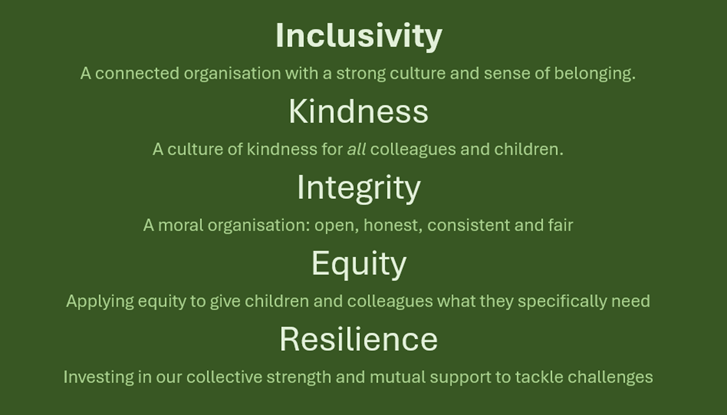


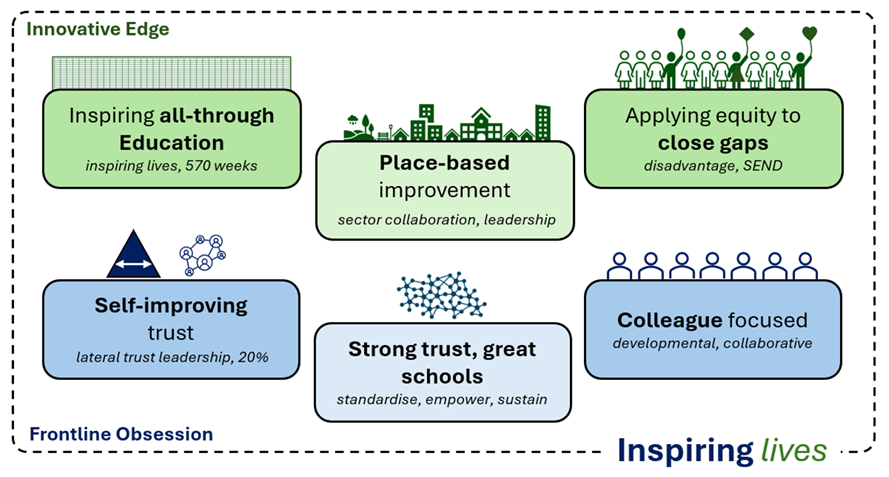

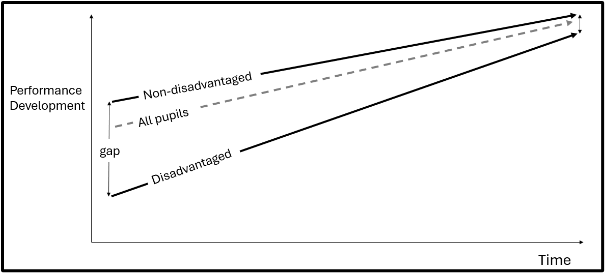











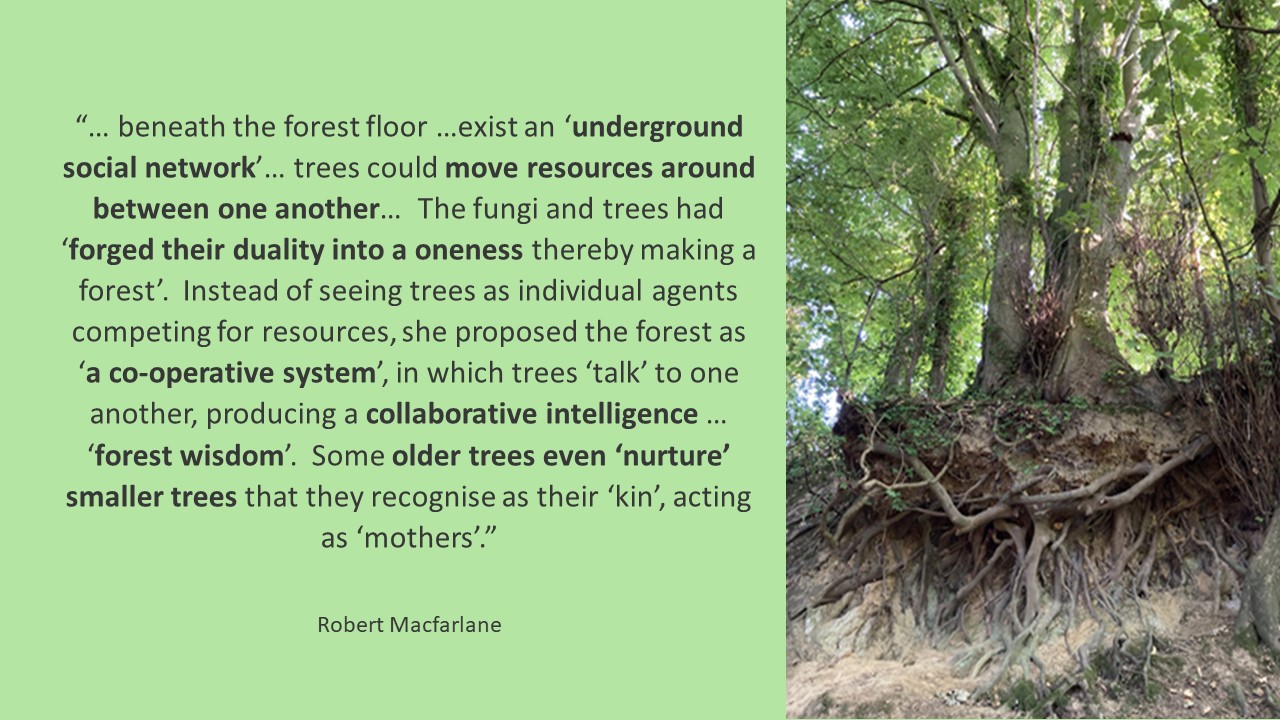





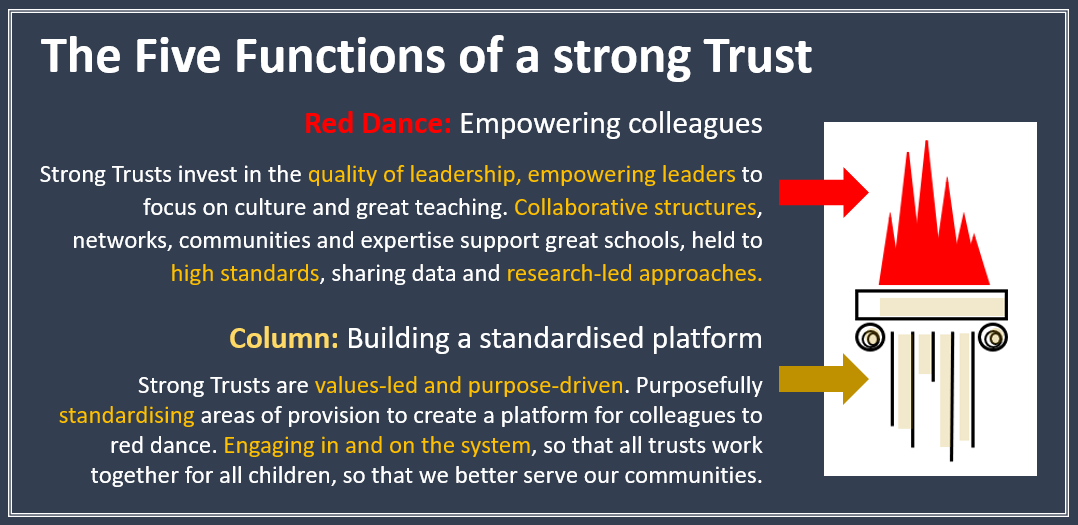
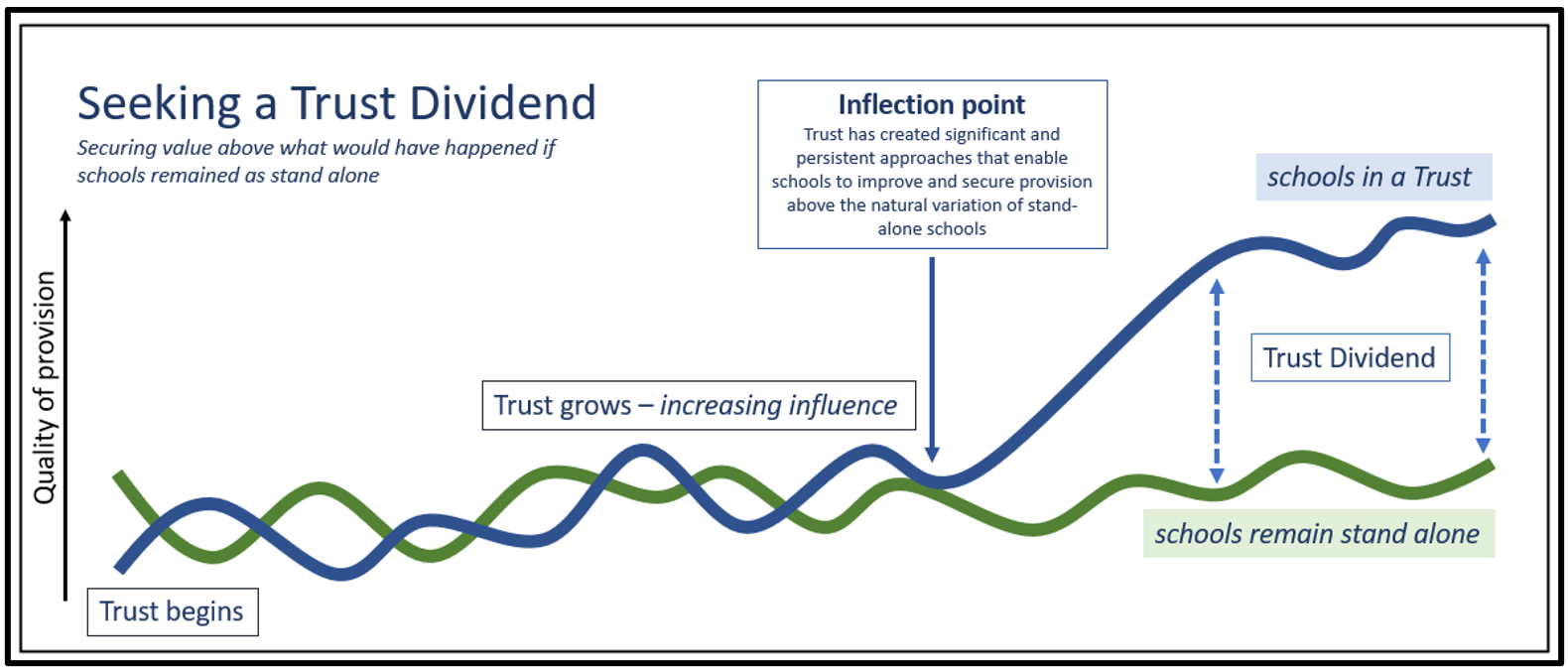


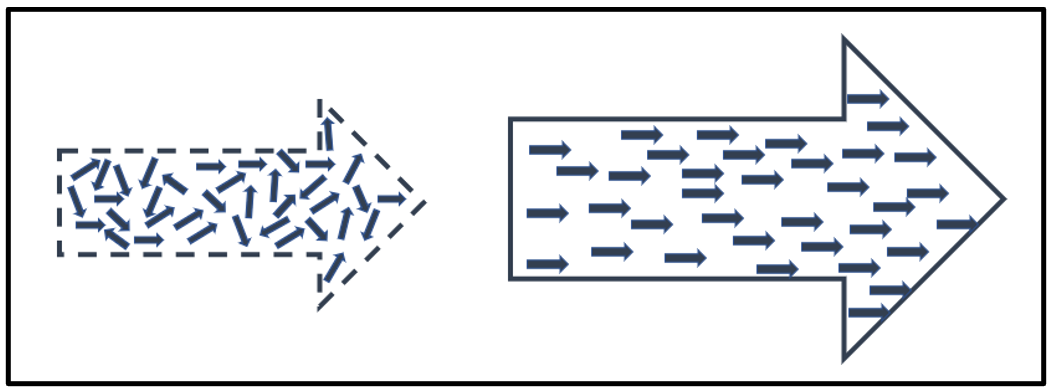
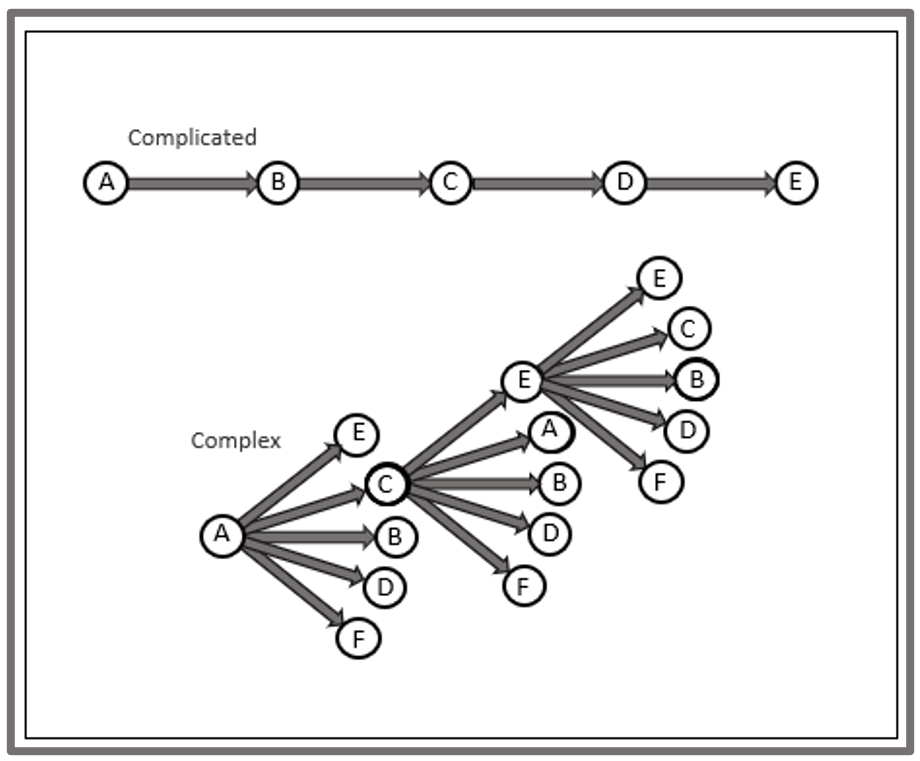


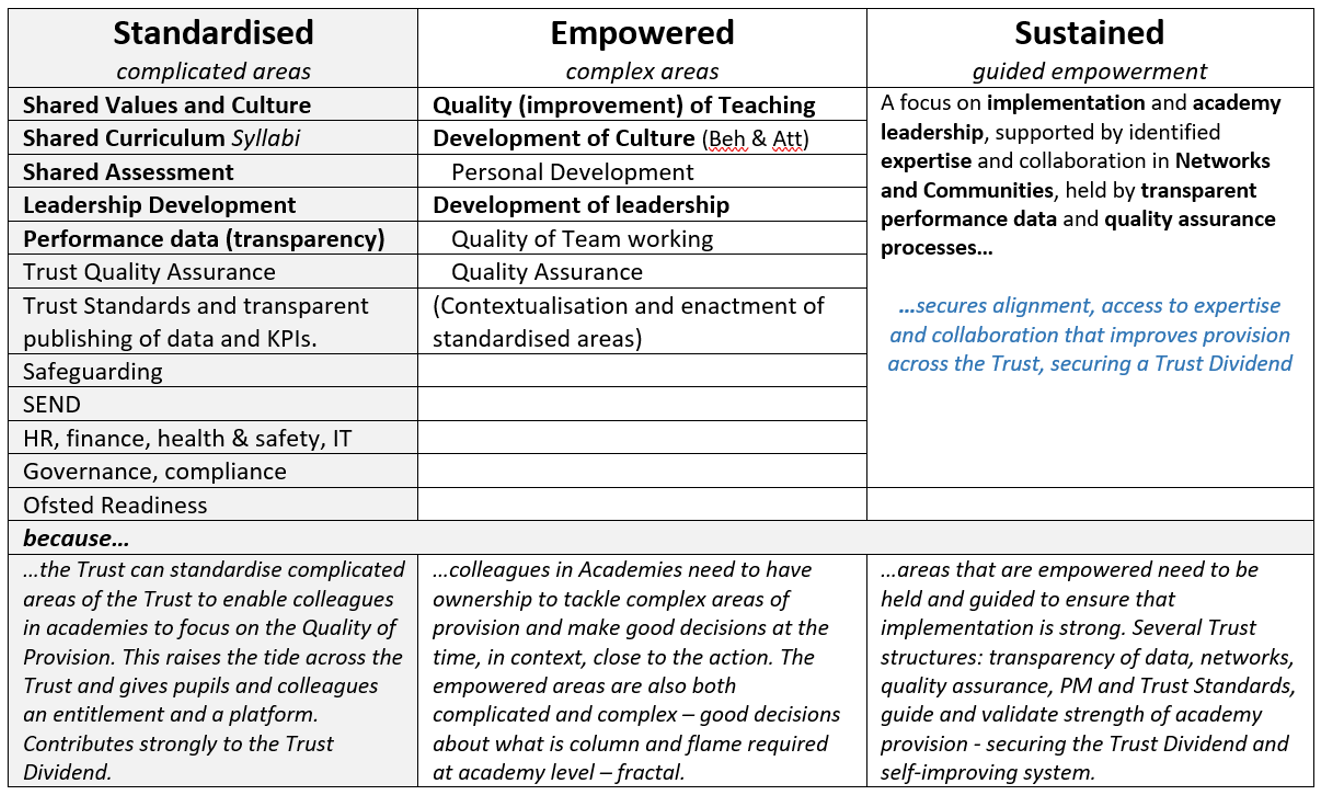
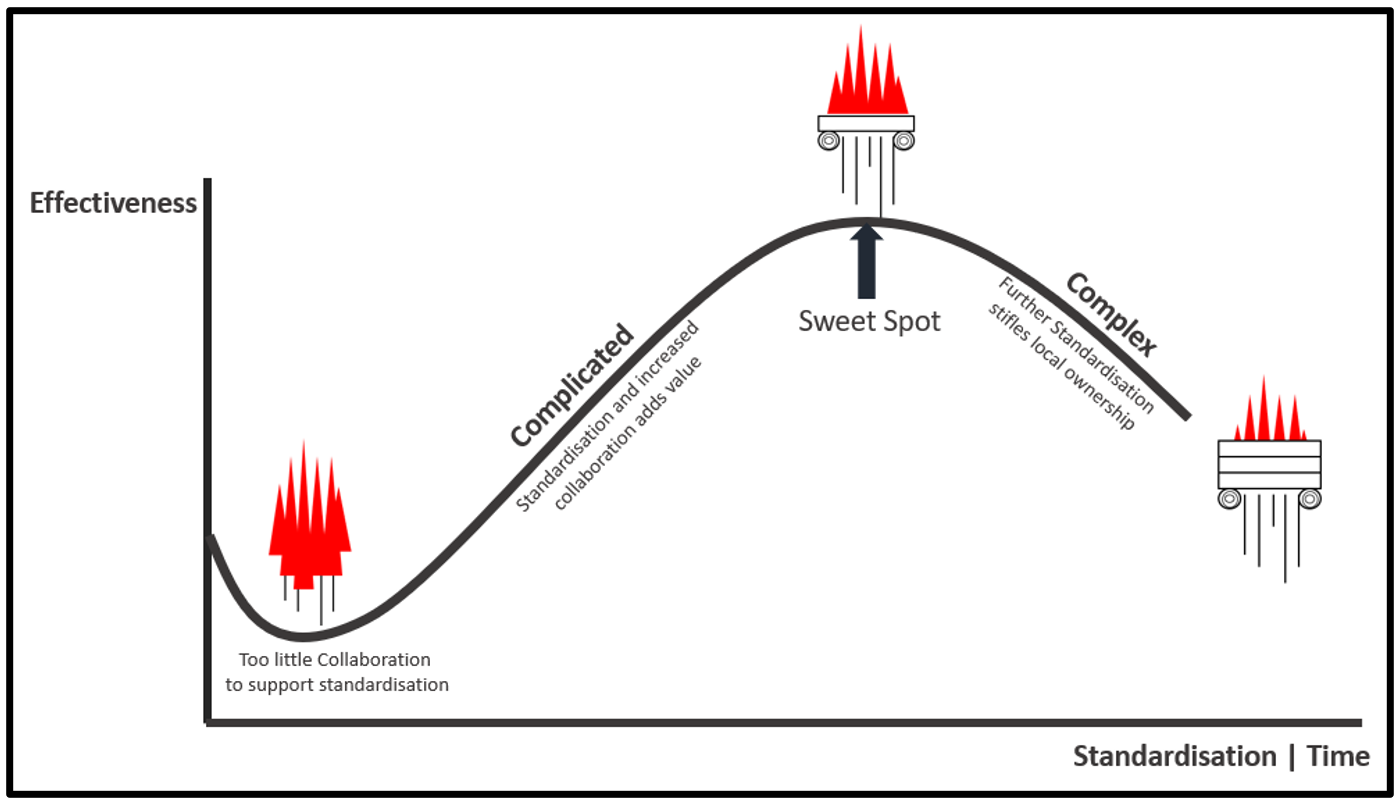


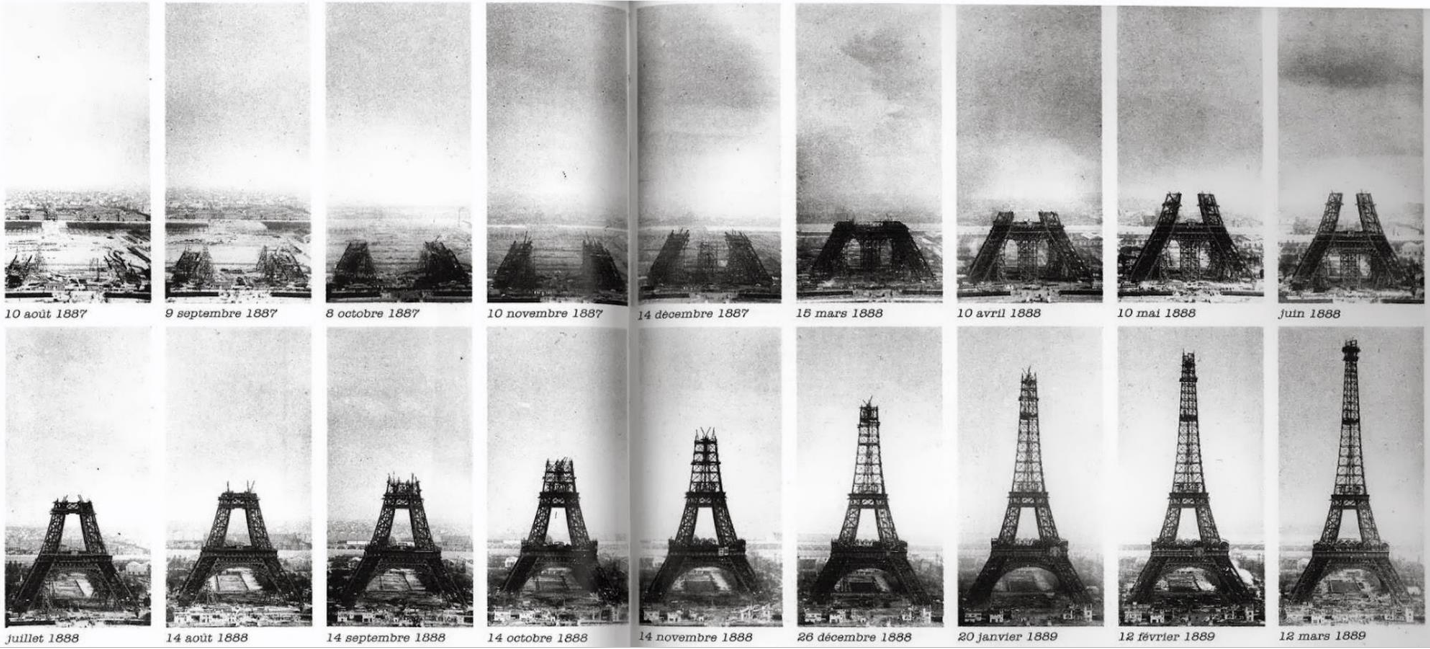





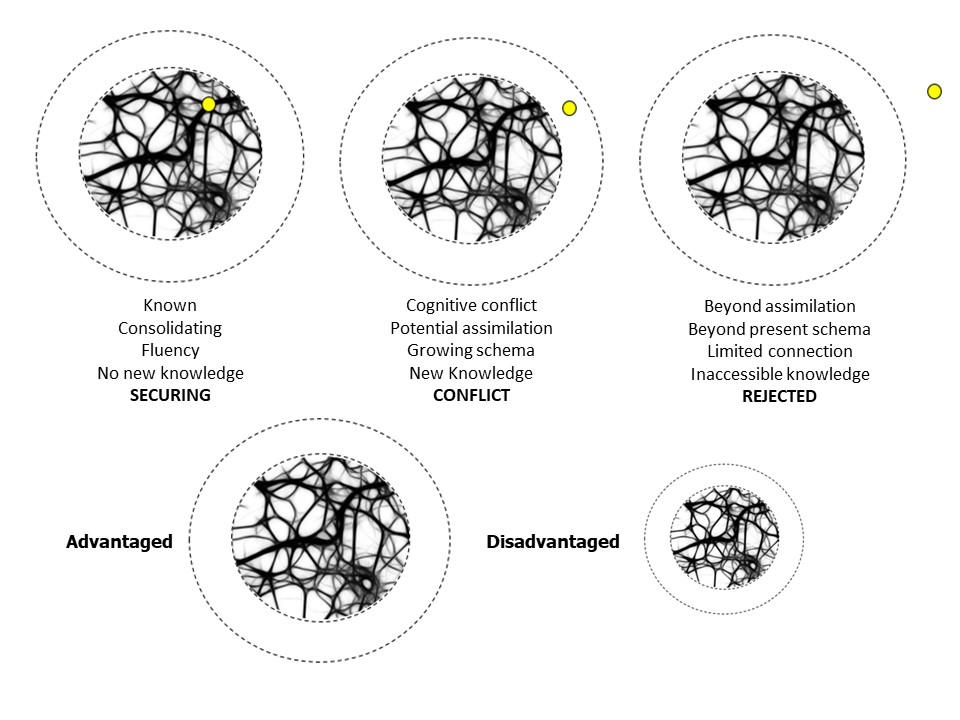

 Dan Nicholls