Igniting identity | circumstance and happenstance

Our self-identity forms over time, shaped by our experiences and interactions, particularly in our formative years. It is not a uniform development of self, but rather one that is punctuated disproportionately by high impact moments. These sit in our backstories, having ignited our identity and shaped who we have become.

These moments are often subtle, quiet experiences of awe and wonder: a sudden realisation, both unsettling and exciting, that the world and our role in it is not what we thought. In these moments of alchemy, brief serendipitous collisions create a hiatus between our old and new self-image.

“…in moments of alchemy, brief and serendipitous collisions, the beautiful texture of interwoven lives. There are many seeds of genius in the world, we must nurture as many as we can.” Helen Lewis
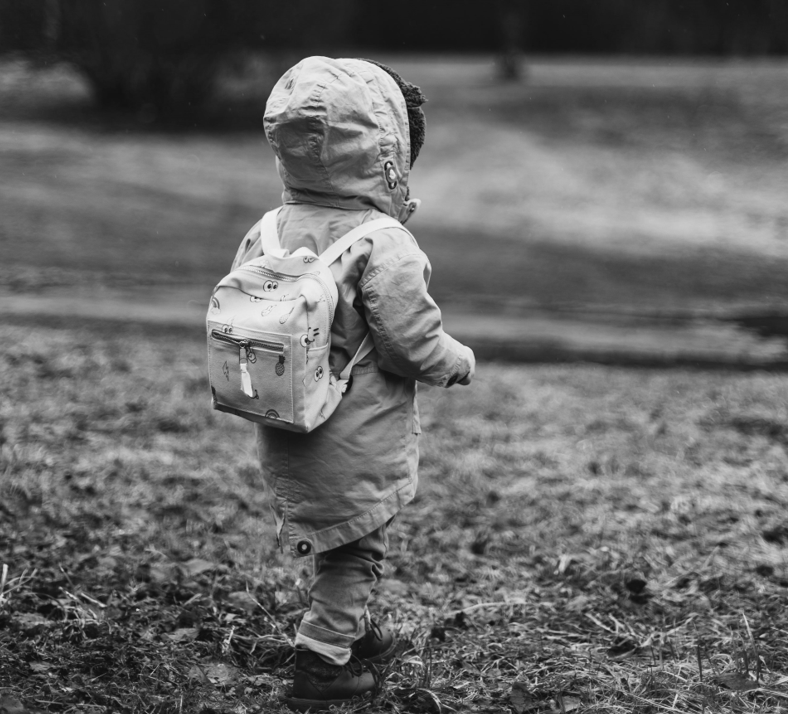

Circumstance and happenstance

The development of self is determined by our context, upbringing and by the influential adults and peers that we look to through childhood: an on-going influence of circumstance through our formative years.

But much, arguably, is happenstance, serendipitous moments that build our self-image. Brief events, often remarkably small, that disproportionately shape our lives. Rather awkwardly, they are often surprisingly quiet, private moments of self-realisation that are invisible to the provider.

“The smallest act in the most limited circumstances bears the seed of boundlessness, because one deed, and sometimes one word, suffices to change every constellation.” Hannah Arendt

Yet for some children the vagaries of life’s happenstances are less frequent, less influential or much less accessible. It also depends on a child’s circumstance and their pre-disposition to act on these moments. Whilst our childhood sets the conditions and the circumstances that influence our predispositions, the brief moments, the happenstances, disproportionately explain who we become.


Predispositions

Will, Should, Might, Could, Won’t, Can’t

Our context and circumstance, whether consciously or unconsciously, determine our predispositions and the strength of our self-agency. For any given aspect of life we align to one of the following dispositions:

I Will  …. I fully expect to do this, unswerving, predestined, locked in, self-fulfilling.

I Should … Highly likely, people like me do things like this (reinforced by peer status).

I Might … Entirely possible and within my gift, requires a step forward, focus and resourced adults.

I Could … It is possible, but could be difficult to achieve – requires ignition, support and must be followed by resource.

I Won’t … People like me don’t do this, locked out, keys hard to find, and not sought, no capacity or resource, unable to see the future or be part in it.

I Can’t … Not possible, nobody like me does things like this, psychologically and materially forbidden.

If you are under-resourced and have experienced much less privilege, then too often your agency is limited to the bottom few dispositions. This offers a form of immunity to moments of ignition and even if ignited a lack of resource to follow your triggered passion. In a world of privilege, however, you occupy the top few dispositions: emboldened to accessible experiences and open to life-changing moments. And yet, ‘ambition’ is equally distributed, but enhanced or stifled from birth and perhaps before birth.

If you are lucky enough to be born in a world made in your image, you probably think of a failure as an obstacle on the path to eventual success. If you are a marginalised person in any way you internalise that failure more closely.” Elizabeth Day


Moments of wow… igniting identity

Regardless of who we are there are moments we witness that change our passions, our identity and motivation for what we wish to become…

“But the moment that changed everything came on 29 July 1992 … the Barcelona Olympics. Chris Boardman was about to go in the final of the men’s individual pursuit. I sat in front of the TV and watched him … Four and a bit minutes later, Chris had overtaken his German counterpart and become Britain’s first Olympic cycling gold medallist in 72 years. I was 12 and knew straightaway I wanted to emulate his feat. Another 12 years later I did just that.” Bradley Wiggins

…or influential adults who we are desperate to emulate…

“When I’m 13, my mum gives me a load of photos that she’s found. There he is, in his cycling kit, racing. It’s a definite “Wow!” moment, like he’s been brought to life in my hands. Those photos become my greatest treasure. The closest connection I could have with my father was by following in his footsteps” Bradley Wiggins

…or experiences that ignite our identity…

“My love for cinema began at a very early age, as early as I can remember… I was just a little kid in a darkened theatre, and I remember that beam of light just cut across the room and I remember looking up, and it seemed to just explode on the screen. … and suddenly, the world was so much larger than the one that I knew … it opened my eyes. It opened my imagination to the possibility that life could expand far beyond the boundaries that I then perceived in my own life.” Tom Cruise

“Making films is not what I do, it is who I am.” Tom Cruise


Owning the future

How far are children able to focus on the future? If you exist in an under-resourced world where you seek to survive the day, the week, your effective horizon is limited, perhaps irrelevant to you: there is no bandwidth to contemplate your future. This fundamentally forces you toward the weaker predispositions, I Won’t and Can’t, and breaks the connection between recognising that the efforts of now are an investment in next. The future will act on me.

Resourced children are able to make the investments now, fill their lockers and are typically compelled to do so, supported to strong dispositions, I Will and Should. I create my future.

To be or not to be

To be or not to be, that is the question that children wrestle with as they navigate the world. We know, though, that some children have much less capacity to be, forced into a not to be mindset. Growing in a world that tips the odds against you, denies a starting disposition, or ladder to, ‘Will, Should, Could’ and restricts the under-resourced to ‘Can’t and Won’t’. Only the application of equity can offer a ladder and break the cycle.

Lockers filled with belief

In every aspect of a child’s life, a child holds a locker of self-belief. Advantaged children have bursting lockers, filled by circumstance and opportunity, narrated by resourced adults, affirmed through experience. The lockers of under resourced children are sparse, short on belief, encouragement or affirming experiences. When they look to their lockers for self-confidence and self-belief they are encouraged, perhaps compelled, to step back, to not take risks and internalise the failure. We must be better at filling the lockers of under-resourced children.

“When you are born into wealth and privilege, you inherit a plan that outlines the paths ahead, indicating the shortcuts and byways available to reach your destination … If you enter the world without such a map, you are bereft of proper guidance. You lose your way more easily.” Elif Shafak

Chasing status

What you become depends largely on who you find yourself with. We measure status on those around us, typically the 5 peers that we spend time with that we look to and derive our own sense of status. Our belief in what is possible is shaped by our peers, and our schools are the crucible for these interactions.


Our verbal quota

“…we speak about 16,000 words a day, that is a lot of chances to tease, complain and criticise, but also to encourage, inspire and comfort. I know I can do a lot more good with my verbal quota.” Matt Woodcock

In every interaction, exchange and conversation our words are a powerful force for good (or ill). We never know for certain the weight of our words on a child, but we do know that children are adult-watchers, seeking to decode the world around them. Awkwardly or helpfully, in every interaction our words always carry weight and have influence, intended or otherwise. Often just 13 words deliver a self-belief that becomes unshakable and propels a dopamine-soaked desire to follow a passion:

“…I was introduced to a club coach, Stan Knight. Immediately he took hold of my wrist. “I’ve never felt a pulse like it,” he said. He looked me in the eye – “You’re going to be the best cyclist this country has ever produced.” … I liked the fact he had belief in me… Stan didn’t tell me I was special because of who my dad was. He told me I was special. Me.” Bradley Wiggins


Inspiring lives

“I began to realise how important it was to be an enthusiast in life. If you are interested in something, no matter what it is, go at it full speed, Embrace it with both arms, hug it, love it and above all else become passionate about it. Lukewarm is no good.” Roald Dahl

As educators we chose to inspire lives – and yet we spend little time understanding how children exist in the world or how their lives unfold through their circumstance and happenstance. How do we ensure that curiosity, hope and ambition is a feature of all childhoods not just those that are privileged?

Perhaps we should maintain a greater sense of awe and wonder, of possibility and back it with the application of equity and protect the flickering flames of hope, so that more children can embrace an interest with both arms. If we are to ignite a child’s self-identity, so that they have agency into their adulthood, we must create greater opportunity and apply the equity that will give all children the choice to follow their dreams.

...inspire lives with greater opportunity and choice.


Dan Nicholls | December 2025

Towards Social Justice

Featured

Every system is perfectly designed to get the results it gets.”

Our education system is perfectly designed to secure and maintain the conditions that accumulate disadvantage over time. A system so ingrained and accepted that we unwittingly perpetuate it and see the results as inevitable. Against the backdrop of the fracturing social contract, the aftermath of the pandemic and in darkening times, the cogs of the system continue unabated, galvanised and renewed to further widen gaps and disenfranchise an ever-larger number of children.

To not feel belonging is to experience the precarious and insecure sense of an outsider.” (Owen Eastwood, 2021)

The system is strengthening, forging greater division in society precisely at a time when individual agency and mobility is decreasing. A system that has powerful ways of telling children that they do not belong, playing out asymmetrically to make life precarious and insecure for far too many. A national crisis rages, children are becoming more invisible, opting out of education and they are being pushed to the edges. Those who most need school are not there, absent and missing from the very place that could offer social justice and opportunity.

We need to create a system that is for all children, a system of opportunity that is on their side, a place to belong, where equity gives them what they need. A system where we go beyond just caring about closing gaps. Recognising that the system and our accepted norms often exclude children whose experience of multi micro-exclusions, accumulate disadvantage and erode self-agency.


Using our architecture to tilt the system towards social justice

What if we have more power in this system than we think, than we have come to accept? What if we were to use the architecture of our system, the maturation of groups of schools connected within Trusts to tilt the system, to re-align and re-engineer the system? Taking braver, more courageous decisions that unswervingly seek social justice and challenge the status quo. We choose to do this not because it is easy, but because it is hard; a loonshot.

Never tell me the odds.” (Han Solo)

What if Trusts, engage in deep(er) connection and collaboration, offering the security and permission to go after something that really matters? Trusts working together for all children transforming and re-aligning the system to secure greater social justice for disadvantaged learners.


It is not that we don’t care, it is that we do not care enough

… because if we did we would seek to influence, adapt, re-orientate the very system that we are part of, that we are responsible for; understanding the we are the system. What we presently do as educationalists is not working, gaps are growing, we are getting no closer to social justice.

Ubuntu – a quality that includes the essential human virtues; compassion and humanity: I am what I am because of who we all are

We need greater expressions of compassion and humanity to overcome the forces in our society and schools that insidiously widen gaps. We need to be more ferocious, more tenacious in creating the conditions that enable our disadvantaged learners to flourish. This requires educators to be more honest, to ask uncomfortable questions and make braver decisions to enact greater equity: a deeper expression of care.


Social justice as the aim, social mobility as an outcome.

Social mobility” is about escaping disadvantage, whereas social justice is about eradicating that disadvantage in the first place. Education as a tool for social justice ought to be the goal of any civic-minded (society) university, and indeed our collective goal as a sector for our widening participation efforts to be capable of actually producing meaningful change.” (Claire Sosienski Smith)

Seeking social justice and how our system increases participation, connection, opportunity and experience is better placed than initiatives focused on mobility, which seek to enable relatively few individuals to escape the system, to defy the odds. We need a bottom-up investment in all individuals; we need to change the rules of the game with social justice as the goal and social mobility as an outcome.

Social justice: Access, Equity, Diversity, Participation, Human Rights

Seeking social justice requires us to work in the system at an individual-level to integrate and engineer connection between all attainment bands and groups, and through this deliberate act of inclusion, create supported opportunity, participation and experiences that close gaps.  Reaching in and applying equity to lift lives; counterintuitively, one by one. A redistribution of esteem to increase the number of those that see they are able to live lives of decency and dignity.

“…we need a redistribution of esteem… to live lives of decency and dignity, winning social esteem. …(to) travel the road to 2045 with purpose, dignity and accomplishment.” (Peter Hennessy)

We need educators and leaders to act within the system, as agents of change, tilting our system to achieve greater social justice. Leadership from the inside to enact the equity required to create paths that have heart and secure social justice; heroes wanted.

“Look at every path closely. Then ask yourself, and yourself alone, the question: does this path have a HEART?” (Carlos Castenada)


Equity over Equality | giving what individuals actually need

We are baffled and compelled by equality, but equality is a brilliant way to maintain our perfect system. Equity in contrast is not offering the same to all, but securing what individuals actually need. This means that we need to be more comfortable with doing different, doing more and meeting the ‘actual’ needs of individuals so we give ourselves a chance at closing gaps and match fixing the system. Turning, where we can the system on itself.

The system is so ingrained, accepted and normalised that we are often blind to the influence of the system, and complicit in it. We do have a choice and the agency to actively disrupt the system, to apply equity and redirect the power of the system to level the playing field.


The multiplying effect of small acts | the power of the crowd

“Never doubt that a small group of thoughtful, committed citizens can change the world; indeed, it’s the only thing that ever has.” (Margret Mead)

The power of the crowds and the accumulation of small acts, of heroes who are alive to the system, call it out and tilt it with small and large actions towards those that need it most. Seeking to privilege disadvantaged learners in all that we do, redesigning our system for social justice.

“It is a matter of shared purpose and sustained application.”(Peter Hennessy)


Every child needs at least one person who believes in them | advantaging the disadvantaged

We need a system where all children have someone who believes in them. To grow up advantaged is to have adults who deeply believe in you, hold you to high expectations, encouraging (demanding) participation in supported opportunities over time. A childhood that encourages risk taking, whilst holding a safety net and offering commentary, narrating the journey through life, reaffirming and strengthening a child’s internal locus of control incrementally, day by day.

And in this we see what must be done, to re-design the system to enable disadvantaged to participate, to have supported opportunity and wider social connectivity, with a back stop of someone who believes in them, who creates a safety net and support them as they interpret life. Get up, go again, you have agency, you are always invited to dance.


Help me, Obi Wan, you’re my only hope

Educationalists need to work together to propagate a movement that re-engineers and re-aligns our system, increasing our impact on the everyday experience of every child, bottom up; great schools in strong Trusts, meeting need. So that together we realise and enhance a collective Trust Dividend that offers hope and achieves greater social justice for all children and particularly those presently or previously experiencing disadvantage.

“To be hopeful in bad times is not just foolishly romantic.” (Howard Zinn)

We need to seek greater collective endeavour that goes upstream in search of social justice for the many, demonstrating through our actions our deeply held desire to do more than just care, to be braver and to join in a quest that accumulates advantage. A quest that enacts equity through education to lift up disadvantaged children and make a difference, one life at a time, knowing that this collective sector wide effort might just tilt the system to something that befits our personal values and the collective desires for our sector.

What if we decided to seek greater social justice and re-engineer our system to…  

  • Privilege disadvantage everywhere and in everything? Prioritising disadvantage learners in all decision making, in provision, in opportunity, a culture of ambition for all children, going beyond just caring. A system, Trusts and schools that firmly privilege disadvantage in all that they do, such that it becomes the norm; a system perfectly designed to close gaps.
  • Measure what we really care about, what really matters? Securing the attainment and attendance of disadvantaged learners. Measure it, target it, expect it, publish it, reward it, make it the accepted and expected currency of our sector. Securing high attainment because grades really matter and attendance because there is no point in any other actions if they are not there; disadvantage even over, attendance first.
  • Apply Equity through education? Shaking the shackles of equality to give children what they specifically need. Doing differently by individuals, securing this as the normal; using the advantaged upbringing as a measure for the amount of equity required to tilt the system.
  • Seek deep and sustained participation for all children? Measure it, prioritise it, demand it and invest in it. Using the sharp elbows that create the supported opportunity for advantaged children and over-match for disadvantaged learners. Beyond enrichment, this is about entitlement for those who presently feel the opposite of entitled.
  • Mix all attainment bands and create a strong system of inclusion for all children? Actively addressing the school within a school phenomenon, that creates alternate realities and routes. Individuals measure status and standards against those that we are closest to. We must create the connections and influences that close gaps.
  • Deeply understand individual lives?  Working to understand each child so that they connect, belong, participate, feel success, thrive. Every child needs to have at least one adult who believes in them. Magic happens when all colleagues believe in all children.
  • Seek bottom-up mobilisation, a movement? Focus at the level of individual and mobilise the many in this shared endeavour to lift lives, one by one. Creating the conditions for a movement to lift up a generation. A counterintuitive focus on individuals and schools, in Trusts, to re-engineer our system toward social justice, seeking irreversible change in our society.

To do so is to be a bit more pirate and seek good trouble, rather than conform to the system and remain in the Navy. If not now, when, if not you, who?

“I’d rather be a pirate than join the Navy.” (Steve Jobs)


Dan Nicholls | October 2023