Be More Pirate | time for good trouble

Amidst the turbulent waves of change we must re-imagine what education and our system can be; it is the opportunity of now, because next matters. It is at this point in our maturing sector that we should venture for greater coherence, collaboration and connection. By embarking on shared quests, we can better navigate toward a new North Star for all places and plunder our shared capability for all children. We need to be more pirate.

“Pirates trouble the edges of society and make enough shock waves to influence the middle ground. Trouble is their tool, although it’s more accurate to call it good trouble.” Sam Conniff Allende

Next needs to be more collective, more adjoined, more than the sum of the present parts, because too often, we are in parts. The view from the crow’s nest reveals inequity and that our pieces rarely fit well to serve our places and the children that need us most. It is the incongruousness of our pieces, the dominance of ‘I’ over ‘we’ and conditions that drive isolationism and competition that is constraining our collective potential. As system altruists, and sector architects we should rise and act on and not just in our system; seeking good trouble.

“…acting on the system gives us an opportunity to think differently. We should think of leadership as the ability to shape the system.” Leora Cruddas


Charting new waters | shared mutinies of good trouble

There are times in history when a group of like-minded individuals chart new waters and from the fringes find new ways to live and be; creating a movement based on new rules, a new code. Pirates challenged the world-order and flipped the accepted shared truths about how things could be, they created a movement so successful and agile that their approach and thinking might just influence and provoke us into our next-phase; toward better. This is our time to be a little more Pirate to strengthen and connect Trusts, to rebel, rewrite, reorganise, redistribute and retell the hell out of what could be.

Whilst pirates get a bad press, there is significant evidence that these merry men (and women) actually transformed the world and challenged the oppressive status quo. The golden age for pirating 1710-1740 was progressive and counter-establishment – it provided the basis and conditions for significant change. Now as it was then the need for change and a shift of ownership is required.” Sam Conniff Allende


We are the System | Charting new waters, re-finding old maps

There is a significant opportunity to re-imagine the future. There are waters, territories and opportunities, for plundering that could create an education system more aligned with the needs of all children and the places we serve. Whilst our educational landscape is fragmented, the forces that have pushed and pulled academies together have also created the conditions for leaders to better shape our system, to act on it, not just in it. And we must, because we are the system and these are our shared waters.

We exist in a period of uncommon opportunity, where there is now enough maturity in our system, beyond the stormy waters of early academisation, and within calmer waters, for greater horizontal collaboration and shared responsibility for all children and every place. There is no Armada coming over the horizon, so it is time to be more pirate and engage in good rebellion, small arrrrgh.

“I’d rather be a pirate than join the navy” Steve Jobs

The next phase requires greater alignment of the soft and hard power within our system. And more crucially secure a shift in our intrinsic motivation to collectively do better for all, attaching greater currency for collaborative place-based leadership. Stronger extrinsic motivators as part of the new code, held by us, alongside regulators will galvanise the change we seek.


Treasure worth seeking | next-phase thinking

Our sector needs to do more to address the inequity in our society and seek greater social justice. We must better balance the haphazard opportunities that are not evenly distributed in our communities or between peers even in the same neighbourhood. We need to be braver and bolder to build our system to liberate and empower those who find themselves adrift and stranded in life. A band of educators collectively motivated to apply equity and build provision for those that most need an anchor.

The next-phase must build ‘great Trusts’ driven by a Trust Improvement Model that places Trust and place-based improvement at the heart of our mutiny. As we seek to connect and collaborate for the good of all children and to ‘educate a place’ the increased openness and connection will concurrently build stronger Trusts within a more capable system. This is the real treasure worth seeking: Trusts, in partnership, unearthing and aligning much greater capacity for securing social justice and inclusion.

“A major benefit of effective ‘place-based’ reform is seen as the provision of essential “glue” or coordination, by mobilising a collective sense of responsibility to reduce competition which drives local hierarchies and decreases the effects of disadvantage.” Cousin and Crossley-Holland


A new look crew required | Pirating, banding and plundering more capacity

We need a new look crew, educators banding together, collectively questing, compelled by a stronger yearning for the endless immensity and possibility of the sea ahead of us.

“If you want to build a ship, don’t drum up people to collect wood and don’t assign them tasks and work, but rather teach them to long for the endless immensity of the sea.” Antoine de Saint-Exupery

Captains and crews must invest beyond the present boundaries, giving time and resource, committing to plunder and better directing the existing capacity towards those most adrift. New crews know that the real treasure is in levelling-up, in greater social justice for all, that is not constrained by our present boundaries. Re-finding geographic territories, places and communities across the land can offer greater opportunity and choice.

“There is one idea that whenever it has been applied has had the power to change the world. Cultures that shift from ‘I’ to ‘We’.” …restore the Common Good in divided times.” Jonathan Sacks


A new Pirate Code | seeking good trouble, a sector-led mutiny for our next phase

  1. “We, not I, Captain.” The next phase is one that must preference ‘We’ over ‘I’. To take shared responsibility for the education of all children across communities, not just those closest to us. A fundamental adoption of a ‘we’ mindset as the basis of our next phase.
  2. Build a values system that directs energy to that which is worth having. A sector that rewards those that connect and collaborate to achieve value beyond themselves and their time. A new values system that rewards those who close gaps for children and the gaps in our places, those who create coherence and partnerships to plunder resources and expertise for the greater good.
  3. Banding crews together. As system architects we must prioritise meaningful partnerships and collaboration between Trusts, Local Authorities and community partners. This is place-based collaborative leadership that connects crews who invest, across boundaries, in informal and formal alliances, releasing expertise. Place-based, because children grow-up in communities not in Trusts and their success and security is bound to that of their peers and their community.
  4. Unearthing old maps, seeking lost territories. We need to re-consider our boundaries, around the importance of ‘place’ to collectively “educate a city, a town, a county… a coherent locality.” By seeking to educate a locality we adjoin partners in shared endeavour to direct, release and use our collective resources and intelligence, to add more capacity and serve the whole. Kintsugi, repairing broken pottery by joining parts with gold, treating the repair as part of the history of a place, strengthening the whole; seeking gold.
  5. Captains and new crews needed. Into the next phase we need braver educators willing to navigate, beyond their waters, and venture into partnerships for the greater good of all children, in all communities. This requires stronger system leadership and collaborative structures that extend beyond settings and to depth, to educate a place.
  6. Connecting and strengthening Trusts. As Trusts work more in neighbouring waters, engaged in place-based improvement, with other crews, we have the basis for a Trust Improvement Model, a form of co-opetition. The next phase requires the development of great Trusts, improving in partnership, to secure greater social justice. Just as Roman concrete is strengthened by exposure to sea water, Trusts will improve through deeper connection beyond their waters: symbiotically.
  7. The treasure we seek, championing those unmoored and cast adrift. We should seek to win for all children. The success of our pirating and joint questing will be measured by how far we close gaps, particularly, the attainment and attendance of those under-resourced, lost at sea and those with needs that we are not yet meeting.  Our children and communities need a system and a collective quest for inclusive excellence. We should deliberately apply equity to close gaps across communities and not just seek the escape of a few.
  8. The laws of the sea. We care about what we measure and reward. Our accountability structures and regulators must align to reward the new code. Only if we align soft and hard power toward this quest and re-orientate the laws of the sea to articulate a new North Star, will we create the conditions where educators who boldly navigate by these stars are encouraged.

Setting Sail | being bolder and braver

“The moment we turn outward and concern ourselves with the welfare of others no less than with our own, we begin to change the world in the only way we can, one act at a time, one day at a time, one life at a time.”Jonathan Sacks

So, we should set sail, hold ourselves and each other to the new pirate code, seek good trouble and venture for greater coherence, collaboration and connection, so that we better serve those children stranded in our system and under-served by our places.

Of course, we don’t need everyone, we just need enough. Movements and mutinies tend to require surprisingly few pirates, engaged in counterintuitively small actions to transform our territories and secure greater social justice.

Time to be more pirate and seek good trouble, it is our time at the edge…

“It’s St. Elmo’s Fire. Electric flashes of light that appear in dark skies out of nowhere. Sailors would guide entire journeys by it … they thought they needed it to keep them going when times got tough. … We’re all going through this. It’s our time at the edge.” Billy


Dan Nicholls | March 2025

Our Future | building culture

The next stage of our Trust will seek to connect and empower all colleagues as one organisation. Colleagues trusted to transform lives, so that children thrive and flourish now and into adulthood. We will use the power of education to unlock and inspire young lives, particularly for those children who carry more than others, in these difficult times.

“There is no trust more sacred than the one the world holds with children.” (Kofi Annan)

Building on strong foundations

Your expertise and commitment have built the platform on which our Trust now stands. Because of this work, over time, you have developed provision and approaches that are making a difference to the lives of children and is the foundation for our next stage. On this maturity we will seek greater influence on the lives of colleagues and children, strategically plotting and shaping our path, together.

In the next stage there are key approaches and principles that will establish a cultural model that will inform our relationships, interactions and underpin the strategy. This will build the conditions, culture, and climate for colleagues to do meaningful work. We will prioritise psychological safety for colleagues, so that they feel greater belonging and to be given permission to do work that transforms lives. Offering the opportunities for more children to flourish, to have a sense of wonder and be wonder-smitten: I am here, that I may wonder.

“To live wonder-smitten with reality is the gladdest way to live.” (Maria Popova)

One organisation

We are one organisation, serving children, aged 2 to 19, responsible for all children, with every school and colleague woven into a collective cultural fabric: school is trust, trust is school. A collection of great schools, meeting need, held in a strong trust.

Our culture matters to us. It is built and shaped, in every interaction, everywhere, all the time and ever onward. Our cultural landscape is carved over time towards our shared purpose and is guided by deeply held lived values and shared rituals and routines. It is shaped and measured by how far colleagues feel they belong, have status, and build esteem. How we choose to spend time, the constellations we form and how colleagues connect will create our culture.

“The stars we are given. The constellations we make.” (Rebecca Solnit)

Making good decisions together

We make good decisions together. We seek and value expertise across our schools and the Trust as a whole. We are open and transparent as an organisation, making the best decisions we can, with the information we have, whilst seeking to do the right thing. We act without fear or favour.

First say yes. If a colleague feels the need to ask for support or resource, we should say yes, first, and work out how, later. Paying forward as an exercise in collective endeavour and shared responsibility.

The second mistake. It is rarely the case that the first mistake matters, it is often the second or third that turns mistake into problem. Because we make good decisions together, are open and transparent we share and resolve challenges at the first opportunity. Almost everything becomes easier when things are shared, it builds trust, and importantly avoids the second and third mistake.

A Human organisation, valuing relationships

We make time to listen, learn and build relationships. Being present. This is about ensuring colleagues are known as individuals, individuals with a unique story, a story that is heard. Understanding an individual’s story allows us to weave collective stories into the future; generating a greater sense of belonging. How we treat anyone, is how we treat everyone.

Humans are beautifully contagious

Use time well, seek simplicity

We will seek to use time well. Deliberately prioritising time towards the Main Thing(s). Logically sequencing our routines and networks and creating simple approaches that focus on making the greatest difference. We will work to reduce unnecessary burdens on individuals, to be as agile and nimble as is appropriate to our scale. As simple as possible, but not more so.

We will seek clarity because it is kind. Humans like rules, it is clarity that creates safety. We will share all data and information transparently to understand performance and drive improvement, part of our joint endeavour and collective responsibility for all children.

Primacy of Headteachers, the drivers of change

We understand the importance and primacy of Headteachers. The strongest Heads are great with people, understand provision and lead with purpose, prioritising and implementing key strategies and approaches, over time, to enable colleagues to change lives. They are open and able to utilise the capacity of the Trust, and to add into the strength of the Trust; a mutually beneficial symbiosis that adds value.

We are the sum of our decisions

Our effectiveness could be simplified as the sum of all decisions, by all colleagues, all the time, everywhere across our Trust that either accumulates value, or not. Our role as Trust Leaders is to influence, nudge, direct, enable better decisions to be made more often, to deliver a dividend. We will continue to dance between what we decide to do together and where we choose to empower colleagues to act.

Deliberately choosing where to standardise and where to empower colleagues

We will continue to standardise aspects of provision, to become more than the sum of our parts. Standardising, building things together, has tremendous power to liberate, support and give permission (and opportunity) for colleagues to focus on the Main Thing(s); creating a platform for colleagues. Our shared, common curriculum exemplifies the power of this collective endeavour.

Leadership is the art of giving people a platform for spreading ideas that work. (Seth Godin)

We will standardise and empower deliberately and strategically. Holding ideas in tension, informed by context, because context matters; it is not a compromise. Whilst recognising the importance of standardisation and of empowering colleagues on platforms, we will not seek to over dictate the complex areas of provision where experts and professionals make decisions, informed in the moment, in context, for their community.

“…under the conditions of true complexity – where unpredictability reigns – efforts to dictate every step from the centre will fail. People … require a seemingly contradictory mix of freedom and expectation.” (Atul Gawande)

We understand the influence we have on others

Back to the Future. Whilst Marty McFly travelled back in time and understood the future consequences of his actions, we are much less conscious of our influence on the future. Whilst we cannot foresee the future we can, together, create the conditions, sow the seeds, prepare the ground for humans to flourish and for more good than bad to happen. We, collectively create a crucible of serendipity where colleagues shape what is possible. Lives are shaped by opportunity. Our collective capacity can and will transform lives, evidenced in the smallest acts, every day.

“The smallest act in the most limited circumstances bears the seed of boundlessness, because one deed, and sometimes one word, suffices to change every constellation.” (Hannah Arendt)

We are collaborative by nature

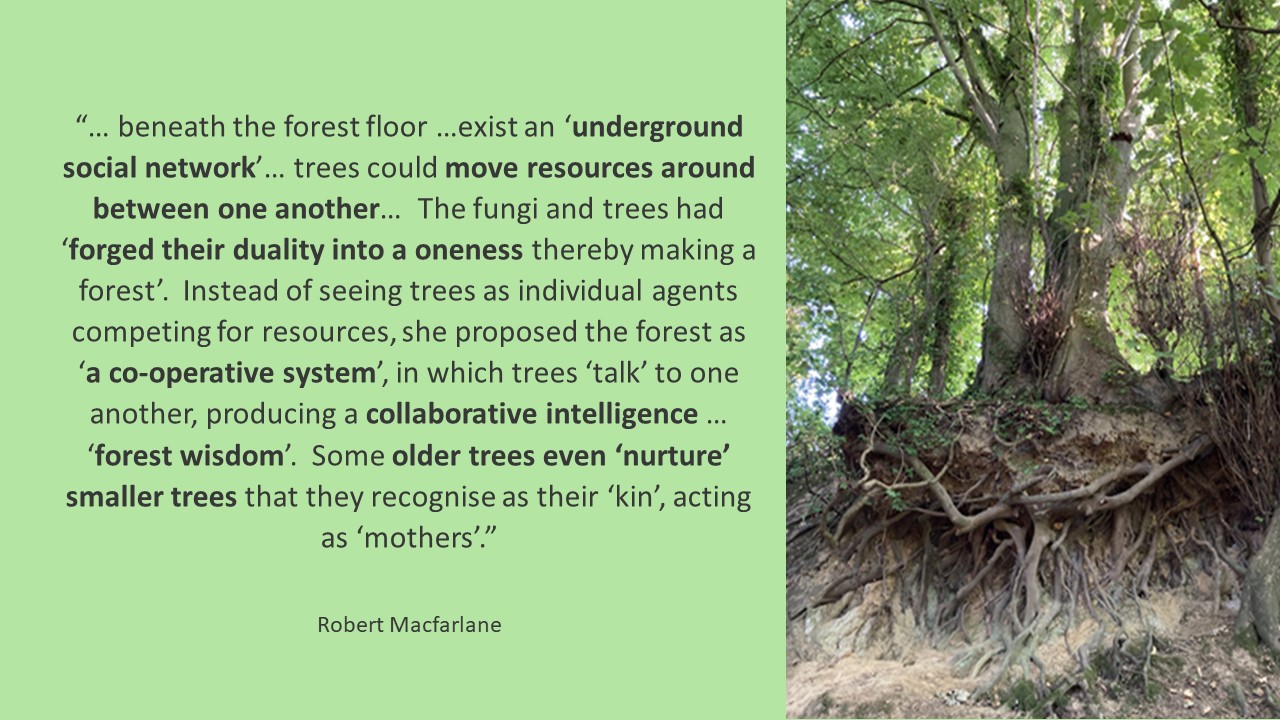
We will build on our existing collaborative architecture, our co-operative system, to connect colleagues with purpose and to each other, seeking collaborative advantage. Connecting colleagues within professional networks and subject/year communities, where hard and soft-wired collaboration secures collaborative intelligence and wisdom that becomes self-improving and irreversible. The biggest influence on colleagues is colleagues.

Getting today right and building for the future

Two speed. As we forge forward, we will build our future, based on where we have been, where we are, and toward what we seek. We will seek to get today right and the future right. We will seek change and improvement in months and years, concurrently.

What do we seek? We decide, next, together.


Into our future

So, based on the platform that you have built, we will work with humanity, humility and openness, to shape the future, together. So, at this time, as I join you as CEO, my optimism, hope and determination for what we will achieve is galvanised by the brilliant people in our Trust.

“When we build a culture of people who eagerly seek out and take responsibility, we build a culture that enables a special kind of resilient freedom.” (Seth Godin)

We have an opportunity to enable all colleagues across our Trust to collaborate, connect and feel empowered to make a difference. To work as one organisation, sharing responsibility, engaged in collective endeavour to secure greater social justice, particularly for our most vulnerable children, those that carry the most through life, and particularly at this time. A worthy cause.

“To be hopeful in bad times is not just foolishly romantic.” (Howard Zinn)


Postscript

There is no way to build high-performing organisations without a cultural model that drives the strategy. Or to put it differently, strategy without culture is just wishful thinking.


Dan Nicholls | July 2024

Towards Social Justice

Featured

Every system is perfectly designed to get the results it gets.”

Our education system is perfectly designed to secure and maintain the conditions that accumulate disadvantage over time. A system so ingrained and accepted that we unwittingly perpetuate it and see the results as inevitable. Against the backdrop of the fracturing social contract, the aftermath of the pandemic and in darkening times, the cogs of the system continue unabated, galvanised and renewed to further widen gaps and disenfranchise an ever-larger number of children.

To not feel belonging is to experience the precarious and insecure sense of an outsider.” (Owen Eastwood, 2021)

The system is strengthening, forging greater division in society precisely at a time when individual agency and mobility is decreasing. A system that has powerful ways of telling children that they do not belong, playing out asymmetrically to make life precarious and insecure for far too many. A national crisis rages, children are becoming more invisible, opting out of education and they are being pushed to the edges. Those who most need school are not there, absent and missing from the very place that could offer social justice and opportunity.

We need to create a system that is for all children, a system of opportunity that is on their side, a place to belong, where equity gives them what they need. A system where we go beyond just caring about closing gaps. Recognising that the system and our accepted norms often exclude children whose experience of multi micro-exclusions, accumulate disadvantage and erode self-agency.


Using our architecture to tilt the system towards social justice

What if we have more power in this system than we think, than we have come to accept? What if we were to use the architecture of our system, the maturation of groups of schools connected within Trusts to tilt the system, to re-align and re-engineer the system? Taking braver, more courageous decisions that unswervingly seek social justice and challenge the status quo. We choose to do this not because it is easy, but because it is hard; a loonshot.

Never tell me the odds.” (Han Solo)

What if Trusts, engage in deep(er) connection and collaboration, offering the security and permission to go after something that really matters? Trusts working together for all children transforming and re-aligning the system to secure greater social justice for disadvantaged learners.


It is not that we don’t care, it is that we do not care enough

… because if we did we would seek to influence, adapt, re-orientate the very system that we are part of, that we are responsible for; understanding the we are the system. What we presently do as educationalists is not working, gaps are growing, we are getting no closer to social justice.

Ubuntu – a quality that includes the essential human virtues; compassion and humanity: I am what I am because of who we all are

We need greater expressions of compassion and humanity to overcome the forces in our society and schools that insidiously widen gaps. We need to be more ferocious, more tenacious in creating the conditions that enable our disadvantaged learners to flourish. This requires educators to be more honest, to ask uncomfortable questions and make braver decisions to enact greater equity: a deeper expression of care.


Social justice as the aim, social mobility as an outcome.

Social mobility” is about escaping disadvantage, whereas social justice is about eradicating that disadvantage in the first place. Education as a tool for social justice ought to be the goal of any civic-minded (society) university, and indeed our collective goal as a sector for our widening participation efforts to be capable of actually producing meaningful change.” (Claire Sosienski Smith)

Seeking social justice and how our system increases participation, connection, opportunity and experience is better placed than initiatives focused on mobility, which seek to enable relatively few individuals to escape the system, to defy the odds. We need a bottom-up investment in all individuals; we need to change the rules of the game with social justice as the goal and social mobility as an outcome.

Social justice: Access, Equity, Diversity, Participation, Human Rights

Seeking social justice requires us to work in the system at an individual-level to integrate and engineer connection between all attainment bands and groups, and through this deliberate act of inclusion, create supported opportunity, participation and experiences that close gaps.  Reaching in and applying equity to lift lives; counterintuitively, one by one. A redistribution of esteem to increase the number of those that see they are able to live lives of decency and dignity.

“…we need a redistribution of esteem… to live lives of decency and dignity, winning social esteem. …(to) travel the road to 2045 with purpose, dignity and accomplishment.” (Peter Hennessy)

We need educators and leaders to act within the system, as agents of change, tilting our system to achieve greater social justice. Leadership from the inside to enact the equity required to create paths that have heart and secure social justice; heroes wanted.

“Look at every path closely. Then ask yourself, and yourself alone, the question: does this path have a HEART?” (Carlos Castenada)


Equity over Equality | giving what individuals actually need

We are baffled and compelled by equality, but equality is a brilliant way to maintain our perfect system. Equity in contrast is not offering the same to all, but securing what individuals actually need. This means that we need to be more comfortable with doing different, doing more and meeting the ‘actual’ needs of individuals so we give ourselves a chance at closing gaps and match fixing the system. Turning, where we can the system on itself.

The system is so ingrained, accepted and normalised that we are often blind to the influence of the system, and complicit in it. We do have a choice and the agency to actively disrupt the system, to apply equity and redirect the power of the system to level the playing field.


The multiplying effect of small acts | the power of the crowd

“Never doubt that a small group of thoughtful, committed citizens can change the world; indeed, it’s the only thing that ever has.” (Margret Mead)

The power of the crowds and the accumulation of small acts, of heroes who are alive to the system, call it out and tilt it with small and large actions towards those that need it most. Seeking to privilege disadvantaged learners in all that we do, redesigning our system for social justice.

“It is a matter of shared purpose and sustained application.”(Peter Hennessy)


Every child needs at least one person who believes in them | advantaging the disadvantaged

We need a system where all children have someone who believes in them. To grow up advantaged is to have adults who deeply believe in you, hold you to high expectations, encouraging (demanding) participation in supported opportunities over time. A childhood that encourages risk taking, whilst holding a safety net and offering commentary, narrating the journey through life, reaffirming and strengthening a child’s internal locus of control incrementally, day by day.

And in this we see what must be done, to re-design the system to enable disadvantaged to participate, to have supported opportunity and wider social connectivity, with a back stop of someone who believes in them, who creates a safety net and support them as they interpret life. Get up, go again, you have agency, you are always invited to dance.


Help me, Obi Wan, you’re my only hope

Educationalists need to work together to propagate a movement that re-engineers and re-aligns our system, increasing our impact on the everyday experience of every child, bottom up; great schools in strong Trusts, meeting need. So that together we realise and enhance a collective Trust Dividend that offers hope and achieves greater social justice for all children and particularly those presently or previously experiencing disadvantage.

“To be hopeful in bad times is not just foolishly romantic.” (Howard Zinn)

We need to seek greater collective endeavour that goes upstream in search of social justice for the many, demonstrating through our actions our deeply held desire to do more than just care, to be braver and to join in a quest that accumulates advantage. A quest that enacts equity through education to lift up disadvantaged children and make a difference, one life at a time, knowing that this collective sector wide effort might just tilt the system to something that befits our personal values and the collective desires for our sector.

What if we decided to seek greater social justice and re-engineer our system to…  

  • Privilege disadvantage everywhere and in everything? Prioritising disadvantage learners in all decision making, in provision, in opportunity, a culture of ambition for all children, going beyond just caring. A system, Trusts and schools that firmly privilege disadvantage in all that they do, such that it becomes the norm; a system perfectly designed to close gaps.
  • Measure what we really care about, what really matters? Securing the attainment and attendance of disadvantaged learners. Measure it, target it, expect it, publish it, reward it, make it the accepted and expected currency of our sector. Securing high attainment because grades really matter and attendance because there is no point in any other actions if they are not there; disadvantage even over, attendance first.
  • Apply Equity through education? Shaking the shackles of equality to give children what they specifically need. Doing differently by individuals, securing this as the normal; using the advantaged upbringing as a measure for the amount of equity required to tilt the system.
  • Seek deep and sustained participation for all children? Measure it, prioritise it, demand it and invest in it. Using the sharp elbows that create the supported opportunity for advantaged children and over-match for disadvantaged learners. Beyond enrichment, this is about entitlement for those who presently feel the opposite of entitled.
  • Mix all attainment bands and create a strong system of inclusion for all children? Actively addressing the school within a school phenomenon, that creates alternate realities and routes. Individuals measure status and standards against those that we are closest to. We must create the connections and influences that close gaps.
  • Deeply understand individual lives?  Working to understand each child so that they connect, belong, participate, feel success, thrive. Every child needs to have at least one adult who believes in them. Magic happens when all colleagues believe in all children.
  • Seek bottom-up mobilisation, a movement? Focus at the level of individual and mobilise the many in this shared endeavour to lift lives, one by one. Creating the conditions for a movement to lift up a generation. A counterintuitive focus on individuals and schools, in Trusts, to re-engineer our system toward social justice, seeking irreversible change in our society.

To do so is to be a bit more pirate and seek good trouble, rather than conform to the system and remain in the Navy. If not now, when, if not you, who?

“I’d rather be a pirate than join the Navy.” (Steve Jobs)


Dan Nicholls | October 2023

The Social Contract is fracturing

“Everyone participates in the social contract every day, and we rarely stop to think about it. Yet social contracts shape every aspect of our lives, including how we raise our children and engage in education.” (Minouche Shafik)

We live in difficult and darkening times. The growing gloom is becoming oppressive, encouraging retreat and reducing belonging. The social contract that shapes and guides every aspect of our lives is fracturing. For far too many children and families this is fundamentally altering their relationship with society, authority, and how we value and engage in education.

The “social contract” is a theoretical agreement between individuals and society wherein people relinquish certain freedoms and abide by agreed-upon rules and norms in exchange for social order and mutual benefits.

These are dark ages, characterised by challenging economics and social inequity, that are presenting both a psychological and material challenge. This is infecting and altering the narratives we tell ourselves and each other about what is important and what our contributions to society should be.

“We all … listen for an account of who we are and where we stand.” (George Monbiot)

Increasing numbers of children and adults are opting out from a world that finds multiple ways of challenging their sense of self, place, and agency. Whilst for some the light is not fading, for too many others, often the most vulnerable, the gloom is encouraging retreat from the agreed contract. Schools are at the heart of the maelstrom, open, available, and trusted enough for some families to fight against, because few others are listening, available or there. Schools stretch and respond to the needs that walk into school every day, attempting to fulfil their duty of care, often without the resource or expertise.

For increasing numbers of pupils and families, school is seen as optional, far from being irresistible or a place of opportunity. The prevailing narrative is replacing long held norms around the value of education, driven by a weakening social contract and the entrenched inequities in society. The disadvantage gap, on any measure, is wide and widening, embarrassingly so. Fundamentally, the social contract is built on trust– when the returns from society diminish or disappear, or where we become increasingly priced out of life, we see the contract weakening and the trust we hold erodes.

“Trusting others puts us in an inherently vulnerable position… the proof of the importance of trust is the intense emotional pain that accompanies it being broken. (Owen Eastwood)

We need a revised and reinforced social contract that seeks greater cohesion, strengthens belonging and places education at the heart of this nation. This needs to secure far greater equity through education and a much stronger architecture of opportunity. An architecture enacted by stronger trust and system leadership, greater connectivity and purposeful collaboration between trusts and schools so that we take collective responsibility and stewardship for our sector. All Trusts working together for all children.

“It is only through building a connected system that we will be able to address the multiple challenges facing our communities” (Leora Cruddas)

Building the effectiveness of our trust, civic and system leadership to build an education system that is able to address the multiple challenges, redistribute esteem and enable many more children to live lives of decency and dignity.

“…we need a redistribution of esteem… to live lives of decency and dignity, winning social esteem. …(to) travel the road to 2045 with purpose, dignity and accomplishment.” (Peter Hennessy)

Seeking together to build strong trusts with great schools that meet need. Enabling more children and families to belong and benefit from a renewed social contract, gaining a greater sense of agency in their lives and contributing towards the common good.

“Agency gives us control over our time, and it encourages us to choose what our contribution looks like.” (Seth Godin)


In the eye of the storm

The lines between school and society have blurred. Schools are trying to respond to the fracturing of the social contract. Where deprivation bites and societal problems leak into schools, colleagues can become overwhelmed. They take increasing amounts of time to support, resolve, and cope with difficult and widening societal issues of children and families, obligated to fulfil their deeply held duty of care for the communities they serve.

The present level of attendance, suspensions and disenfranchisement, particularly of those presently disadvantaged, is a national crisis – a social epidemic. As the narrative falters, individuals are making pragmatic decisions around survival and choosing to opt out, to not conform, to challenge authority, avoid commitment and to escape the perceived risk of failing in class.

If life is a game, too many are deciding not to play.


Fracturing built on entrenched inequity

It is not that the social contract has suddenly fractured, it has been creaking over time and is evident in the inequalities that characterise our society. Just as there are triggers for climate change, where it becomes irreversible and the impact is catastrophic, the same is true of the social contract. Multiple factors have triggered descent to this crisis point with our social contract.  


Strong Trusts, Great Schools, Meeting Need | An architecture of opportunity

“There is no trust more sacred than the one the world holds with children.” (Kofi Annan)

The present architecture of opportunity in our sector, exists within a developing Trust landscape. It is timely, urgent and imperative for Trusts and groups of schools to work together within stronger collaborative structures to build strong trusts capable of supporting more great schools that are well placed to meet need. The sector should grasp the opportunity to create a stronger architecture of opportunity that addresses the societal challenges and particularly the widening disadvantage gap. Trusts and schools need to work much more collaboratively to realise the promise of academisation and to secure greater equity through education.

We are the system

The development of great schools across the sector that enable all children to lead full, flourishing lives is at that heart of the renewal we seek.

“We need a broader and more ambitious vision of what a good life is. Human flourishing and dignity for all, requires us to have a wide set of success measures. Placing greater value on things such as contribution, difference, common values, and the process of learning and work itself.” (Ben Newmark, Tom Rees)

The collaborative structures we need to build within and across the sector are required to secure a greater dividend, one that rises the tide for all children. Schools need to grow good humans through strong culture and inspire young minds through great teaching held within a progressive, sequenced curriculum that liberates agency and meets the needs of children now and for their future. This requires us to develop leaders(hip) that understands how to improve schools within the collaborative structure of Trusts, accelerated by Trusts working closer together. This will demand a move from silos to deliberate collaboration, so that we, together, take greater collective stewardship of our sector.

The deficit narrative in society is reflected within our sector and in our schools. It is no accident that the current recruitment and retention challenges, the catastrophic decline in ITT applications and weakening working conditions are linked to the deficit narrative around schools and the value that our nation places on education. It is not that there isn’t an appetite to meet and reverse the challenges of the failing social contract, it is that it feels progressively more futile given the available funding, resourcing, staffing, and expertise that is required to meet the ever-increasing demand.


Stewardship and Longtermism

The investment in education needs to be long-term and it requires a commitment over generational timescales that inconveniently span timescales longer than political terms of office. We are prone to shortermism and this struggles to keep up with the complex needs of a growing number of children and families.

“We should shift our energies upstream: personally, organisationally, nationally and globally. We can, and should, stop dealing with the symptoms of problems, again and again, and start fixing them.” (Dan Heath)

This is urgent; it is not just about now, it is fundamentally about the future and the future health of our society and the standing, place and importance of education. Great schools are the hope, and increasingly the only hope, but they are exposed and creaking under the weight of the failing social contract. Schools and Trusts need to consider deeply their role in society and the educational offer that will better meet the needs of all children, now and into their adulthood.


The weather is oppressive

The prevailing climate is increasingly oppressive and characterised by profound uncertainty.

“How to live in a world where profound uncertainty is not a bug, but a feature?” (Yuval Noah Harari)

Our response to this uncertainty and the challenges of our time has influenced the national psyche and altered our narratives. So much has shifted in our lived experience…

The global pandemic, Brexit, standards in public life (Nolan Principles), high inflation, high interest rates, energy costs, mortgage rates, loan rates, cost of living, AI, inaccessible first homes, decline in living standards, shifting employment types and longevity, climate change, political turmoil, social media, conflicts across the world (including Europe), long waiting lists, funding crisis, erosion of local services and multi-agency services, mental health challenges, public service strikes, recruitment, retention…

… disconcerting, oppressive, challenging; encouraging retreat and a deafening backdrop to life.

All of which play out unevenly across society. Except that, this is not true for everyone. These oppressive conditions tend to maintain the status quo for those who have means and power.


The shifting locus of control; retreating from the noise

“Nations and peoples are largely the stories they feed themselves.” Ben Okri

Our society has always been divided into those who have and those who have not. Typically, the most disadvantaged in society have an external locus of control, one that encourages retreat, and one that negates a sense of agency. The current challenges are pushing more children into believing and acting as if they have an external locus of control. When this happens, they look to the contract that is meant to hold them, meant to say to them that they belong, and they pragmatically choose retreat and make decisions about their contribution to society; becoming more invisible.  

Ubuntu: “I am a person through other people; my humanity is tied to yours.” (Zulu proverb)

We must reinforce, redesign and improve the social contract. It is fractured and faltering. We must not stand-by and in doing so collude with this erosion. We need a society and an education system that builds back the social contract for the common good and creates an architecture of opportunity, so that more are invited to dance.


Architecture of Opportunity | an invitation to dance

1. We need to renew the invitation to dance, so that individuals contribute and benefit from the social contract. We need a new national and educational narrative around schools that places education at the heart of social renewal. This should seek to create a greater sense of belonging, status and esteem, a more just society and communities where children and families flourish.

“Those who imagine the ground beneath their feet is solid are probably managing the present, not leading into the future.” (Tracey Camilleri, et al.)

2. We are the system. As educators we have an opportunity and responsibility to make a difference, to tell a stronger narrative and to influence the national position of education. We need to review the present paradigm and ensure that we are keeping our side of the contract. We need to ensure that Trusts and schools develop organisational leadership to build a sector that rises the tide. Strong Trusts with Great Schools that Meet Need.

“You cannot take away someone’s story without giving them a new one. Whether the systems that emerge from this rupture are better or worse than the current dispensation depends on our ability to tell a new story.” (George Monbiot)

3. We need to invest more in education; an investment that yields a long-term dividend to our society and nation. The pay off will not just boost the economy, but it will improve well-being, mental health, community cohesion and deliver social justice. This investment will support schools to fulfil their duty of care and create an architecture of opportunity where the power of education will secure greater equity. Not for us, for them.

4. We need to take a longer-term view on the role of education in society, as the moral priority of our time. Taking greater stewardship of the future, building collaborative structures where all educationalist can share responsibility for all children. It is what we owe their future.

“Longtermism is about taking seriously just how big the future could be and how high the stakes are in shaping it. We need to act wisely.” (William Macaskill)

5. We need to invest more in the first 1001 days from conception and in readying children for school. This lights the fire, sets the stage and reinforces, at the earliest possible moment, that education and investing in human potential is part of the fabric of our social contract. This includes educating and influencing parenting and the nations understanding of key developmental stages. We need to follow through on that investment into early years to give the best possible start in life, to secure the importance of school, where children belong and where we genuinely work upstream to prevent downstream problems.

“We have the opportunity to help people become significant… build a culture of affiliation and status.” (Seth Godin)

6. We need more great schools that meet the needs of all children. Schools that secure strong culture and great teaching to build great humans and bestow the very best curriculum, for our children in these times. Trusts need to work together to develop system leadership and purposeful collaboration that accelerates our impact on the everyday experience of every child. So that together we realise and enhance the collective Trust Dividend on children and society. We should seek to secure greater attainment mobility, to close gaps for those presently disadvantaged, and meet the needs of those with SEND.

“There should be a national strategy to close the attainment gaps that have opened since the pandemic. Addressing these gaps should be a national priority, with a long-term plan in place, based on evidence.” (Sutton Trust)

7. We need to urgently address the attendance crisis in this country. Seeking to tackle the entrenched challenges of our time, to strengthen our narrative around the importance of education and build back the social contract. Improving attendance is urgent; the damage and implications for this generation will play out across society and over decades.

“Culture can change. And it is schools and school systems that have the power to change it.” (Lucy Crehan)

8. We need to invest in ‘place’, work in strong partnerships and fulfil our civic responsibilities. We need Trusts and schools to collaborate and develop civic leadership to take greater stewardship for the places that we educate. Without these collaborative structures in place, we will not create the architecture of opportunity and the multi-agency working required to serve the communities where children grow up.

“Civic leadership is about the protection and promotion of public values and addressing issues of place …creat(ing) the conditions for collective impact by addressing complex issues affecting children … that require different actors to work together.” (Leora Cruddas)

9. We need to invest in wider services, and find ways to effectively work in closer partnerships with others, including social care that sit in and around schools – renewing and reinforcing the broken contract, as an expression of care and duty. Taking greater opportunity to understand and meet the needs of all children and adults. Funding and supporting schools to realise their civic duty, with enough resource and expertise to meet demand and fulfil our duty of care.

10. We need to be clear on where the boundaries of the social contract sit between schools and society.  This clarity is required to understand where responsibilities sit and to reduce the flow of societal issues into schools. We need to either rebuild the agencies, services and expertise in our communities or significantly invest in schools as community hubs to meet the needs of society.


Through joint enterprise and shared responsibility we can build a society and an education system that renews the social contract for the common good and create an architecture of opportunity so that more are invited to dance.

“It is a matter of shared purpose and sustained application.” (Peter Hennessy)


Dan Nicholls | July 2023