Delivering discernible difference

“If something is discernible, you can discern it – you can see it, smell it, taste it, or otherwise tell what it is.” (www.vocabulary.com)

It is probably true… that effective leaders and exceptional teachers have the ability to deliver discernible difference (improvement). It is this ability and awareness to focus in, move to action and deliver a discernible difference that stands these people out as great leaders and teachers. They have the ability to rationalise, prioritise, simplify, see the important, dismiss the clutter and move effortlessly and quickly to…

…secure meaningful improvement in areas that will leverage the most impact and improvement… triggering and delivering change that is both discernible and sticky…maybe even irreversible.

Perhaps… we should seek to tell stories and build narratives of improvement in identified areas or on trails where we deliberately place bets to transform practice and deliver discernible difference.

make_a_difference_sign


Which begs the question… what does it take to deliver discernible difference? How can we be more deliberate and focused on singling out the key levers of improvement; executing these changes, building a story and telling a narrative of improvement around the few things that matter?


What if… achieving discernible difference requires prioritisation of what matters? and that this takes thinking time and a careful consideration of what will leverage the greatest improvement? What if… we considered the following phrase when identifying where to play and achieve the discernible difference that we seek…

“What’s the ONE Thing you can do such that by doing it everything else will be easier or unnecessary?” (Gary Keller)

What if… great leaders and teachers understood that what you do not do, what you de-prioitise (the omissions) are as important as what is actioned? …that ability to place bets only on what counts and the mindset that reduces  crippling complexity and workload?

What if… we realised that trails and areas requiring improvement are often obvious and rarely require deep evaluation to be understood?; seek the trails that matter…

Slide4

What if… we spend too much time evaluating and applying QA to the whole population or provision instead of moving more quickly to action on the areas that require improvement; seeking discernible difference?

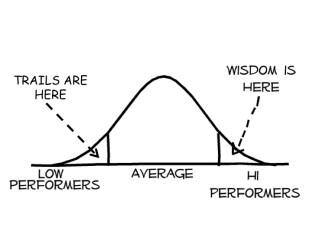
What if… we also realised that in any population there are outliers, bright spots and positive deviants who have that answer or exhibit behaviours that have the ability transform? …achieving discernible difference and improvement will often be within the population… seek the wisdom and grow it…
Slide3

What if…we were more aware of the fact that we can get over-excited or be prone to complacency when we measure and weigh stuff? That feeling we get when we complete the SEF, a round of observations, work scrutiny, achievement meeting, re-writing our to-do-list etc. – often confuses us into thinking we have achieved impact or improvement?

What if…we are prone to believing that things will just improve, or that if we apply a strategy more, or if we weigh stuff more, that we will achieve a different end point?

Insanity is doing the same thing over and over and expecting a different result.” Albert Einstein

What if… we only focused on the key trails and moved to action. What if… we are not quick enough to move to action (to start stories) and as a consequence rarely achieve the change that we desire and others need…

d3a6b2aafb7946d0ec5aacd42d4860e2

What if… we do not continue to commit to action during the implementation dip or when it is easier to go off and measure something else or when we can duck the difficult conversation or action?

seth-godin-the-dip

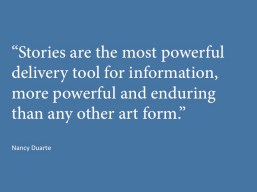
What if… we were in the habit of telling stories; and building a narrative of improvement? … around those areas that we have prioritised, that will have the greatest impact and deliver discernible difference?
Slide2

What if… a self-improving education system or academy or teacher has the ability to understand the brutal truths of the situation and embark on a set of deliberate actions that together tell a story and provide a narrative of improvement?

g2g-confront-facts

What if… these stories always have a start, a middle and an end…

Slide1

blogs.scholastic.com

What if… we are good at opening up stories, but much weaker at building plot and poor at writing great endings (happy or tragic)? What if… we do not stick around long enough on a story or move to action quick enough to realise the twist or truths or barriers to improvement that exist?

…stories motivate people to achieve more. They show what is possible and trigger other unintended improvement.

What if… milestones are a key aspect of delivering discernible difference? That these chart progress, point to the desired destination and importantly provide ongoing motivation to overcome implementation dips and secure discernible difference … perhaps even irreversibility (Barber).

 

gorsel-km-taslari

What if…this ability to place bets on the stuff that matters is born out of an acute awareness and a lack of organisational blindness achieved from beyond our present context (Academy, classroom, MAT, region…)

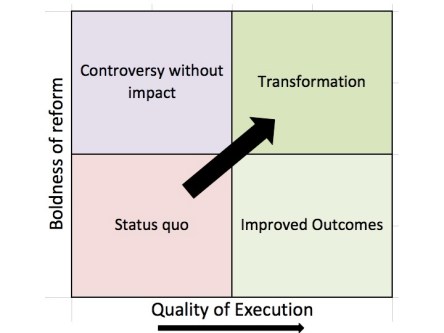
What if… delivering discernible difference has everything to do with execution, execution, execution… only this delivers transformation… and possibly irreversibility…
Slide2

What if… we…

…ensure that the choice architecture, nudges and culture provokes and rewards individuals and teams to chase their own narratives of improvement, growing the ability to tell stories of discernible difference.


Maybe then… leaders would have pride in telling their narrative of improvement – their motivating stories of the difference that they have made. Maybe then… leaders and teachers can point to examples of  discernible difference as evidence of impact on others and students.

Maybe then… leaders and teachers would move to action more quickly on the few things that matter – placing bets on the one thing(s) that make a discernible difference. Maybe this… level of focused action has the ability to add far greater value than blunt, catch-all, self-evalution.

What are your trails? where is your discernible difference? what stories of improvement can you tell – where have you achieved irreversibility? Has this become the lens through which you seek future improvement?

After all… the measure of our own impact should be judged through the stories of discernible difference that we can tell.

Dan Nicholls @DrDanNicholls

November 2015

Effective Feedback | CLF Conference

Slide1

It is probably true that effective feedback is the important aspect for improving performance and accelerating progress. Where an expert coach (teacher or other) offers feedback that is timely, specific, within the task and moves individuals to respond and take action, children see things differently and are supported to deliberately practise to make gains in knowledge, skill and understanding.

It is also probably true that we can be blinded into assuming that feedback is limited to the written variety in books (Silo effect). Whereas effective formative feedback should be used to inform all parts of teaching. This is the craft of teaching… where teachers use effective feedback to inform their pedagogy and base planning on an acute awareness of where children are and precisely what they require next to make progress.  Perhaps it is more a mindset and an approach rather than a strategy or a method.

blackbox-3

Which begs the question… what makes feedback effective so that it pervades all that we do and leverages gains in knowledge, understanding and skills?

The following reflects some of the best practices across the Federation and identifies the key aspects for securing effective feedback in all classrooms…


What if… effective feedback is more precise and leveraging when there is a depth of knowledge that teachers use as a framework/basis for feedback? What if… this knowledge encompassed…

  • subject/age-related understanding of standards and expectations – that also ignited an interest and passion around content?
  • a deep understanding of the key concepts and importantly the key mis-concepts that are built into a child’s progress in a subject or area?
  • Knowledge of exam and age-related expectations to provide precise feedback – with the end in mind?
  • Knowledge of pedagogy – the how do I teach for understanding?

What if… the Sutton Trust is right about the two key factors influencing great teaching, Content Knowledge (particularly concepts and misconceptions) and Quality Instruction (questioning and use of assessment – modelling, specific practice that is based on quality feedback)?…

Slide3

What if… feedback was focused within tasks and not bolted on to tasks?… What if… we recognised that some of the best feedback happens within tasks…tweaking and suggesting … intervening (whole group, small group, individual) in the moment. Too often feedback is given outside of the event of learning and is not reflected in the planning of subsequent lessons –  so that students are unable to remember or link back to the cognitive challenge they were wrestling with.

Slide21

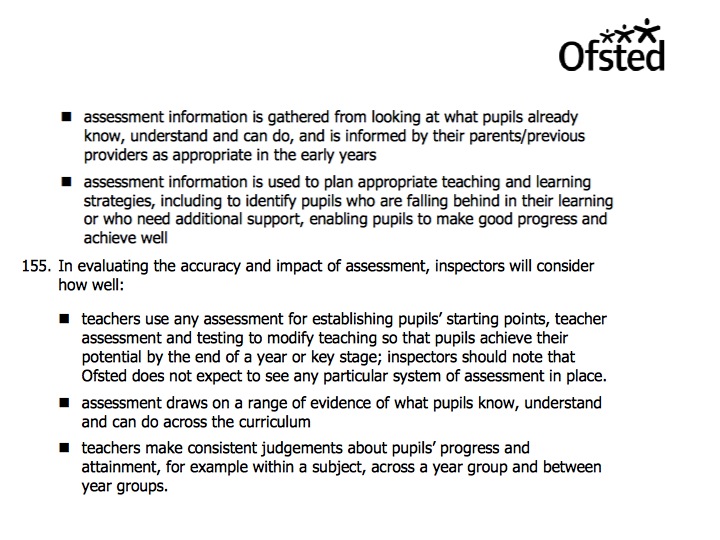
What if… Ofsted are right about the nature and required impact of assessment and feedback…

Slide1

What if… teachers spent more time planning lessons based on the formative assessment of present progress of pupils (perhaps always based on present progress in lessons and the learning demonstrated in books) to focus planning on closing gaps and addressing mis-conceptions … not just progressing through the scheme of work? Based on the precision of planning there is a discernible difference in the progress of each child. When lesson planning, details matter… (marking is feedback for planning.)

Slide28

What if… much of what is marked does not trigger the action and response required from the child to close gaps. In fact what if… a good proportion of written feedback is not read, not understood and not ultimately acted upon?

What if… the quality of books are judged on the progression in content, skills, understanding and application, rather than the amount and extent of marking – rewarding the closing of gaps, progression of learning and the quality of planning, whether this is achieved directly from written feedback, oral feedback, lesson planning or in the quality if teacher intervention within lessons and across lessons?

What if… teachers wrote less feedback and students wrote more in response – where feedback is responded to in lessons as a key part of the planning – time and commitment is made to close gaps by re-doing and redrafting, by consolidating and practising?

What if… Feedback was SMART –

  • specific – directly related to the skill gap, hole in knowledge, lack of understanding.
  • measurable – you will know when you can do this when…
  • achievable – set in the proximal zone for a child – it is the next step in their learning
  • realistic – specific enough and a gap that is closable in the next 20 minutes, lesson or two.
  • timed – it is acted upon in the present or as soon as possible after the event – and importantly actioned.

…and what if… the very best feedback has the potential to ignite motivation or better still enable a child to see the world, an idea, an approach through new eyes – so that it removes a barrier, unlocks a misconception and makes connections in the brain that support improvement. – seeking light bulb moments.

d3a6b2aafb7946d0ec5aacd42d4860e2

What if… effective feedback was clear with children so that they know what they are aiming for, the size of the gap and specifically what they need to do next to close the gap. (D. William) …children know what good performance looks like.

What if… summative assessment provides a very rich form of feedback – but that this is lost unless there is strong feedback, gap recognition and a move to action (DTT DIRT) that specifically closes gaps? What if…there is no opt out policy for individuals – who must use time in lessons to respond to feedback? (e.g. DTT, DIRT)

What if… we ensured that where feedback is given that this is not wasted … that subsequent lessons reflect the formative learning of the marking and feedback that has revealed exactly where each child is … so that lessons are well planned, crafted and directed to close the gaps … often re-doing and re-drafting to secure learning over time.

What if… we understood that learning is a physical process – that the development of myelin in the brain (layers in picture below) enables neurons to fire and for things to be remembered or skills to be hard-wired … such that only through effective feedback that engages in practise and repetition do we internalise and physically create connections in the brain that allows us to remember and master…making the most of the feedback?

Myelin1

What if…therefore, we used our understanding of the curve of forgetting to interleave curriculum and deliver a spiral curriculum that revisited and consolidated learning over time? Perhaps developing a layered, escalating spiral curriculum where children repeat and return to build on learning.

curve_0-500x231

What if… feedback needs to be in the proximal zone? and that the real challenge in teaching is to keep as many children in the proximal zone for as long as possible (explaining and applying knowledge just beyond what the child is capable of) … or in a state of FLOW (that area between boredom and anxiety)? What if… good lessons are pitched and challenging for 80% of students, but that in great lessons this is a different 80% each lesson? Pitch matters – sadly it varies by individual.

pz

figure1

What if… we understood that practise has to be deliberate to be effective and that this is accelerated where children are in the presence of an expert coach and effective feedback; a coach that…

  • maximises reachfulness in the presence of an expert.
  • supports children to embrace the struggle – “You will become clever through your mistakes.”
  • and encourages theft – using feedback and modelling to copy others.

What if… the real purpose of feedback is to support and engage children in purposeful practice or deep practice?….(Dan Coyle)

“We all have the ability to profoundly change our levels of talent, our level of skill. Where clusters of great talent emerge there has been a culture created where individuals are constantly reaching and repeating, making mistakes, receiving feedback, building better brains, faster more fluent brains…inside the brain myelin acts like insulation on the pathways and connections in the brain – each time we reach and repeat we earn another layer – signal speeds in the brain start to increase from 2 mph to 200 mph – neuro broadband – (or the difference between normal and great).”

Slide23

“…practice (is) intentional, aimed at improving performance, designed for (a student’s) current skill level, (aimed at excellence), combined with immediate feedback and repetitious.” (Malcolm Gladwell)

What if…teaching and feedback focused more on the journey; on the “near win?” (Sarah Evans)

“The pursuit of mastery is an ever onward almost.” … “Grit is not just simple elbow-grease term for rugged persistence. It is an often invisible display of endurance that lets you stay in an uncomfortable place,work hard to improve upon a given interest, and do it again and again.”(Sarah Evans)

What if… too often we give feedback and explanation that is not different from the first explanation or we ask children to simply re-do the same task – missing the opportunity to reframe and explain differently…increasing the chance of a child overcoming cognitive conflict?

What if.. questioning is one of the key ways to provide effective feedback and that through great explanation and modelling children receive on-going formative development and feedback based on exactly where the child is and what they need to know, do or understand next? – expert delivery of aspects of pedagogy that secures concepts and unlocks mis-concepts.

What if… when we have a really clear understanding of the curriculum, the journey, the key learning by age, the concepts and mis-concepts by stage – we can provide much more effective feedback against this wider framework?

What if… effective feedback is only secured where there is an ethic of excellence?

excellence

What if… effective feedback is everywhere – from a corridor conversation to our expectations to what is seen as acceptable in the Academy?


Maybe then…based on secure knowledge (subject/age related/exam/conceptual understanding) teaching will provide a range of formative feedback that importantly informs deeply the lesson planning, but also provides expert coaching to support children to actively respond and work in their proximal zone where repetition and deliberate practice supports progress.

Maybe then…there would be no opt-out for children who are compelled to respond and act-on feedback and that this is integral to the learning process as children receive feedback that is built in and not bolt-on to tasks (and takes many forms – is ubiquitous within the teaching – a thread through the employed pedagogy). Maybe then children will experience flow and, with the aid of an expert coach, improve through well targeted deliberate practice.

Perhaps that… describes the greatest challenge of pedagogy and that which transforms teaching effectiveness … delivered by practitioners whose awareness, knowledge and grasp of pedagogy and the integral role of effective feedback creates the conditions for over performance. (…for a different 80% in each lesson).

Dan Nicholls

October 2015

The Ethic of Excellence | igniting the possible

It is probably true that:

“Once a student sees that he or she is capable of excellence, that student is never quite the same. There is a new self-image, a new notion of possibility. There is an appetite for excellence.” (Ron Berger)

Which begs the question, “how often do students produce excellence?”

It might be that although students are capable of excellence we rarely support students to produce their very best work and that much of the work produced falls in the bottom quartile of what is possible for that individual. It might be true then that the opportunity to  enable students to see what is possible rarely happens as students simply tread water in the mediocre.

Slide1

 So what if?

  • What if students skewed their work right toward excellence (and teaching prioritised and supported this) and not left where it probably sits at present.

skewed

  • What if the Curriculum and teaching shifted to focus on depth? Avoiding the skimming of content?
  • What if every child kept their very best piece of work as the benchmark for subsequent work, published and accessible?
  • What if feedback was within and not after tasks? So that students were supported throughout tasks to move to excellence. What if this supported the production of excellence more than summative feedback that comes at the end and does little to inform the outcome.

feedback

  • What if we forget green pen and dialogue and replace with on-going embedded feedback that expects much through the work and supports redrafting and re-doing on the journey to excellence.
  • What if the essence of deliberate practice informed teaching more so that:

    “practice (is) intentional, aimed at improving performance, designed for (a student’s) current skill level, (aimed at excellence), combined with immediate feedback and repetitious.” (Malcolm Gladwell)

  • What if students were not allowed to finish work until it was excellent? excellence
  • What if we borrowed much from Dan Coyle’s insights and took seriously the role of:
    • Deliberate Practice,
    • Establish the conditions for ignition, (ideally from within themselves and what they achieve)
    • Provide the feedback of an expert coach from within tasks to tease out and expect excellence.

“we are often taught that talent begins with genetic gifts – that the talented are effortlessly able to perform feats that the rest of us just dream of. This is false. Talent begins with brief powerful encounters that spark motivation (ignition) by linking your identity to a high performing person or group (or self image). This is called ignition, and it consists of a tiny, world shifting thought lighting up your unconscious mind: I could be them (or do that, or achieve that – in fact look at my best work… my near wins).” (Dan Coyle)

  • What if students were more inspired and surprised by themselves and the production of their excellent work; what if it is this that ignites the intrinsic motivation within each child to be more and achieve more.
  • What if all of this is allied with a growth mindset that set the conditions and ethos for a class, cohort or Academy to stretch for excellence. (Dweck)

“People with Growth Mindsets and who show GRIT achieve more when they engage in deliberative practice … it is this practice that achieve marginal gains (Steve Peters), inching toward excellence.”

  • What if we focused more on the journey; on the “near win” (Sarah Evans)

“The pursuit of mastery is an ever onward almost.” … “Grit is not just simple elbow-grease term for rugged persistence. It is an often invisible display of endurance that lets you stay in an uncomfortable place, work hard to improve upon a given interest, and do it again and again.”(Sarah Evans)

Maybe then…individuals would see that they are capable of excellence, that this would change them forever and raise their personal benchmark. They would have a new self-image, a new notion of possibility and an appetite for excellence. Maybe observation and education would value the outcome, the quality, the closeness to excellence and be less fixated on observed practice…

“If you’re going to do something, I believe, you should do it well. You should sweat over it and make sure it’s strong and accurate and beautiful and you should be proud of it” (Ron Berger)

January 2015