Our Future | building culture

The next stage of our Trust will seek to connect and empower all colleagues as one organisation. Colleagues trusted to transform lives, so that children thrive and flourish now and into adulthood. We will use the power of education to unlock and inspire young lives, particularly for those children who carry more than others, in these difficult times.

“There is no trust more sacred than the one the world holds with children.” (Kofi Annan)

Building on strong foundations

Your expertise and commitment have built the platform on which our Trust now stands. Because of this work, over time, you have developed provision and approaches that are making a difference to the lives of children and is the foundation for our next stage. On this maturity we will seek greater influence on the lives of colleagues and children, strategically plotting and shaping our path, together.

In the next stage there are key approaches and principles that will establish a cultural model that will inform our relationships, interactions and underpin the strategy. This will build the conditions, culture, and climate for colleagues to do meaningful work. We will prioritise psychological safety for colleagues, so that they feel greater belonging and to be given permission to do work that transforms lives. Offering the opportunities for more children to flourish, to have a sense of wonder and be wonder-smitten: I am here, that I may wonder.

“To live wonder-smitten with reality is the gladdest way to live.” (Maria Popova)

One organisation

We are one organisation, serving children, aged 2 to 19, responsible for all children, with every school and colleague woven into a collective cultural fabric: school is trust, trust is school. A collection of great schools, meeting need, held in a strong trust.

Our culture matters to us. It is built and shaped, in every interaction, everywhere, all the time and ever onward. Our cultural landscape is carved over time towards our shared purpose and is guided by deeply held lived values and shared rituals and routines. It is shaped and measured by how far colleagues feel they belong, have status, and build esteem. How we choose to spend time, the constellations we form and how colleagues connect will create our culture.

“The stars we are given. The constellations we make.” (Rebecca Solnit)
Making good decisions together

We make good decisions together. We seek and value expertise across our schools and the Trust as a whole. We are open and transparent as an organisation, making the best decisions we can, with the information we have, whilst seeking to do the right thing. We act without fear or favour.

First say yes. If a colleague feels the need to ask for support or resource, we should say yes, first, and work out how, later. Paying forward as an exercise in collective endeavour and shared responsibility.

The second mistake. It is rarely the case that the first mistake matters, it is often the second or third that turns mistake into problem. Because we make good decisions together, are open and transparent we share and resolve challenges at the first opportunity. Almost everything becomes easier when things are shared, it builds trust, and importantly avoids the second and third mistake.

A Human organisation, valuing relationships

We make time to listen, learn and build relationships. Being present. This is about ensuring colleagues are known as individuals, individuals with a unique story, a story that is heard. Understanding an individual’s story allows us to weave collective stories into the future; generating a greater sense of belonging. How we treat anyone, is how we treat everyone.

Humans are beautifully contagious

Use time well, seek simplicity

We will seek to use time well. Deliberately prioritising time towards the Main Thing(s). Logically sequencing our routines and networks and creating simple approaches that focus on making the greatest difference. We will work to reduce unnecessary burdens on individuals, to be as agile and nimble as is appropriate to our scale. As simple as possible, but not more so.

We will seek clarity because it is kind. Humans like rules, it is clarity that creates safety. We will share all data and information transparently to understand performance and drive improvement, part of our joint endeavour and collective responsibility for all children.

Primacy of Headteachers, the drivers of change

We understand the importance and primacy of Headteachers. The strongest Heads are great with people, understand provision and lead with purpose, prioritising and implementing key strategies and approaches, over time, to enable colleagues to change lives. They are open and able to utilise the capacity of the Trust, and to add into the strength of the Trust; a mutually beneficial symbiosis that adds value.

We are the sum of our decisions

Our effectiveness could be simplified as the sum of all decisions, by all colleagues, all the time, everywhere across our Trust that either accumulates value, or not. Our role as Trust Leaders is to influence, nudge, direct, enable better decisions to be made more often, to deliver a dividend. We will continue to dance between what we decide to do together and where we choose to empower colleagues to act.

Deliberately choosing where to standardise and where to empower colleagues

We will continue to standardise aspects of provision, to become more than the sum of our parts. Standardising, building things together, has tremendous power to liberate, support and give permission (and opportunity) for colleagues to focus on the Main Thing(s); creating a platform for colleagues. Our shared, common curriculum exemplifies the power of this collective endeavour.

Leadership is the art of giving people a platform for spreading ideas that work. (Seth Godin)

We will standardise and empower deliberately and strategically. Holding ideas in tension, informed by context, because context matters; it is not a compromise. Whilst recognising the importance of standardisation and of empowering colleagues on platforms, we will not seek to over dictate the complex areas of provision where experts and professionals make decisions, informed in the moment, in context, for their community.

“…under the conditions of true complexity – where unpredictability reigns – efforts to dictate every step from the centre will fail. People … require a seemingly contradictory mix of freedom and expectation.” (Atul Gawande)

We understand the influence we have on others

Back to the Future. Whilst Marty McFly travelled back in time and understood the future consequences of his actions, we are much less conscious of our influence on the future. Whilst we cannot foresee the future we can, together, create the conditions, sow the seeds, prepare the ground for humans to flourish and for more good than bad to happen. We, collectively create a crucible of serendipity where colleagues shape what is possible. Lives are shaped by opportunity. Our collective capacity can and will transform lives, evidenced in the smallest acts, every day.

“The smallest act in the most limited circumstances bears the seed of boundlessness, because one deed, and sometimes one word, suffices to change every constellation.” (Hannah Arendt)

We are collaborative by nature

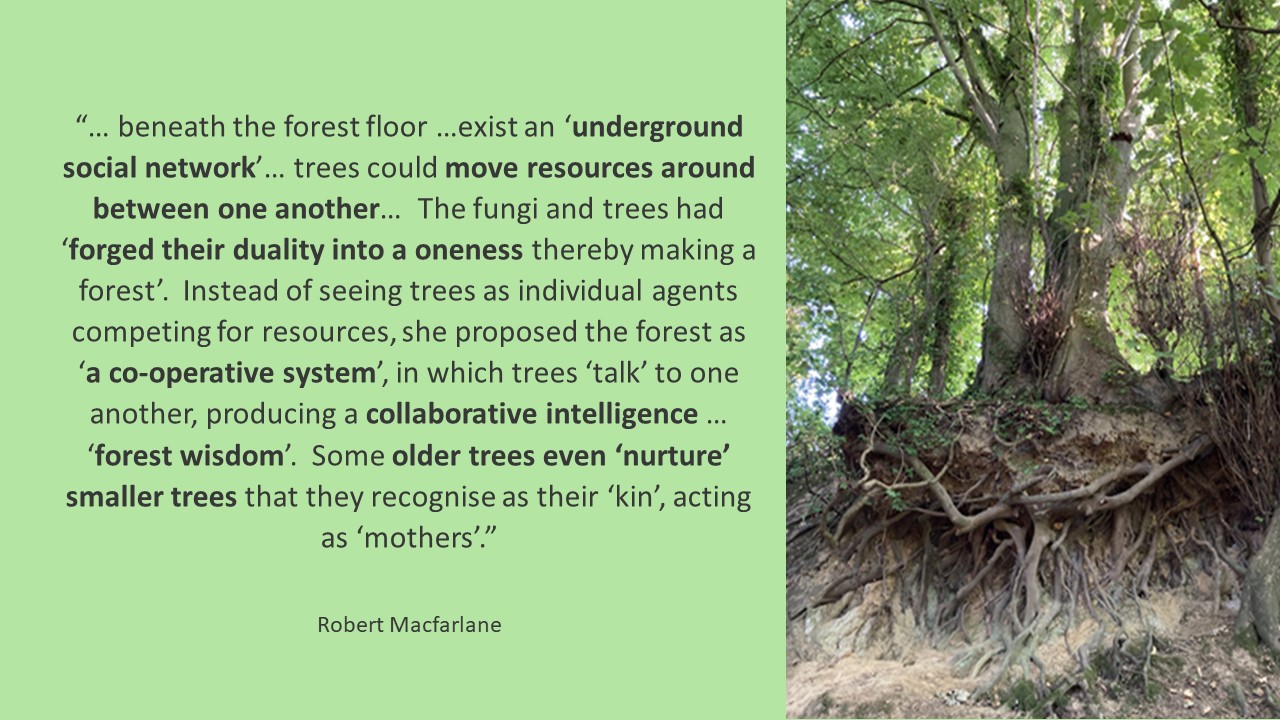
We will build on our existing collaborative architecture, our co-operative system, to connect colleagues with purpose and to each other, seeking collaborative advantage. Connecting colleagues within professional networks and subject/year communities, where hard and soft-wired collaboration secures collaborative intelligence and wisdom that becomes self-improving and irreversible. The biggest influence on colleagues is colleagues.
Getting today right and building for the future

Two speed. As we forge forward, we will build our future, based on where we have been, where we are, and toward what we seek. We will seek to get today right and the future right. We will seek change and improvement in months and years, concurrently.

What do we seek? We decide, next, together.


Into our future

So, based on the platform that you have built, we will work with humanity, humility and openness, to shape the future, together. So, at this time, as I join you as CEO, my optimism, hope and determination for what we will achieve is galvanised by the brilliant people in our Trust.

“When we build a culture of people who eagerly seek out and take responsibility, we build a culture that enables a special kind of resilient freedom.” (Seth Godin)

We have an opportunity to enable all colleagues across our Trust to collaborate, connect and feel empowered to make a difference. To work as one organisation, sharing responsibility, engaged in collective endeavour to secure greater social justice, particularly for our most vulnerable children, those that carry the most through life, and particularly at this time. A worthy cause.

“To be hopeful in bad times is not just foolishly romantic.” (Howard Zinn)


Postscript

There is no way to build high-performing organisations without a cultural model that drives the strategy. Or to put it differently, strategy without culture is just wishful thinking.


Dan Nicholls | July 2024

Collaborative Advantage | seeking a trust dividend

Strong Trusts seek collaborative advantage by building an organisational structure and curating a culture that connects colleagues in shared endeavour. In these Trusts colleagues are empowered, on standardised platforms, to take collective responsibility for approaches and artefacts that enable connected schools to add value and secure a Trust dividend that sustains beyond their time. Trusts seek school improvement by making deliberate bets, laid as investments, that improve the life chances of all children, particularly those who are under-resourced. And in these dark times, it has never been more important for Trusts to seek greater equity through education, to be long-sighted and to invest in the future by planting trees, deeply rooted in their communities; the shade from which they may never benefit.

“…leaders doing less but understanding more… can free themselves to focus on the future – which is, after all, the proper territory of leadership.” (Tracey Camilleri, et al.)

Where Trusts choose to play and how they focus on the future, matters

Defined by the decisions we make | Choosing where to play

Whilst we might assume that there are many ways to run a Trust, there are surprisingly few. And it is ‘few’ because all Trusts are in the business of school improvement, held in a highly regulated system and seeking to improve the life chances of all children. There is a reassuring alignment between the challenges and opportunities that Trusts engage with to add value, moderated, a little, by maturity, scale and capacity. Where Trusts choose to play and how well this is enacted largely determines the success of a Trust.

As Trusts grow, merge, mature and forge identities, their effectiveness could be simplified as the sum of all decisions made, by all colleagues, every second, of everyday, everywhere in a Trust that accumulates a dividend, or not. The role of Trust leaders is to influence, nudge, (direct), enable better decisions to be made more often, over time, the sum of which delivers the dividend. How Trusts influence this decision making, is a dance between what it decides to do together and where it decides to empower colleagues to act. An intelligent dance, that balances standardised and empowered approaches, and connects colleagues together seeking a collaborative advantage.

Seeking collaborative advantage | Who’s on first base?

Trust (and school) leaders “…are all playing Moneyball, all the time” (Seth Godin). Seeking the organisational design and strategy that will make a discernible difference and hold schools in a higher and more consistent performance space. For Bill James and the Oakland As it was: “…putting players on base at a higher rate, leads to more runs, which therefore, translates to more wins.” For Trusts, perhaps it is:

“…putting colleagues together (with purpose) at a higher rate, leads to more value, which therefore, translates to a greater dividend.”

Creating the architecture for colleagues to deliberately collaborate creates the conditions for a collaborative advantage. Connecting colleagues within professional networks and subject communities, empowers peers to co-construct and co-design beliefs, attitudes, approaches and artefacts that drive the dividend, for the long term. Strong Trusts understand the need to build antifragile organisations where the hard-wired (and soft wired) collaborative architecture strengthens under stress, secures wide ownership for improvement, is self-improving and irreversible. Effective collaboration is hard to create, what it is and what it isn’t and how it is designed, entirely determines the benefit felt. The biggest influence on teachers is teachers.

“System leaders focus on creating the conditions that can produce change and that can eventually cause change to be self-sustaining.” (Senge et al.)

The cultural landscape and fabric of the Trust

It is hard to under-state the importance of culture in organisations. The deliberate design of the cultural landscape and the strength of the cultural fabric are necessary pre-requisites for the sustained success of any organisation; built ever onward.

Colleagues need a contradictory mix of being part of something bigger (the cultural landscape), and to see themselves in the organisation (part of the cultural fabric), to have what they need and to be a unique part of the pattern.

The cultural landscape of a Trust is shaped and carved over time towards the shared purpose, the mission of the Trust and is guided by deeply held (lived) values and enacted in shared rituals and routines. Walking and working in the cultural landscape reveal the values and character of the Trust; it determines and secures belonging, status, and esteem of colleagues, or not. How Trusts choose to spend time and how colleagues connect is a window into the soul of the organisation.

“The stars we are given. The constellations we make.” (Rebecca Solnit)

The strongest cultural landscapes are organised around the reason for existence. These Trusts clearly articulate the mission and the purpose of the Trust, which is held across the landscape by the North Star, guiding and moulding the norms and behaviours. Lit by this star the cultural fabric weaves colleagues together towards the mission, to do good and make a difference.

 “If everything is important, then nothing is… When you know your reason for existence, it should affect the decisions you make.” (Lencioni)

The strongest cultural fabrics are held together by a shared language, vocabulary, norms, behaviours, attitudes, artefacts, standards, conversations, ideas… it holds colleagues, offering the psychological safety to bring their best selves. The fabric is deliberately, consciously and systematically woven in every action and conversation. It is the cultural landscape and fabric of a Trust, that sets the stage and the conditions for colleagues to do important work.

When we build a culture of people who eagerly seek out and take responsibility, we build a culture that enables a special kind of resilient freedom.” (Seth Godin)

In strong Trusts, culture is deeply linked to where it has been (true to founding) and where it is going (ambition for all) and its journey (the everyday culture). It is (un)surprisingly well designed and felt everywhere, from all colleagues; how we treat anyone, is how we treat everyone. One of those things that takes years to build and seconds to destroy. The culture and colleagues drive the dividend.

Trust Mindedness | school is trust, trust is school. Priming the landscape.

Strong Trusts seed and cultivate the landscape, to reward Trust mindedness, intrinsically so. A priming of culture that is conducive to collaboration, to understanding that all leaders, all colleagues are responsible for all children in the Trust. It is about creating an internal market where the stock price of schools, leaders and colleagues rises with altruism, collaboration, professional generosity, contributing to the shared artefacts, routines and rituals that live out the Trust values, towards the mission and secures the dividend.

This is a Trust-wide mindset, within the cultural landscape and fabric that primes, promotes and rewards relationships and behaviours that fuel and sustain the School Improvement Model. It is the deep collaborative motivation that lives in the Trust, to depth, that encourages better decisions more often, so that the Trust is more than the sum of the parts. Under these conditions Trust leadership is increasingly about guardianship and stewardship.

The primacy of Principals | The lead actors in mature (and immature Trusts)

Strong Trusts recognise the primacy of Principals. Schools are significantly influenced by the quality of the headteacher (and teams they lead). If the culture and choices made by a Trust largely determines the potency and effectiveness, then the Headteachers are the key actors in school improvement. The effectiveness of the Headteacher is largely the determining factor in the quality of provision, influenced by the Trust, of course, but perhaps not as much as we would like to think.

The strongest Principals are great with people, understand provision and lead with purpose, prioritising and implementing key strategies and approaches, over time to drive the effectiveness (and efficiency) of the school. Importantly they are open and able to utilise the resource and strength of the Trust; a symbiosis that adds value, and increasingly so. Strong Trusts invest deeply in Headteachers, designing curriculum, professional learning, opportunities, connectivity, collaboration and the conditions for Heads to lead well.

Exploit the complicated | Standardised Provision

Perhaps the biggest advantage afforded to Trusts is the ability to standardise aspects of provision to secure school improvement and greater consistency in provision. Despite some negative connotations or overly simplistic views of “standardisation,” it has tremendous power to liberate, support and give permission (and opportunity) for colleagues to focus on the Main Thing(s). The creation of standardised approaches, strategies and artefacts builds a platform for colleagues, to focus on meeting need, without the distraction of re-designing areas of provision that just need to happen reliably and consistently.

Leadership is the art of giving people a platform for spreading ideas that work.” (Seth Godin)

Strong Trusts intentionally and deliberately standardise ‘complicated’ areas of provision:  Complicated areas act largely the same way each time. These areas can often helpfully be reduced to a checklist; if this, then do that. Trusts should play in these areas and standardise as there is limited need for local decision making or creativity and, importantly, this offers the opportunity for a Trust to improve provision for all learners (and colleagues). Co-creating and co-designing shared curriculum and assessment are particularly potent areas for the dividend.  

Empower and guide the complex | Empowered Provision

Areas that are largely complex should be empowered to schools and colleagues. Complex areas respond differently each time and are typically influenced by the unpredictability of human action and interaction, requiring in the moment decision making. In complex areas of provision, we need to push decisions closer to the action where quality and outcomes are linked to the situation as it emerges, contextually influenced. 

There are areas of provision in each academy that is better owned and empowered locally, they are largely complex, influenced by context and improved by local decision making. Of course, it is desirable to standardise aspects of these largely complex areas in academies to (fractally) create the standardised platform for colleagues in academies.

Don’t overcook | Just because you could, does not mean you should.

Standardise too far, and you remove the local decision making, professionalism and agency of colleagues to make good decisions, commensurate and appropriate to a profession, and being a professional.  This is the crux of effective Trust leadership, the dance between the complicated and complex, to standardise and to empower deliberately and purposefully. Held in tension, strong Trusts create routines, standardise areas of provision to support colleagues, but do not seek to over dictate the complex areas of provision where local decision making, near to the action, informed in the moment, adds the value and creates the sustainable behaviours that secures a self-improving organisation, beyond our time.

Holding ideas in tension is not a compromise

Trusts should not use their power to standardise without bound, there are limits to the effectiveness of standardisation when it steps over and on individual agency and professionalism.

“…under the conditions of true complexity – where unpredictability reigns – efforts to dictate every step from the centre will fail. People … require a seemingly contradictory mix of freedom and expectation.” (Atul Gawande)

Measure what matters, transparently and in the interest of school improvement

Strong Trusts measure what matters and by doing so indicate what they care about. This is the transparent democratisation of data to all colleagues to enable a focus on learning and evaluation of provision, to depth. This reveals standards, informs school improvement and highlights high (and low) performance as well as expertise across the Trust.

Trust leaders are guardians of standards, creating an insurance policy that holds and secures improvement for all children and schools in the Trust. A risk-led approach enables an agile and timely distortion of resource, school improvement capacity and expertise to ensure that all children, areas of provision and academies are supported to improve and level-up in a timescale that is quicker than the local resource capability. School is Trust, Trust is school; all colleagues responsible for all children.


Whether Trusts become more than the sum of their parts and add a dividend for all children, families and communities is determined by the choices that they make and where they choose to play. Strong Trusts craft cultural landscapes and empower colleagues within a cultural fabric, on a standardised platform, to connect across the Trust to realise a collaborative advantage.

“The role of the leader is to enable, facilitate, and cause peers to interact in a focused manner…but still only a minority of systems employ the power of collective capacity.” (Fullan)

Strong Trusts build the conditions where the collective capacity is focused on addressing the steep challenges of our time and where the collaborative advantage drives a dividend that secures greater equity through education.

…But, Trusts are not alone in the landscape, despite pressures that promote isolationism and competition, all parts of the sector are joined in a quest to build a better system. A system that will only meet the growing needs of all children when there is greater collaboration, stewardship, generosity and collective responsibility. We should seek together a sector that exploits a collective collaborative advantage for the good of all children.

All Trusts working together for all children


Dan Nicholls | February 2024

The thinking presented here is based on the work, experience and thinking of colleagues across Cabot Learning Federation.