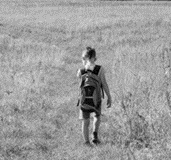
Growing Human Beans

We are in the business of growing human beans, and beans have dreams.

Some have dreams that are delicate, wispy-misty bubbles, but, more frightsome, some beans believe dreams are for others and not for them. So, whilst all kiddle beans have dreams, some are lost before they grow to be whunking. For the world has a habit of bursting the bubbles of beans.

“Dreams,” he said, “is very mysterious things. They is floating around in the air like little wispy-misty bubbles. And all the time they is searching for sleeping people.”  Roald Dahl


Tread softly | zozimus is fragile 

We grow beans and all beans spread their dreams under our feet.

But I, being poor, have only my dreams;
I have spread my dreams under your feet;
Tread softly because you tread on my dreams W.B. Yeats

So, tread softly, but do deliberately step and set the stage for dreams to appear, exist and grow. Dreams require our guardianship, for the moment a child ceases to believe, they step back and separate themselves from those whose dreams are well preserved and soundly protected. For the dreamless beans we are their only second chance: exunckly why we choose to be here, doing what we do.

“The moment you doubt whether you can fly, you cease for ever to be able to do it.”  Peter Pan


Leaders of Dreams | dealers in dreams

“Leadership is communicating to (human beans) their worth and potential so clearly that they are inspired to see it in themselves.” Stephen Covey

We must curate the conditions that convince beans of their worth and potential so clearly that they are inspired to see it in themselves. Leadership that deals in dreams and has the courage to apply equity, might just create the opportunities that change lives of human beans, because childhoods last a lifetime.

“Dreams is full of mystery and magic… Do not try to understand them.”  Roald Dahl


The land of less | surviving childhood

All human beans depend on supported opportunity to thrive. Opportunity, however, is largely a feature in the land of advantage. A place where beans go on quests, fueled by belief and held to high expectations. In their land, they stride sure-footedly, supported, resource laden, time enabled, in the direction of their dreams, with eyes affixed on the horizon.

Contrariwise, the land of disadvantage has less. Whilst, all beans are seeking to survive childhood, beans and often their grown-ups, in this land have less time, fewer resources and fleeting opportunity. Whilst ability and ambition are distributed equally in beans, dreams evaporate quicker in this land, quests revert to quiescence as under-resourced beans seek to survive, focused on the foreground, suspichy of their future.

Of course, the odd thing about the land of the less is that it is expensive to exist, to get by; there is a scarcity of money, and of resource and of time. But, we know this, and as educators we do have the resource and the expertise to offer the specific, targeted support that can lift horizons, to short cut and create cheat codes that close gaps and grow opportunity in the land of less. We are not yet brave or courageous enough to hack the system, one diddly and different bean at a time.

“Every human bean is diddly and different.” Roald Dahl


Igniting dreams | shifting self-image

Human beans are the sum of their experiences. Some of which are potent enough to ignite something deep inside making beans fall helplessly in love with their future passion. We are not yet experts in ignition; we pay too little attention to these life-changing moments and yet we are all shaped by them.

“Beneath every big talent lies an ignition story – the famously potent moment when a young person falls helplessly in love with their future passion.” Dan Coyle

All children are social beans, deeply sensitive to the words and actions of all adults. In every action, interaction and intonation we choose to construct or de-construct, to convey status, or not. Our role is to ignite and guard dreams, secure excellent provision and apply equity to gift beans a new notion of what is possible, daring them to dream, guiding them to look up and beyond.

“Once a student sees that he or she is capable of excellence, that student is never quite the same. There is a new self-image, a new notion of possibility.” Ron Berger


Fields of dreams | seeding serendipity

Only the application of equity in the right conditions can overcome the insidious influence and impact of having less. We must seed greater opportunity, deliberately to both specifically target and to increase the probability that unmoored beans will grow, flourish and accumulate advantage over time. For success is not a random act, it arises out of a predictable set of circumstances, more readily and typically evident in the advantaged realm.

“…success is not a random act. It arises out of a predictable and powerful set of circumstances and opportunities …replace the patchwork of lucky breaks, context and arbitrary advantages that determine success…with a system that provides opportunities and the conditions for all to feel success.” Malcolm Gladwell

To accumulate advantage for those with less, we should recreate the conditions of the land of more, being braver to give what is specifically needed so that beans do not feel unremarkable and separated from their world.


Full of Beans | inspiring lives with opportunity and choice

“Somewhere inside all of us is the power to change the world.” Matilda

We are full of beans, they are everywhere, and so are their dreams. Together, we have a responsibility, to grow both beans and dreams. To find that little bit of magic asleep inside each and everyone. In doing so we might just influence the lives of those who exist in the land of less, who carry more, who need, indeed rely upon, our expertise and our belief in them. As enthusiasts in life we can inspire the lives of those with less with greater opportunity and choice. But we should choose to close gaps at full speed, to embrace it with both arms, to become passionate about it, because lukewarm is no good.

“I began to realise how important it was to be an enthusiast in life. If you are interested in something, no matter what it is, go at it full speed, Embrace it with both arms, hug it, love it and above all else become passionate about it. Lukewarm is no good.” Roald Dahl


Dan Nicholls | January 2025

Fiercely educate…

… children who are presently disadvantaged.

If we are to overcome the forces in our society and schools that insidiously widen gaps, between those that have and those that have not, we need to be more ferocious, more tenacious in creating the conditions that enable our disadvantaged learners to flourish. This requires educators to be more honest, to ask uncomfortable questions and make braver decisions to fiercely educate those that need us the most.

Photo by Efe Yagiz Soysal on Unsplash

To fiercely educate is to replicate the stage-managed, high expectation and sharpened elbows of an advantaged childhood. Being fierce means guarding a child’s education, expecting much, staying alongside, pushing from behind, consistently and persistently championing individual children.

An advantaged childhood holds, expects and elevates children, who are fiercely loved and as a result feel more secure.

“Okay, well, Eleanor has this mother. She intimidated me at first actually because she just – she’s fierce. Fiercely loving. … but I could tell she felt safe in that house. She grew up feeling safe and fiercely loved.

“And you and I didn’t get that, not because we didn’t deserve it, we just got dealt something else. But the people who did get that love, they grew up to be different from us. More secure.

Coco Mellors | Cleopatra and Frankenstein

To be fiercely loved* is to be challenged, extended, stretched, to reach and risk, and at the same time, to be held tightly, more secure. “You will be brave, I have got you.”

*the emphasis is on fiercely rather than loved. Families who are socio-economically deprived do not love their children less, often quite the opposite, but the time, money, space to create opportunity and supported experiences to translate that love, ferociously, is compromised at every turn.

Advantaged families interpret the world for their children, translating experiences and interactions to maintain their sense of security and renew their agency. Setting and re-setting a desired narrative of what it is to be and feel successful, to step forward once more, even when the randomness of life and experiences intrude beyond the home. There is always an ongoing invitation to dance. Sitting out is not an option.

To grow up advantaged is to step forward through a life punctuated by opportunities, reaching, risking and stepping forward, it is a secure pursuit. These are childhoods, with guide ropes and safety harnesses, that see failure as an obstacle on the path to eventual success.

If you are lucky enough to be born in a world made in your image, you probably think of a failure as an obstacle on the path to eventual success. If you are a marginalised person in any way you internalise that failure more closely.

Elizabeth Day

Without a deep sense of security, a disadvantaged child is far more likely to internalise failure more closely. It is precisely this self-reflection, the connection of failure with self that perpetuates over time and maintains an inhibiting mindset that convinces that it would be safer not to try. Without the ferocity of expectation, the unwavering (taught) belief in their own agency, a child’s hand goes up fewer times, they step back rather than stride forward and live with a constraining belief that the world is not built in their image or for their circumstance.

If we step forward less we tend to surround ourselves with others who are also less likely to step forward in life. It is the five closest individuals with whom you measure your status, the ones that set the bar, the ones we compare against. And where we create schools within schools we set expectations of what is possible (and not possible). We must work harder to cross-connect social circles, orchestrating and intervening to be more inclusive.

Each starling is only ever aware of five other birds,” she said. “One above, one below, one in front and either side, like a star. They move with those five, and that’s how they stay in formation.”

Who are your five then?” asked Cleo. “The ones you watch?

Coco Mellors

It is an inconvenient truth that schools create these self-fulfilling groups, reinforce the conditions for advantage and disadvantage to accumulate. We are the problem more often than we admit, more often than we see, more often than we realise. To see the conditions we create, those that we have come to accept, we must apply the disadvantage lens on ourselves and our schools, be more honest and evaluate what we are willing to accept, what we hold up and measure as success. This is about confronting and tackling the perpetuating inequity, seeking to halt social fractures at a time when society is fracturing.

Hope: to want something to happen or to be true, and usually have a good reason to think that it might.

A childhood of advantage is one of agency and hope; a life on an exciting journey of opportunity, where what is wanted, sought after, is within reach and based on previous experiences, have a good reason to think it might be achieved. And if it does not, any failure slides off, it does not define. After all, the failure is not about me reaching out, because I act on the world. And yet for our disadvantaged children each failure is another hit on self-belief, self-image, another example of the world acting on them. “This world is not for me.”

An advantaged childhood also has purpose (one insisted on, and then internalised by the child), a beacon that directs effort and demands persistence. We must work harder to create, expect and articulate purpose so that it fuels the persistence required to close gaps.

“When we have a purpose, we are able not only to endure and persist but also to provide a beacon that reminds us of what’s important and to make the right decision at the right moment.”

Steve Magnus


Too many journeys through school are riddled with children being let off, in conditions of low expectation where interactions are compromised by collusion. We are prone to making poor assumptions about background, present levels of attainment, context, aspiration, resilience; missing the fact that we are both the problem and the solution.

We need to be more honest and braver as educationalists, guarding each child’s education and building great schools that deliberately step in to create pathways for disadvantaged learners to thrive and flourish. It takes the whole team to maintain provision that privileges disadvantage everywhere, only shared endeavour has any chance of systematically closing gaps; culture over lists of good intentions/interventions.

So:

  • There is little in this world more powerful than someone who deeply believes in you; educators have that power. An unconditional acceptance from a trusted adult gives a child the warm sense of belonging; a psychological safety that says we believe in you. Unpicking disadvantage is a team sport, focused on individuals to apply equity.
  • We are disproportionately influenced by those that we spend time with (sometimes chosen, sometimes destined, sometimes orchestrated); schools need to remove the school within school phenomenon – our choices around setting, staffing, curriculum either perpetuates disadvantage or removes it.
  • To fiercely educate is to have educational provision that reaches those that need us most. We need to measure what matters: the attendance and attainment of disadvantaged learners. Attendance first… we cannot fiercely educate any child we cannot see.
  • Our journey through education is disproportionately shaped by small acts; these are rare, often serendipitous experiences that shape us the most. How far do we purposefully engineer and create these moments of ignition within a child’s education so that they see themselves differently?

The disproportionate influence of five sentences within the novel of our lives.

  • Our interactions, language and the attention we give to others defines our attitude towards them and influences the way children see themselves. It is easy to understate the importance of culture and collective attitude in schools.
  • A child’s self-belief, self-confidence and self-image can be so fragile that inconsequential comments, experiences and actions can erode any belief that exists. As educators we can choose to fill or not fill these lockers. Removing deficit and neutral discourse in our shared language really matters; our words make a difference, both ways.
  • Simply adding “I am giving you this feedback because I believe in you,” changed students’ learning trajectories significantly (Cohen & Garcia, 2014).

“They may forget what you said, but they will never forget how you made them feel.”

Carl Buehner

  • We need great teaching in great schools to understand where children are in their learning and teach the next bit. Seeking to hunt not fish and to apply the equity that disadvantaged learners need. Weaving nets to catch the curriculum.
  • We are hard-wired to see success as talent and gift and not the expression of supported opportunity and accumulated hard work over time; it is the latter that disadvantage learners need, it is the former that perpetuate poor attitudes to individual potential and widens gaps.
  • We may well be witnessing a significant shift in the social contract. The contract held between families and school is eroding, relationships and attitudes are shifting. Whilst we wrestle with a whole range of challenges we must not forget, rather increase our investment in the individual children that walk into our schools everyday.
  • … you have the power to change lives, to weave a future for children, just as the threads of society are unravelling for too many children. You are the hope, for many the only second chance.

“History will judge us by the difference we make in the everyday lives of children.”

Nelson Mandela


Dan Nicholls | May 2023

The disconnection of disadvantage | reconnecting the disconnected

Please hold while we try to connect you, your life is important to us

dis: the lack of, not…

We live in a time when increasing numbers of children are becoming disconnected from their world. Too often, circumstances and events act to disconnect disadvantaged learners, who become increasingly disillusioned and disenfranchised from society and school; pushed to the fringes. As children become disconnected their status, sense of belonging and self-esteem diminishes, encouraging retreat.

We live in a time of increased disconnection and social inequality, that is tipping life and opportunity away from increasing numbers of children who are presently disadvantaged. Disconnection is an ever-present thread, a process, through life, accentuated by key events that chip away at a child’s belief in what is possible. This is an on-going and sometimes catastrophic erosion of agency over time that encourages children to step back and not forward into opportunity.

 “Disconnection is a fearsome state for a social animal to find itself in. It is a warning that its life is failing and its world has become hostile: where there’s no connection, there is no protection.” (Will Storr)

Looking through the lens of disadvantage we can see the circumstances and experiences that create disconnection and accentuate disadvantage. Almost none of it is purposeful, but we are inconveniently complicit through our actions and collude with practices that disconnect. The failure of a child to connect positively time after time, increases the likelihood of disconnection that drains the joy, the ambition and colour from life, profoundly harming well-being. Once disconnection leads to disillusionment, children find themselves on the outside, where return is possible, but rare. The powers of education are weak at this distance, too often any existing connection irretrievably snaps.

…loneliness can quite literally make us sick? Human beings crave togetherness and interaction. Our spirits yearn for connection just as our bodies hunger for food.” (Rutger Bregman)

We can counteract and remove these “forces of disconnection” and create better climates and cultures that enable children to grow, to belong and to have more agency. Only then will children feel like the hero in their story through life. Heroes that need equity for their quest, to be privileged, to not be let off and to be held by high expectations worthy of hero-status. We do, however, need to meet them there and up the bandwidth of connection to reach out and say you belong here.

The pandemic is the greatest “disconnection event” of our time and it has entrenched and exposed a world that is already riddled with disconnection. A world where connection systematically weakens over time for increasing numbers and gaps become chasms between those that have and those that have not. The following explores just a few examples of disconnection.


Alternate realities | schools hidden within schools

Alternate reality: a self-contained separate world, coexisting within the real world.

Schools are navigated entirely differently by each child. We may like to generalise provision, but children are the only real experts of their experience. The reality for too many is that they attend a school within a school, disconnected and parallel to the best provision. These alternate realities hinge on a range of factors: levels of attainment, timetable, staffing, setting, banding, reputation, pathways, peers, groupings, pre-conceived ideas, expectations. Typically, high attaining children experience a privileged route, whilst lower attaining children endure a less privileged route; different reality, same school.

“The last thing a fish would ever notice would be water.” (Ralph Linton)

The decisions we make about how we organise provision, have consequences for learners, that create or deny connection, systematically over time. We have come to accept the alternate realities, where those presently disadvantaged are disproportionately represented in the less connected, lower performing, under ambitious, alternate reality. They do not often feel the privilege of the high attaining reality.

“What provokes our outrage depends on what surrounds us – on what we consider normal.” (Cass Sunstein)


Lost in Transition | mind the gap

Children navigate many transitions as they move through their education. Advantaged children leap confidently across these transitions, whilst disadvantaged gingerly and uncertainly step across; this is not for me. Whether it is the summer break (any break), moving schools, moving years, options or pathway choices, advantaged families step forward, stage manage, resource and guide readiness and decision making. At the same time disadvantaged learners get lost in transitions and lose connection, disconnected from seizing opportunities. In these transitions they are reminded that this is a world that happens to them, they step back, not forward and the gap widens, on repeat. We need to stage manage and connect children so they find (not lose) themselves in transition.


We assume too much | pedagogy and teacher that connects children to what is possible

Classrooms should build connection, not just between peers or with adults, but also with the joy of learning and the richness of subject. A connection that enables children to feel clever, to build knowledge and understanding that opens their eyes and inspires them to feel enfranchised and empowered; connecting and giving them access to the world.

Too often we make assumptions that erode connectivity and deny access, particularly for disadvantaged learners. Each time we assume knowledge, cultural capital, language, vocabulary, ability to attend to verbal and written instruction, resilience, persistence in seeking to understand… we limit accessibility and the ability to connect. Assuming too much over time, disenfranchises learners; there is a limit to how often a child will go back and try to connect.

“Making good use of school time is the single most egalitarian function that schools perform, because for disadvantaged children, school time is the only academic learning time, whereas advantaged students can learn a lot outside of school.” (Hirsch)

Enhancing connection in classrooms:

  • Invest deliberately in a Reading Strategy; perhaps the most important enabler for learning, connecting to the best that has been written. Literally connecting a child, forever, to learning and the world around them; fundamentally enhancing quality of life.
  • Invest in vocabulary, the keys to language, to comprehension, discussion, building fluency and falling in love with words.
  • Invest in oracy; supporting children to find their voice to articulate, apply and explore their understanding out loud, connect to others and have a voice that is heard.
  • Tell stories that bounce up and down through the curriculum, reducing assumptions, inspiring, connecting knowledge and understanding in rich retrieval spaces.
  • Weave schema nets: really understand the architecture and structure of subject. It is this spine, these key organising concepts that create the net or holding baskets for future learning. 
  • Keep the curriculum tight, spiralling and bouncing not far from the core spine of the subject. Too much unconnected breadth or arbitrary content disconnects disadvantaged learners; who are much more likely to blame themselves than the quality of teaching.

“The curriculum should whisper to our children, you belong. You did not come from nowhere. All this came before you, and one day you too might add to it.” (Ben Newmark)


Connection lost | attendance first

Looking for the disconnected? they aren’t in. Everyday too many children are physically disconnected from school. If we do not consider attendance first and reach out to reconnect we reinforce disconnection. In our endemic world the forces disconnecting children from their education are strong. There is a growing sense of wider disconnection that is shifting attitudes and weakening the contract held between families and schools. Children need to feel like they belong, that they can succeed, that it is worth attending and that we deeply care if they are in. Belonging is rarely achieved through compulsion or penalty.


Small moments of prestige | interactions can have serious repercussions for the future

“Anything you do could have serious repercussions on future events. Do you understand?” (Doc Brown, BTTF)

Tread carefully, you know not where your influence will lead. Each interaction or experience can trigger a child to connect or disconnect to a new self-image a new sense of whether this is for them; whether they step forward and persist or step back and dissociate. Each positive connection fills a child’s “confidence locker” stacking evidence that they can do.

“An ignition story … when a young person falls helplessly in love with their future passion … a tiny, world shifting thought lighting up your unconscious mind: I could be them (Dan Coyle)

Small moments of prestige, give status. We all need to feel clever, to achieve something, to be acknowledged, to be truly listened to, to be invested in, to see yourself in the learning, to build belonging and status over time. Every interaction, word, comment, response, expectation, experience builds or breaks a child’s sense of what is possible (often stickily into adulthood). It is too easy for individuals to grow disconnected and to feel the insecure sense of being an outsider.

“To feel a sense of belonging is to feel accepted, to feel seen, to feel included.. to not feel belonging is to experience the precarious and insecure sense of an outsider (Owen Eastwood)

Our language and expectations are an expression of our attitudes towards others. Deficit language erodes connection, we need to invest in specific language, in high standards and expectations; if we let you off we let you down. High expectations are an expression care, that connect and include individuals. To grow up advantaged is to be shaped by high expectations.

“My expectations about you define my attitude towards you.” (Rutger Bregman)


“some of us may need to start with bubbles of safety.. when we belong and where we are encouraged or at least allowed to make a contribution, the magic happens.” (Jon Alexander)

Dan Nicholls | March 2023