
All Leadership and Teaching Blogs below (Views my own)
Dr Dan Nicholls | @DrDanNicholls
Inspiring Lives | circumstance and happenstance
…the power of brief, serendipitous collisions, (within) the beautiful texture of interwoven lives…
 The development of self-identity is influenced by both circumstance and happenstance, subtle moments, often private, but internally powerful that shape our identity. Disparities in resources and support affect children’s predispositions and self-belief, impacting their future potential. Equitable opportunities are crucial in nurturing ambitions, allowing all children to pursue their dreams and foster a stronger sense of self.
If we are to ignite a child’s self-identity, so that they have agency for their adulthood, we must create greater opportunity and apply the equity that will give all children the choice to follow their dreams. inspiring lives with greater opportunity and choice.
Human Organisations | alchemy and magic
The building of Trusts as Human Organisations offers the best opportunity to exploit the collaborative advantage created by deeply connecting colleagues and groups of schools. Human organisations are deliberately designed to be colleague-centred, relational, collaborative and generative. Aligning individual purpose with the collective mission, empowers colleagues to seek improvement.

Human organisations require deliberate ‘Trust’ leadership to orchestrate collaboration and to understand that Trusts are adaptive, living systems that with the right culture and architecture can trigger greater connection and value. This value is multiplied when peers connect with purpose to explore and exploit their collective imagination and expertise: alchemists creating magic. Too often the capacity and connection for improvement remains latent within Trusts.
Toward the future | inspiring lives
In the next phase we will strengthen our trust, deepen our connection and collaboration to add more value to each other and to all children. This is a venture in shared responsibility and joint endeavour to inspire lives with greater opportunity and choice. Succeeding in our mission:
Inspiring every child to flourish through an inclusive, all-through education that nurtures opportunity, equity, and agency for life.
A mission that ensures 11,000 children flourish and develop greater self-agency, becoming the masters of their fate. A worthy quest powered by 1,500 connected colleagues, empowered to do meaningful work.

Be More Pirate | time for good trouble
Amidst the turbulent waves of change we must re-imagine what education and our system can be; it is the opportunity of now, because next matters. It is at this point in our maturing sector that we should venture for greater coherence, collaboration and connection. By embarking on shared quests, we can better navigate toward a new North Star for all places and plunder our shared capability for all children. We need to be more pirate.

So, we should set sail, hold ourselves and each other to the new pirate code, seek good trouble and venture for greater coherence, collaboration and connection, so that we better serve those children stranded in our system and under-served by our places.
Growing Human Beans
We are in the business of growing human beans, and beans have dreams.
Some have dreams that are delicate, wispy-misty bubbles, but, more frightsome, some beans believe dreams are for others and not for them. So, whilst all kiddle beans have dreams, some are lost before they grow to be whunking. For the world has a habit of bursting the bubbles of beans.
Dreams require our guardianship, for the moment a child ceases to believe, they step back and separate themselves from those whose dreams are well preserved and soundly protected. For the dreamless beans we are their only second chance: exunckly why we choose to be here, doing what we do.
This is not about you…
You are not that important, but your influence on others and the future is.

The influence we have as leaders to trigger change in others is what matters. The proliferation of influence beyond ourselves, through a deliberate investment in other human beings, pays forward. It is through this investment that leaders influence greater numbers and further into the future. Ego-less, values-driven leadership that knows it is not about them, but about how they extend their reach and influence. Paying forward, through others, for the future
Poor | inspiring childhoods shaped by poverty
Childhoods that are constrained by poverty are shaped by steep challenges, limited resources, and few opportunities. Children surviving under the weight of hardship, cope with more, with less help, are more vigilant, anxious, and mistrusting of the world they navigate.

As educators we must do more to understand what it is to grow up poor, to grasp some understanding of the lived experience and the visceral truth. We should cut through our own jargon, our own perceptions and assumptions to understand the barriers, the struggle and the occupying weight of what some children are forced to carry.
Our Future | building culture
The next stage of our Trust will seek to connect and empower all colleagues as one organisation. Colleagues trusted to transform lives, so that children thrive and flourish now and into adulthood. We will use the power of education to unlock and inspire young lives, particularly for those children who carry more than others. A worthy cause.
“The stars we are given. The constellations we make.” (Rebecca Solnit)
Privileging disadvantage | Excellence, Equity, Culture
 Securing provision that privileges disadvantaged children requires a deliberate balance of Excellence, Equity and Culture. A system in 3 dimensions. An excellent education made accessible by the application of equity held within a culture of high expectation closes gaps into adulthood for under-resourced children. Shifting the identity of schools and organisations to systemically privilege those that need us most, because it is who they are and what they do.
Unwarranted Optimism
We choose our approach to life and to work. It is too easy to see the challenges that surround us and retreat into the security of pessimism, into narratives that reduce agency and reinforce helplessness. But, when we do, it is not an individual choice, the impact of this stance reverberates through other beings and happenings. It denies a sense of possibility.  Conversely, to bravely choose optimism, conditional optimism, we offer a greater sense of possibility, to reassess what is valued and to see the magic and the light in the everyday. This is a stronger basis for the future, more generous and a greater investment in colleagues and children.
Collaborative Advantage | seeking a trust dividend
 Strong Trusts seek collaborative advantage by building an organisational structure and curating a culture that connects colleagues in shared endeavour. Trusts seek school improvement by making deliberate bets, laid as investments, that improve the life chances of all children, particularly those who are under-resourced. And in these dark times, it has never been more important for Trusts to seek greater equity through education, to be long-sighted and to invest in the future by planting trees, deeply rooted in their communities; the shade from which they may never benefit.
Be Braver | Heroes Wanted
As educators, we choose to educate children, all children, and to make a difference to the lives of others; it is what brought us here. We do this surrounded by good people seeking to use the power of education, in darkening times, against the backcloth of a fracturing social contract and weak social justice, to do good. It is a noble quest, but for those that need us most, at this time, it is a quest that we are not winning, at least not collectively winning. We need to show greater courage, to be braver, to do more to close the gaps that tarnish our system; heroes needed.
Towards Social Justice

Our education system is perfectly designed to secure and maintain the conditions that accumulate disadvantage over time. A system so ingrained and accepted that we unwittingly perpetuate it and see the results as inevitable. We need to seek greater collective endeavour that goes upstream in search of social justice for the many, demonstrating through our actions our deeply held desire to do more than just care, to be braver and to join in a quest that accumulates advantage. A quest that enacts equity through education to lift up disadvantaged children and make a difference, one life at a time, knowing that this collective sector wide effort might just tilt the system to something that befits our personal values and the collective desires for our sector.
The social contract is fracturing
 We live in difficult and darkening times. The growing gloom is becoming oppressive, encouraging retreat and reducing belonging. The social contract that shapes and guides every aspect of our lives is fracturing. For far too many children and families this is fundamentally altering their relationship with society, authority, and how we value and engage in education.
Through joint enterprise and shared responsibility we can build a society and an education system that renews the social contract for the common good and creates an architecture of opportunity so that more are invited to dance.
Fiercely educate … children who are presently disadvantaged
If we are to overcome the forces in our society and schools that insidiously widen gaps, between those that have and those that have not, we need to be more ferocious, more tenacious in creating the conditions that enable our disadvantaged learners to flourish. This requires educators to be more honest, to ask uncomfortable questions and make braver decisions to fiercely educate those that need us the most.
To fiercely educate is to replicate the stage-managed, high expectation and sharpened elbows of an advantaged childhood. Being fierce means guarding a child’s education, expecting much, staying alongside, pushing from behind, consistently and persistently championing individual children.
Belonging | an exercise in leadership
 “In the end, all that matters is how we feel about the places we spend most of our time in. It is the sense of belonging that defines our experiences.” (Rob Carpenter)
Creating places of belonging is an exercise in nuanced leadership that invests deeply in human relationships. Leadership that influences the daily weather to create the long term climate that builds organisations as great as the colleagues within. When the weather conditions in our sector seem to be decreasing belonging, it is reassuring that belonging is typically situational, built, grown and strengthened locally with leaders building havens that we need to deliberately nurture more widely for our sector; a sector worth belonging to and where more feel that they belong.
The disconnection of disadvantage | reconnecting the disconnected
We live in a time when increasing numbers of children are becoming disconnected from their world. Too often, circumstances and events act to disconnect disadvantaged learners, who become increasingly disillusioned and disenfranchised from society and school; pushed to the fringes. As children become disconnected their status, sense of belonging and self-esteem diminishes, encouraging retreat.
Five functions of a strong Trust | strong Trust, great schools
 Strong Trusts build collaborative structures and platforms for great schools to create more value for all children, over time. This trust dividend enables groups of schools to achieve more than the sum of their parts, and more than before. There is now enough maturity in our system to identify how strong Trusts create enough value to sustain groups of great schools; school is Trust, Trust is school. The following identifies five functions of a strong Trust that, taken together, create a trust dividend that supports, empowers and sustains great schools.
Seeking a Trust Dividend | exploiting the power of collaboration
For just over a decade, schools have been coalescing and forming into multi-academy trusts. As Trusts mature, there is an ever-increasing responsibility falling on educators to find coherence, to create more value and to secure a Trust Dividend. A dividend that enables groups of schools to achieve more than the sum of their parts, and more than before.
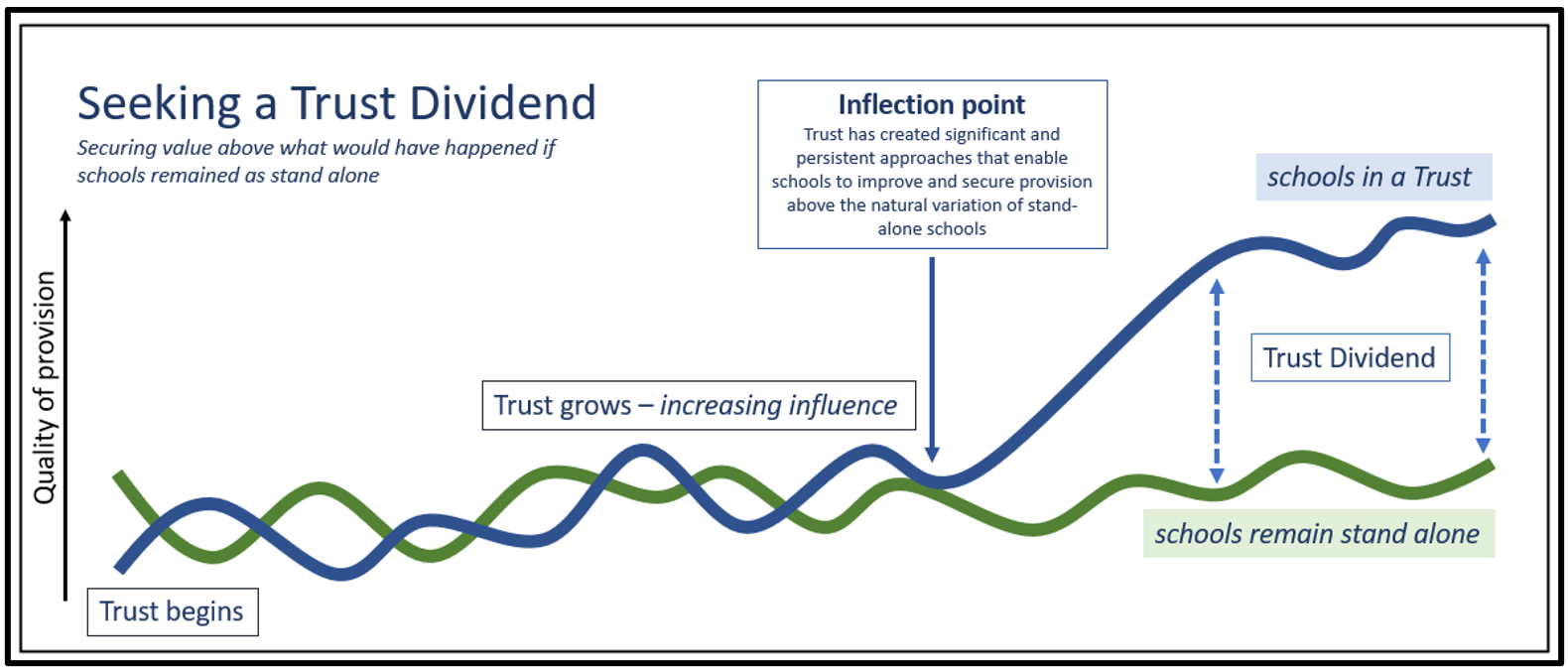
The following seeks to explore how Trusts can intelligently implement high dividend approaches and strategies to secure a trust dividend. Decisions made in these spaces on what is standardised, empowered and how these are sustained and intelligently implemented will determine the long-term trust dividend.
The world is getting darker | bring light to those who need it most

Our world is getting darker. In the enveloping gloom, individual children are becoming invisible, trapped by circumstance. We urgently need to wield our collective power and throw light on those who are fading. If we choose to work in education, and we do, then we also choose to make a difference to the lives of all children. And if it is about all children then we are compelled, through our shared duty of care, to tackle the eye-watering and widening inequality. Together we must secure far greater equity through education, giving individuals what they specifically need and seeking to close the growing chasm between those that have and those that have not.
Closing the disadvantage gap | Curriculum as the lever
Closing the disadvantage gap requires educators to deeply consider the central and critical role that curriculum and the enactment of curriculum needs to play as the key lever on accumulating advantage year-on-year. This seeks to privilege those who are presently or previously experiencing disadvantage. (and all children). 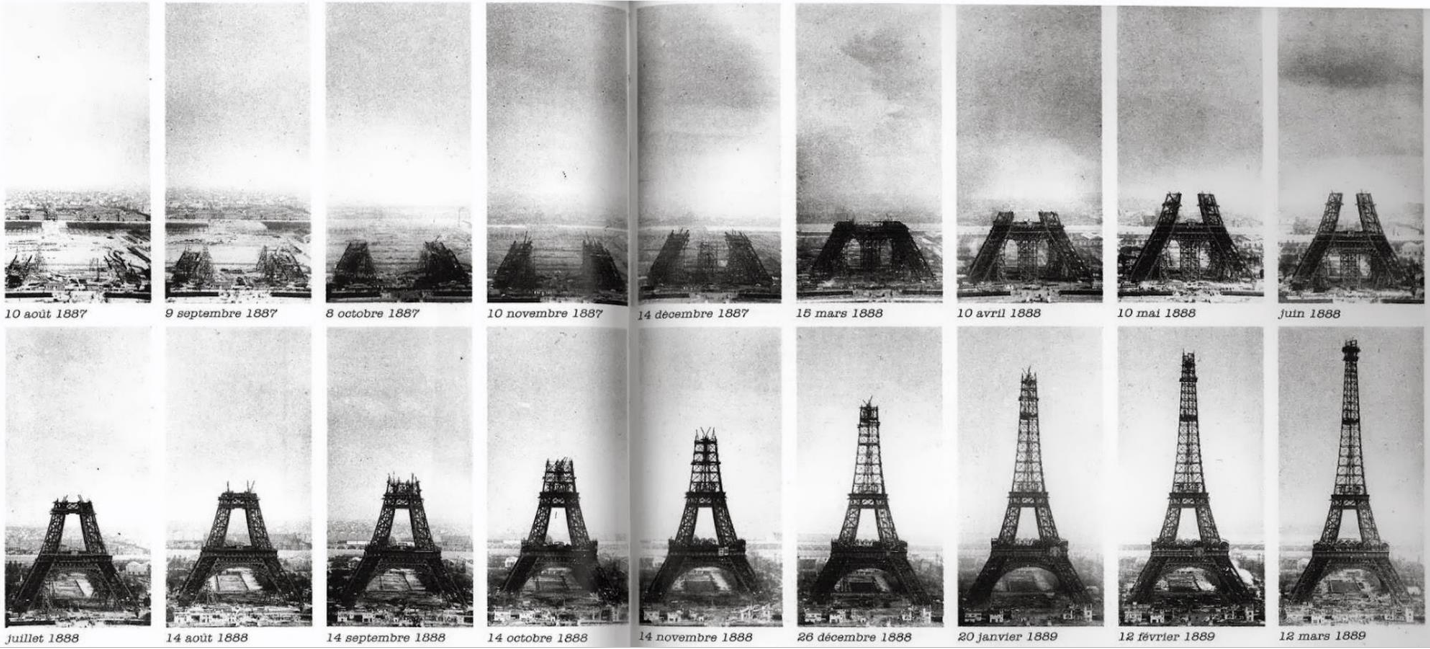 Placing the curriculum under the disadvantage lens allows much greater specificity in response to this challenge. Identifying the connected best bets that will secure the circumstances and opportunities for children to accumulate advantage in our schools; disproportionately supporting disadvantage learners so that we (upwardly) close the disadvantage gap.
What if we are the hope and we fail? Part Three
 As educationalists, we are the greatest hope and the biggest resource that children and their families have to reverse disadvantage* and give each child the agency to decide their future. However, we are falling short and we need to face the inconvenient truth that we are part of the problem. We must
 take our opportunity fulfil our obligation to those who trust us and need us most. It is time for us to feel impassioned and outraged by the inequity and asymmetry in our society and, dare we admit it, within our schools.
Part Two | urgent action required, addressing disadvantage

As educationalists we still have an urgent, deeper problem; one that may already be irreversibly entrenched by a pandemic whose impact has not been felt evenly. It is more important than ever for us to work together to deliberately and systematically address deep-seated inequality and act now to slow the growing gulf between advantaged and disadvantaged children; so that children are not permanently defined by the pandemic, because they have the tools to choose what they become…
Urgent Action Required | addressing disadvantage
 This is now an urgent issue, the impact of the present pandemic will not be felt equally; our asymmetric society will become more so. As you read this the disadvantaged gap is widening quicker than ever. The inconvenient truth is that the legacy of the pandemic will be far reaching, will extend into the future, and for an increasing number of children the impact will be irreversible. It may well threaten the fabric of society, but it is the fortune of individual children that should motivate our action now and as we emerge into a post-pandemic world.
Leading in extraordinary times | Paradigm shifting
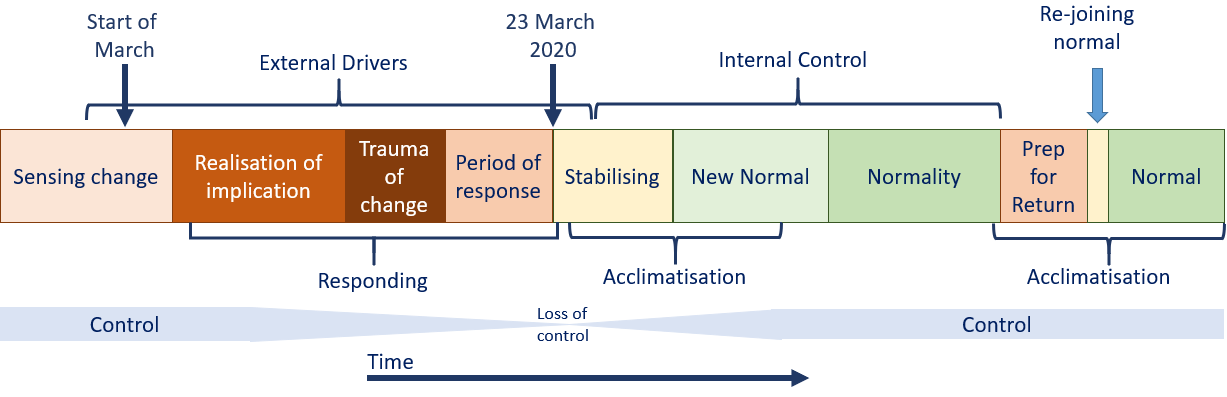
We are coping, working and leading in extraordinary times. We are in the midst of a high magnitude, low frequency event; a global pandemic that has significantly shunted and disrupted life as we know it; an event that is more disruptive to education than any in our living (working) memory. Considering how we lead in this pandemic era and in a post pandemic world provides a framework for us to seize opportunities to imagine how education can be.
CLF Key Stage Three Curriculum 3.0
 An update that details the development of the Cabot Learning Federation’s Key Stage 3 Curriculum; the third iteration of the curriculum that has been in place for the last two years. It is the result of the work and insight of curriculum curators from across the Trust who have been charged with the deep responsibility of curating the curriculum for our children. A curriculum that allow children to dance across disciplines…
What if the Curriculum is the thing and we get it wrong?

What if our opportunity is to build, design and curate a curriculum that inspires the next generation? What if this curriculum, built by teachers, as curators of the curriculum, enabled the next generation to be unusually well prepared for their future? What if this requires us to think deeper about the curriculum and what children really need?
Enabling children to understand their place in the world, which they exploit because a developed sense of self and agency built on an ability to seek meaning and make connection based on evolving understanding secured through playing with knowledge and skills.
CLF Cognitive Science and Teaching Framework | CLF Conference 2018

The Conference seeks to empower experts to discuss teaching and how we play with pedagogy to secure learning against the background of cognitive science and within the structure of the CLF Teaching Framework; concentrating on the key aspects that affect learning. Focusing on…
- The CLF Cognitive Science: the cognitive basis for how we learn; so that teaching, pedagogy and learning has a sound scientific basis.
- The CLF Teaching Framework: the framework that provides for structure and language for experts to discuss teaching, pedagogy and learning across the Trust.
CLF Teaching Framework | empowering teachers to teach
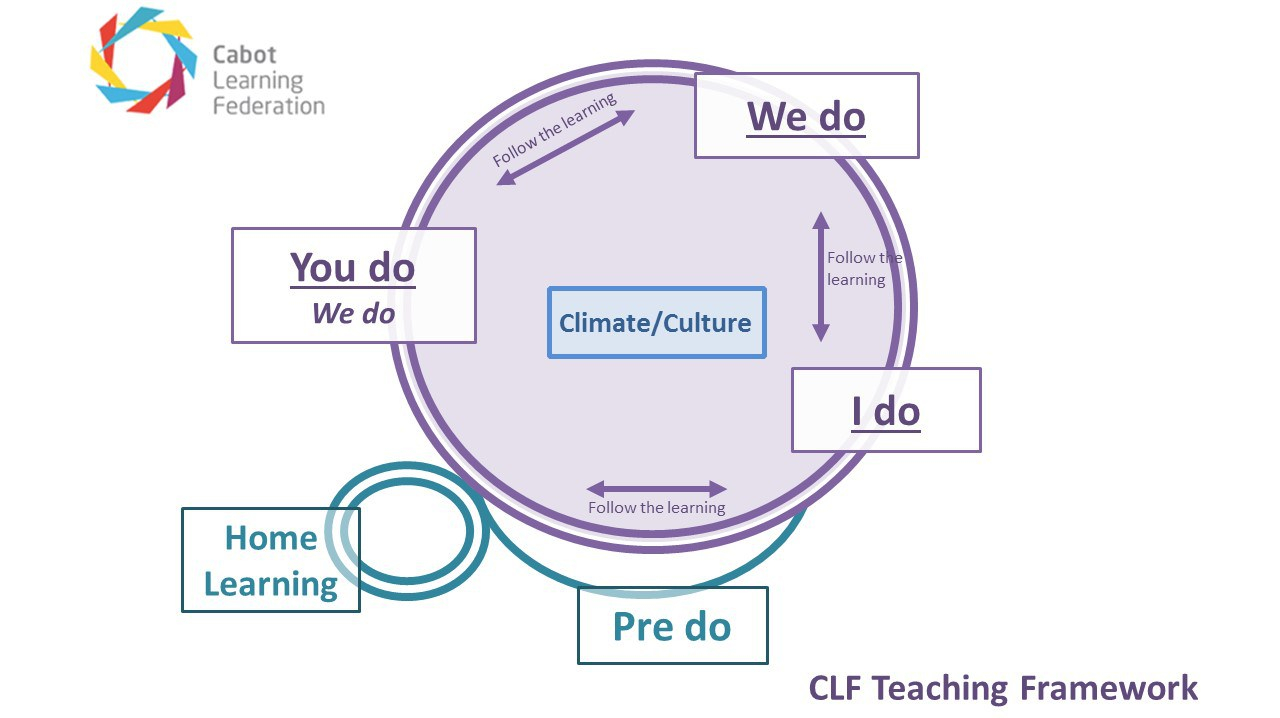 It is probably true that when teachers are empowered to play with pedagogy, informed by assessment, within an inspiring curriculum, children learn and flourish.
It is also probably true that within a Trust or collection of schools a shared teaching framework offers the opportunity to deeply collaborate and develop approaches to pedagogy that accelerates learning.
Key Stage 3 Curriculum 2.0 (CLF)
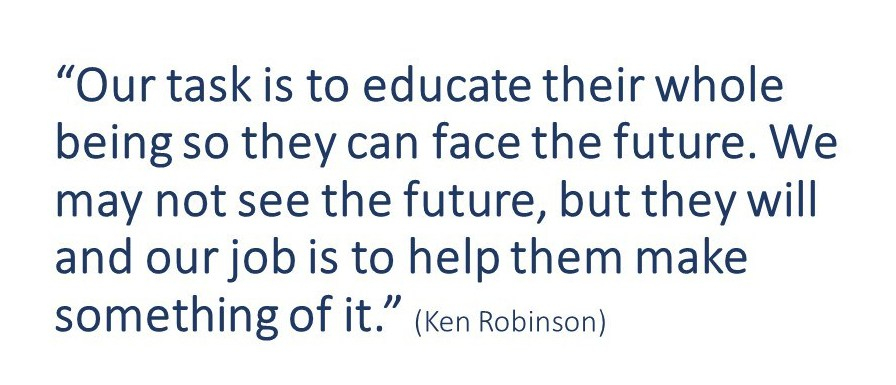 The removal of levelspresents an enormous opportunity for teachers and leaders at Key Stage 3 to be curators of a curriculum that inspires children to learn, build understanding and seek meaning. What does an effective KS3 curriculum look like and how can this be designed to inspire the next generation to learn and make good decisions throughout their lives? How can it create the next historians, mathematicians, geographers, musicians, authors, artist, sportspeople, scientists, writers, innovators, dreamers, magicians, environmentalists, mothers, fathers, responsible citizens, leaders…?
What if this is how we learn?
 Cognitive science has opened up new (and not so new) understanding of how we learn and make progress that need to better inform teaching and our present approaches to education…
What if learning something new is a physical (and chemical) process in the brain? What if the ability to know, understand or do something relies on the development and consolidation of connections in the brain? What if progress is a measure of how far these connections form and establish in the long term memory so that over time a child knows, understands and is able to do more? …
Seek attainment mobility
 What if the key role of Education is to secure attainment mobility for all children? What if we are beguiled by high attainment and consciously or unconsciously label this as innate talent? What if this limits our expectations of what a child is capable of? What if high attainment is actually the result of opportunity, supported effort, deliberate practice and high expectations… early advantage? What if we need to reconsider and evaluate provision in relation to how well it reverses delayed attainment to create opportunity through attainment mobility. Maybe then we would have a world class education system that genuinely supports children to attain what they need. Seek the neural connections that reverse delayed attainment…
Is there Life after Levels? – an approach using Age Related Expectations…
 The removal of levels at KS3 and Ofsted’s “no prescribed or preferred
method” presents an enormous opportunity for teachers and leaders at KS3 to own the curriculum, develop assessment, improve pedagogy and inspire students to develop into rounded, successful individuals (who also achieve well at GCSE and A-level). What could a life after levels approach to KS3 look like? How can Age Related Expectations be used to transform the curriculum, assessment, teaching and progress of children at KS3?
Outstanding Meetings | How groups drive improvement
 What are the key aspects of effective meetings/groups? How do we nudge and develop the quality of social interaction within groups/teams so that they deliver purposeful collaboration and drive improvement? In short, how do effective teams and groups collaborate to secure high performance and accelerate improvement? (How do your meetings rate against the checklist in the Maybe then… section?)
NEW: How can MATs be more than the sum of their parts?
 How can Multi Academy Trusts realise their potential in a rapidly changing educational landscape so that they become more than the sum of their parts and make a contribution to system leadership that transforms education as we know it?
1 + 1 = 3
THUNKS – simple questions that prompt a new view…
Thunks… beguiling questions and thoughts about everyday things that stop you in your tracks and suggest new ways to look at the world…
Earthrise: “The vast loneliness is awe-inspiring and it makes you realise just what you have back there on Earth.” (Jim Lovell)
Thunks have the ability to change our view, our thinking, our behaviours, our habits and the way we lead and teach; just like seeing earth from space changes perspective and forces us to reflect. The following is a herd of thunks designed to add ideas and viewpoints that stop and force reflection…prompting improvement in our leadership and teaching…
LEADERSHIP… (teaching below)
Delivering Discernible Difference…

How can leaders and teachers tell stories of improvement that deliver discernible difference? Perhaps the measure of our own impact should be judged through the stories of discernible difference that we can tell….
How to make stuff happen… and deliver change
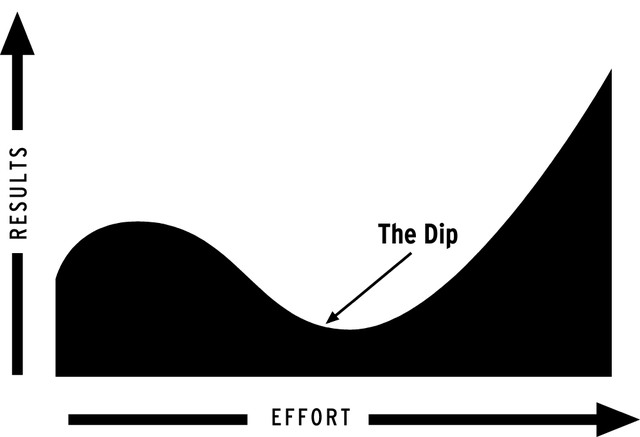 How can leaders execute change that becomes irreversible. Change that alters habits and behaviours, so that it becomes irreversible and leverages improvement in the long term.
… or, put simply, how do we make stuff happen and ensure change sticks?
Great Middle Leadership – Into the Engine Room
Some thoughts for the Middle Leadership Workshop: Middle Leadership
Great Leaders create movements that stick | Amazing is what spreads…
 Understanding how to “start a movement” is a key leadership quality at all levels within organisations. Why is it that somethings tip and others do not; why some approaches are adopted and become habitual and others mis-fire?
How can we start, propagate and embed a movement that sticks and accelerates improvement?
Disadvantaged children | think low attainment not low ability
 “What if… we view disadvantaged children as low attaining and not as low ability, instil a deep and widely held belief in what is possible and then set eye-watering targets that underline our ambition to overcome the inertia of context.”
Do we disadvantage the disadvantaged? How do we disrupt the loop of unequal opportunity?
Connected collaboration and deliberate altruism… growing great organisations and systems
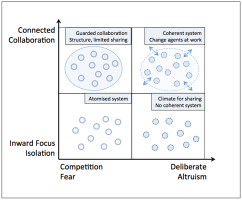
To grow great organisations and support systems to improve it is essential to grow connected collaboration – where individuals and organisation are deliberately altruistic. How can we be more deliberately altruistic to improve the system? […]
Strategic leadership | fanatical discipline and deliberate delivery

How can we strategically lead an organisation? Securing the WHY, articulating the DREAM, finding URGENCY, focusing on what matters and being fanatically disciplined to deliberately deliver improvement. As leaders how do we inspire and strategically lead in our organisation? […]
Failure is not an option… attitude matters…

It is probably true that attitude matters… it is everywhere; determining our limits and those that we expect of others…it is these underlying attitudes that determine the outcomes and progress of students in classrooms and schools/academies. How can we create a whatever it takes attitude? […]
Seeing the wood for the trees: beware organisational blindness…

It is probably true that the longer we lead, teach or support within an organisation the blinder, more conditioned we become. Organisational blindness begins at six weeks – good leaders recognise this and seek to actively reduce blindness. How can we reduce organisational blindness? […]
A culture of continuous improvement…

“Seeking Marginal Gains – enables improvement through small steps and creates a contagious ethos and environment where a philosophy of continuous improve dominates – reaching beyond what most settle for as possible. How do we create a culture of continuous improvement and make things happen?… […]
Creating the conditions for over-performance
 “The truth is that only a tiny fraction of people get lucky.” (Gove, 2013) Beckham and Gladwell demonstrate the importance of creating conditions where people over perform. But what are the conditions for over-performance?… […]
TEACHING…
CLF Signature Pedagogy – blogs…

-
Ethic of Excellence: Signature Pedagogy 1 | An Ethic of Excellence
- It is probably true that:“Once a student sees that he or she is capable of excellence, that student is never quite the same. There is a new self-image, a new notion of possibility. There is an appetite for excellence.” (Ron Berger)It is also probably true that where an ethic of excellence runs through teaching and learning a child’s progress is accelerated and they outperform their peers. This maybe the most important aspect for driving up standards, accelerating progress, securing unusually good outcomes and giving all children a new sense of possibility; enhancing their life chances for the long term.
-
Effective Feedback: Signature Pedagogy 2 | Effective Feedback
- It is probably true that effective feedback is the important aspect for improving performance and accelerating progress. Where an expert coach (teacher or other) offers feedback that is timely, specific, within the task and moves individuals to respond and take action, children see things differently and are supported to deliberately practise to make gains in knowledge, skill and understanding.
-
Questioning (explanation and modelling): Signature Pedagogy 3 | Questioning (explanation and modelling)
- It is probably true… that questioning is an incredibly powerful way to drive learning and accelerate progress – particularly those questions or explanations that unlock light bulb moments of personal discovery. When questioning is used in concert with quality explanation and modelling children get a new view of the world, increased access to knowledge, greater opportunity to understand and develop skills. It is perhaps these aspects of pedagogy that have the greatest ability to intervene, inject and steer greater gains in learning.
-
Stretch and Challenge: Signature Pedagogy 4 | Stretch and Challenge
- It is probably true… that consistently, deliberately and purposefully pitching learning just beyond a child’s present ability, that point between confusion and boredom, is perhaps the hardest part of teaching. This requires a depth of awareness of where each child is and specifically what each individual needs to do next to learn and make progress.
Life without levels | With opportunity comes responsibility

Life without levels | with opportunity comes great responsibility. “The removal of levels from the curriculum creates an amazing opportunity to redefine success and progress for children…and to reshape teaching (and assessment)” Quality first teaching counts the most… […]
To grade or not to grade… is probably not the question?
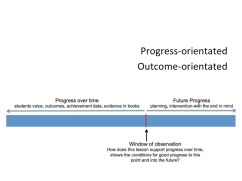
“Not all approaches aimed at securing progress over time are equally effective or equally well delivered. We need to ensure teaching is increasingly progress and outcome-orientated – concentrating the strategies that provoke progress and secure outcomes for students.” […]
Judge teaching over time not over 20 minutes

What matters is that students receive typically good and outstanding teaching every lesson so that they make progress over time and achieve outcomes that allow them to be successful in the future. We need to judge teaching from this perspective; using a triangulation of evidence to judge quality… […]
If not now, when? Raising Achievement

When it comes to raising achievement a “whatever it takes” mindset is key to ensure that students perform. Where there is a focus on quality first teaching and a balance of being deliberate, precise and rigorous on strategies and approaches that matter… there are no limits to what can be achieved. […]
The Ethic of Excellence | igniting the possible

“Once a student sees that he or she is capable of excellence, that student is never quite the same. There is a new self-image, a new notion of possibility. There is an appetite for excellence.” (Ron Berger) How do we get students to produce their personal best work, more often? […]
Greatness isn’t born, it’s grown | thinking differently about success
 In the world of celebrity the role of luck maybe high; however, we live in a world where a series of conditions, attitudes and deliberate approaches enable individuals to succeed. What can Billy Beane, Dan Coyle, Myelin and the Oakland As tell us about greatness and success? […]
 Dan Nicholls
Brilliant and incredibly interesting articles. thanks for sharing!!
Love the format Dan. Readers can dip in or out as the fancy takes them. Really enjoyed them & have shared widely!
Really enjoyed getting my brain to work again in lockdown. As a primary teacher there are many interesting pointers – thank you!
FAO Dan Nicholls,
I am trying to contact you to gain permission for an extract in a book I am working on with Hodder. Could you let me know a direct email please. Or how I can contact you privately? Many thanks.
dnicholls@twhf.org.uk sorry for the delay.
Really interesting reading, and noticing from the comments how long the post has been up, gets me to ask “how much progess do you think has happened so far towards your thinking/blog within the teaching industry in the last 10 years?
I have 3 children that have always struggled at school, but they had an upbringing that could afford them what was needed (ie laptop, wifi etc before it became outdated) – so on the right side of your scales, infact they tick alot of boxes on that side.
But they’ve also got the attitude of only learn what you need, “why waste the time and energy to learn what you’ll never use”. But unless they can tell you what they want to be you cant help towards guiding them to that. Additionally, they also need to see how far they can reach, but “they’ve already produced a logical thinking not to need to so they conserve energy and dont aspire to better things.
They’re also afraid of all the bewilderment/ hecticness/ noise when they arent in theyre safe space so this makes communication poor in those environments.
My opinion is that its been very slow, from the experience I’ve had, but maybe this year its making that upturn now????
Be glad to hear back.
Regards
Giles